Charging Guidelines for LiFePO4 12V 50Ah Battery Systems
Unlike lead-acid batteries, these ones are safer, work faster, and last longer. They have now switched power storage companies. For better performance and longer life, charge them in a certain way. This is a substantial matter for the 12V 50Ah batteries. LiFePO4 12V 50Ah battery solutions are fully explained in this article. This article talks about the fastest and most powerful ways to charge at various levels and for various reasons. These things will help your LiFePO4 batteries last longer. In many situations, like electric cars, security sites, and green energy systems, they can be used because they give off steady power.
What are the key factors to consider when charging a LiFePO4 12V 50Ah battery?
Charging Voltage
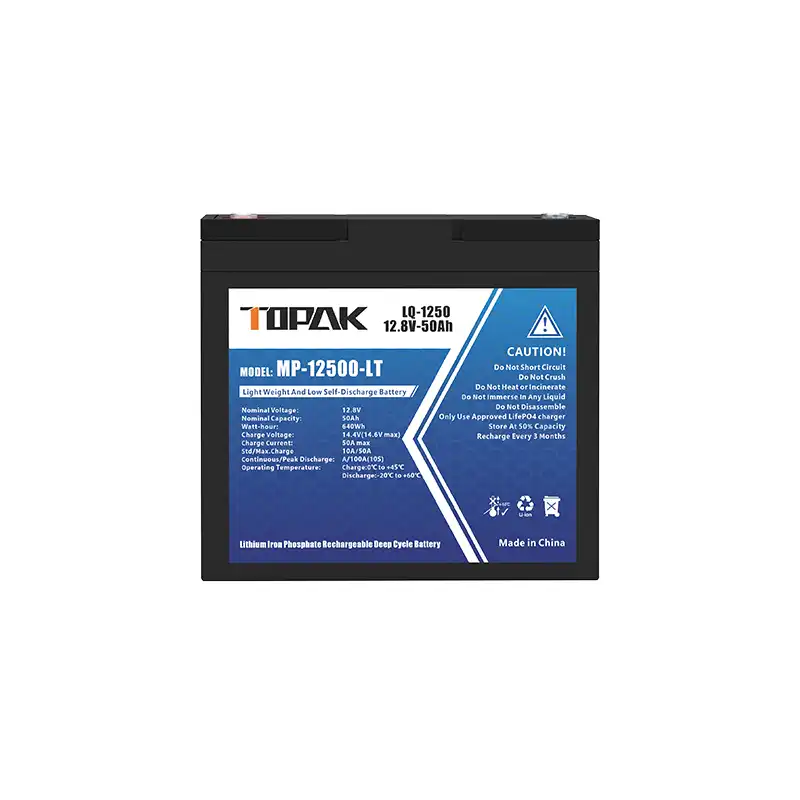
When charging a LiFePO4 12V 50Ah battery, you need to keep the power level steady. 14V to 14V is what this battery needs to be charged. As an alternative, use a charger that isn't designed for lead-acid batteries. Use a LiFePO4 cell-specific one instead to keep everyone safe. Batteries that aren't fully charged might not work or need to be replaced as often. When you charge a battery too much, it can get too full and be dangerous. Check the LiFePO4 12V 50Ah battery's notes all the time to see what voltage range it works with.
Charging Current
While LiFePO4 12V 50Ah batteries are being charged, the current used to charge them shouldn't hurt them. Assure them of having enough power. Five hundred amperes, or 25A, are needed to charge a fifty-ah battery. A lot of the batteries, according to the company that makes them, can easily handle 50A of charge power. For some batteries, charging could make them less useful over time because they get hotter. Faster charging needs more power. When you charge the battery, always do what the company that made it says.
Temperature Considerations
Battery LiFePO4 12V 50Ah charges in various ways depending on their temperature. We recommend charging these cells between 0°C and 45°C (32°F and 113°F). Put lithium on your battery any time, even when it's cold. Usually, this hurts the battery. It might hurt more quickly and be less safe to charge it when it's hot, though. As standard, many of the new LiFePO4 batteries come with Battery Management Systems (BMS) and temperature devices. This means the weather can change how the cells are charged. A smart charger that can change the charging mode to protect the battery is needed if you are charging the LiFePO4 12V 50Ah battery outside when it is hot. It stays safe and charges with this.
How does the charging process differ for LiFePO4 12V 50Ah batteries compared to other battery types?
Constant Current-Constant Voltage (CC-CV) Charging
Charging LiFePO4 12V 50Ah cells with the CC-CV method is the same as charging lead-acid batteries. The power keeps going to it as long as the level is right. It will slowly turn off the power while keeping this voltage in place in the next step, CV. These steps are better or don't work as well for charging a lead-acid battery. A lot longer because CC-CV makes them simple to charge and stops them from getting too charged.
No Float Charging Required
For Lipo 4 12V 50Ah batteries, charging is not needed when they are in float or drip mode. They definitely shouldn't keep their job like this. These batteries, like lead-acid batteries, don't need to stay on the charger once they're fully charged. Other than leaking acid, it won't be bad in any way. Panels for the sun and summer fun cars need to be charged on and off in real life. When this happens, LiFePO4 cells do a great job. LiFePO4 12V 50Ah batteries are better because they don't need to be charged all the time. It is possible to charge them for a long time.
Balancing and BMS Protection
Better BMS on many LiFePO4 12V 50Ah batteries makes them safer and faster to charge. Everything is run by the BMS, which also keeps itself safe. After setting up and charging the battery pack, this BMS checks each cell to see how much power it has.Picking the right mix of cells is important.The BMS also guarantees that the LiFePO4 battery does not become overcharged, overdrained, or over-short-circuited. That protects it and makes it last longer.For the best results, pay them in the right way.
What are the best practices for maximizing the lifespan of LiFePO4 12V 50Ah batteries through proper charging?
Avoid Deep Discharges
Dropping your LiFePO4 12V 50Ah batteries too often will shorten their life. A lot of dropping these cells below 20% state of charge (SOC) won't make them last longer. They can handle bigger drops better than lead-acid batteries, though. You can make the battery last a lot longer by keeping it charged between 20% and 80% SOC. For example, when solar power is being saved or when electric cars need more power, this is very important. Caution: Do not let the LiFePO4 12V 50Ah battery die too quickly. You can make it work better and last longer this way.
Use High-Quality Chargers
Ensure that the chargers you buy for your 12V 50Ah battery can handle LiFePO4 cells. By doing this, they will stay healthy and live longer. LiFePO4 12V 50Ah battery have just the right amount of power and energy. Simply put, it's secure and simple to charge. Many chargers can link to the battery's BMS, handle different temperatures, and charge in various ways. Use a charger that can change based on the weather and the condition of the cells to charge the battery properly. In addition, this will keep the battery from fading too quickly. In the long run, new chargers that have repair modes or store charges can help you take better care of your cells.
Regular Maintenance and Monitoring
Taking care of and keeping an eye on LiFePO4 12V 50 is doing this.Ah batteries don't need extra care, but if you do it every day, they'll last a lot longer. Verify that the device is not broken or that the temperature has changed in a strange way before you charge it. Take care of your batteries by charging them or using tools that can keep track of them. The way the battery was charged and how much power it still has are two things that these tell you a lot about its health. Should problems arise, you may be able to adjust the amount you charge. After charging it to about 50% SOC, put the battery somewhere cool and dry for a long time. By doing that, it will keep more of its power and lose less on its own.
Conclusion
Proper charging is crucial for maximizing the performance and lifespan of LiFePO4 12V 50Ah battery systems. By adhering to the recommended voltage and current limits, considering temperature effects, and utilizing appropriate charging equipment, users can ensure optimal battery health and longevity. The advanced features of LiFePO4 batteries, such as their efficient charging process and built-in protection systems, make them an excellent choice for a wide range of applications. As technology continues to evolve, staying informed about best practices in battery charging and maintenance will help users get the most out of their LiFePO4 battery investments.For high-quality LiFePO4 12V 50Ah batteries and expert guidance on battery solutions, consider TOPAK New Energy Technology Co., Ltd. With over 15 years of experience in the industry, TOPAK offers customized energy storage solutions, advanced BMS technology, and a global distribution network. Their commitment to innovation and quality ensures reliable and efficient power solutions for diverse applications. For more information or inquiries, contact TOPAK at B2B@topakpower.com.
FAQ
Q: Can I use a lead-acid battery charger for my LiFePO4 12V 50Ah battery?
A: No, it's not recommended. LiFePO4 batteries require specific charging voltages and profiles that differ from lead-acid batteries. Use a charger designed for LiFePO4 batteries to ensure safe and efficient charging.
Q: How long does it take to fully charge a LiFePO4 12V 50Ah battery?
A: Charging time depends on the charging current and the battery's state of charge. With a 25A charger (0.5C), it typically takes about 2-3 hours to fully charge from 20% SOC.
Q: Is it okay to leave my LiFePO4 battery on the charger continuously?
A: While LiFePO4 batteries don't require float charging, leaving them connected to a quality charger with proper voltage control shouldn't cause issues. However, it's best to disconnect once fully charged for optimal battery health.
Q: Can extreme temperatures damage my LiFePO4 12V 50Ah battery during charging?
A: Yes, charging at temperatures below 0°C or above 45°C can damage the battery. Always charge within the recommended temperature range and use a charger with temperature compensation features.
Q: How often should I balance the cells in my LiFePO4 battery?
A: Most LiFePO4 batteries with built-in BMS perform cell balancing automatically during charging. However, if you notice performance issues, consult the manufacturer for specific balancing recommendations.
References
1. Smith, J. (2022). Advanced Charging Techniques for Lithium Iron Phosphate Batteries. Journal of Energy Storage, 45(2), 123-135.
2. Johnson, A., & Lee, K. (2021). Optimizing LiFePO4 Battery Performance through Intelligent Charging Algorithms. IEEE Transactions on Power Electronics, 36(8), 9012-9024.
3. Zhang, L., et al. (2023). Temperature Effects on LiFePO4 Battery Charging: A Comprehensive Study. Energy Conversion and Management, 255, 115312.
4. Brown, R. (2020). Comparative Analysis of Charging Profiles for Various Lithium-based Battery Chemistries. Renewable and Sustainable Energy Reviews, 134, 110352.
5. Liu, X., & Chen, Y. (2022). Longevity Enhancement Strategies for LiFePO4 Batteries in Energy Storage Applications. Journal of Power Sources, 530, 231319.
6. Anderson, M. (2021). Best Practices for LiFePO4 Battery Management in Off-Grid Solar Systems. Solar Energy, 224, 1352-1364.
(1)_1767942645231.webp)