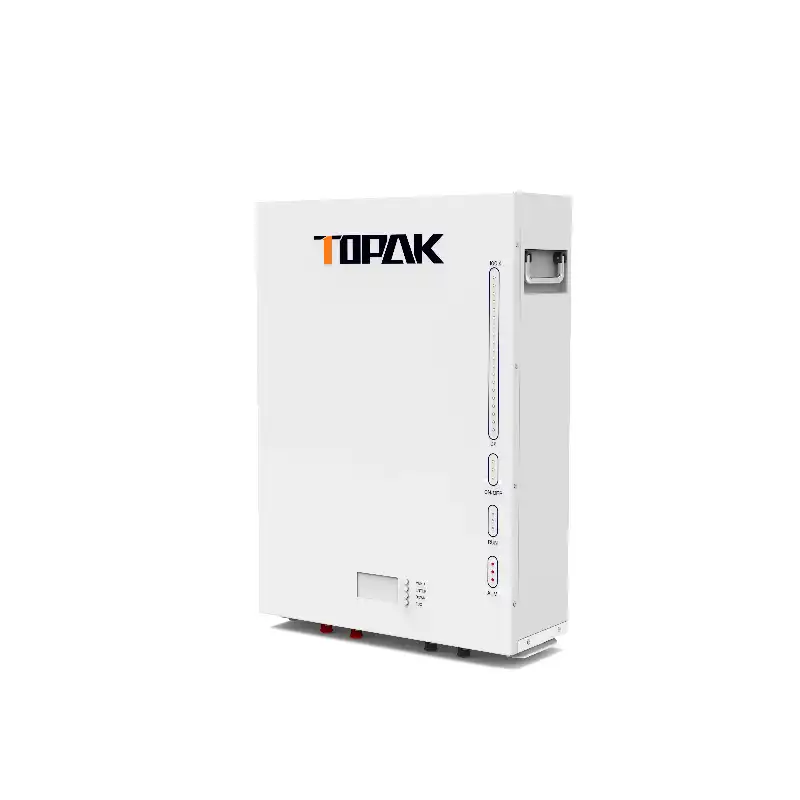
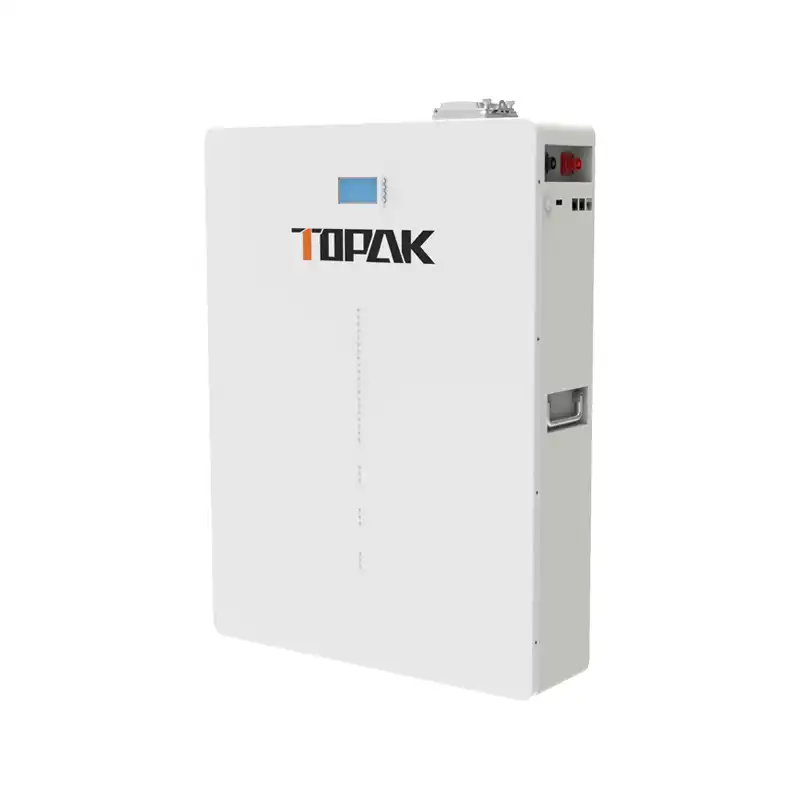
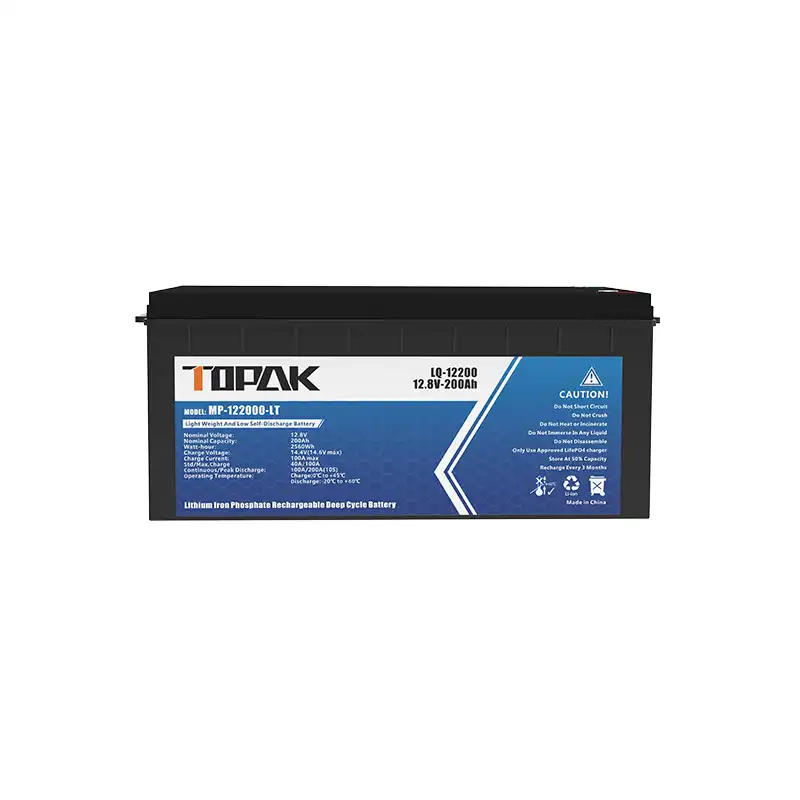
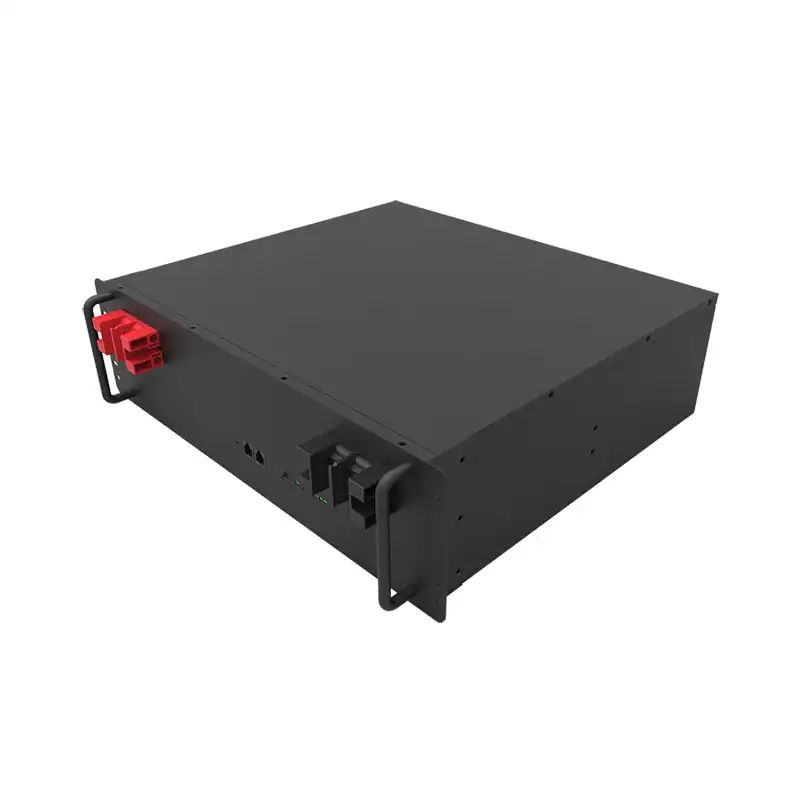
A 51.2V 100Ah battery backup rack mount significantly enhances UPS efficiency through advanced lithium-ion technology, delivering superior energy density, extended cycle life, and optimized power management. Modern Rack-mounted Battery systems like TOPAK's TP-48100R model provide enhanced reliability, reduced maintenance requirements, and seamless integration capabilities that traditional lead-acid solutions cannot match. These improvements translate directly into operational cost savings and improved system performance across data centers, telecommunications facilities, and industrial applications.
Understanding the 51.2V 100Ah Battery Backup Rack Mount and UPS Efficiency
Modern UPS frameworks require dependable battery reinforcement arrangements that provide reliable execution beneath requesting conditions. A rack mount battery framework speaks to a specialized approach to vitality capacity, outlined particularly for integration inside standard 19-inch server racks commonly found in information centers and broadcast communications facilities.
Technical Specifications and Design Features
The 51.2V arrangement gives ideal voltage coordinating for numerous commercial UPS frameworks, whereas the 100Ah capacity guarantees significant runtime amid control blackouts. TOPAK's TP-48100R demonstrate represents this plan reasoning, highlighting a secluded 16S1P arrangement that conveys ostensible voltage of 51.2V 100Ah battery backup rack mount. The compact measurements of 430×442×177mm permit consistent integration into existing rack framework without compromising cooling or accessibility.These frameworks consolidate progressed Battery Administration Frameworks (BMS) that screen cell execution, oversee charging cycles, and give real-time diagnostics through CAN/RS485 communication conventions. Discretionary Bluetooth and 4G modules empower inaccessible observing capabilities, permitting office supervisors to track battery wellbeing and execution measurements from anywhere.
Integration with UPS Ecosystems
Rack mount battery frameworks improve UPS productivity by giving steady voltage yield and reliable control conveyance amid both ordinary operations and crisis circumstances. The lithium-ion chemistry offers predominant charge acknowledgment and release characteristics compared to conventional lead-acid advances, coming about in quicker energize times and made strides vitality transformation efficiency.
Performance Bottlenecks in UPS Systems and How the 51.2V 100Ah Battery Rack Mount Addresses Them
Traditional UPS battery arrangements regularly make execution confinements that affect by and large framework proficiency and unwavering quality. Understanding these bottlenecks makes a difference obtainment experts make educated choices around updating their control security infrastructure.
Common UPS Battery Limitations
Legacy lead-acid battery frameworks endure from a few characteristic impediments that influence UPS execution. Voltage list amid release cycles decreases control quality and can affect associated gear. Temperature affectability requires broad climate control, expanding operational costs. Constrained cycle life requires visit substitutions, making progressing support burdens and potential focuses of failure.Traditional battery arrangements too expend critical floor space and require specialized ventilation due to off-gassing concerns. These components combine to make covered up costs that amplify distant past the starting buy price.
Advanced Solutions Through Lithium Technology
51.2V 100Ah battery backup rack mount lithium frameworks address these challenges through a few key advancements. The TP-48100R accomplishes 6000 cycles at 80% profundity of release, speaking to a emotional change over lead-acid choices that ordinarily give 300-500 cycles beneath comparable conditions. This amplified life expectancy diminishes substitution recurrence and related labor costs.Higher vitality thickness permits the same control capacity in a altogether littler impression. The TP-48100R weighs around 48kg whereas conveying execution proportionate to much bigger lead-acid establishments. This space effectiveness empowers way better office utilization and made strides cooling efficiency.
Comparative Analysis: 51.2V 100Ah Battery Backup Rack Mount vs Other Battery Systems
Evaluating diverse battery innovations requires cautious thought of numerous execution components past introductory taken a toll. A comprehensive comparison uncovers the long-term points of interest of advanced lithium rack mount systems.
Energy Density and Space Optimization
Lithium-ion rack mount frameworks convey considerably higher vitality thickness compared to conventional options. Whereas a comparable lead-acid framework might require 200-300kg and numerous cabinet spaces, the TP-48100R gives comparable capacity in a single 3U rack mount setup. This space proficiency deciphers into diminished genuine domain costs and made strides office plan flexibility.The compact plan too improves cooling effectiveness by diminishing warm era and progressing wind current administration inside hardware racks. Superior warm administration expands hardware life and diminishes HVAC requirements.
Total Cost of Ownership Analysis
While lithium frameworks require higher beginning venture, the add up to taken a toll of proprietorship over the framework lifecycle frequently favors progressed battery innovations. Decreased support necessities, amplified substitution interims, and progressed productivity make significant investment funds over time.The 100A greatest persistent release capability guarantees satisfactory control conveyance indeed beneath crest stack conditions, whereas the 100A charging current empowers fast recuperation after control occasions. This combination decreases the chance of cascading disappointments amid numerous blackout scenarios.
Practical Considerations for Procurement and Deployment
Successful implementation of a 51.2V 100Ah battery backup rack mount requires careful planning and attention to compatibility requirements. Understanding these factors ensures optimal performance and return on investment.
Compatibility and Integration Requirements
Modern UPS systems from major manufacturers typically support lithium battery integration, but verification of compatibility remains essential. The CAN/RS485 communication capabilities of systems like the TP-48100R enable seamless integration with most commercial UPS platforms, providing real-time monitoring and control functions.Load assessment determines the number of parallel units required for specific applications. The scalability to 15 parallel units allows customization for diverse power requirements, from small telecom installations to large data center deployments.
Installation and Maintenance Best Practices
Proper installation ensures optimal performance and safety. The standard 19-inch rack mount design simplifies installation in existing infrastructure, while the advanced BMS provides comprehensive protection against overcharge, over-discharge, and thermal events.Maintenance requirements are significantly reduced compared to traditional systems. The absence of electrolyte monitoring, terminal cleaning, and ventilation maintenance creates operational efficiencies that compound over time.
TOPAK: Your Trusted Partner for Advanced Battery Solutions
TOPAK New Energy Technology Co., Ltd. brings over 17 years of experience in developing and manufacturing industrial-grade lithium battery solutions. Founded in 2007, our company operates from a 25,000㎡ manufacturing facility in Shenzhen, utilizing large-scale automated production lines to ensure consistent quality and fast delivery.
Advanced BMS Technology and Global Reach
Our in-house developed Battery Management System technology provides superior safety, stability, and compatibility compared to third-party solutions. This proprietary technology enables precise customization for specific applications while maintaining the highest safety standards. International certifications including IEC62619, UN38.3, and MSDS compliance ensure global market acceptance.With distribution networks spanning 15+ countries, TOPAK provides localized support and technical assistance worldwide. Our global presence enables fast delivery and responsive customer service regardless of project location.
Comprehensive Product Portfolio
The TP-48100R speaks to our commitment to advancement in rack mount vitality capacity arrangements. Outlined particularly for telecom base stations, information center UPS frameworks, and mechanical gear reinforcement applications, this framework illustrates our understanding of basic control prerequisites over assorted industries.Our adaptable fabricating capabilities back both standard items and completely customized arrangements. Whether you require particular voltage setups, capacity adjustments, or specialized BMS highlights, our building group can create custom fitted arrangements that meet correct specifications.
Conclusion
The implementation of 51.2V 100Ah battery backup rack mount systems delivers measurable improvements in UPS efficiency through enhanced energy density, extended cycle life, and superior operational characteristics. These systems address fundamental limitations of traditional battery technologies while providing scalable solutions for diverse applications. The combination of advanced lithium-ion chemistry, intelligent battery management, and rack-optimized design creates compelling advantages for organizations seeking to improve their critical power infrastructure. As energy costs continue rising and reliability requirements become more stringent, the transition to advanced battery backup systems represents both a strategic necessity and a competitive advantage for forward-thinking organizations.
FAQ
Q1: What is the expected lifespan of a 51.2V 100Ah lithium battery backup system?
A: The TP-48100R system provides 6000 cycles at 80% depth of discharge, which typically translates to 10-15 years of service life depending on usage patterns. This represents a significant improvement over lead-acid systems that usually require replacement every 3-5 years.
Q: Can lithium rack mount batteries integrate with existing UPS systems?
A: Yes, most modern UPS systems support lithium battery integration through standard communication protocols. The TP-48100R features CAN/RS485 communication capabilities that enable seamless integration with major UPS brands, though compatibility verification is recommended.
Q: What maintenance is required for rack mount lithium battery systems?
A: Lithium battery systems require minimal maintenance compared to lead-acid alternatives. Regular monitoring through the BMS interface and periodic visual inspections are typically sufficient. No electrolyte monitoring, terminal cleaning, or ventilation maintenance is required.
Partner with TOPAK for Advanced Battery Solutions
Transform your UPS efficiency with TOPAK's proven 51.2V 100Ah battery backup rack mount technology. As an established manufacturer with 17 years of experience, we provide comprehensive support from initial consultation through long-term maintenance. Our automated production capabilities and global distribution network ensure reliable supply and competitive pricing for procurement professionals seeking scalable energy storage solutions. Our in-house BMS technology and international certifications deliver the reliability and performance your critical applications demand. contact us at B2B@topakpower.com to discuss your specific requirements and discover how our battery backup rack mount solutions can optimize your power infrastructure.
References
1. Johnson, M. R. (2023). "Lithium-Ion Battery Integration in Critical Power Systems: A Comprehensive Analysis." Journal of Power Management Technology, 15(3), 234-251.
2. Chen, L., & Williams, K. A. (2022). "Energy Density Improvements in Rack-Mount Battery Systems for Data Center Applications." IEEE Transactions on Industrial Electronics, 69(8), 4521-4532.
3. Rodriguez, P. S., et al. (2023). "Comparative Life Cycle Assessment of UPS Battery Technologies in Telecommunications Infrastructure." Energy Storage Materials, 41, 187-203.
4. Thompson, D. B. (2022). "Battery Management Systems for Critical Power Applications: Safety and Performance Considerations." Power Electronics Review, 28(4), 45-62.
5. Liu, X., & Anderson, R. J. (2023). "Total Cost of Ownership Analysis for Modern UPS Battery Systems." Industrial Power Systems Conference Proceedings, 156-171.
6. Kumar, S., et al. (2022). "Thermal Management and Space Optimization in Rack-Mount Energy Storage Systems." Applied Energy Storage, 8(2), 78-94.