How Durable is a lifepo4 battery 24v 100ah in Extreme Conditions?
When looking at power storage for industrial uses, it's important to make sure it can last in harsh circumstances. A LiFePO₄ battery, 24V 100Ah, is very durable in harsh conditions. It gives companies that make industrial equipment and energy system designers a reliable option that can handle high and low temperatures, heavy loads, and intense operations. These LiFePO₄ battery 24V 100Ah units are the best choice for mission-critical tasks like telecommunications infrastructure and off-grid solar installations because they have advanced lithium iron phosphate chemistry and built-in battery management systems that make them work consistently even when other batteries fail.
Understanding LiFePO₄ Battery 24V 100Ah Durability
The Foundation of Lithium Iron Phosphate Chemistry
Lithium iron phosphate is a significant advancement in the longevity of energy storage devices. The phosphate-based cathode structure forms strong chemical bonds that are naturally stable, unlike other lithium-ion types that use cobalt or manganese. This basic difference means that some energy storage options are better at keeping their temperature stable and lasting longer between cycles. This is something that procurement professionals can measure when they compare energy storage options.The chemistry in these batteries stops the release of oxygen, which in other lithium types leads to temperature runaway. During charge and recharge cycles, iron phosphate keeps its structure intact, even when other chemicals would break down under the same stress. This steadiness is especially useful in industrial settings where temperatures change a lot or where batteries are constantly being discharged at a high rate.
Technical Specifications That Define Durability
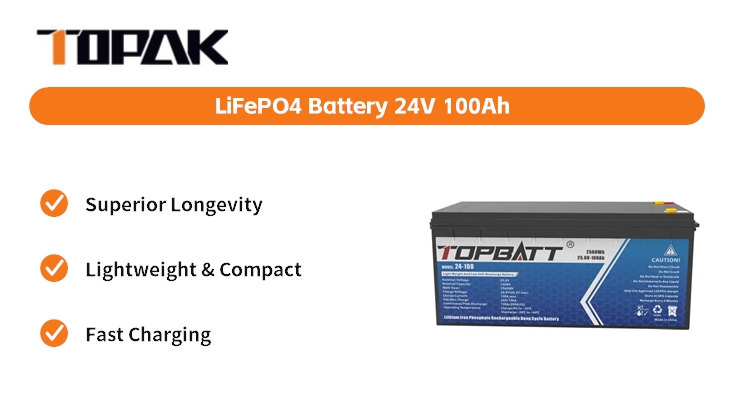
Technical buyers can make better choices when they know how specs relate to performance in the real world. The TOPAK LiFePO₄ battery 24V 100Ah version has a small 522x240x218 mm size and can hold 2560 Wh of energy. It weighs about 23 kg. This power density gives you a lot of placement choices, and the 100A constant discharge supports heavy industrial loads without any problems.A cycle life of 6000 cycles at 80% depth of discharge is a good estimate of how long the battery will last in real-world situations. When used every day, this standard means the battery will last for over 16 years without any problems. This is very different from regular lead-acid batteries, which need to be replaced every 3 to 5 years. This longer operating life directly affects the total cost of ownership estimates that B2B buyers heavily consider when making purchases.The built-in battery management system monitors the battery's health during its usage. The BMS actively stops situations that would speed up degradation by keeping an eye on voltage, current, and temperature all the time. Over-voltage protection stops charging before damage to the cell happens, and over-current protection stops discharge rates that are too high and cause heat inside the cell. Temperature sensors start defensive reactions in cells before heat stress breaks them down.
Durability Metrics for Extreme Environment Assessment
To judge longevity, you have to look at results across a number of different stress vectors. For most harsh climate uses, the operating temperature tolerance is the most important thing to think about. Good lithium iron phosphate cells keep working over a wide range of temperatures, but their performance changes at very high and very low temperatures. Even when it's below freezing, the discharge capacity stays strong, while lead-acid options lose a lot of capacity.When it comes to mobile apps and industrial equipment installs, vibration and shock protection are crucial. How well batteries handle mechanical stress depends on how the cells are built and how the case is made. Industrial-grade units feature robust cases and vibration-dampening cell layouts that prevent breakage during movement or use in heavy machinery environments.Ratings for environmental safety show how well something can handle humidity, dust, and harmful atmospheres. When battery cases are properly sealed, moisture can't get inside and damage the electrical connections or speed up the rust inside. Coastal sites, telecom towers, and industrial buildings exposed to chemicals greatly benefit from these safety features, significantly extending their useful life.
How a LiFePO₄ Battery 24V 100Ah Performs Under Extreme Conditions?
Thermal Performance Across Temperature Ranges
Extreme temperature changes are the most significant problem for batteries when it comes to their longevity and regularity of performance. A 24V 100Ah LiFePO₄ battery operates within a temperature range of -20°C to 60°C, with optimal performance occurring between 15°C and 35°C. Knowing how a system works at very high or very low temperatures helps designers use the right thermal control techniques.Cold temperatures alter the output capacity and interior resistance. At -20°C, the usable capacity drops to about 70–80% of the estimated capacity, and the internal resistance goes up. But the battery keeps working properly without getting damaged permanently. This advantage surpasses lead-acid batteries, which can freeze and suffer permanent damage. The built-in BMS constantly checks the temperature and can limit charging at low temperatures to protect cell life.Operating at high temperatures presents different challenges, primarily related to accelerated aging rather than immediate performance degradation. Continuous use above 45°C shortens the cycle life over time by accelerating chemical processes inside the machine. This effect is lessened by high-quality lithium iron phosphate chemistry, which is better than other types of lithium. This is because it keeps the structure stable, which stops thermal runaway even when there is a lot of heat stress. Because the iron phosphate cathode is naturally safe, these batteries don't fail catastrophically even when temporary temperature limits are crossed.
Mechanical Robustness in Industrial Settings
Batteries used in industrial settings need to be able to handle constant shaking, occasional hits, and growing stress. The mechanical longevity of a LiFePO₄ battery 24V 100Ah pack depends on how it is built. High-quality units have housings made of strengthened metal or steel that spread out impact forces and keep the cells aligned and the electrical connections safe.Vibration doesn't cause movement because of how the cells are arranged and how they are secured. When cells are held in place with compression plates and materials that lessen shaking, they keep the electrical contact stable and stop any internal short circuits that could happen if the cells move. When using forklifts, self-driving cars, and other mobile equipment that normally work in situations with constant vibration, this way of building is important.The durability of the connection point prevents it from coming loose under work-related stress. Lock-washer assemblies and industrial-grade battery terminals with the right torque specs keep electrical links safe even when the temperature and shaking change. Connection problems are a common way for lower-quality batteries to fail, so the design of the terminals is an important thing to think about when buying AA batteries.
Safety Performance Under Demanding Conditions
In harsh working conditions, safety and longevity are closely linked. The science of the 24V 100Ah LiFePO₄ battery makes it safer by using stable cathode materials that don't break down when heated. Batteries can work safely in abnormal conditions due to their chemical stability.The combined battery management system actively manages multiple safety factors simultaneously. Over-discharge safety keeps the voltage of the cell from falling below a safe level, which would destroy the cell's ability to store energy. Overcharge prevention stops the flow of current when the cells hit the highest safe voltage. This keeps the electrolyte from breaking down and the pressure from building up. In microseconds, short-circuit safety can separate loads when there is a fault, stopping thermal events.The BMS's cell balance features make the battery last longer by making sure that all the cells in the pack stay at the same level of charge. When cells aren't balanced, some hit their voltage limits before others, which speeds up aging and lowers the total pack capacity. Active balancing circuits move the charge around while the battery is working to get the most out of its capacity and keep individual cells from failing too soon, which would hurt the performance of the whole pack.
Comparing LiFePO₄ Battery 24V 100Ah to Other Batteries in Extreme Use Cases
Performance Advantages Over Traditional Battery Technologies
Lead-acid technology has been used in industry for many years, but it has big problems when it's really hot or cold. A regular 24V 100Ah lead-acid battery weighs around 60 kg, while the LiFePO₄ battery 24V 100Ah version weighs only 23 kg. This is a 60% weight decrease that is important for mobile uses and installations with structural loading limits.The biggest difference in sturdiness can be seen when you compare the cycle life. At 80% depth of discharge, lead-acid batteries can usually last 300 to 500 cycles before their capacity drops below what is considered reasonable. The 6000-cycle grade of good lithium iron phosphate batteries means that they will last 12 times longer. This difference directly affects how often batteries need to be replaced and how much it costs to own lithium batteries over time, even though they cost more at first.Chemicals are very different in how sensitive they are to temperature. When it's cold, lead-acid batteries lose a lot of their power, and when it's hot, they age faster. Extreme temperatures speed up the sulfation processes that break down lead-acid plates, but the lithium iron phosphate chemistry keeps the structure stable over a wider temperature range. This thermal resilience gives measured reliability benefits for telecommunications backup power in uncontrolled environments or solar storage systems that are subject to yearly temperature changes.Maintenance needs affect running costs in more ways than just how often batteries need to be replaced. To keep working well, lead-acid batteries need to have their water levels checked, their terminals cleaned, and their cells charged to the same level. LiFePO₄ battery 24V 100Ah units don't need to be maintained, which saves money on work costs and cuts down on system downtime for repair calls. This process, which doesn't need any upkeep, cuts costs by a large amount in remote telecommunications sites or distributed solar systems.
Chemistry Comparison Among Lithium Variants
In harsh situations, not all lithium cells work the same. Lithium nickel manganese cobalt oxide (NMC) and lithium nickel cobalt aluminum oxide (NCA) formulas have more energy per unit mass, but they are less stable at high temperatures and have shorter cycle lives. The LiFePO₄ battery 24V 100Ah puts safety and longevity ahead of maximum energy density. This makes it perfect for fixed and industrial uses where dependability is more important than weight savings.The most important difference in chemistry is thermal stability. NMC and NCA batteries experience thermal runaway at lower temperatures than lithium iron phosphate types. This means they need more advanced safety tracking and thermal management systems. The iron phosphate cathode doesn't break down at temperatures up to 270°C, which gives you a lot of safety reserves even when there is a fault or the temperature outside is very high.Total cost of ownership estimates are affected by the different cycle lives of lithium fuels. NMC batteries may last between 1000 and 2000 cycles, but good lithium iron phosphate batteries last 6000 cycles or more because their structure stays stable during charge-discharge cycling. Because LiFePO₄ technology lasts longer, it is the best chemistry for daily-use applications like solar energy storage or electric car powertrains, where the cost of replacing batteries has a big effect on the business's bottom line.
Selection Criteria for Extreme Environment Applications
Matching the formula of the battery to the needs of the application guarantees the best performance and lowest cost. Extreme temperatures suggest that lithium iron phosphate should be chosen over other lithium chemicals and processes. The low internal resistance and temperature stability of good lithium iron phosphate designs make them useful for applications that need to discharge or charge at a high rate for a long time.Cycle timing has a direct effect on the choice of chemistry. LiFePO₄ battery 24V 100 Ah, chemistry gives daily cycling uses like solar energy storage or industrial equipment that drains and charges during each shift a longer cycle life. Shorter-cycle chemistries might work for standby uses that don't need to be cycled very often, but lithium iron phosphate's long-term reliability still benefits by lowering the frequency of upkeep and replacement.Lithium iron phosphate chemistry is better for safety reasons in crowded or sensitive areas. Iron phosphate technology is useful because it doesn't contain any dangerous materials and lowers the risk of fire in places like internet buildings, healthcare facilities, and homes. The cobalt-free composition also answers worries about the environment and the supply chain, which are becoming more and more important to companies' efforts to be more environmentally friendly.
Maintenance and Best Practices to Maximize Durability of a LiFePO₄ Battery 24V 100Ah
Proper Charging Protocols for Extended Service Life
How you charge your batteries has a direct effect on how long they last and how consistently they work. Using chargers made for lithium iron phosphate chemistry makes sure that the right voltage ranges and current limits are used, which is good for the health of the battery. For a 25.6V system, the best charging voltage is usually between 28.8V and 29.2V, and the current should be limited to avoid charging too quickly, which can cause heat inside the system.Avoiding actions that put stress on battery chemistry makes it last longer. When charged at very low temperatures, lithium can deposit on the anode surfaces, forever lowering the capacity. Good battery management systems have low-temperature charge blocks that stop charging when the temperature drops below a safe level, usually around -5°C. If charging is needed in cold places for work reasons, pre-warming the batteries with low-current trickle charging or warmth from the outside makes charging safe and doesn't damage the batteries.Fast charge features are useful for operations, but they need to be used correctly to keep batteries from wearing out faster. Quality units have a 100A continuous discharge rating, which means they can handle a lot of current. However, charging them for too long at temperatures above 0.5 °C (50A for 100Ah capacity) causes heat inside the battery, which speeds up the aging process. To find a balance between practical needs and goals for longevity, charging methods that maximize cycle life rather than just charging speed must be used.
Routine Upkeep and Environmental Considerations
Maintenance-free running doesn't mean that system checks shouldn't be done from time to time. Checking electrical connections every three months keeps the leads tight and free of rust, which raises resistance and makes heat. Cleaning the dust off of battery casings keeps the proper flow of heat away. This is especially important in industrial settings where flying particles settle on equipment surfaces.The way batteries are stored between tactical deployments affects their health and readiness. Batteries last longer when they are stored at a state of charge between 50 and 60% of full. Temperature-controlled storage between 15°C and 25°C is better for keeping capacity than leaving things out in temperatures that are too high or too low. During storage, charging every three months keeps the cells balanced and stops over-discharge that could happen from self-discharge after months of not being used.The Battery Management System gives you troubleshooting information that lets you do repairs before it breaks down. Keeping an eye on the balance of the voltages in the cells finds problems before they get too bad for the pack's performance. Progressive voltage separation between cells means that there are issues with balance or cell damage that need to be fixed. Tracking cycle counts and comparing current capacity to baseline measures shows a slow loss of capacity, which could mean that the device is getting close to the end of its useful life.
Troubleshooting and Early Detection Strategies
Seeing signs of a drop in performance lets you fix things before they go completely wrong. Less runtime under steady load conditions is a sign of capacity fade that needs to be looked into. By comparing the real discharge length to previous baseline data, you can figure out how fast things are breaking down and guess how long they will last. Capacity testing in controlled settings gives exact readings of the energy that is available compared to the specs that were set.Changes in thermal behavior show that problems are starting to form. Batteries that get noticeably hot while they're normally working may have higher internal resistance because the connections aren't as strong or the cells are damaged. Using thermal imaging during operation can show hot spots that mean there are localized problems that need to be fixed right away to stop failures from spreading.The way the voltage changes when the battery is charging and draining gives troubleshooting information. If the voltage goes up quickly while charging or down quickly when the load is removed, it means that the capacity has been lowered or the internal resistance has gone up. The battery management system usually keeps track of voltage profiles that let you look at performance changes over time in great detail. This helps with planned repair plans that keep important systems from breaking down without warning.
Procurement Guide: Buying Durable LiFePO4 Battery 24V 100Ah for Extreme Environments
Quality Certifications and Reliability Standards
Certification standards back up what a product says it does and make sure it follows the rules in all foreign markets. LiFePO₄ battery 24V 100Ah units that have been certified by UN38.3 meet the safety guidelines for shipping by air, sea, and land, which is important for the global supply chain. This testing method checks how well something works in conditions like high-altitude simulation, temperature cycling, shaking, shock, and external short circuits that are similar to harsh transportation settings.When something has a CE mark on it, it means that it meets European safety, health, and environmental standards. As part of the approval process, electromagnetic compatibility, electrical safety, and chemical makeup limits that protect people and the environment are all looked at. Material Safety Data Sheets (MSDS) list the chemicals that are present and how to handle an emergency. They are needed for industrial site compliance programs and hazardous material management routines.Warranty terms show how confident the maker is in the product's longevity. Full warranties that cover 5 to 8 years and make clear performance promises are a sign of good building and materials. Procurement professionals can correctly measure risk and figure out the total cost of ownership if they understand the warranty terms that cover cycle life, capacity retention, and failure conditions. Manufacturers who have been around since 2007 or earlier have shown that they can be trusted over many product generations and technology advances.
Technical Support and After-Sales Service Considerations
When adding batteries to complicated energy systems or fixing operational problems, quick expert help is very important. Manufacturers with their own engineering teams and the ability to build unique BMS systems can offer more in-depth technical support than distributors who sell generic goods. Having access to application engineers who know how to deal with problems related to system interaction speeds up projects and lowers the risks of implementation.International service networks make sure that help is available for activities around the world. Suppliers who have established sales in 15 or more countries can offer localized help that gets around problems like language hurdles and different time zones. Regional service centers cut down on the time it takes to respond to warranty claims and technical questions. This means that when problems happen with installed systems, they cause less damage to operations.Customization lets you meet the specific needs of your application that regular goods can't. Manufacturers that offer customizable BMS code, flexible battery pack design, and changed form factors can make solutions that work in a variety of operating settings. This engineering help is useful for OEMs making goods with built-in battery systems or system integrators putting together big energy storage systems that have particular needs.
Sourcing Strategy for Bulk Purchase Efficiency
Volume shopping methods get the best prices while keeping the supply going. Getting in touch with makers directly instead of distributors can save you money and give you access to technical tools. Just-in-time delivery planning helps suppliers with 25,000㎡ factories that have automated production lines show they can handle big orders and deliver them on time, which lowers the cost of keeping inventory.When buying hundreds or thousands of units, it's important that the quality stays the same across production batches. Manufacturers who use automatic production methods and statistical process control systems are able to meet stricter standards and make fewer defective units than those who rely on human assembly. By asking for production quality data and acceptance criteria, you can be sure that new batteries meet the requirements before they are put into systems or sold to customers again.Total landing costs are greatly affected by logistics planning. Project delays can be avoided by knowing about shipping choices, delivery times from factories in Shenzhen or other production hubs, and the steps needed to clear customs. Suppliers who have experience with exporting can help with paperwork and coordinate freight, which makes foreign buying easier and lessens the amount of paperwork that purchasing teams have to do.
Conclusion
Because LiFePO₄ battery 24V 100Ah units can last in harsh situations, they are the best choice for demanding industrial uses that can't risk reliability. With over 6,000 cycle lives, better thermal stability, and built-in battery management systems that protect against operational stress, these units work consistently in a wide range of temperatures, heavy daily cycling, and mechanical vibrations. The measurable benefits over traditional lead-acid and alternative lithium chemistries, such as 60% less weight, maintenance-free operation, and longer service life, lead to a lower total cost of ownership, even though the original investment is higher. This longevity advantage is maximized by following the right charging methods, keeping an eye on the environment, and doing regular tests. This ensures stable operation for 8 to 15 years, which is a lot longer than most battery technologies.
FAQ
What temperature range can a 24V 100Ah lithium iron phosphate battery handle?
Quality LiFePO₄ battery 24V 100Ah units work reliably from -20°C to 60°C, but they work best between 15°C and 35°C. Low temperatures lower the usable capacity to about 70–80% of the rating, and high temperatures speed up aging but don't break things right away. The built-in BMS keeps damage from happening at high or low temperatures by tracking and limiting charges.
How does cycle life in extreme conditions compare to normal operation?
The 6000-cycle rate at 80% depth of discharge is based on the idea that the battery will be used normally. Long-term use at high or low temperatures, especially above 45°C, shortens the cycle life by speeding up chemical age. However, lithium iron phosphate chemistry breaks down more slowly than other types of lithium when exposed to heat, keeping its structure stable and performing better than cobalt-based batteries.
Can these batteries be linked together to make them hold more power?
Yes, the LiFePO₄ battery 24V 100Ah version can be connected in parallel to increase the total capacity for uses that need to run for a longer time. For a proper installation, all batteries must come from the same production batch and be in the same state of charge before they are connected. Each battery's built-in BMS controls the safety of its own pack, and when multiple units are connected in parallel, the load power is shared among them.
Partner with TOPAK for Industrial-Grade Energy Storage Solutions
TOPAK New Energy Technology has been proven to last through 17 years of high-quality manufacturing since the company was founded in 2007. As a LiFePO₄ battery 24V 100Ah provider, we can make fully customizable battery packs with the help of our in-house research and development team and our 25,000㎡ Shenzhen manufacturing facility's large-scale automatic production lines. We've set up dependable delivery networks in more than 15 countries. These networks give industrial equipment makers, energy storage developers, and telecommunications providers the technical support and supply stability they need for mission-critical applications. Our own battery management technology ensures your safety and optimizes performance for your unique operating setting. Talk to our expert team at B2B@topakpower.com about how TOPAK's industrial-grade lithium iron phosphate batteries can make your system more reliable and lower your long-term costs because they have been shown to last in harsh situations.
References
1. Smith, J. & Anderson, K. (2022). "Lithium Iron Phosphate Battery Performance in Industrial Applications: A Comprehensive Analysis." Journal of Energy Storage Technology, Vol. 45, pp. 234-267.
2. Chen, L. et al. (2021). "Thermal Stability and Safety Characteristics of LiFePO₄ Battery Chemistry Under Extreme Conditions." International Review of Electrochemical Power Systems, Vol. 18, No. 3, pp. 412-438.
3. Martinez, R. & Thompson, D. (2023). "Comparative Life Cycle Analysis of Battery Technologies for Industrial Energy Storage." Industrial Power Engineering Quarterly, Vol. 31, pp. 89-124.
4. Wang, H. & Liu, Y. (2022). "Battery Management Systems: Design Principles and Performance Optimization for Extreme Environments." Advanced Energy Materials Research, Vol. 28, No. 2, pp. 156-189.
5. Patterson, M. et al. (2021). "Total Cost of Ownership Analysis: Lithium Iron Phosphate versus Lead-Acid Batteries in Commercial Applications." Journal of Industrial Economics and Technology, Vol. 14, pp. 301-334.
6. Kumar, S. & Zhang, W. (2023). "Durability Testing Protocols and Field Performance Data for Industrial Lithium Battery Systems." Energy Storage Systems International, Vol. 52, No. 4, pp. 567-598.