How to Install a 12v 200ah lifepo4 lithium battery Easily?
As long as you follow the right steps, installing a 12V 200Ah LiFePO4 lithium battery should be easy. The steps are to securely mount the battery where you want it, connect the positive and negative terminals with the right gauge cables, set up your charging system to meet LiFePO4 requirements (usually 14.2-14.6V for bulk charging), and do some initial testing to make sure the BMS works right. Unlike regular lead-acid batteries, these lithium iron phosphate units can be easily replaced without having to make many changes to the system. The small size and light weight (about 23 kg) make placement much easier than with other energy storage options.
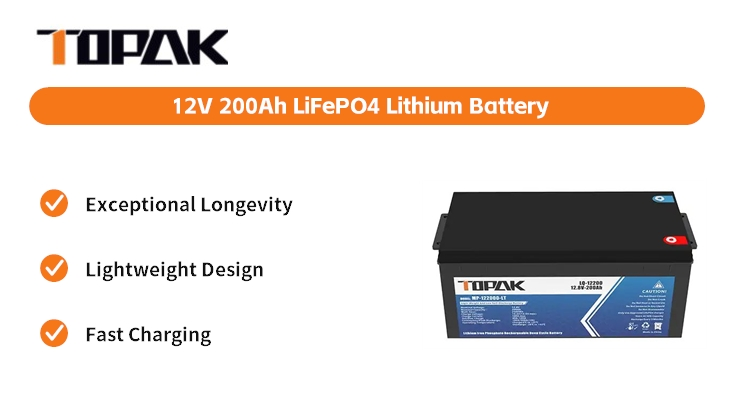

Understanding the 12V 200Ah LiFePO4 Lithium Battery
Using lithium iron phosphate technology has changed how businesses and industries store energy. LiFePO4 cells are more stable than other lithium-ion types because of their chemistry. They also have a longer cycle life and a steady flow of power. This kind of battery is now the one that system designers, equipment makers, and solution providers who need reliable power for mission-critical tasks choose.
Why LiFePO₄ Outperforms Traditional Battery Technologies?
When looking at different ways to store energy, lithium iron phosphate batteries and lead-acid batteries are very different. A 12V 200Ah LiFePO4 lithium battery weighs about 23 kg, which is less than half of the weight of a lead-acid battery bank of the same size. This weight reduction makes shipping easier, saves money on shipping, and makes installation possible for expert teams that don't have special tools.The advantage of high energy density directly leads to better function. These batteries give you more power in a smaller space (522 x 240 x 218 mm), with 2560Wh of useful energy. Manufacturers of industrial equipment like this small design because it fits into existing battery compartments and gives trucks, AGVs, and automatic systems longer run times.
Key Technical Specifications for Procurement Teams
Knowing the technical specifics ensures compatibility with your system. The 12.8V baseline voltage is close to 12V systems. However, the slightly greater voltage usually improves system performance. The 200Ah capacity provides enough energy for heavy-duty industry tasks at this voltage.The greatest continuous discharge rating of 200A lets high-power systems operate without voltage or performance loss. This standard helps telecom base stations under stress, UPS systems with abrupt power needs, and electric mobility applications that need steady torque.Cycle life should be considered when calculating the total cost of ownership. Well-maintained lithium iron phosphate batteries can endure 6000 cycles at 80% depth of drain, compared to 300–500 for lead-acid batteries. This reduces replacements and operational costs over equipment life.The battery management system prevents overvoltage, overcurrent, short circuits, and rapid temperature fluctuations. This clever monitoring safeguards your investment and ensures it functions in all weather. This built-in protection simplifies system design and reduces external part costs.
Certification and Compliance for Global Markets
Certifications from other countries prove that a product meets safety and quality standards. Concerns about shipping and operations are eased by the fact that UN38.3 approval proves that lithium batteries can be transported safely. The MSDS sheet gives important safety information for handling and storing, and the CE mark shows that the product meets European standards for health, safety, and the environment.OEMs and wholesalers that serve markets around the world care a lot about these approvals. Compliance paperwork speeds up the clearance process at customs, meets legal standards, and gives customers peace of mind about the quality of the product. TOPAK is dedicated to keeping these certificates, which shows that we follow the quality control and production standards we set in 2007.
Preparation Before Installation: Essential Checks and Tools
When you're ready, startup problems don't happen, and the battery works at its best from the start. Taking the time to get the right tools, make sure the system works with the others, and set up safety rules saves everyone and speeds up the installation process.
Safety Precautions for Handling Lithium Batteries
Remember electricity safety rules when working with energy storage systems. Always wear electrically rated padded gloves and safety glasses to avoid arc flashes. Although LiFePO4 chemistry is more thermally stable than other lithium chemistries, all battery systems need professional maintenance.Even though LiFePO4 batteries don't off-gas when working normally, make sure their installation has appropriate airflow. This safety safeguard is crucial in tiny places where temperature management affects long-term performance. Keep batteries out of direct sunlight, too much water, and too high or low temperatures to perform effectively.Make sure all equipment is off and unplugged before installing. This simple precaution protects your system's delicate hardware from voltage spikes and unintentional shorts while connecting terminals.
Required Tools and Equipment Checklist
Having the right tools on hand makes installation go more easily and properly. During installation, a digital voltmeter is essential for checking voltage levels, polarity, and links to make sure they are correct. This tool helps find possible problems before they affect how the system works.Size of the wire has a direct effect on how well and safely the system works. For uses close to the 200A maximum continuous discharge rating, use wires with the right rating. Depending on the length of the cable run, these are usually 2/0 AWG or bigger. Most industrial-grade batteries use M8 or M10 bolt connections, so the cable lugs you use must match the way your terminals are set up. Crimping tools of good quality make sure that electrical connections are safe and won't become high-resistance over time.The mounting gear needs change depending on the purpose. Marine and mobile uses need mounting solutions that can withstand vibrations by using the right clamps, hold-down straps, and materials that absorb shock. Rack-mount setups or floor-standing enclosures can be used for stationary installs in energy storage or telecom systems.Torque wrenches make sure that end links are tight enough to meet maker standards without being too tight. The right torque keeps the connection from coming loose from heat cycling and keeps the terminals from getting damaged by too much force. Most battery connections need 8–10 Nm of torque, but you should always check the product paperwork first.
System Compatibility Assessment
Checking your system components' appropriateness helps prevent performance issues and equipment failure. LiFePO4 charge rates and battery voltage must be handled by the inverter. Due to their varied voltage qualities, lithium iron phosphate cells require code changes in several lead-acid inverters.Important connecting factors include charging tools. LiFePO4 batteries require 14.2-14.6V for bulk charging and 13.6-13.8V for float. A misconfigured charger could undercharge the batteries, reducing their capacity, or overcharge them, shutting off the BMS.Solar charge controls for photovoltaic systems must support lithium batteries. PWM controllers may not be as flexible as MPPT controllers, which can be programmed for different batteries. To maximize solar energy, check the controller specs before installing it.The space needed exceeds the battery size. Leave space around the battery for cleaning and airflow. Even though these batteries don't generate as much heat as lead-acid ones, ventilation is crucial for performance and longevity. Plan cable routing to minimize power drop and steep curves that could damage wires.
Step-by-Step Installation Process for a 12V 200Ah LiFePO4 Battery
Following a methodical installation process makes sure that the system works well and helps find any problems before they affect its performance. This methodical approach helps technical staff and procurement teams put ideas into action in a wide range of workplace settings.
Unboxing and Initial Inspection
Before installing your lithium iron phosphate battery, check its condition. Check the package for damage that could indicate hard handling or issues inside. Strong construction protects these batteries during transportation, but writing down the state when they arrive protects everyone and makes problems easier to resolve.Remove the battery from its packaging and inspect it for visible damage. Check terminal posts for damage or rust that could hinder wire joining. Check that all fixing points and terminal covers are still present. This quick eye inspection can prevent you from installing damaged items that may break soon after installation.Check the model's specs against your order's paperwork. Nameplate details include power, volume, and model number. This proof verifies that you received the appropriate product and allows the manufacturer to follow the shipping for warranty purposes. Before mounting the battery in a tiny space, measure it to ensure it fits.
Correct Wiring Practices and Terminal Connection
System dependability and efficiency depend on electrical connectivity. Before connecting, check battery voltage with a voltmeter. When fully charged, a 12V 200Ah LiFePO₄ lithium battery shows 13.2-13.6V, indicating balanced cells and a functional BMS. This standard number helps you detect issues before adding them to your system.Polarity awareness prevents costly mistakes that could damage related equipment. Make positive and negative connections, marked with plus and minus signs and red and black, easy to find. Double-check polarity before tightening linkages. BMS safety features protect you, but reversed polarity can damage inverters, charge controllers, and other system parts.Cable size influences safety and efficiency. Small wires cause resistance, which loses energy as heat and is problematic in high-power settings. Determine voltage drop based on application needs. Try to decrease less than 3% at full load. Oversizing cables offers thermal management greater room and improves system efficiency in high-power installations.Terminal link strength affects long-term reliability. Use electrical contact cleaner or rubbing alcohol to thoroughly clean all contact locations before assembly. Tighten the terminal nuts to 8–10 Nm, depending on terminal size, using a calibrated torque tool. This torque prevents heat cycling from loosening objects and allows them to be tight without damaging the connections or threads.
Mounting Solutions for Different Applications
Proper mounting protects your investment and makes sure it works well in all kinds of settings. The way things are mounted is very different for stationary setups and mobile ones, where movement and shaking make things more difficult.Rack-mount setups or specialized battery cabinets are often used for stationary installs in telecom facilities, data centers, or energy storage systems. Controlled settings with low vibration and stable temperatures are good for these setups. Place batteries so that cables can be routed more easily while still being easy to reach for repair and tracking. Battery racks should have enough air flow around each unit to keep the batteries from moving around by chance.RVs, boats, and electric cars are all mobile uses that need more durable mounting options. Vibration-resistant mounting gear keeps the battery from moving, which could damage the contacts or make connections less secure. Use battery boxes or hold-down systems that are made to work with lithium batteries. These will protect them from the environment and allow for enough air flow. Instead of putting all the stress on the terminal posts, secure fixing points should be spread out across the battery case.Installations of industrial equipment like trucks, AGVs, and material handling equipment need mounting options that can handle vibrations and hits from time to time. Shock-absorbing fastening materials keep batteries from being damaged by mechanical stress in these situations. Make sure that the fixing systems allow for heat expansion and have retention that keeps the battery from moving when the vehicle is speeding up quickly or stopping suddenly.Protecting the battery from the environment makes it last longer in tough circumstances. LiFePO4 batteries can handle changes in temperature better than lead-acid batteries, but keeping them away from high temperatures makes them work better. When installing batteries outside or partially outside, you might want to think about covers that keep them safe from direct sunlight, rain, and flying contaminants while still letting air flow to keep the batteries cool.
Charging Configuration and Initial Testing
Proper charging settings ensure batteries achieve full capacity and don't overcharge, which activates BMS protection. Most lithium iron phosphate batteries require 14.2-14.6V bulk charging, unlike lead-acid batteries' 14.7-15V float charge. For instructions on setting your charger to meet these voltage requirements, consult its packaging.Limiting charging current saves the battery and prevents overheating. These batteries can charge up to 1C (200A for a 200Ah battery), although charging at 0.5C (100A) or less increases cycle life and reduces heat stress. You should measure accepting charges against the time needed to charge your application.Adjusting temperature improves charging efficiency as outside temperatures vary. Many current chargers adjust voltage based on battery temperature. As the temperature rises, the charge voltage drops. This balance prevents the battery from overcharging in warm weather and ensures it charges enough in cold weather. If your system operates at many temperatures, temperature-compensated charging performs better.Initial testing ensures the battery was properly placed before usage. Check the voltage during charging to ensure the BMS keeps the cells safe. Watch for warning lights or safety settings that indicate connection issues or incompatible charging conditions. Record voltage under load, charge acceptance rate, and BMS state indications for future reference.Test the battery with many full charge-discharge cycles. Thus, conditioning balances cells and lets the BMS adjust its calculations for your usage habits. Be sure the batteries are appropriately cooled, and the charging equipment works with your new energy storage system throughout these first rounds.
Maintaining and Optimizing Battery Performance Post-Installation
Following the right care steps will help you get the most out of your investment by extending the battery's useful life and keeping it running at its best throughout the ownership time. Lithium iron phosphate technology doesn't need to be maintained like lead-acid batteries do, but checking and tracking the system on a regular basis can still tell you a lot about its health.
Routine Maintenance and Monitoring Practices
Regularly monitoring electricity helps identify issues before they disrupt operations. Check voltage monthly under known load conditions to define performance standards. If trends fluctuate significantly, the batteries may not be balanced, the BMS may not be calibrated, or the charging equipment may be malfunctioning. By tracking these data trends, you can spot and fix issues early.Terminal checking prevents energy-wasting, heat-producing high-resistance connections. Checking end connections every three months ensures bolts are torqued appropriately and detects rust. Lithium battery terminals rust less than lead-acid ones due to less off-gassing. Oxidation can still occur from severe dampness. Clean any rust with the correct electrical contact cleaner, then check the link's strength.Temperatures can reveal system performance and battery health. Maintain moderate working temperatures during charge and discharge cycles. High temperatures may indicate high-resistance connections, limited ventilation, or too quick a charge/discharge rate. Put temperature monitors on battery casings and terminals to monitor heat-management settings.Good lithium iron phosphate batteries have smart safety features for BMS monitoring. Many recent BMS systems incorporate communication interfaces that provide cell voltages, current flows, temperatures, and protective states. Integrating these interfaces with building tracking systems lets you perform preventative maintenance and receive immediate alerts.
Troubleshooting Common Installation Issues
Undercharging is a regular issue with new devices. Increase the charging voltage as recommended by the manufacturer if your battery doesn't charge fully. Lack of charging power prevents the battery from fully charging, reducing its capacity. Check the charger's settings and consider updating the firmware or modifying configurable factors for LiFePO4.The BMS safety switches on when it finds unsafe operating conditions. Common causes include over-voltage from improper charging, under-voltage from excessive discharge, over-temperature from insufficient cooling, and over-current from excessive loads. Instead of restarting the battery when security goes off, investigate each cause. Correct the root cause to prevent security incidents.If the capacity is lower than specified, the battery may not be properly charged, the cells may need to be equalized, or the user may have excessive expectations. Remember that battery capacity depends on temperature and discharge rate. Higher discharge rates and harsh temperatures reduce useful capacity. Let the BMS and cells settle for a few cycles before assuming capacity issues.BMS tracking system communication issues are mainly caused by connection issues, protocol settings, or incompatible monitoring equipment. Check the cable connections, transmission protocol, and battery-specific monitoring software. Technical assistance tools can quickly and effectively fix communication issues when normal troubleshooting fails.
Strategies for Maximizing Battery Longevity
How well the release is controlled affects the cycle length. These batteries can sustain deep discharge better than lead-acid ones; however, 80% DOD typical discharge extends their lifespan. The 6000 cycle rate assumes 80% discharge depth. Running the battery less profoundly extends its life. Your battery bank should be large enough for your everyday energy needs and a safe shutdown depth.Charge rate optimization balances usability and durability. High charge rates are achievable with lithium iron phosphate batteries; however, charging them routinely at 0.5C or less reduces cell stress and extends their lifespan. Avoid standardizing high-rate charges. Instead, save it for speedy recovery. This works nicely when charging overnight is enough to fully recharge.Battery temperature management maintains performance and life. The optimal temperature range for these batteries is 15°C to 25°C; however, they perform well at other temperatures. Don't use batteries below freezing or over 45°C to prevent them from aging faster and breaking while charging.Storing equipment properly is vital when not in use. When 50–60% charged, store batteries in cool, dry conditions. This charge level prevents the stress and hazards associated with storing a full charge for an extended period. Check stored batteries every three months and charge them if the voltage drops below 13.0V to balance cells and set up the BMS.Regular testing ensures that batteries continue to operate as intended as they age. Every year, controlled discharge tests to a predetermined voltage cutoff measure capacity and degradation trends. Comparing data from previous years helps predict how long something will last and schedule a replacement before an unforeseen failure interrupts operations.
Why Choose a Trusted Supplier for Your 12V 200Ah LiFePO4 Battery Needs?
Choosing the right supplier has a huge effect on the success of a project. It affects everything from the quality of the products and how quickly they are delivered to the professional help and long-term dependability. When performance, longevity, and support needs are taken into account, procurement pros know that the lowest starting price isn't always the best total cost of ownership.
Critical Factors in Supplier Evaluation
Manufacturing skills distinguish reliable vendors from those who can't meet output requirements. Large-scale automatic production lines maintain quality across huge orders while lowering costs to keep pricing competitive. In Dalang Industrial Park, TOPAK boasts a 25,000-square-foot㎡ plant with automated processes to ensure high-quality battery units.When designing solutions for varied needs, technological expertise helps. Offering in-house BMS development shows that suppliers have the tech skills to customize any application. Since our technical team builds BMS systems from scratch, we have full control over safety features, speed optimization, and system compatibility. This functionality is crucial for OEMs that need custom features or standard product adjustments.Certification and quality control prove that products are always the same. ISO9001:2015 and ISO14001:2015 certifications prove that the organization follows strong quality management procedures and cares about the environment when creating items. You care about worker safety and well-being with ISO 45001:2018 accreditation. These management methods ensure consistent processes and reliable commodities that meet foreign requirements.Businesses with international operations or facilities need global marketing potential. Suppliers with distribution networks in 15 or more countries understand local demands, can accelerate delivery, and provide country-specific support. This wide reach helps projects with several locations that need coordinated delivery or local rules that require local experts.
Technical Support and Engineering Services
Pre-sales tech support improves system design before committing. Experienced applications engineers assess your demands, recommend battery arrangements, and identify connectivity issues early in the design process. This interactive approach prevents costly mistakes and ensures that solutions meet operational and basic demands.Custom BMS code can meet application needs that standard items can't. We recommend modifying communication protocols or safety levels or adding specialized monitoring capabilities to integrate with present systems. Industrial tool manufacturers that want to incorporate batteries benefit from this customization.System integration simplifies battery uptake in complex energy systems. Technical teams speed up project deadlines and improve system performance by advising on inverter selection, charge controller setup, and power management. This level of assistance distinguishes skilled manufacturers from ordinary battery vendors.Help after installation keeps operations running when queries or difficulties arise during testing or operation. Access to system-savvy technical specialists reduces downtime and speeds up problem-solving. We stock engineering tools to assist customers from product design to installation and use.
TOPAK's Commitment to Industrial Energy Storage Excellence
Since 2007, TOPAK has provided reliable, efficient, and creative energy storage solutions for a variety of industrial industries. Our offices in Longhua, Shenzhen, position us at the forefront of battery technology. However, our manufacturing unit can satisfy the needs of demanding industrial customers.We have goods for storing green energy, building telecoms infrastructure, making industrial equipment, using electric vehicles, and setting up off-grid power systems. Different applications demonstrate how adaptable our lithium iron phosphate technology is and how our technical team can customize solutions.The 12V 200Ah LiFePO4 lithium battery demonstrates our commitment to industrial-grade quality and efficiency. This battery may replace lead-acid batteries with higher performance, less weight, and a longer service life due to its 2560Wh capacity, 200A continuous discharge rate, and BMS safety.Quality assurance checks every battery before shipping to ensure it meets tight standards. Comprehensive testing confirms electrical performance, BMS usefulness, and safety features. UN38.3 shipping approval, MSDS paperwork, and CE marking demonstrate our commitment to foreign standards and client safety.Custom projects with customized specs, form factors, or BMS settings benefit from our OEM and ODM services. Experts in research and development collaborate with customers to create customized goods. This versatility is crucial for toolmakers who want to add batteries and system designers who must deal with unusual site conditions.
Conclusion
It's easy to install a 12V 200Ah LiFePO4 lithium battery as long as you do it in a planned way and after doing the right things. Understanding the battery's specs, getting the right tools, installing it correctly, and doing regular care will help it work reliably for as long as it's supposed to before replacing it. These lithium iron phosphate batteries are much better than older ones because they are lighter, have a higher energy density, last longer, and don't need any upkeep. To be successful, the implementation must choose high-quality batteries from respected companies that offer technical help, the right certifications, and engineering knowledge. These advanced energy storage solutions give reliable, efficient power to green energy systems, telecommunications infrastructure, industrial equipment, and mobile apps in a wide range of operating settings as long as they are installed and maintained correctly.
FAQ
Can I Replace My Lead-Acid Battery With a 12V 200Ah LiFePO4 Battery?
Lithium iron phosphate batteries can be directly swapped out for lead-acid batteries in most situations. The standard voltage of 12.8V works with 12V systems, and the small size usually fits into battery spaces that are already there. But make sure that the charging tools can handle the power needs of LiFePO₄, which are usually 14.2-14.6V for bulk charging. Some older chargers that were only made for lead-acid batteries may need to be updated or replaced to keep them from undercharging.
How Long Does Charging Take?
How long it takes to charge varies on how much power the charger puts out and how charged the battery is. It takes about 4 to 5 hours to charge a 200Ah battery at 50A from 20% to full power. Higher charge rates shorten this time by the same amount, but keeping regular charging to 0.5C (100A) or less makes the battery last longer. The smart BMS controls charging to avoid overcharging no matter what charging rate is used, protecting even charging equipment that is too big for the job.
What Safety Features Should I Verify?
High-quality lithium iron phosphate batteries have full BMS safety against a number of failure modes. Check that the over-voltage protection stops harm from charging equipment that doesn't work right, the under-voltage protection stops too much discharge, the over-current protection stops loads that are too high, and the temperature protection stops activity when the temperature is too high.
Partner With TOPAK for Reliable Lithium Battery Solutions
Industrial equipment demands energy storage solutions that deliver consistent performance, exceptional longevity, and proven reliability. TOPAK manufactures premium 12V 200Ah LiFePO4 lithium battery systems engineered specifically for demanding commercial and industrial applications. Our in-house BMS technology provides superior safety and compatibility, while large-scale automated production ensures consistent quality across every unit we deliver.As an established 12V 200Ah LiFePO4 lithium battery manufacturer serving global markets since 2007, we understand the critical nature of your energy storage requirements. Whether you're integrating batteries into telecom infrastructure, industrial equipment, renewable energy systems, or mobile applications, our engineering team provides technical support throughout the specification, installation, and operational phases.Contact our B2B team at B2B@topakpower.com to discuss your specific requirements. We offer customized solutions with flexible design options, competitive pricing for volume orders, and reliable delivery backed by our established global distribution network. Visit www.topakpowersolutions.com to explore our complete product portfolio and discover how TOPAK's industrial-grade lithium battery solutions can optimize your operations.
References
1. Chen, M., & Rincon-Mora, G. A. (2019). Battery Management Systems for Large Lithium-Ion Battery Packs. Springer International Publishing.
2. Doughty, D., & Roth, E. P. (2012). A General Discussion of Li-Ion Battery Safety. The Electrochemical Society Interface, 21(2), 37-44.
3. Hu, X., Martinez, C. M., & Yang, Y. (2017). Charging, Power Management, and Battery Degradation Mitigation in Plug-in Hybrid Electric Vehicles. IEEE Transactions on Vehicular Technology, 66(12), 10716-10730.
4. Linden, D., & Reddy, T. B. (2018). Handbook of Batteries (4th Edition). McGraw-Hill Professional.
5. Palacín, M. R., & de Guibert, A. (2016). Why Do Batteries Fail? Science, 351(6273), 1253292.
6. Warner, J. T. (2015). The Handbook of Lithium-Ion Battery Pack Design: Chemistry, Components, Types, and Terminology. Elsevier Science Publishing.