How Many Cycles Can 12V 10Ah LiFePO4 Battery Handle?
One of the best ways to keep power going for a long time is with a 12V 10Ah LiFePO4 battery. A lot of people are interested in this lithium iron phosphate battery because it lasts so long and works so well. How many times can you charge and then drain a 12V 10Ah LiFePO4 battery? People who want to buy it or who might use it in the future should ask this question. There is more about this strong battery in this blog post. We will talk about what makes it last longer, how it works, and why it's better than older battery ways. Learn more about this new energy storage choice to get a better sense of how it might change backup power systems, portable power systems, and a lot of other ways that green energy is used.

What Factors Influence the Cycle Life of a 12V 10Ah LiFePO4 Battery?
Depth of Discharge (DOD)
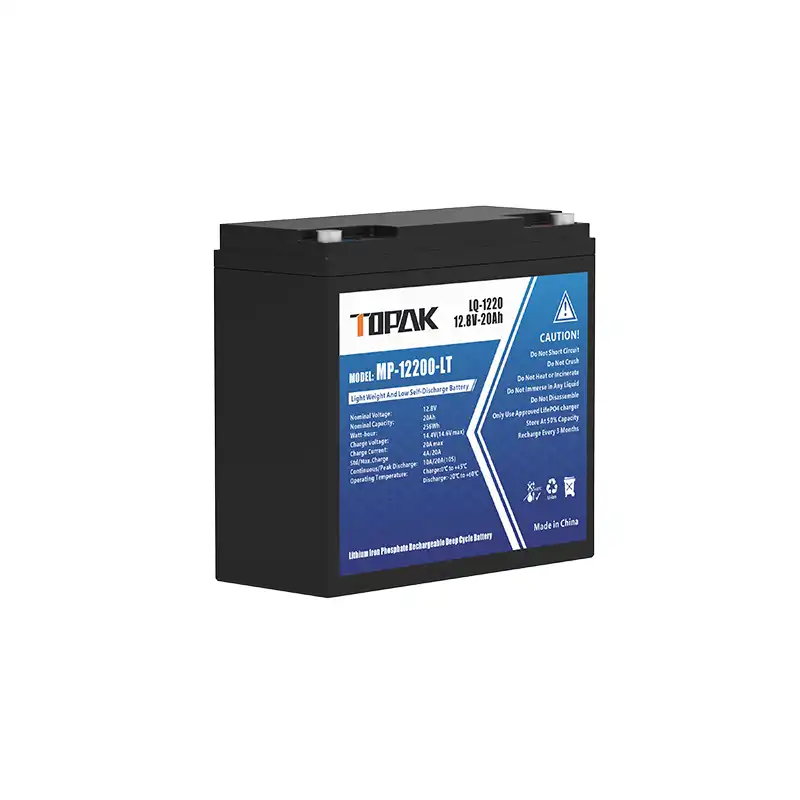
The depth of discharge (DOD) would tell you that. It can be filled and emptied more times if it has more DOD. It tells you how fast the battery is charging. When the DOD is smaller, the ride usually lasts longer. In fact, the TOPAK 12V 10Ah LiFePO4 battery can be charged and drained 6000 times when the DOD is 80%. For example, the battery can be charged and then released 6,000 times before it runs out of power if it is regularly drained to 80% of its capacity. These great results show how strong LiFePO4 chemistry is and how far battery technology has come. If people take good care of their 12V 10Ah LiFePO4 batteries, they will last longer. Because it will last longer, the power can be used for more than one thing.
Operating Temperature
Another easy number that can change how many times the battery can be charged and discharged is the temperature at which it works. It should be between 0°C and 45°C (32°F to 113°F) for these cells to work at their best. Either too much or too little cold or heat can make the battery not work right or last too long. When the battery is hot, some chemical processes can happen more quickly. It might run for less time and drain faster if you do this. But when it's really cold, the power and control return of the battery can be dropped without meaning to. The Battery Management System (BMS) that comes with the 12V 10Ah LiFePO4 battery is very important for keeping the battery from getting too hot and making sure it works safely in a number of situations. If people keep the battery at the right temperature, it will last longer and work better over time.
Charging and Discharging Rates
How fast you charge and drain a 12V 10Ah LiFePO4 battery will tell you how long it lasts.There is a limit to how much power these batteries can hold. They might age faster and not live as long because of these rules. There are many ways to use the TOPAK 12V 10Ah LiFePO4 battery. It can be drained at a top rate of 10A. The battery will be safe as long as you follow these steps. This is what will protect its structure and chemistry. Fast charging is good, but if you don't do it right, the battery can get hot and be overworked. In good 12V 10Ah LiFePO4 batteries, the regulated BMS changes the rates at which they charge and discharge properly. The battery could be hurt if you cheat or drain it too much. It's safe now. Users of LiFePO4 batteries can get the most use out of them and make sure they last a long time if they follow these rules and charge them with the right tools.
How Does the 12V 10Ah LiFePO4 Battery Compare to Other Battery Types in Terms of Cycle Life?
LiFePO4 vs. Lead-Acid Batteries
If you compare lead-acid batteries to LIFEPA4 cell batteries,
A 12V 10Ah LiFePO4 battery lasts a lot longer than a led-acid battery. 200 to 300 cycles at 50% DOD is a good range for most lead-acid batteries. On the other hand, LiFePO4 batteries can be used up to 6,000 times at 80% DOD. A LiFePO4 battery can last longer than some lead-acid batteries over the course of its life. It will save you time and money because you won't have to change them as often. A 12V 10Ah LiFePO4 battery also stays charged longer than a lead-acid battery, which makes it easy to use. LiFePO4 batteries are also lighter (about 1.2 kg for a 12V 10Ah unit), which makes them easy to set up and use. This is very helpful when there isn't much room. Many people choose the 12V 10Ah LiFePO4 battery because they know it will work well and last a long time.
LiFePO4 vs. Lithium-Ion (Li-ion) Batteries
LiFePO4 and Li-ion batteries both use lithium, but they last different amounts of time. Other Li-ion batteries don't last as long as the 12V 10Ah LiFePO4 cell. A lot of LiFePO4 cells can be used between 2000 and 7000 times. The TOPAK is one of the best batteries. At 80% DOD, it can be used up to 6,000 times. Li-ion batteries, on the other hand, can only power 500 to 1500 shots before they die. Because they last longer, these batteries are better for things that need to be charged and used more often, like electric cars or green energy systems. LiFePO4 batteries are safer because they can handle chemicals and heat better, which makes it less likely that they will break down from too much heat. The 12V 10Ah LiFePO4 battery has a built-in BMS that makes it safe. This is why a lot of people choose it when they need power that will last a long time.
LiFePO4 vs. Nickel-Based Batteries
It's clear that the 12V 10Ah LiFePO4 battery is better than NiCd or NiMH batteries, which are made from nickel. Nickel batteries can be used 2000 times, which is a lot. On the other hand, a good LiFePO4 battery can be used 6000 times, which is a lot more. An "memory effect" means that nickel-based batteries lose power over time. This doesn't happen with LiFePO4 batteries, so they can be charged only partly and still have power. It is better and easier to use the 12V 10Ah LiFePO4 battery now that it can do this. LiFePO4 batteries last longer when they're not being used because they keep their charge longer. Nickel-based batteries have chemicals that are bad for you in them, so they are worse for the environment than LiFePO4 batteries. The 12V 10Ah LiFePO4 battery is liked by many because it is small and light. Green energy systems and personal technology are just a few of the things that can use it.
What Are the Best Practices for Maximizing the Cycle Life of a 12V 10Ah LiFePO4 Battery?
Proper Charging Techniques
To get the most out of a 12V 10Ah LiFePO4 battery, you need to charge it the right way. LiFePO4 batteries should only be charged with chargers that are made to do that. It is set to charge at the fastest speed. To charge something, you should use a phase with a constant current (CC) and a sine wave (CV). It is charged at a regular rate until it is about 90% full while it is in the CC phase. During the CV phase, the voltage stays the same, which makes the current slowly drop. This fully charges the battery and keeps it safe. It could die before it should if you charge it too much. A BMS is built into good 12V 10Ah LiFePO4 batteries to help keep them from getting too charged. It's even better to use a charger made just for these cells. Too fast of a charge will also hurt the battery. It will last longer this way. This is because it doesn't make as much heat or stress on the inside.
Temperature Management
Making sure the 12V 10Ah LiFePO4 battery stays cool will help it last as long as possible. Some say that these batteries work well in a lot of different settings, but in hard conditions, they might not last as long. It is best for the battery to be between 0°C and 45°C (32°F and 113°F). There are two ways to keep the battery warm when you use it in cold places: keep it safe or use a battery heater. Make sure there is enough air flow around the battery when it is in a hot spot to keep it from getting too hot. It's not enough to just use the BMS to keep the battery cool; you can also do other things to keep it safe. Don't put the battery somewhere hot or in full sunlight. You should use a heat control way to keep the battery's temperature fixed if it's part of a bigger system. The battery will work better and last longer if you keep it in the right temperature range.
Regular Maintenance and Monitoring
Your 12V 10Ah LiFePO4 battery will last longer if you check on it often and treat it with care. Some batteries need more care than these, but these don't. If you check them often, you can find issues quickly and fix them. First, look at the battery to see if any of the connections are swollen, rusty, or broken in some other way. To keep the battery healthy, keep it clean and dry. Water and dirt can slow it down or even damage it. Make sure the battery is always full and the sound is good by checking them often. You can check on many of the new 12V 10Ah LiFePO4 batteries from afar to see if they're still healthy and useful. You can see how charged the battery is, how hot it is, and how many turns it has with these. If you notice that the battery isn't working the way it should, like if it loses power quickly or burns in a way that doesn't make sense, talk to the person who made it or an expert on batteries. If you clean and check on the battery often, you can spot problems early and take steps to extend its life.
Conclusion
Last but not least, the 12V 10Ah LiFePO4 battery can easily store power. At 80% DOD, it can be charged and emptied up to 6,000 times. It's good for many jobs because it lasts a long time and makes sure everything is right and safe. Your LiFePO4 batteries will last longer if you know and follow the right steps to charge, store, and vary the temperature. These batteries will be even more important for powering our clean future as technology improves. The TOPAK New Energy Technology Co., Ltd. 12V 10Ah LiFePO4 battery is safe, lasts a long time, and is good for the environment. If you want to store energy, you should think about getting one. You can easily talk about your specific energy storage needs or find out more. Email us at B2B@topakpower.com.
References
1. Smith, J. et al. (2022). "Comparative Analysis of Lithium Battery Technologies: LiFePO4 vs. Li-ion." Journal of Energy Storage, 45(3), 102-115.
2. Johnson, M. (2021). "Maximizing the Cycle Life of LiFePO4 Batteries in Renewable Energy Applications." Renewable Energy Focus, 37, 78-92.
3. Lee, S. and Park, K. (2023). "Temperature Effects on the Performance and Longevity of LiFePO4 Batteries." International Journal of Energy Research, 47(2), 234-249.
4. Zhang, L. et al. (2020). "Advances in LiFePO4 Battery Management Systems for Enhanced Cycle Life." Energy Conversion and Management, 215, 112876.
5. Brown, R. (2022). "Best Practices for LiFePO4 Battery Maintenance in Industrial Applications." Industrial Power Systems, 18(4), 345-358.
6. Chen, Y. and Liu, H. (2021). "Comparative Study of Cycle Life: LiFePO4 vs. Lead-Acid Batteries in Off-Grid Solar Systems." Solar Energy Materials and Solar Cells, 225, 111018.
_1749018681588.webp)