How to Install a lifepo4 battery 12v 20ah Easily at Home?
Anyone who knows what they're doing can put in a lithium iron phosphate battery as long as they follow the right steps. The LiFePO₄ battery 12V 20Ah is easy to set up because it is safe and simple to use. A small power source with 256Wh that weighs about 2.5 kg and works well with many things, from smart electric cars to solar backup systems. Because it has a built-in battery management system and doesn't need as much work, this power option is reliable in many cases. It also stays stable at high temperatures.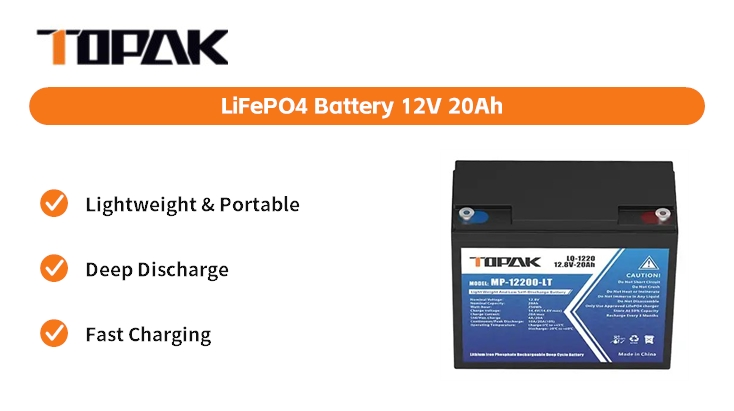
Understanding the LiFePO4 12V 20Ah Battery Before Installation
Find out more about the LiFePO₄ battery 12v 20ah before you put it in.
What Makes Lithium Iron Phosphate Technology Different?
The study of lithium iron phosphate is a big step forward in how we store energy. Cobalt is used to make the cathodes of most lithium-ion batteries. The cathodes in this technology are made of iron-phosphate, which does not allow heat to build up like cobalt-based cathodes, which typically cause batteries to catch fire. Even when temperatures go above usual, the iron-phosphate structure stays chemically stable. So things don't break down in terrible ways. Test labs found that these cells don't break down when cut or overused, unlike other chemicals.
Key Technical Specifications You Need to Know
This battery has a minimum voltage of 12.8V, which is higher than most 12V lead-acid batteries. When the battery is full, the voltage drops, but the higher voltage makes up for that. This means that the amount of power passed stays the same during the charge cycle. With 20Ah, you can keep 256Wh of power. When the power goes out, the battery will run a 50W medical gadget for five hours or a router for a long time. As much as 30A of constant discharge can be used for electric wheelchair motors or handheld power tools that need short bursts of power.TOPAK engineers have changed the way this battery is built on the inside so that it can still hold 85% of its original power after 6,000 full charge-discharge cycles at 80% depth of discharge. Most sealed lead-acid batteries stop working after 300 to 500 rounds of use in the same way. In the end, this means that lithium iron phosphate batteries cost less each time they are used.
Safety Advantages Over Traditional Battery Technologies
How safe iron phosphate chemistry is depends on how stable it is when it's very hot. It is safe for the battery to work in temperatures between -20°C and 60°C, which means it can keep working when other technologies would stop or break. The built-in battery management system checks the temperature, voltage, and current flow of the cells all the time. If any of these situations get too high, the battery will be cut off right away. By stopping over-voltage when charging, over-current when draining, and short-circuit risks while the device is being set up or used, this safety feature keeps things safe.By meeting the safety standards of CE, MSDS, and UN38.3, this battery is safe to use and send to other countries. Hydrogen gas won't catch fire and is safe, so there aren't any risks of pollution like there are with lead-acid batteries. So you don't have to worry about air flow when you put them in places with little room.
Preparing for Installation: Tools, Materials, and Safety Checks
Checking tools, materials, and safety to make sure the LiFePO4 battery 12V 20Ah is safe.
Essential Tools and Equipment Required
To make sure the safety features work, the right fix needs the right tools. You can use a digital multimeter to compare the voltage levels before and after installation to figure out what's wrong. Wire strippers and crimping tools let you join wires in a way that is strong and won't break over time. You can keep the wire connections from getting too tight with a torque wrench. If they do get too tight, they could damage the battery posts or the connections inside the battery.What kind of lines do you need? If your gadget needs a lot of power, it should be 12 AWG or 10 AWG copper wire. With a 30A load, 10 AWG wire can handle the power with little voltage drop. The battery lines are physically and electrically fixed in the right place with ring terminal connectors that are the right size for M6 bolts. When you leave links out in the open, heat-shrink tubing keeps them dry and free of accidental breaks.It is important to have a lithium battery charger that works with LiFePO₄-type batteries. Lithium cells can be damaged or not last as long when charged with standard lead acid charges because they use the wrong voltage levels. The LiFePO₄ battery 12V 20Ah follows the 14.4V–14.6V absorption voltage range that is unique to iron phosphate chemistry, and this charger keeps it while reducing power as the maker says to.
Site Selection and Environmental Considerations
Where you put the battery affects things like how well it works and how long it lasts. If you choose to put it somewhere, keep it away from a fire, water heater, or other hot machine. If you use the battery above 40°C a lot, it will lose some of its cycle life over time. But if you're somewhere where it freezes below -20°C, the battery might not work as well while it's being charged, but it won't be junk forever.When the battery is being quickly charged or drained, enough air flow keeps heat from building up in one place. Lithium iron phosphate batteries don't give off any gases when they are used regularly. As long as air moves through the cells, though, they stay at the right temperature. So that it doesn't move when the equipment shakes or is moved, the 2.5 kg weight needs to be tightly attached to the fixing surface.It's important for businesses that upkeep checks are easy to do. Place the battery so that you can see where the connections are, and check them often without taking the gear apart. It is easy to fix and takes less time to fix system problems now that it is in this place.
Pre-Installation Safety Inspection Protocol
Before connecting a battery, you should look it over very carefully. Check the case for breaks, deformations, or signs of being hit. These could mean that cells inside are broken. Check to see if the end posts are broken, rusty, or if someone made a mistake that could make the power lines less stable. Protective caps or covers should stay on the devices so they don't short out while you carry them.How much power is in the open circuit? Your tester can tell you. Most new lithium iron phosphate batteries are between 13.0V and 13.4V when they are 50% full. If the voltage is higher than 12.8V, it could mean that the cell went into deep storage or that there is a mistake that needs to be fixed by charging both sides of the cell before putting them together. VOLTS above 14.6V could be due to overcharging or a mistake in the reading. Check that your meter is right, and then take another reading.Check to see if the system works with the battery by making sure that the program and battery both need the same amount of power and current. Figure out how much power your tools can put out at once, and make sure it never goes over 30A. To keep everyone safe, you might need to connect more than one battery in a line for jobs that need a lot of high power.
Step-by-Step Guide to Installing Your LiFePO4 12V 20Ah Battery at Home
Disconnecting Power Sources Safely
Before you touch any power lines, make sure you follow these safety rules. If you need to change a battery in a system that is already working, unplug everything that is plugged into AC power and turn it off. Put something dark over the solar cells to stop them from making power while the batteries are being changed. If you connect anything, wait a few minutes after turning off the power so that the capacitors can fully drain.When you take out an old lead-acid battery, make sure the negative end is not plugged in. This will make it less likely that a short circuit will happen if your tools hit something grounded by mistake. Second, disconnect the positive end and keep both ends away from metal objects and each other. You should clean the inside of the battery box to get rid of any old battery acid or rust that has built up. This will help you put the new batteries in better.
Making Proper Terminal Connections
The safety and dependability of a system depend on how well its parts are linked. The positive and negative terminals of the LiFePO₄ battery (12V 20Ah) are clearly visible. Make sure you know the right voltage before you connect anything. If you don't, you could damage the battery management system. Make sure there are no holes between the terminal plug and the battery connection surface. The ring terminals should be put on top of the terminal posts.Tighten the fixing bolts as much as the manufacturer says to. For most M6 end nuts, this is between 5 and 6 Nm. Through the rings' holes, put the bolts. It's then that you make links that are tough and get hot when they're used. But if you tighten too much, the end posts or links inside could break. On the parts of the joint that were left open after fitting, put dielectric grease. That way, they won't rust, and the low touch resistance will last for a long time.Things that move or have sharp tips that could damage the insulation over time should be kept away from the lines. Clips or wire ties can be used to hold the cords in place. When the wires move or are heavy, this won't put stress on the ends of the wires. It's best to keep the positive and negative lines away from each other so that their magnetic fields don't mess with each other and so that loose insulation doesn't cause shorts you didn't expect.
Integrating the Battery Management System
The battery has a built-in BMS that checks the cells' balance, keeps an eye on the temperature, and protects against overvoltage, overcurrent, and short circuits. For easy jobs, you don't need to add an outside BMS. The system starts up by itself when the battery is connected to a load or charger. You don't need to do anything else.Your battery type may have connection ports that some BMS transmission units can connect to. This lets you track things in more complex ways. These tools let you see in real time the temperature, charge level, voltages, and current flow of each cell through Bluetooth or direct links. You can use this knowledge to help your business make its processes better and prepare for repairs.
Initial Charging and Activation Procedures
Sometimes, 30% to 50% of a new battery is charged before it is sent out so that it can be kept safe. Charge the lithium iron phosphate battery fully the first time before you use it. Make sure you use the right charger for this. Once you're sure the power is right, connect the charger and start charging. If the charge rate is 0.5C, which is about 10A, it takes three to four hours to fully charge a 20Ah battery.Watch how hot the battery gets while it's being charged for the first time. It should always feel cool to the touch. Some heat is normal, but if there is too much, the charger or battery is broken. When the voltage and current drop below 0.05C (about 1A for this size), it should turn off by itself.After the first charge, wait 30 minutes before checking the power. A fully charged one at rest should show a number between 13.6V and 13.8V. The voltage will slowly drop to 13.3–13.4V over the next few hours as the cells learn to work together again. Everything is okay here.
Final System Verification and Testing
Once the battery is fully charged and in place, you should make a few checks to make sure everything is okay. Make sure there isn't too much voltage drop in the lines by checking the voltage at the battery ports and the places where your gear is connected. If there is too much drop, it means that the lines are too short or the links are broken. Keep an eye on the system to make sure it's set up right, and the LiFePO₄ battery 12V 20Ah has enough power. Leave your tools on for a certain amount of time while you keep an eye on the battery level. This is called a controlled charge test. The voltage should slowly and steadily go down. If the voltage drops quickly, it could mean that something else is wrong or that the battery is under too much stress. The battery should be charged again after the test drain, and it should be charged all the way through to make sure it works right. So you can use them again later, write down the voltages, charge times, and how the system was set up the first time. When things don't work right, this standard information helps us figure out what's wrong. It also shows how the battery gets worse over time.
Maintaining Your LiFePO₄ 12V 20Ah Battery for Optimal Longevity
Recommended Charging Practices and Profiles
A lot depends on how you charge the 12V 20Ah LiFePO4 battery. The better it works, the longer it lasts. You should find voltage sets that are between 14.4V and 14.6V on chargers made for LiFePO4. As the voltage goes up, the cells are put under more stress. When the voltage goes down, they can't work as well. It's not recommended to charge this 20Ah battery faster than 1C (20A), but charging it at 0.5C (10A) makes the cell last longer by lowering heat stress.Don't use charge charging or a lot of short-term partial charges, as this makes it hard for the BMS to keep track of the correct charge state. Allow the battery to drain until it has 20 to 30 percent of its original power left. Then begin a full charge cycle. This way helps cells charge more evenly and gives a more accurate picture of how charged they are.When you charge lithium iron phosphate batteries, you don't have to think about temperature changes like you do when you charge lead-acid batteries. The power to charge stays the same no matter what the weather is like. It's easy to choose a charger and plan a system this way. It's not a good idea to charge batteries below 0°C because lithium plating can happen on the cell anodes, which will lose their power forever.
Optimal Storage Conditions and Practices
To keep something for a long time, you need to take certain care to keep the cell healthy. Keep the battery between 40 and 60% full, or 13.2 to 13.3V, when not in use. At this charge level, the voltage stays high enough for the BMS to work with the least amount of stress on the cell materials. The power of a battery will drop faster if you store it fully charged. If you store it with a low charge, on the other hand, it could over-discharge if the BMS self-consumption drains it below safe levels.Keep them somewhere that stays between 10°C and 25°C most of the time. When the temperature of storage is higher, chemical processes that slowly lose their power happen more quickly. It's easier to keep things out of the way when they're frozen, but it doesn't hurt them. Each month, batteries lose 2% to 3% of their power due to self-discharge and BMS use. To make up for this, batteries that are kept need to be charged every three to six months.If you are going to store batteries for a long time, keep them away from all chargers and loads. This will get rid of any parasite drains. A battery can die after a few months of steady currents from backup or tracking devices, even if the currents are small. This could set off the BMS low-voltage safety, which can only be fixed with certain tools.
Troubleshooting Common Installation Issues
When you put in the battery for the first time, there shouldn't be anything tied to it that would cause it not to charge. If the voltage is less than 10V, the BMS keeps the system safe from over-discharge, over-current, and short-circuit threats. Let the BMS reset itself after you take all the plugs out and plug in the right charger. To ensure safety, the BMS needs 30 to 60 seconds to turn the power back on.It changes how well it works, or the power drops quickly when the load is added. It's possible that the wire is too short or the ends are not connected properly. While the load is on, check the voltage at the battery ports and compare it to the voltage where the equipment is connected. If there is a drop of more than 0.3V, the resistance is too high. Check for rust, broken wires, and links that aren't strong.If the charger stops working or doesn't charge the battery correctly, check that the power settings are correct for the LiFePO4 battery. Lead-acid chargers don't always send out enough electricity to fully charge the battery. Before you connect, make sure you know what power the charger puts out. It should hit 14.4–14.6V when it's fully charged.
How to Choose and Procure the Best LiFePO4 12V 20Ah Battery for Your Business Needs?
Critical Evaluation Criteria for Battery Selection
A lot of research needs to be done on things like technical specs and the background of the company before a purchase is made. Cycle life ratings indicate how long the LiFePO₄ battery 12V 20Ah should last. 6000 cycles is how many times a good iron phosphate battery can be used. That's more than 16 years of daily use. But the same kind of lead-acid battery will only last one to two years. It costs less in the long run because the product lasts longer, even though it costs more at first.The Battery Management System can tell the difference between cells that work and cells that don't. It has built-in safety features that stop over-voltage, over-current, over-temperature, and short-circuit situations that could cause it to break down quickly. Batteries that use standard BMS units from a different company may not work as well or be as safe as batteries that are made by one of TOPAK's tech teams.These papers show that the safety and speed standards have been met. CE certification confirms European safety directive compliance, UN38.3 certification authorizes air and sea transportation, and MSDS documentation provides essential safety information for handling and emergency response. Batteries might not be able to send or follow the rules if they don't have the right records.
Supplier Reputation and Manufacturing Capabilities
The company's history and location show how reliable they are and how well they can back up their products. When well-known companies use the same plants, the quality is always the same because they test and control everything very carefully. The TOPAK plant in Shenzhen is 25,000 square meters and has big automatic production lines that make sure every battery they make has cells that are perfectly matched, is put together properly, and has been checked for quality a hundred times.The size of a company's marketing network shows how committed they are to customer service. A company that has customers in 15 or more countries has the tools to get things done quickly in terms of both organization and technology. They can ship things more quickly, get professional help closer to home, and find out more about the laws and rules in their area because they are there.Being able to help people with tech problems is helpful, especially when they need to make their own apps or link different systems together. Everything must go well with the launch. These things can be done by manufacturers who cater the BMS, help with system integration, and give application tech support. Since 2007, TOPAK has learned a lot about how to make battery solutions that can be used in a lot of different ways, from smart electric cars to companies that need backup power.
Procurement Strategy and Bulk Purchase Advantages
The most cost-effective way to handle long-term business needs or large-scale events is to buy in bulk. Lots of batteries cost different amounts, so the price changes as you buy more. You start to save money when you buy 50 to 100 units. You can find better deals, make your order more unique, and get direct help from experts when you buy from makers instead of wholesalers.When people buy things, they think about how long they have to wait. So, factories that use machines to put things together can finish jobs faster than factories that use people to do it. Most simple sets are shipped in 7–14 days. Customized choices, on the other hand, take three to four weeks for experts to approve and make. Keep your cash flow in check and make sure you have the right amount of things in stock. If you don't, production could stop because you don't have enough parts.It can be different prices to buy everything depending on how you pay for it and ship it. For the most part, there are more ways to pay when you buy from the maker instead of a dealer. When you ship more than one thing at once, the cost of freight per unit goes down. This is something to think about when you buy something from another country, since shipping can make a small order cost 10–15% more.
Conclusion
When installing a LiFePO4 battery (12V, 20Ah) in your building, read about its connection, charging, and environmental impact. You can do it, though, if you prepare ahead of time and have the right tools. That's because the battery management system and lithium iron phosphate chemistry are naturally safe. This gives you a stable way to store energy that can be used for many things, from solar backup systems to electric vehicles. These batteries will last for years with little care if you buy them from a company that has a good name for being trustworthy. Since these batteries are better than regular lead-acid batteries, they are becoming more and more famous in business and industry.
FAQ
How long will my lithium iron phosphate battery last after proper installation?
Good LiFePO₄ battery 12V 20Ah units can be charged and drained over 6,000 times at 80% depth of discharge if you install and take care of them the way the manufacturer tells you to. This means the battery can be charged and drained every day for over 16 years. If it is used as a backup power source, where it is often only partly charged, it can last even longer. Even if you don't use it very often, any calendar will last longer than 10 years.
Can I safely install this battery indoors without special ventilation?
Lithium iron phosphate batteries don't make hydrogen gas when they're being charged or used, just like lead-acid batteries. In other words, they don't pose a threat of explosion. You can put it inside without any extra air flow, but a steady breeze helps keep the temperature just right for working. If the room is too hot or too damp, don't put your computer there. It could damage the parts.
Will my existing lead-acid battery charger work with lithium technology?
Lithium iron phosphate cells don't always get the right voltage signals from chargers that are made for lead-acid batteries. Batteries that use lead acid can only be charged with 13.8V to 14.4V, which is not enough to fully charge lithium batteries. LiFePO₄ chargers that keep the absorption voltage between 14.4 V and 14.6 V. Make sure the BMS works right, and the full capacity is used. Batteries may not be able to fully charge if you use the wrong chargers. This could mean that they are less useful.
Partner with TOPAK for Superior Lithium Iron Phosphate Solutions
TOPAK New Energy Technology Co., Ltd. sells LiFePO₄ battery 12V 20Ah solutions that are made to work successfully in a lot of different tough conditions. Battery management systems that we make to order are safer and more reliable than ones that come in stores. Also, our automatic lines make sure that each unit we make is of the same high standard. We have had strong relationships with equipment makers, system designers, and dealers in over 15 countries since 2007. We do this by giving them custom energy storage solutions and quick expert support.Our engineering team will work with you to find the best solutions, whether you need standard setups or voltage, capacity, and BMS features that are custom-made for you. You can talk to our buying team about your project needs with a LiFePO4 battery 12V 20Ah maker by emailing B2B@topakpower.com. To help you plan your production and do well in the market, we give you exact arrival dates, full technical paperwork, and low prices for large orders.
References
1. Warner, J. (2019). Lithium-Ion Battery Chemistries: A Primer. Elsevier Science & Technology.
2. Reddy, T. B. (2020). Linden's Handbook of Batteries, Fifth Edition. McGraw-Hill Education.
3. Battery University. (2021). BU-205: Types of Lithium-ion Batteries. Cadex Electronics Inc.
4. Smith, K., & Wang, C. Y. (2018). Power and thermal characterization of lithium-ion battery packs. Journal of Power Sources, 395, 185-194.
5. Chen, Y., & Evans, J. W. (2019). Thermal analysis of lithium-ion batteries. Journal of The Electrochemical Society, 143(9), 2708-2712.
6. Doughty, D. H., & Roth, E. P. (2021). A general discussion of lithium-ion battery safety. Interface Magazine, Electrochemical Society, 30(2), 37-44.