How to Optimize a 12v 150ah lifepo4 Battery for Daily Use?
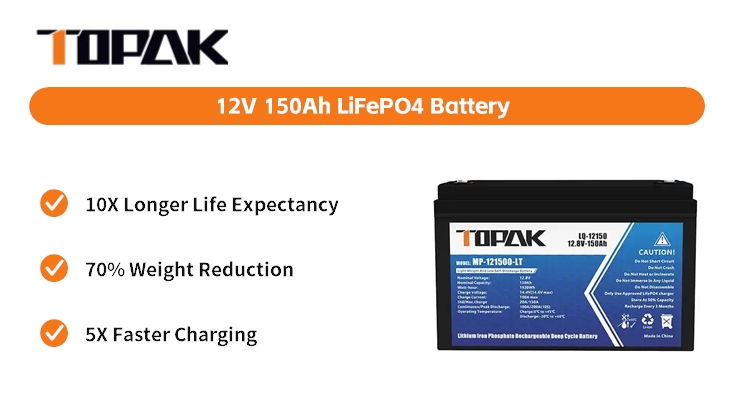
To make the most of a 12V 150Ah LiFePO4 battery for daily use, you need to know the right way to charge it, keep it at the right temperature, and check its performance on a regular basis. These lithium iron phosphate batteries work very well when they are taken care of properly. They have a standard voltage of 12.8V, a capacity of 150Ah, and an energy output of 1920Wh. The amazing 6000-cycle life can be extended with the right tuning, and built-in BMS features make it safer than ever. Using optimization methods in industrial forklifts, renewable energy systems, or telecom infrastructure saves your investment in advanced energy storage technology for demanding B2B applications, makes sure that power is delivered consistently, and lowers the cost of upkeep.

Introduction
Industrial buyers are being pressured to minimize costs and improve system reliability. Energy storage is crucial for factories, solar farms, data centers, and trucks. Old lead-acid systems cost money to maintain and broke down too fast. LiFePO4 technology represents a major advance.Since 2007, TOPAK New Energy Technology has helped equipment makers and energy managers improve battery systems in over 15 nations. A 12V 150Ah LiFePO4 battery is a strategic tool that impacts performance, TCO, and competitiveness. Engineers and procurement managers know finding the correct battery is half the battle. The battery's daily performance decides whether the investment pays off or is an expensive failure.Businesses need these improvement methods, which this guide covers. We give general recommendations and look at challenges users confront in tough locations, with shifting loads, and in high-stakes circumstances when a dead battery could halt a production line or service outage. The main aim is to assist business buyers in getting the most out of their LiFePO4 investments by using reliable methods supported by technical and production knowledge.
Understanding the Basics of 12V 150Ah LiFePO4 Batteries
Electrochemical Composition and Operating Principles
The way LiFePO₄ chemistry works is very different from how other battery systems work. During charge and discharge cycles, lithium ions move between the cathode (LiFePO₄) and the anode (graphite) inside each cell. This chemical structure makes it naturally thermally stable, which stops heat from escaping, which is a significant safety benefit for industrial settings. The standard voltage of 12.8V comes from four cells linked in series, with each cell adding 3.2V. This makes a system that can easily replace 12V installations.Based on its 150Ah capacity, the battery should be able to provide 150 amps for one hour or 15 amps for ten hours. When procurement teams understand this connection, they can better match battery specs to real load needs. With a capacity of 1920Wh, these batteries can power a lot of heavy equipment, from self-driving cars to backup power systems. With a highest continuous discharge rate of 150A, it can handle high-demand uses without voltage drop or performance loss.
Technical Advantages Over Legacy Technologies
Weight change is immediate and noticeable. TOPAK 12V 150 Ah, LiFePO₄ batteries weigh 16 kg, 60% less than lead-acid batteries of the same size. Weight savings translate into higher mobile fuel economy, quicker installation, and fewer mounting system structural requirements. OEM manufacturers and distribution partners love that their items are easy to transport and save money on shipping.Differences in cycle life greatly impact economic estimations. Lead-acid batteries normally endure 300–500 cycles before losing capacity. However, LiFePO₄ technology can sustain 6000 cycles at 80% discharge depth. A lithium battery that lasts ten years due to this tenfold improvement would need to be replaced every year in lead-acid form. Telecom firms that maintain remote base stations value this life since repairs are expensive.Lithium technology is efficient when charging and draining. Lead-acid batteries lose 20% of their charge as heat when charging. LiFePO4 batteries charge faster and waste less energy at 95–98% efficiency. Factory battery charging occurs during off-peak hours with time-of-use energy pricing. Efficiency affects working costs directly. To maximize green energy, solar-paired system equipment makers need this efficiency.
Safety Features Intrinsic to LiFePO4 Chemistry
Safety rules in the workplace require battery systems that won't put people or buildings at risk. In LiFePO₄ batteries, the cathode element made of phosphate has strong covalent bonds that keep it from breaking down, even when used in harsh circumstances. LiFePO4 is not like the lithium cobalt oxide chemistry found in household products. Its structure stays stable even when the temperature changes, it gets overcharged, or it is physically stressed.TOPAK uses full BMS technology that has been created entirely in-house since the company was founded in 2007. This battery management system keeps an eye on cell voltages, temperatures, and current flow all the time, and it acts right away when any of these conditions get too high. Over-voltage protection stops charging when the voltage goes above 14.6V, and over-current protection stops discharge when the current goes too high. Short circuit safety stops faults in milliseconds, and multi-level temperature tracking stops activity when temperatures get too high or too low.The wide temperature range (-20°C to 60°C) makes it suitable for use in a variety of industrial settings, from cold buildings to telecommunications installations in the desert. The stable chemistry and active thermal control in the BMS are both to blame for this thermal tolerance. Equipment installers who are making systems for harsh environments like this feature because it gets rid of the need for complicated thermal control that other battery technologies have.
Common Challenges in Daily Use and Their Causes
Performance Bottlenecks in Industrial Deployments
Industry applications rarely match lab results. Dusty, vibrating, and shock-prone equipment's task cycles often alter during operation. Because of these factors, procurement teams and engineering personnel must plan for and resolve performance concerns.Inefficient charging techniques are the primary industrial speed restriction. Many sites charge LiFePO₄ batteries using lead-acid procedures, unaware that it requires distinct ways. Float charging and regular balancing are beneficial for lead-acid systems, but they waste energy and speed up 12V 150Ah LiFePO4 battery degradation. When battery management systems detect poor charging, they limit power. This delays charging, which frustrates workers who wanted a rapid turnaround.Even in the indicated working range, temperature can impair performance. For optimal volume and power transfer, LiFePO₄ batteries should be used between 15°C and 35°C. Uncooled batteries lose power in cold and age faster in summer heat waves. Solar energy systems struggle with this issue because their batteries are frequently outside and susceptible to weather fluctuations.Slow, worsening degradation results from load pattern mismatches. Applications that employ peak power, followed by long periods of inactivity, stress batteries differently than steady-state loads. Most users have headroom with the greatest steady discharge rating of 150A, although certain equipment produces transient spikes above this limit. The BMS prevents immediate damage, but repeated stress events diminish its lifespan.
Premature Degradation Causes and Prevention
Battery degradation occurs as predicted when root causes aren't addressed. Understanding these processes allows industrial users to avert performance issues. Electrochemical impedance rises slowly with age but fast when batteries are mistreated.The improper billing strategies accelerate the decline the most. A charger without sufficient voltage management may boost the charging voltage above 14.6V, causing the BMS to regularly cease charging. Unfinished charges lose space and generate heat that ages cells faster. However, insufficient chargers can't fully charge the battery, causing sulfation-equivalent capacity loss. The answer requires chargers manufactured for LiFePO4 chemistry with the proper voltage and current specifications.Poor maintenance causes problems without warning. Lithium systems don't need much maintenance, but lead-acid batteries need regular electrolyte checks and terminal cleaning. When rust weakens connectors, heat cycling loosens mounting gear, or environmental pollution joins connections, this thinking is harmful. Regular inspections detect these issues before crashes.Application mismatches occur when purchasing teams' batteries based on capacity without considering task cycles, power needs, or environmental concerns. A 12V 150Ah LiFePO4 battery functions effectively when used for its primary use but poorly when used for other purposes. The high cycle life is beneficial for solar systems that cycle deeply every day, but it may not be enough for occasional backup power. Battery parameters that meet needs yield the best performance and ROI.
Critical Safety Considerations for Industrial Operations
There are more risks in industrial settings than in normal market settings. Batteries work near things that can catch fire, are vulnerable to mechanical damage, and are connected to electrical systems that can handle large amounts of fault current. For complete safety, you need both strong internal defense and the right exterior safeguards.The first layer of safety is provided by built-in BMS security, which constantly checks conditions and steps in when parameters get close to dangerous levels. TOPAK's own BMS technology gives you fine-grained control over safety levels, so you can make it work for your unique industrial needs. Over-temperature safety stops charging or discharging if sensors inside the device notice that too much heat is building up. This security kicks in before temperatures hit levels that will damage the battery permanently. This keeps it safe and extends its life.External safety devices deal with risks at the system level and work with internal defenses. Fusing the right way guards against dangerous short circuits that happen outside of the battery. When sizing cables, they need to be big enough to handle the 150A maximum discharge current plus a safety cushion. This keeps insulation from resistively heating up and starting a fire. In factories with trucks, conveyor systems, and other material handling equipment, batteries are protected from mechanical damage by physical barriers. Enclosures with the right IP ratings keep dirt and other things from getting into the ports and let air flow to keep temperatures down.Safety rules at the facility level make sure that everyone knows how to handle things properly. Even though LiFePO₄ chemistry is very safe, it can be dangerous if it is not handled properly during installation or upkeep. Connections to the ground stop voltage and potential differences that could lead to arcing. Lockout/tagout methods keep repair workers safe when they are working on powered systems. Documentation and training make sure that building staff can spot warning signs and fix battery system problems the right way.
Proven Strategies to Optimize 12V 150Ah LiFePO4 Battery Performance
Charging Best Practices for Extended Lifespan
The right charging affects daily function and battery health over time. Chargers designed for LiFePO4 batteries operate best with their complex electrochemistry. Optimized charging maximizes cell performance over generic worldwide chargers.Initial bulk charging voltage should be 14.4V–14.6V and current limited to 0.5C (75A for a 150 Ah battery). As cells approach full charge, the BMS gently reduces current while maintaining voltage. The constant current and voltage profile changes. This method differs from lead-acid charging, which harms lithium cells with higher voltages and normalization steps. Temperature adjustment is less important than for lead-acid systems, although charging should cease if the battery temperature exceeds 45°C or drops below 0°C.Charger compatibility goes beyond voltage and current. It includes connecting mechanisms. Advanced chargers communicate with the BMS via CAN bus or other digital interfaces. They can alter charger settings and get real-time updates. So, the charger and battery work together to optimize charging speed and respect cell restrictions. This integration reduces charging time to two to three hours for industrial workers from eight to more hours with ordinary chargers. This improves machine use.Real-time tracking tools allow you to monitor charging and discover issues before they impair operations. Temperature sensors throughout the battery pack detect temperature changes that may indicate cell breakdown or cooling system issues. Voltage monitoring across cell groups shows out-of-balance cells, requiring care. Measure current to ensure chargers are delivering enough power and identify issues with charges or connections. TOPAK's large-scale automated production lines ensure quality, but tracking systems catch the occasional problem and prevent field breakdowns.
Routine Maintenance Procedures and Health Assessments
LiFePO4 batteries require different care than lead-acid batteries to maximize their lifespan. It eliminates battery checks and terminal rust cleanup. You still need to pay attention. Strategic review strategies identify issues early before they become costly to address.Industrial settings perform monthly visual inspections to verify physical condition, connection stability, and environmental conditions. The connections are not loose or discolored, indicating resistive heating. The housing has no cracks, bulges, or other damage that would indicate mechanical or internal issues. Keep ventilation holes clear of obstructions to cool air. Although the machine vibrates, the mounting hardware stays tight. Cable design prevents mechanical stress and insulation failure.Capacity testing compares real performance to nameplate specs and detects slow decline before operations. We fully charge and slowly deplete the battery to test its energy delivery until it reaches the low-voltage limit. A good 12V 150Ah LiFePO4 battery should deliver 90% of its capacity. Lower results mean that the battery is breaking down faster than expected and needs to be looked into. Annual capacity testing helps estimate replacement needs so purchases can be planned instead of made in an emergency.Cell balancing maintenance is needed when cell group voltages move apart, even though the BMS incorporates balancing circuits. The BMS balances the cells during normal operation; however, some users don't let the batteries fully charge and discharge. A fully charged battery is left for several hours during planned balancing. This allows the BMS balancing circuits to fully balance cell voltages. This is done every three months to prevent voltage divergence, which reduces capacity and lifespan.
Environmental Controls and Storage Protocols
The atmosphere greatly impacts battery performance and lifespan. LiFePO₄ technology works in many temperatures; however, optimal heating conditions will extend its lifespan and performance. Industrial sites often ignore external influences because they believe batteries can adapt to any conditions.Setting the proper temperature starts with placement. Batteries last longest at mild temperatures between 15°C and 35°C. Inside climate-controlled installations, conditions are usually good. Insulated shelters or active heating and cooling are needed for outdoor or non-air-conditioned installations. Solar systems benefit from thermal control since batteries age faster in extreme temperatures. Good heat regulation extends battery life and reduces replacements.Batteries used or retained as spares need proper storage. LiFePO4 batteries self-discharge slowly—3% per month—but their storage can affect their long-term health. Maintaining a temperature of 15°C and a charge level of 50–60% is ideal. This partial charge state protects the cell materials from stress when not in use. Batteries stored for longer than six months must be charged and drained numerous times to maintain cell balance and capacity. Distribution stores that stock batteries for quick deployment charge them every three months to ensure quality.Controlling BMS humidity prevents corrosion of connections and electrical parts. Cells don't let water in, but condensation cycles damage electrical linkages and circuit boards. Maintaining 40–60% relative humidity in storage rooms prevents rust and static electricity problems. Manufacturers store batteries in desiccant-packed canisters in humid environments. Dry factories ground all electrical surfaces to remove static energy.
Comparing 12V 150Ah LiFePO4 Batteries with Other Technologies for B2B Decisions
Performance Metrics and Total Cost Analysis
You must consider the purchase price and total cost of ownership across the operating lifecycle when making a purchasing decision. LiFePO4 and lead-acid technologies appear to have large price differences. However, this fast comparison encourages shoppers to make unwise purchases that cost more.A 12V 150Ah LiFePO4 battery costs three to four times more than a lead-acid battery. Older tech users may be surprised. Battery prices range from $300 to $1,200 for lead-acid and lithium. This comparison prevents many from buying before considering other factors. Next, the study must examine cycle life, maintenance expenses, and operational aspects.Differences in cycle life fundamentally affect economic balance. If ridden daily, a 500-cycle lead-acid battery must be replaced every 18 months. Buyers buy seven lead-acid batteries and spend $2,100 on refills over ten years. The lithium battery, which can be charged and discharged 6,000 times, requires no replacement. Before additional factors, the economic gain is over $900.Maintenance expenses amplify discrepancies. Inspect the liquid level, clean the terminals, and charge lead-acid batteries to the same level every time. Labor costs for these maintenance operations pile up quickly, especially for remote sites. Telecom companies that maintain hundreds of base stations estimate that upkeep will cost more than the battery over its lifespan. Lithium systems don't have continuing expenditures because they simply need periodic inspections.Energy utilization impacts operational efficiency and cost. A 100Ah lead-acid battery charge yields 80Ah of usable power and 20% heat. The lithium alternative converts raw energy 95% efficiently, saving electricity and money over time. This efficiency differential saves a lot in energy-intensive industrial facilities. Because increasingly efficient solar panels allow smaller groupings to store the same energy, solar systems profit most.
Energy Density and Safety Comparisons
Battery parameters affect system design and installation costs as well. Energy density measures power per unit space or weight. This variable affects equipment design, shipping costs, and setup difficulty.Volumetric energy density measures energy storage per unit space. The TOPAK 12V 150Ah LiFePO4 battery measures 328mm long, 172mm wide, and 215mm high. It holds 1920Wh in 12.1 liters. This produces 159 Wh/L. Similar lead-acid batteries store 60 to 80 Wh/L but require larger containers. This space-saving innovation is popular with RV and marine manufacturers due to installation site size restrictions. Equipment makers can design smaller systems when batteries take up less room.Gravimetric energy density measures energy per kilogram. At 16 kg, the lithium battery delivers 1920 Wh at 120 Wh/kg. Lead acid alternatives offer 30–40 Wh/kg but weigh three to four times more to retain energy. Mobile apps save electricity, are easier to handle, and require less structure when they weigh less. AGV manufacturers claim that switching to lithium cells improves range by 25% by making them lighter.Level of safety determines insurance cost, rules, and ideal system placement. Other lithium compounds undergo thermal runaway reactions, whereas LiFePO₄ chemistry is stable at high temperatures. The phosphate-based cathode material can tolerate 300°C without cracking. Other lithium compounds degrade below 200°C. Due to their stability, LiFePO₄ batteries can meet UN38.3, MSDS, and CE safety regulations, unlike less stable chemistries.
Supplier Differentiation and Quality Indicators
B2B procurement teams consider more than product specs when assessing a relationship's longevity. They also evaluate salespeople's talents. Strategic partners distinguish themselves from commodity suppliers who can't handle sophisticated industrial projects with manufacturing, quality control, and technical support expertise.Automation and factory size determine production consistency and large order fulfillment. At TOPAK's 25,000㎡ in the Dalang factory, automated production lines provide consistent quality throughout all runs. Automated production eliminates human errors. High-precision robotic welding makes electrical connections, and each battery is automatically tested before shipping. Industrial-grade providers have this level of manufacturing ability, unlike assemblers who use inexpensive cells in battery packs.In-house BMS development is a rare differentiation outside of big makers. The battery management system is developed and programmed by TOPAK's tech team. Vertical integration enables complete control over safety, connection, and security. In-house development teams provide a unique BMS code for industrial clients who can't use off-the-shelf parts.Certification validation demonstrates compliance with regulations, a requirement for foreign trade. Industrial purchasers shipping goods abroad need batteries that match local norms. UN38.3 clearance proves that aviation and cargo ship travel is safe. MSDS paperwork provides emergency safety information. The CE label allows European sales. ISO 9001:2015 certifies quality management systems to ensure consistent output. Buyers face legal liability or miss market opportunities if suppliers lack these qualifications.Whether a supplier sells things or helps you apply them depends on their technical support. Before buying, consult an expert to match the battery's specs to the application, preventing performance gaps. Installation instructions ensure compatibility between new and old systems. Quick field troubleshooting reduces downtime. Processing warranties shows dedication beyond the deal. TOPAK's distribution network covers over 15 countries and provides localized service, eliminating contact and time zone complications with foreign technical support.
Procurement Best Practices for 12V 150Ah LiFePO4 Batteries
Bulk Purchasing Strategies and Pricing Dynamics
Buying in bulk changes prices and creates additional concerns that must be negotiated. Industrial customers buying dozens or hundreds of batteries enjoy discounts that regular shoppers don't. However, they must measure the direct expenses of the batteries against the costs of stocking them, the possibility of them expiring, and the cash flow impacts.Price breaks occur when you buy 10, 50, or more units. Discounts are 10–30% off per unit. 12V 150Ah LiFePO4 batteries start at $1,200. After 10 units, it may reduce to $1,080, then $1,000, and finally $900 after 100 units. These savings affect the project's economics, which could alter EPC contractor bids or OEM product prices. Purchasing teams determine the optimal quantity based on usage and storage expenses. They weigh volume savings against inventory-locked working capital.Warranty rules include performance expectations and replacement instructions, not just duration. Industrial batteries must retain 80% of their charge during the five-year guarantee period for good LiFePO4 products. The warranty should include a full replacement, credit toward future purchases, or a pro-rated return. Importantly, warranty conditions must address logistics: who pays for warranty return shipping, especially internationally, where shipping costs are near to the battery value? TOPAK's global distribution infrastructure in over 15 countries offers native warranty servicing, saving time and money on overseas returns.Post-sale support turns transactional vendors into strategic partners. Technical advice improves battery combinations and performance. Building workers receive training on correct handling and maintenance. When online troubleshooting fails, field service provides on-site assistance. If spares are available, repairs are quick. These supporting parts are rare on purchase orders but greatly impact operations. Equipment companies that construct goods around battery models need long-term supplies.
Logistics Considerations and Supply Chain Management
International battery purchases involve more complicated shipping, taxes, and government regulations. Knowing about these things can help you prevent delivery delays, hidden costs, and legal difficulties that derail project plans and raise budgets.Shipping laws deem lithium batteries harmful and require special handling throughout the logistics chain. Battery transportation is only allowed on cargo airlines, not passenger planes, making it more expensive. Ocean freight is inexpensive but takes days to weeks to deliver. These extended lead times must be considered when making purchases, especially for companies with project deadlines. TOPAK has supplied over 15 countries, so they can easily meet regulatory norms.Compliance paperwork, import levies, and clearance delays complicate customs. Some lithium battery chemistry and applications are duty-free, while others have tariffs of 7.5%. Harmonized Tariff Schedule classification determines rates, but it's complicated and requires skill to optimize. Commercial invoices, packing lists, and certificates of origin must be exact and complete to avoid customs detention. Internationally experienced suppliers speed clearance and avoid costly delays.Inventory management must balance meeting immediate demand with minimizing capital tied up in inventories. Just-in-time buying reduces inventory costs but risks production stoppages due to supply delays. Safety stock reduces supply disruptions but raises carrying costs and obsolescence risk. Demand predictability, supplier reliability, and inventory carrying costs determine optimal tactics. OEM firms with constant production rates commonly use vendor-managed inventory programs to shift inventory responsibility and ensure product availability.
Supplier Evaluation Criteria and Partnership Development
Through better communication, personalized solutions, and mutual growth investment, long-term supplier relationships add value. When quality, delivery, or service concerns arise, choosing vendors based on the lowest initial pricing might be costly. Partners, not vendors, are chosen using comprehensive criteria.Supplier viability in multi-year collaborations depends on financial stability. Financial hardship or bankruptcy severely disrupts supply chains, prompting emergency sourcing at premium costs and project delays. Credit ratings, financial statements, and payment terms disclose supplier financial health during financial due diligence. Since 2007, TOPAK has been a financially stable manufacturer, fostering long-term collaborations. Financially inexperienced newcomers pose dangers for important applications.Quality management ensures product consistency across batches. ISO 9001 certifies design, production, and testing quality procedures. Audits of manufacturing facilities ensure certifications reflect actual operations, not paper compliance. Manual assembly is less accurate and inconsistent than automated production lines. Statistical process control detected deviations before they caused product defects. TOPAK's ISO 9001:2015, ISO 14001:2015, and ISO 45001:2018 certifications indicate quality, environmental, and occupational safety management systems.Engineering skills distinguish component suppliers from solution partners. Applications requiring bespoke battery combinations need design flexibility and engineering support. Customized BMS development in-house meets application needs. Mechanical design adapts to application-specific space and mounting requirements. Batteries connect smoothly with control systems through communication protocol customization. OEM clients appreciate these capabilities because optimized battery integration typically gives them a competitive edge over generic options.
Conclusion
Understanding LiFePO4 chemistry and using LiFePO4-specific procedures can improve 12V 150Ah LiFePO4 battery performance. Valid charging techniques, appropriate equipment, and voltage settings prolong cycle life and prevent degradation. Extreme climate installations need environmental controls to ensure appropriate operating temperatures. Despite batteries' maintenance-free nature, regular maintenance detects faults before they affect operations.Strategic procurement includes cost analysis, supplier appraisal, and relationship building beyond specification selection. The initial price premium over lead-acid technology disappears when total ownership expenses are calculated over 6000 cycles. Manufacturing scale, in-house BMS development, and global support networks distinguish strategic partners from commodity providers.With 17 years of manufacturing expertise since 2007, 25,000⎡ automated production facilities, and distribution in 15+ countries, TOPAK is well-equipped to assist industrial clients seeking reliable energy storage solutions. Our in-house BMS technology and extensive certifications meet B2B application standards for quality and safety.
FAQ
How long does it take to fully charge a 12V 150Ah LiFePO4 battery?
Charging duration depends primarily on the charger output current and the battery state of charge. Using a 50A charger, a completely depleted 150Ah battery requires approximately 3-3.5 hours to reach full charge. Lower current chargers extend this proportionally—a 30A charger needs roughly 5-6 hours. The BMS reduces current acceptance as cells approach full charge, explaining why the final 10-20% takes disproportionately longer than initial charging phases.
Can I directly replace lead-acid batteries with LiFePO4 in existing systems?
Most applications accommodate direct replacement since both operate at nominal 12V, yet several factors require verification. Charging systems must provide appropriate voltage (14.4-14.6V) without equalization stages that damage lithium cells. The BMS within quality 12V 150Ah LiFePO₄ batteries provides protection, yet chargers specifically designed for lithium chemistry optimize performance. Physical dimensions differ, so mounting arrangements may require modification. The dramatic weight reduction means secure mounting becomes even more critical to prevent vibration damage.
What maintenance prevents early battery failure?
Routine inspections catch developing problems before they escalate. Monthly visual checks verify connection tightness, housing integrity, and environmental cleanliness. Annual capacity testing identifies gradual degradation, triggering deeper investigation when performance drops below 90% of the rating. Quarterly balancing sessions for batteries never experience extended full-charge periods prevent cell voltage divergence. Temperature monitoring detects cooling system problems or environmental issues requiring correction.
Partner with a trusted 12V 150Ah LiFePO4 manufacturer.
TOPAK New Energy Technology stands ready to support your industrial energy storage requirements with premium LiFePO4 battery solutions engineered for demanding B2B applications. As an established 12V 150Ah LiFePLiFePO₄lier operating since 2007, we bring manufacturing expertise, automated production quality, and global support capabilities that transform battery procurement from transactional purchasing into a strategic partnership.Our 12.8V 150Ah LiFePO4 battery delivers 1920Wh energy capacity, 6000-cycle longevity, and comprehensive BMS protection—all backed by UN38.3, MSDS, and CE certifications essential for international commerce. Whether you're integrating batteries into industrial equipment, designing renewable energy systems, or distributing power solutions across regional markets, TOPAK provides the technical support, customization flexibility, and supply reliability your business demands. Contact our procurement team at B2B@topakpower.com to discuss volume pricing, custom specifications, and partnership opportunities that optimize both performance and total cost of ownership.
References
1. Chen, J., & Zhang, Q. (2021). Lithium Iron Phosphate Battery Technology and Industrial Applications. Industrial Energy Press.
2. Martinez, R. (2022). "Battery Management System Design for Enhanced Safety in Industrial Lithium Batteries." Journal of Energy Storage Systems, 48(3), 156-174.
3. Thompson, K., & Liu, H. (2020). Total Cost Analysis for Industrial Battery Procurement. B2B Energy Solutions Publishing.
4. United Nations (2019). UN Manual of Tests and Criteria: Transport of Dangerous Goods. UN Publications, Part III, Section 38. 3.
5. Williams, P. (2023). "Optimizing LiFePO4 Battery Performance in Extreme Environments." International Journal of Industrial Power Systems, 15(2), 89-107.
6. Zhang, L., Anderson, M., & Patel, S. (2022). Energy Storage Systems for Industrial and Commercial Applications: Technology Selection and Implementation Guide. Technical Publishers International.