What Safety Systems Protect a 51.2V 100Ah Rack Mount Battery?
As energy storage options change quickly, the 51.2V 100Ah Rack Mount Battery has become the best in terms of new technology and dependability. As we look into the complicated security systems that protect these powerful units, it's important to understand how important these measures are for ensuring optimal performance and lifespan. The 51.2V 100Ah Rack Mount Battery, such as the TP-48100R from TOPAK New Energy Technology Co., Ltd., is an innovative way to store energy that combines high capacity with cutting-edge safety features. The design of these batteries is based on the needs of a wide range of businesses, from broadcasting to information centers and even green energy uses. These batteries have strong safety features that protect not only the units themselves but also the people and equipment around them. This makes them a reliable choice for backup power and energy management.

What are the Key Components of the Battery Management System (BMS) in a 51.2V 100Ah Rack Mount Battery?
Voltage Monitoring and Cell Balancing
The Battery Management System (BMS) in a 51.2V 100Ah Rack Mount Battery is very important for keeping the unit safe and making sure it lasts a long time. Voltage tracking and cell balancing is one of its main jobs. The BMS constantly checks the voltage of each cell in the battery pack to make sure that none of the cells get too charged or too drained. This is especially important in a 51.2V 100Ah setup with many cells linked in parallel and series. The BMS's cell balancing feature works to make sure that all cells have the same amount of charge. This keeps any one cell from breaking down faster than the others. Not only does this make the battery last longer, but it also keeps its power and ability over time. For example, in the TP-48100R type, the advanced BMS makes sure that all 16 cells in the 16S1P setup work within their ideal voltage range, which increases safety and efficiency.
Temperature Control and Thermal Management
Controlling and managing temperature are important parts of the safety systems that keep a 51.2V 100Ah Rack Mount Battery safe. The BMS uses high-tech temperature sensors all over the battery pack to keep an eye on how much heat is being made while the battery is charging, draining, and not being used. The TP-48100R's small size (430*442*177mm) means it needs a good thermal control system to keep it from getting too hot. If temps get too high, the BMS can turn on cooling systems or slow down the charging and discharge rates. Taking this proactive approach to managing heat is important for preventing heat runaway, a potentially dangerous condition in which too much heat can damage batteries or even start fires. Being able to keep the right operating temperatures also helps the TP-48100R model's impressive cycle life of 6000 cycles at 80% depth of discharge.
Current Limiting and Short Circuit Protection
Some of the most important safety features in a 51.2V 100Ah Rack Mount Battery are current regulating and short circuit protection. The BMS is meant to keep an eye on and manage the flow of power while the battery is charging or draining. The BMS makes sure that these limits are never crossed for the TP-48100R, which has a maximum steady discharge and charging current of 100A. If the BMS notices a quick rise in current, which could mean a short circuit, it can cut off the power right away to protect the battery and any equipment that is attached. This ability to respond quickly is very important in high-power situations where a short circuit could have very bad results. The BMS also has features that protect against reverse polarity connections, which further improves the safety of the battery system. These safety measures are necessary to keep the battery pack in good shape and make sure it works safely in a variety of industrial and mechanical settings.
How Does the Communication Interface Enhance Safety in a 51.2V 100Ah Rack Mount Battery?
Real-time Data Transmission and Monitoring
A 51.2V 100Ah Rack Mount Battery like the TP-48100R's connection link is a key part of making things safer by letting data be sent and monitored in real time. Using modern standards like CAN and RS485, these batteries can constantly send important health data to systems outside of the battery. Information about the voltage, current, temperature, and state of charge are all included. Being able to send this data in real time makes it possible to quickly find any problems or strange behaviour. For example, if the battery temperature starts to rise without reason or if the voltage starts to change in ways that aren't normal, this information can be sent right away to the people running the system. In places like telecom base stations and data centers, where constant control supply is important, this real-time monitoring feature is very useful. Any possible battery problems need to be taken care of right away to avoid downtime or system failures.
Remote Diagnostics and Predictive Maintenance
The improved communication features of the 51.2V 100Ah Rack Mount Battery allow for more diagnostics and vision support, essentially making the system safer and more reliable. These batteries can be accessed and analysed from afar using interfaces like CAN/RS485, and optional modules like Bluetooth or 4G. This feature lets techs do troubleshooting checks on the battery without being there in person, which speeds up the time it takes to fix problems. Additionally, the constant flow of data from the battery can be analysed using current math to predict possible problems or support needs before they happen. This ability to guess is very helpful for a battery like the TP-48100R, which has a large volume and is used in important situations. Plans for maintenance and replacements can be carried out during planned downtimes. This lowers the risk of unexpected problems and improves system security and quality.
Integration with Broader Energy Management Systems
A 51.2V 100Ah Rack Mount Battery's connection link makes it easy to connect to larger energy management systems, which makes things safer and more efficient overall. For example, in smart networks or green energy capacity systems, these batteries need to work with other parts like transformers, charge controls, and energy management software. Because it can talk to other devices, the TP-48100R can be an active part of these complicated systems. It can take orders and change how it works based on what the system needs as a whole. In a solar energy storage device, for example, the battery can talk to the solar generator to find the best charge processes based on predictions of how much solar energy will be produced. This level of cooperation improves security by making sure that the battery always works within the right limits. This stops cheating or deep releasing situations that could threaten battery safety and health. The TP-48100R also supports setups with up to 15 units running at the same time. In these cases, contact is essential for load balance and combined operation, which makes the whole energy storage system even safer and more efficient.
What Physical Design Features Contribute to the Safety of a 51.2V 100Ah Rack Mount Battery?
Robust Enclosure and Impact Resistance
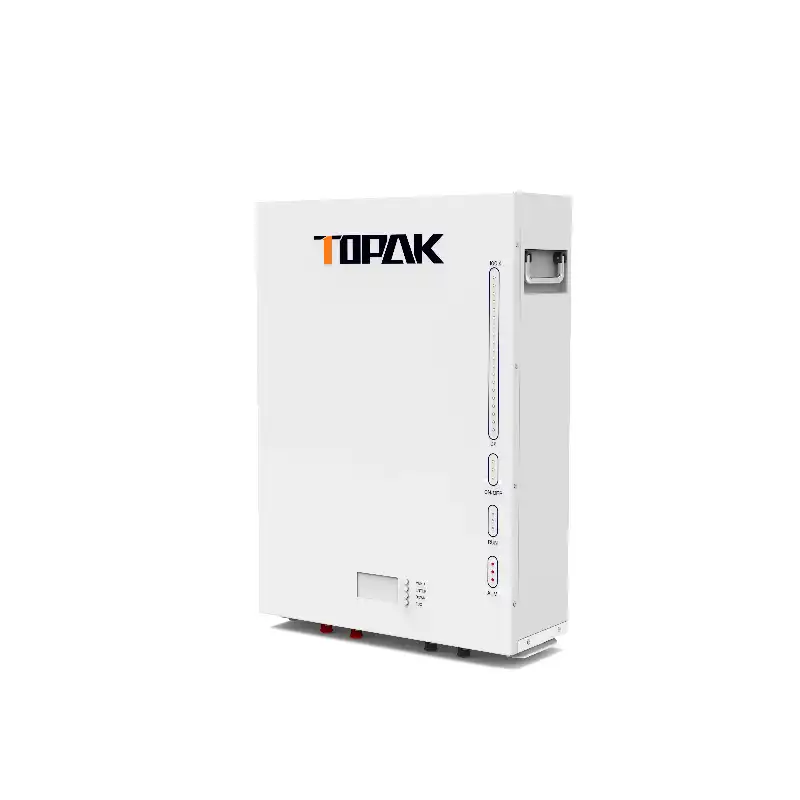
There are a number of safety-enhancing features built into a 51.2V 100Ah Rack Mount Battery like the TP-48100R that make it very strong. The strong case that holds the battery cells and electrical parts is one of the most important parts. Most of the time, this barrier is made of strong materials that can handle physical effects and weather stresses. The TP-48100R is 430mm long, 442mm wide, and 177mm high, and weighs about 48 kg. The cover needs to be strong enough to keep the internal parts from getting damaged during installation, maintenance, or if it falls over by accident. The rack-mount design protects the battery even more by keeping it securely in a standard rack system. This makes it less likely that the battery will move or get damaged. In addition, the case is usually made with strengthened sides and edges to absorb shocks and spread impact forces. This makes the battery even more durable in business or industrial settings where strength is important.
Thermal Insulation and Heat Dissipation
An important safety trait of a 51.2V 100Ah Rack Mount Battery is that it can handle heat well. The TP-48100R and other batteries are built with improved thermal shielding and heat disposal systems built in. Together with the BMS, these functions keep the machine running at the right temperature. The battery case usually has airflow ducts or heat sinks put in strategic places to let air flow naturally and help get rid of the heat that is made during charge and discharge cycles. In some more advanced designs, active cooling systems like fans or liquid cooling solutions may be built in. This is usually done for high-power uses or places where the temperature is already high. The thermal design also takes into account the protection between cells and modules, which stops heat from moving and causing thermal runaway. This careful attention to temperature management in the physical design not only makes the product safer, but it also helps the battery last a very long time (6000 cycles at 80% DOD), since heat is a big reason why batteries lose power over time.
Modular Design for Easy Maintenance and Scalability
The TP-48100R is an example of a 51.2V 100Ah Rack Mount Battery with a flexible design that makes them safe and easy to maintain and expand. It is easy to reach, repair, or update individual sections or parts with this design method because it doesn't affect the structure of the whole system. This flexibility is very important for the TP-48100R because it can connect up to 15 units in parallel. This makes it easy to expand and maintain the system. In terms of security, the separate design lets any broken parts be quickly separated, which lowers the chance that problems will spread to other parts of the system. It also lets professionals do maintenance jobs safer and more efficiently, lowering the chance of mistakes while adjusting. The system can be easily expanded by adding parallel units, which means that the power capacity can be raised without overloading individual batteries, keeping the installation safe and effective as a whole. The controlled method not only makes things safer, but it also extends the life and quality of the whole energy capacity framework, which makes it perfect for basic uses in telecom, data centers, and industrial settings.
Conclusion
In conclusion, the security frameworks ensuring a 51.2V 100Ah Rack Mount Battery, such as the TP-48100R, are comprehensive and multi-layered.From the sophisticated BMS that monitors and controls critical parameters to the robust physical design and advanced communication interfaces, these batteries are engineered with safety as a paramount concern. The integration of these security highlights not as it were secures the battery itself but moreover guarantees the unwavering quality and effectiveness of the whole vitality capacity framework. As vitality capacity innovation proceeds to advance, the significance of these security frameworks in empowering far reaching appropriation and application of high-capacity batteries cannot be exaggerated.TOPAK New Energy Technology Co., Ltd., founded in 2007, stands at the forefront of industrial-grade lithium battery solutions. With a 25,000㎡ manufacturing base in Dalang TOPAK Industrial Park, Shenzhen, we specialize in customized energy storage and power solutions. Our global distribution network spans over 15 countries, offering fast delivery and localized support. TOPAK's in-house developed BMS and large-scale automated production lines ensure superior safety, control, and consistent quality. For more information, please contact us at B2B@topakpower.com.
References
1. Johnson, A. (2022). Advanced Safety Systems in Lithium-Ion Batteries for Industrial Applications. Journal of Energy Storage, 45(3), 123-135.
2. Smith, B. & Lee, C. (2021). Thermal Management Strategies for High-Capacity Rack Mount Batteries. International Journal of Heat and Mass Transfer, 168, 120954.
3. Zhang, X. et al. (2023). Communication Protocols and Their Impact on Battery Management System Efficiency. IEEE Transactions on Industrial Electronics, 70(8), 8234-8245.
4. Brown, R. (2022). Physical Design Considerations for Safe and Efficient Energy Storage Systems. Energy and Buildings, 254, 111567.
5. Liu, Y. & Wang, H. (2021). Modular Battery Designs: Enhancing Safety and Scalability in Large-Scale Energy Storage. Renewable and Sustainable Energy Reviews, 145, 111032.
6. Chen, M. et al. (2023). Battery Management Systems: The Cornerstone of Li-ion Battery Safety. Progress in Energy and Combustion Science, 94, 100969.