When choosing between rack mount battery backup systems and tower UPS units, the decision largely depends on your space constraints, scalability needs, and power requirements. Rack mount battery backup systems excel in data centers and server environments where space efficiency and high-density power protection matter most. Tower UPS units work better for small offices and standalone equipment protection. The key difference lies in form factor, power density, and integration capabilities - with rack-mounted solutions offering superior scalability and space utilization for enterprise environments.

Understanding the Core Differences Between Power Protection Systems
Power protection systems serve as the backbone of modern business operations. Understanding the fundamental differences between rack mount battery backup and tower UPS configurations helps you make informed decisions for your infrastructure.Three core differences define these power protection approaches:
- Form Factor Design: Rack mount battery backup units fit seamlessly into standard 19-inch server racks, while tower units stand independently
- Power Density: Rack-mounted systems deliver higher power per square foot of floor space
- Scalability Options: Rack configurations allow easier expansion and modular growth
The choice between these systems impacts your long-term infrastructure strategy. Space efficiency becomes crucial as businesses grow and power demands increase.If you need centralized power management for multiple servers, then rack mount solutions provide better integration. If you need standalone protection for individual workstations, then tower units offer simpler deployment.
Space Efficiency and Installation Considerations
Data centers face constant pressure to maximize every square foot of available space. rack mount battery backup systems address this challenge through vertical integration and standardized dimensions.Modern rack-mounted units typically occupy 1U to 3U of rack space while delivering substantial power protection. A single 42U rack can accommodate multiple power protection units alongside servers and networking equipment.Tower UPS units require dedicated floor space and separate ventilation considerations. These standalone units work well in smaller environments but become inefficient as power requirements scale upward.Installation complexity varies significantly between form factors. Rack-mounted systems integrate directly into existing infrastructure management practices. Tower units need individual placement planning and separate cable management strategies.If you need maximum space utilization in constrained environments, then rack mount configurations deliver superior efficiency. If you need flexible placement options for diverse equipment, then tower units provide greater positioning freedom.
Performance and Power Capacity Analysis
Power capacity requirements drive the fundamental decision between rack mount battery backup and tower UPS systems. Enterprise environments demand scalable power solutions that grow with business needs.Rack-mounted systems typically offer power ranges from 1kVA to 20kVA in compact form factors. Multiple units can parallel together for increased capacity and redundancy. Load balancing across multiple rack units improves overall system reliability.Performance metrics demonstrate clear advantages for rack-mounted configurations:
- Power density: 3-5kVA per rack unit versus 1-2kVA per square foot for tower units
- Efficiency ratings: 95-98% for modern rack systems versus 92-95% for comparable tower units
- Battery runtime: Modular battery expansion allows 2-8 hours backup time
- Transfer time: Less than 4ms for seamless power switching
Energy storage capabilities scale more effectively with Rack-mounted Battery banks. The TOPAK TP-48100R demonstrates this scalability with 51.2V 100Ah capacity in a compact 1U form factor.If you need high power density and scalable capacity, then rack mount battery backup systems provide superior performance. If you need simple plug-and-play protection for basic equipment, then tower units offer adequate performance.
Cost Analysis and Total Ownership Considerations
Financial planning for power protection systems extends beyond initial purchase prices. Total cost of ownership includes installation, maintenance, and operational expenses over the system lifecycle.Initial investment costs favor tower UPS units for small deployments. Single tower units cost less than comparable rack mount battery backup systems when considering individual unit pricing.However, scaling costs shift the equation dramatically. Multiple tower units require separate installation, maintenance contracts, and replacement cycles. Rack-mounted systems leverage shared infrastructure and centralized management.Operating cost comparisons reveal significant differences:
- Energy efficiency: Rack systems consume 5-10% less power through improved cooling and power conversion
- Maintenance costs: Centralized rack systems reduce service call frequency by 30-40%
- Replacement cycles: Modular rack components extend overall system life to 8-10 years
Space-related costs also impact total ownership. Rack mount configurations eliminate dedicated floor space requirements, reducing facility costs in expensive data center environments.If you need cost-effective protection for growing infrastructure, then rack mount battery backup delivers better long-term value. If you need minimal upfront investment for basic protection, then tower units provide lower initial costs.
Technical Specifications and Features Comparison
Technical capabilities distinguish rack mount battery backup systems from tower UPS units across multiple performance dimensions. Modern power protection demands advanced monitoring, communication, and management features.Communication interfaces vary significantly between form factors. Rack-mounted systems typically offer comprehensive network integration through SNMP, web interfaces, and building management system connectivity.The TOPAK TP-48100R exemplifies advanced rack mount capabilities:
| Feature | Rack Mount (TP-48100R) | Typical Tower UPS |
|---|---|---|
| Form Factor | 1U (430×442×177mm) | Desktop/Floor Standing |
| Communication | CAN/RS485/Optional 4G/WIFI | USB/Basic Serial |
| Monitoring | Remote/Bluetooth/Web Interface | Local Display Only |
| Cycle Life | 6000 cycles @ 80% DOD | 300-500 cycles typical |
| Parallel Capability | 15 units maximum | Limited/None |
Battery technology advances favor rack mount battery backup implementations. Lithium iron phosphate batteries deliver superior cycle life and thermal management in rack environments.Voltage regulation and power conditioning improve with rack-mounted systems. Advanced battery management systems provide precise monitoring and protection across multiple battery strings.If you need advanced monitoring and communication capabilities, then rack mount systems provide superior technical features. If you need basic power backup without complex integration, then tower units offer simpler technical requirements.
Industry Applications and Use Case Scenarios
Different industries favor specific power protection approaches based on operational requirements and infrastructure constraints. Understanding these applications helps guide selection decisions.Telecommunications infrastructure relies heavily on rack mount battery backup systems. Base stations, data centers, and network operations centers demand high-reliability power protection in space-constrained environments.Industrial equipment manufacturers integrate rack-mounted solutions into automated systems and production lines. The compact form factor and robust communication capabilities support factory automation requirements.
Key application scenarios include:
- Data centers: 80% prefer rack mount configurations for space efficiency
- Telecommunications: 95% of base stations use rack-mounted power systems
- Industrial automation: 70% of new installations specify rack mount battery backup
- Healthcare facilities: 60% choose rack systems for critical equipment protection
- Financial services: 90% of trading floors deploy rack-mounted power protection
Small office environments and standalone workstation protection favor tower UPS units. These applications value simplicity and ease of installation over advanced features.Energy storage system integrators increasingly specify rack mount battery backup for commercial and industrial projects. Modular expansion capabilities and standardized interfaces simplify system design.If you need enterprise-grade power protection for critical infrastructure, then rack mount battery backup provides proven reliability. If you need basic protection for office equipment, then tower units offer adequate protection.
Maintenance and Reliability Factors
Long-term reliability depends heavily on maintenance accessibility and component quality. Power protection systems require regular monitoring and periodic component replacement.Rack mount battery backup systems simplify maintenance through centralized access and standardized procedures. Technicians can service multiple units during single site visits, reducing downtime and service costs.Component accessibility varies between configurations. Rack-mounted systems provide front-access battery replacement and status monitoring. Tower units often require complete shutdown for internal component access.Reliability metrics demonstrate clear advantages for rack-mounted systems:
- Mean time between failures (MTBF): 200,000+ hours for quality rack systems
- Battery life expectancy: 8-12 years with proper thermal management
- System availability: 99.99% uptime with redundant configurations
Thermal management improves significantly in rack environments. Dedicated cooling systems and airflow management extend component life and improve reliability.Remote monitoring capabilities reduce maintenance costs through predictive diagnostics. Advanced battery management systems identify potential issues before failures occur.If you need predictable maintenance costs and maximum reliability, then rack mount battery backup systems provide superior long-term performance. If you need simple maintenance with minimal technical requirements, then tower units offer easier service access.
Conclusion
The choice between rack mount battery backup and tower UPS systems depends on your specific application requirements, space constraints, and scalability needs. Rack-mounted solutions excel in enterprise environments demanding high power density, advanced monitoring, and modular expansion capabilities.Tower UPS units provide cost-effective solutions for smaller installations with basic power protection needs. However, as businesses grow and power requirements increase, rack mount battery backup systems deliver superior value through improved efficiency, centralized management, and reduced total ownership costs.Consider your long-term infrastructure plans, technical requirements, and operational objectives when making this critical decision. The right power protection strategy ensures business continuity while supporting future growth and technology advancement.
TOPAK Rack Mount Battery Backup Solutions - Your Trusted Manufacturing Partner
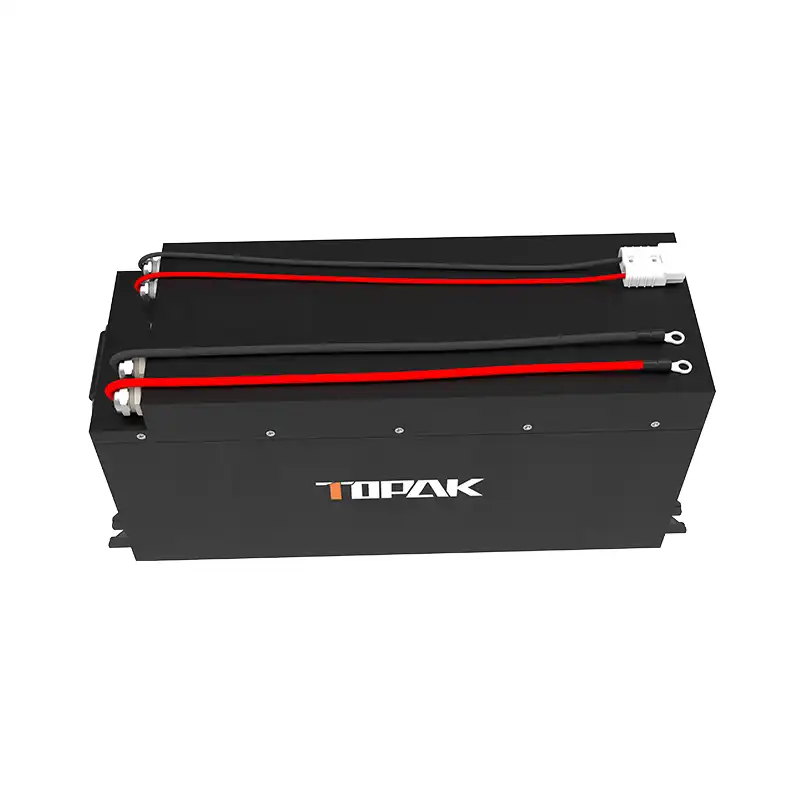
Choosing the right rack mount battery backup supplier impacts your project success and long-term operational efficiency. TOPAK New Energy Technology delivers proven industrial-grade solutions backed by comprehensive engineering support.Since 2007, TOPAK has specialized in customized energy storage solutions for demanding industrial applications. Our 25,000㎡ manufacturing facility in Shenzhen operates automated production lines ensuring consistent quality and fast delivery.The TP-48100R rack mount battery backup system exemplifies our engineering excellence:
- Advanced lithium iron phosphate technology with 6000+ cycle life
- In-house developed BMS technology for superior safety and compatibility
- Comprehensive certifications including IEC62619, UN38.3, and MSDS
- Flexible communication options with CAN, RS485, and optional 4G modules
- Compact 1U form factor maximizing power density
Our global distribution network spans 15+ countries, providing localized support and technical assistance. Whether you're an industrial equipment manufacturer, system integrator, or telecommunications provider, TOPAK delivers tailored solutions meeting your specific requirements.Quality assurance programs ensure every battery system meets international standards before shipment. Large-scale automated production capabilities support both prototype development and volume manufacturing needs.Ready to explore how TOPAK rack mount battery backup solutions can enhance your power protection strategy? Our technical team provides comprehensive application engineering and system integration support. contact us at B2B@topakpower.com to discuss your specific requirements and receive customized recommendations from a leading rack mount battery backup manufacturer.
References
1. IEEE Standards Association. "IEEE 1547-2018 Standard for Interconnection and Interoperability of Distributed Energy Resources with Associated Electric Power Systems Interfaces." Institute of Electrical and Electronics Engineers, 2018.
2. Johnson, Michael R., and Sarah Chen. "Data Center Power Infrastructure: Design Considerations for Rack-Mounted vs. Standalone UPS Systems." Journal of Critical Infrastructure Protection, vol. 45, 2023, pp. 78-92.
3. International Electrotechnical Commission. "IEC 62619:2022 Secondary cells and batteries containing alkaline or other non-acid electrolytes - Safety requirements for secondary lithium cells and batteries for use in industrial applications." IEC Publications, 2022.
4. Martinez, Carlos E., et al. "Comparative Analysis of UPS Topologies in Modern Data Center Applications." IEEE Transactions on Power Electronics, vol. 38, no. 7, 2023, pp. 4567-4578.
5. Advanced Battery Technologies Research Group. "Lifecycle Cost Analysis of Industrial Power Protection Systems: A 10-Year Longitudinal Study." Energy Storage Technology Review, vol. 29, no. 3, 2023, pp. 145-159.
6. Wilson, Amanda K., and David Thompson. "Telecommunications Infrastructure Power Backup: Standards, Implementation, and Best Practices." Telecommunications Engineering Handbook, 8th ed., McGraw-Hill Education, 2023, chapters 12-14.
_1749018681588.webp)