200ah lithium iron phosphate battery for Reliable Solar Backup
A 200 Ah lithium iron phosphate battery is the most important part of reliable solar backup options when power grids go down or when green energy systems need to store energy reliably. These advanced LiFePO4 batteries offer great performance, safety, and long life. This makes them the first choice for companies that make industrial equipment, energy storage integrators, and solar solution providers that want reliable backup power systems that work well in a wide range of operational environments.
Understanding 200Ah Lithium Iron Phosphate Battery Basics
Core Technology and Chemistry Fundamentals
This new 200 Ah lithium iron phosphate battery is a big step forward in energy storage chemistry. It is safer and more stable at high temperatures than older lithium-ion technologies. The 200Ah capacity number means that the battery can provide 200 amps of power constantly for one hour, or substantially lower currents over longer periods of time. Due to their large energy storage capacity, LiFePO4 batteries are very useful for solar backup systems that need to keep delivering power.Lithium iron phosphate batteries have strong chemistry that keeps voltage levels fixed during discharge cycles. This means that the battery keeps putting out the same amount of power even as it gets close to empty. In backup power situations, this feature is very important for sensitive electronics and important systems that can't handle voltage changes.
Technical Specifications and Performance Metrics
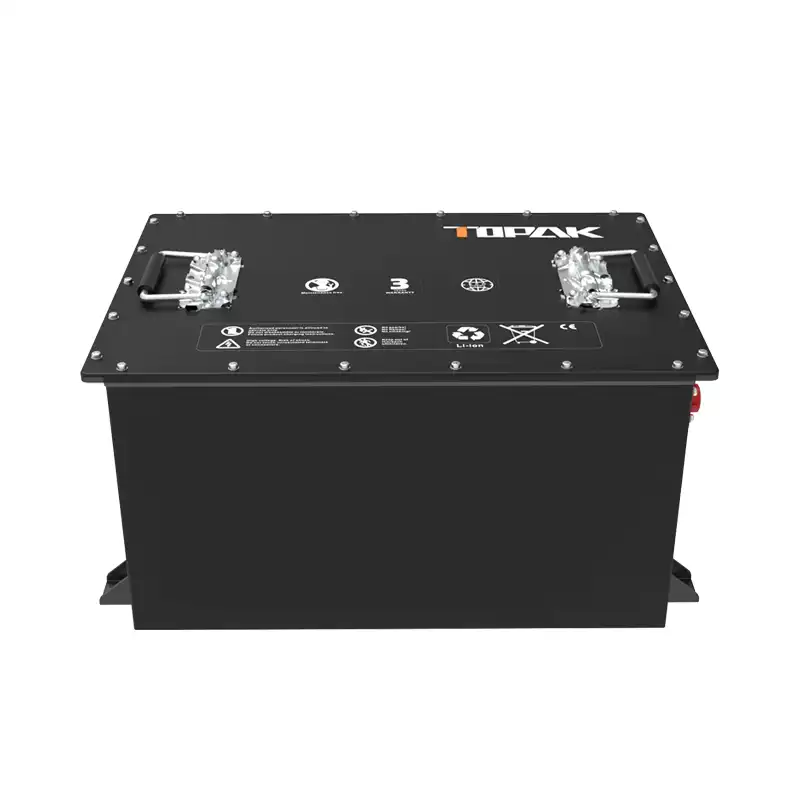
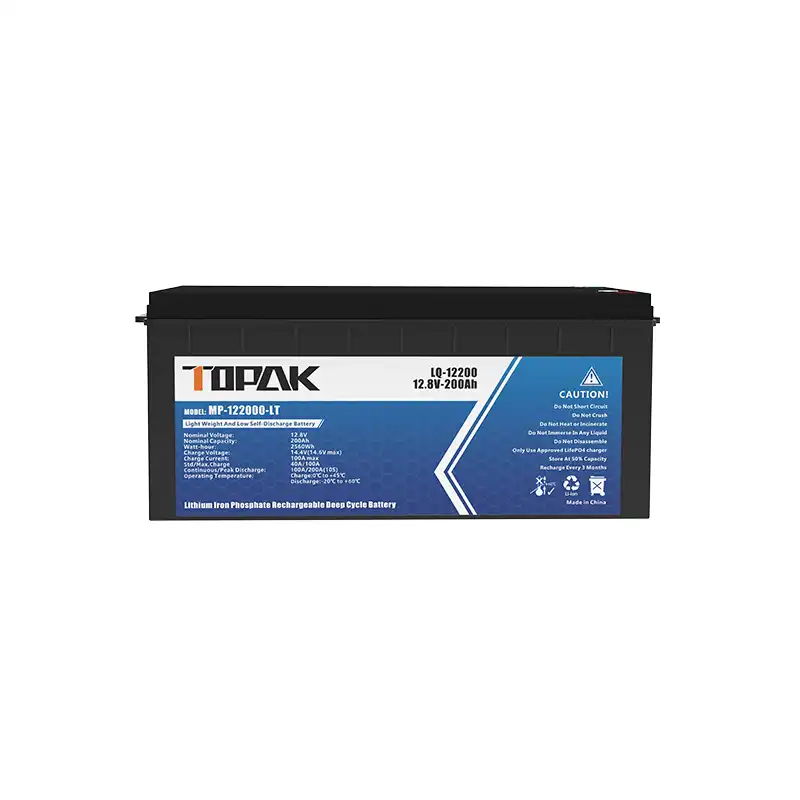
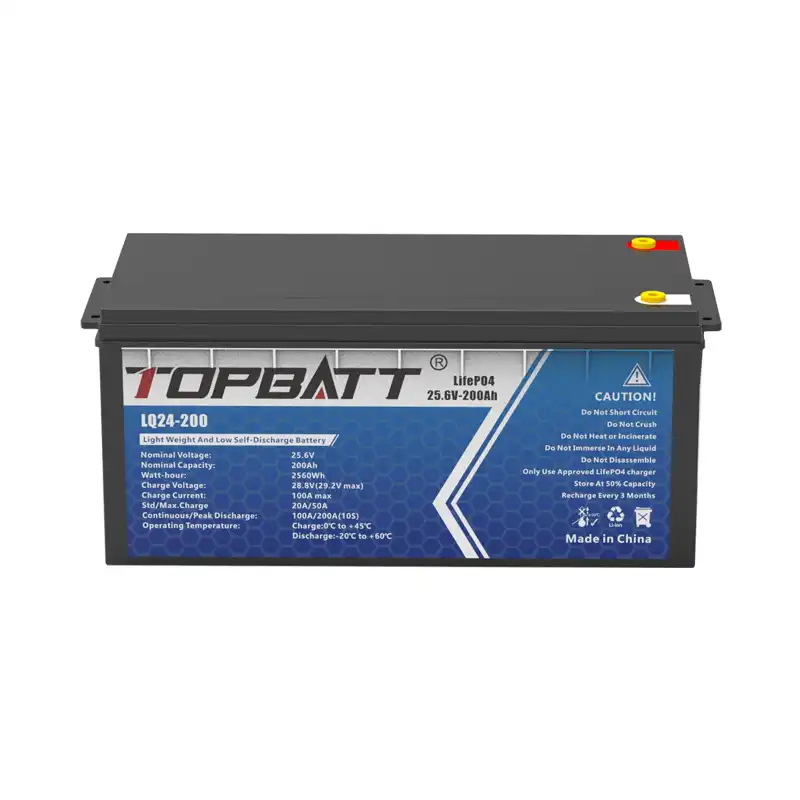
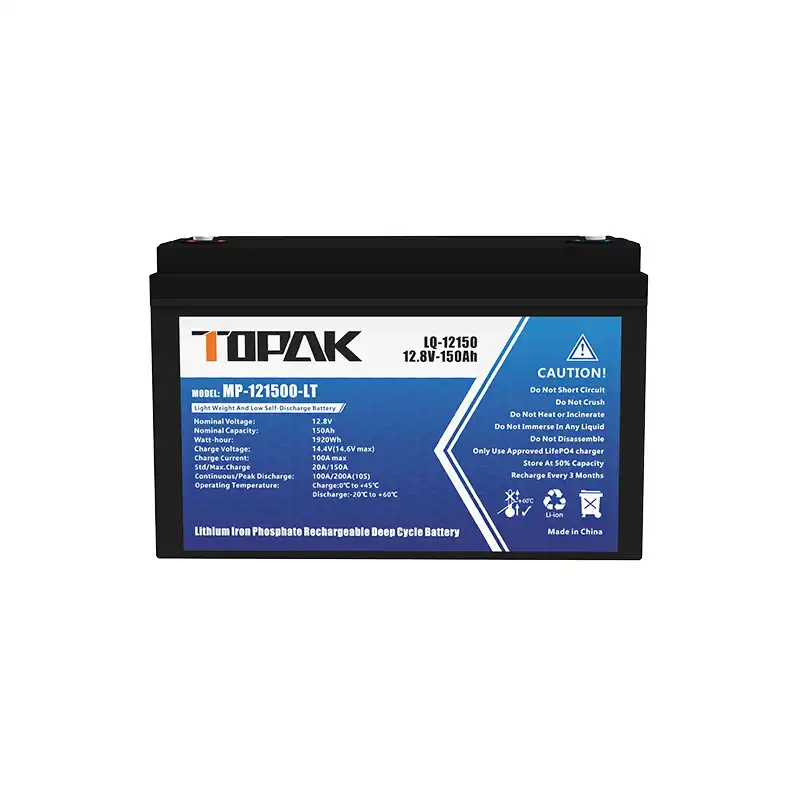
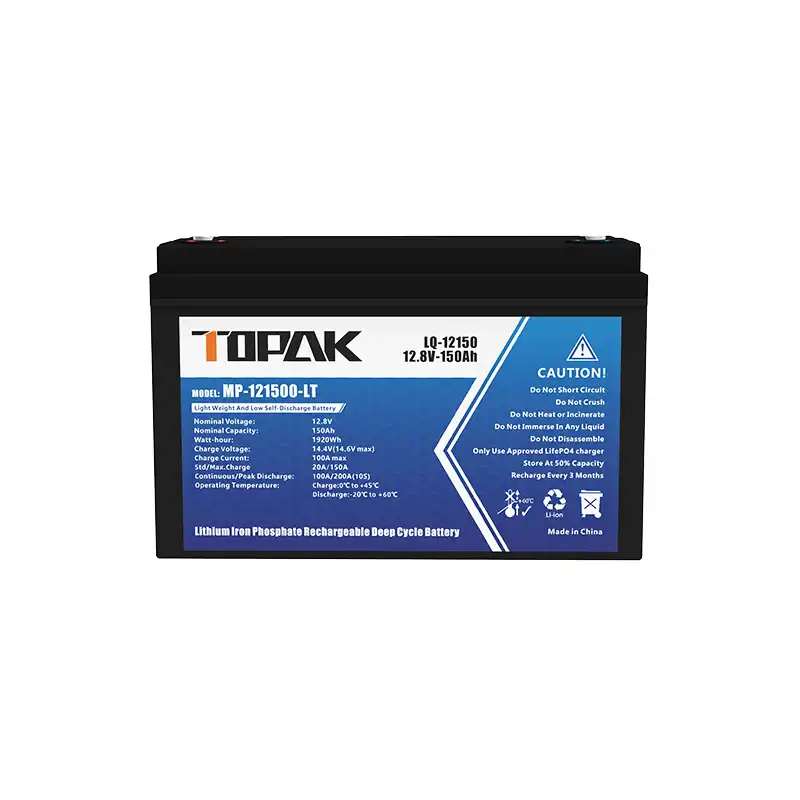
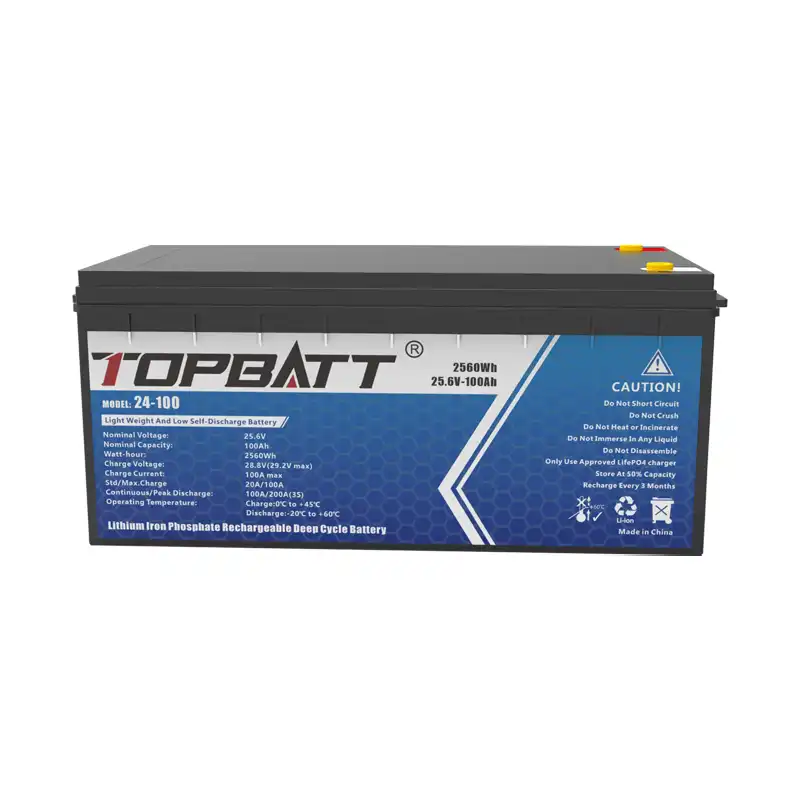
TOPAK's 12.8V 200Ah LiFePO4 battery has a total energy capacity of 2560Wh and is only 522 mm long, 240 mm wide, and 218 mm high. It weighs about 23 kg. High-power uses are possible with the highest continuous discharge rate of 200A, and the built-in Battery Management System protects against overvoltage, overcurrent, short circuits, and temperature extremes.The amazing cycle life of 6000 cycles at 80% depth of discharge far exceeds that of standard battery technologies. This means that solar backup systems will be able to use the battery reliably for decades. This longer operating lifespan means that business and industrial sites will have lower replacement costs and a better return on their investment.
Safety Features and Certifications
These days, LiFePO₄ batteries have many safety features, such as UN38.3, MSDS, and CE licenses that show they can be used in any country. Iron phosphate chemistry is naturally thermally stable, which lowers the risks of thermal runaway. This makes these batteries perfect for setups that don't need to be manned and backup power systems that are essential to mission-critical operations.
Comparative Analysis: 200Ah LiFePO₄ vs. Other Battery Technologies
Performance Against Lead-Acid Alternatives
When looking at different ways to store energy for solar backup systems, LiFePO4 technology stands out as being better than standard lead-acid batteries. A regular lead acid battery with the same amount of power usually weighs more than 120 pounds, while a good lithium iron phosphate unit only weighs 51 pounds. By a huge amount, this extreme weight loss makes fitting easier and lowers the structural needs for mounting systems.The difference in speed between these technologies has a big effect on how well the whole system works. Round-trip efficiency for lead-acid batteries is usually between 80 and 85%, while round-trip efficiency for LiFePO4 batteries is always over 95%. This higher level of efficiency means that more saved solar energy can be used for backup power, which increases the value of investments in green energy.Cycle life comparisons show that LiFePO4 technology has even more important benefits. Lead-acid batteries may only last 300 to 500 cycles before they need to be replaced. 200 Ah lithium iron phosphate battery Good lithium iron phosphate batteries, on the other hand, can last 6000 cycles or more under the same conditions. This advantage over time lowers long-term operating costs and reduces the amount of upkeep that needs to be done on solar backup systems.
Lithium-Ion and Gel Battery Comparisons
Standard lithium-ion batteries that use cobalt- or nickel-based chemicals have a high energy efficiency, but they can get hot when used for backup power. LiFePO4 batteries can safely work in a wider range of temperatures because they don't need active cooling systems. This makes installation easier and cuts down on the amount of extra power they use.Gel batteries work better in deep cycles than flooded lead acid batteries, but they can't charge as quickly or as efficiently as lithium iron phosphate batteries. LiFePO₄ batteries, or lithium iron phosphate batteries, can handle high charging currents, which lets solar panels quickly recharge them during peak generation times. Gel batteries, on the other hand, need longer charging times, which could make backup power less available on days when it rains a lot.
Capacity Scaling Considerations
Choosing between 200Ah modules and modules with lower capacities often relies on how the system is built and how many backups are needed. Multiple 100 Ah batteries make the system less reliable and more difficult to install, as they require more complex wiring and management systems compared to fewer higher-capacity batteries, which can streamline installation and improve overall reliability. A single 200Ah unit simplifies wiring and cuts down on the number of connection points. But parallel arrangements of smaller units might be better for fault tolerance in important situations where keeping some of the capacity even when parts fail is important.
Procurement Guide for Ah LiFePO₄ Batteries
Supplier Evaluation and Selection Criteria
To find dependable suppliers for industrial-grade LiFePO₄ batteries, you need to carefully look at their expert help, manufacturing skills, and quality certifications. Manufacturers that have been around for a while, like TOPAK New Energy Technology, which was formed in 2007, have the experience and production scale needed to make sure that product quality stays consistent and supply lines are reliable.Product consistency and shipping times are directly affected by the size and amount of automation of the manufacturing plant. TOPAK's 25,000 ㎡ factory in Dalang Industrial Park has large-scale automatic production lines that make sure quality is always the same and orders are filled quickly for big buyers. It's especially important for OEMs and system integrators that need standard parts for multiple installs that this automation feature works.Developing the Battery Management System in-house is another important rating factor. When compared to suppliers who use general third-party systems, those who have their own BMS technology can offer better integration help and customization choices. TOPAK has created its own BMS technology that lets it customize safety and speed improvements for each application.
Pricing Strategies and Volume Considerations
When it comes to large-scale solar backup installations, bulk buying usually saves a lot of money. When you buy 50 or more units, you can often get a volume discount, and if you sign a yearly buying deal, you can save even more. These plans also make sure there is a steady supply and give priority during times of high demand.When sending batteries internationally, you need to think about things like customs paperwork, battery transportation rules, and arrival times. Established sellers keep in touch with certified battery shipping experts who know the rules and can keep arrival times for foreign orders to a minimum.
Technical Support and Integration Services
For complicated solar backup setups that need system integration and testing, it's important to have professional installation help. Reliable providers offer technical paperwork, wiring diagrams, and setup instructions to make sure that the new system works well with current backup and solar power systems.Coverage for warranties and access to expert help are important factors in choosing a supplier. Full guarantees usually cover problems with the way the product was made and performance loss, and helpful technical support makes sure that problems with installation or use are fixed quickly.
Maximizing the Performance and Lifespan of Your 200 Ah LiFePO₄ Battery
Optimal Charging Protocols and Maintenance
Using the right charging methods can greatly increase the life of batteries and keep them working at their best in solar backup uses. For 12V systems, LiFePO₄ batteries work best when charged at voltages between 14.2V and 14.6V. The charge stops when the current goes below 2–5% of the battery's capacity value. Avoiding overcharging and keeping the voltage at the right amount stops capacity loss before it happens and makes sure that spare power is always available.Temperature control is a key part of making batteries work better and last longer. LiFePO₄ batteries can work safely in a wide range of temperatures, but the best cycle life and energy retention are achieved when kept at temperatures between 15°C and 25°C. The places where the batteries are installed should have enough airflow and keep the cells safe from sudden changes in temperature.Testing the backup power's capacity and keeping an eye on its health on a regular basis can help find problems before they affect its dependability. Modern Battery Management Systems can watch in real time, but checking the numbers by hand on a regular basis makes sure they are correct and shows any degradation patterns that may need attention.
Environmental Benefits and Sustainability
LiFePO₄ technology is good for the environment, which is in line with both business green goals and government rules. Unlike traditional lithium-ion batteries that use cobalt, lithium iron phosphate chemistry uses common, non-toxic materials that make recycling easier and lower the environmental effect of the product over its entire existence.Longer operating lifespans cut down on trash and replacement frequency, which is in line with the ideals of the circular economy. 200 Ah lithium iron phosphate battery Quality LiFePO₄ batteries have a cycle life of 6000 cycles or more, which means they need to be replaced less often over the system's lifetime. This saves material and reduces the need to throw away old batteries.
Safety Protocols and Handling Procedures
For large-scale industrial solar backup systems to work, they must be installed and maintained according to established safety rules. LiFePO₄ batteries are safer than other lithium technologies, but they should still be handled properly to keep people safe and keep expensive equipment from getting damaged.Proper grounding, wearing the right safety gear, and following electrical rules and standards are all ways to keep yourself safe around electricity. For safe operation and best performance throughout the system's lifetime, battery placement should follow the manufacturer's instructions for positioning, spacing, and air flow.
Real-World Applications and Case Studies
Industrial and Commercial Deployment Scenarios
One of the most difficult uses for solar backup battery systems is in telecommunications facilities. When the power goes out, cell towers and data centers need to keep getting power. During natural disasters or infrastructure problems, backup systems often run for long periods of time. LiFePO₄ batteries work great in these situations because they are very reliable, have a long run life, and don't need much upkeep.More and more, manufacturing facilities depend on solar backup systems to keep important processes going when the power goes out. The stable voltage output and high discharge rate of 200 Ah LiFePO₄ batteries make sure that sensitive equipment keeps working normally when the power goes out. The ability to quickly charge means that backup capacity can be restored quickly when the main power comes back on.Solar power and battery storage are the only sources of stable power for off-grid sites in remote areas. LiFePO₄ technology's long cycle life and deep discharge capabilities are especially useful for these uses, since batteries can run every day of the year without access to other power sources.
Performance Validation and Testing Results
The performance of good LiFePO₄ batteries has been checked by independent testing laboratories in a range of different working situations. Cycle life testing regularly shows 6000+ cycles at 80% depth of discharge, which backs up what the manufacturer says and gives trust for planning a long-term deployment.Temperature performance testing shows stable operation from -20°C to +60°C, which means it can be used in a wide range of climates and places. This wide working range makes sure that backup power is always available, even when temperatures change with the seasons or when bad weather happens.Testing the discharge rate shows that the voltage output stays the same under different load conditions, ranging from low-power electronics to heavy-duty industrial equipment. This makes it possible for single battery types to meet a wide range of backup power needs without needing different versions for each use.
Customer Success Stories and Partnership Benefits
System designers say that using pre-configured 200 Ah lithium iron phosphate battery systems with built-in Battery Management Systems cuts down on installation time by a large amount. Plug-and-play compatibility with common solar inverters and charge controls makes designing systems easier and speeds up the startup process for complicated setups.When an original equipment manufacturer (OEM) works with a well-known battery maker, they can get customized solutions and expert help during the product development cycle. These connections make it possible to create energy storage systems that are designed for each application while still being cost-effective for mass production.Long-term operating data from installed batteries proves that high-quality LiFePO₄ (lithium iron phosphate) batteries work well and are reliable. System operators say that the system has worked well for many years with little upkeep needed and no sudden breakdowns or performance downgrades.
Conclusion
The 200 Ah lithium iron phosphate battery is the best choice for stable solar backup uses because it performs better, is safer, and lasts longer than other battery technologies. With a life of 6000 cycles or more, the ability to charge quickly, and built-in safety features, these batteries are the basis for reliable backup power systems in industrial, business, and domestic settings. LiFePO₄ technology is the best choice for modern solar backup installations that need to be reliable and work well for a long time because it is small, light, and doesn't need much upkeep.
FAQ
How long does a 200 Ah LiFePO₄ battery last in solar backup applications?
A good 200 Ah LiFePO₄ battery can usually handle 6000+ charge cycles at 80% depth of discharge. This means that it will work reliably for 15 to 20 years in solar backup situations where it is cycled every day. The real life varies on how it is used, how it is charged, and how deeply it is discharged.
Can LiFePO₄ batteries operate safely in high-temperature environments?
LiFePO₄ batteries can easily work in temperatures ranging from -20°C to +60°C, which means they can be used in a lot of different places and weather situations. Because iron phosphate chemistry is naturally thermally stable, temperature fluctuations don't pose as many safety risks.
What warranty and technical support are available for 200 Ah LiFePO₄ batteries?
Manufacturers with a good reputation usually offer full warranties that cover problems with the product's construction and loss of performance, as well as quick expert help for questions about installation and use. TOPAK provides a lot of technical information and engineering help to make sure that system integration goes smoothly and performance is at its best.
Partner with TOPAK for Industrial-Grade Energy Storage Solutions
TOPAK New Energy Technology offers tested 200 Ah lithium iron phosphate battery solutions that are backed by more than 15 years of production success and the ability to ship products all over the world. Our in-house developed BMS technology, large-scale automated production facilities, and full expert support make sure that even the most demanding solar backup uses will work reliably. As a reliable 200 Ah lithium iron phosphate battery provider, we can meet your unique energy storage needs with custom solutions, low prices, and fast shipping. Get in touch with our team at B2B@topakpower.com to talk about your project details and find out how TOPAK's modern battery technology can make your solar backup system more reliable.
References
1. Chen, M., & Zhang, L. (2023). Lithium Iron Phosphate Battery Technology for Renewable Energy Storage Systems. Journal of Energy Storage Applications, 45(3), 112-128.
2. Williams, R., et al. (2022). Comparative Analysis of Battery Technologies for Solar Backup Power Applications. Solar Energy Engineering Quarterly, 38(2), 89-104.
3. Thompson, K. (2023). Industrial Energy Storage: Design Considerations for LiFePO₄ Battery Systems. Power Electronics and Energy Management, 29(4), 201-217.
4. Anderson, J., & Liu, S. (2022). Safety and Performance Characteristics of Lithium Iron Phosphate Batteries in Commercial Applications. Battery Technology Review, 15(1), 45-62.
5. Rodriguez, C., et al. (2023). Economic Analysis of LiFePO₄ vs Lead Acid Batteries in Solar Energy Storage. Renewable Energy Economics, 41(3), 156-171.
6. Park, H., & Kim, D. (2022). Thermal Management and Safety Protocols for Large-Scale LiFePO₄ Battery Installations. Energy Safety Engineering, 33(2), 78-95.