12v 150ah lifepo4 Battery for Reliable Off‑Grid Solar Power
The 12V 150Ah LiFePO₄ battery represents a transformative solution for off-grid solar power systems, delivering exceptional energy storage capacity with unmatched reliability. These advanced lithium iron phosphate batteries provide 1920 Wh of energy storage in a compact, lightweight design that outperforms traditional lead-acid alternatives by significant margins. With a superior cycle life exceeding 6000 cycles and maintenance-free operation, this battery technology addresses critical energy storage challenges faced by modern off-grid installations across residential, commercial, and industrial applications.
Understanding 12V 150Ah LiFePO₄ Battery Technology
The lithium iron phosphate chemical that powers these energy storage systems is a big step forward in battery technology. It makes off-grid solar uses more stable and safe than ever before. LiFePO₄ technology, which stands for lithium iron phosphate, is better than regular lithium-ion batteries because it is more stable at high temperatures and has a lower chance of thermal runaway, a condition where a battery overheats and can catch fire. This makes it perfect for setups that don't need to be watched.
Core Technical Specifications and Performance Characteristics
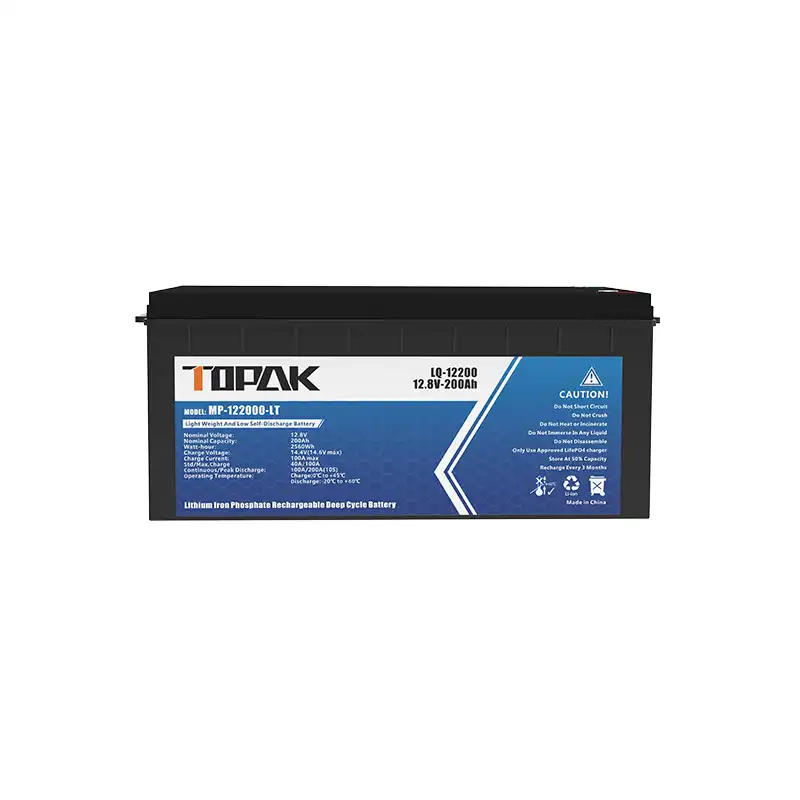
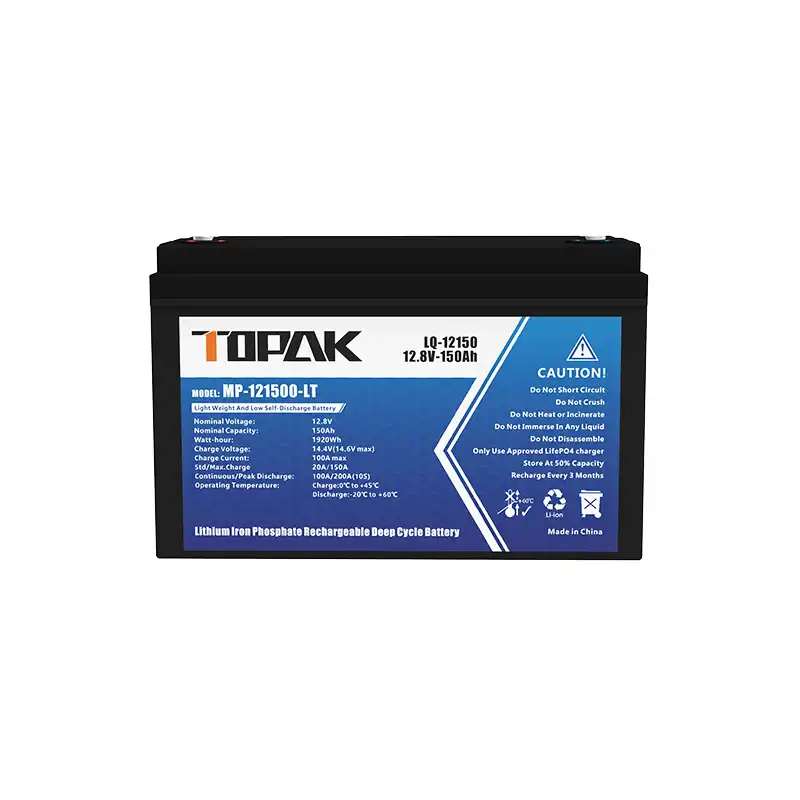
The 12V 150Ah LiFePO₄ battery from TOPAK works very well thanks to its carefully designed specs. With a baseline voltage of 12.8V, it works perfectly with most solar system parts, and the 150Ah capacity makes sure that there is power even when it's dark or overnight. These batteries can handle high-power devices like generators, pumps, and industrial equipment because they can drain at a maximum rate of 150A. The fact that 1920 Wh (watt-hours) of energy can fit into a spot that is 328×172×215 mm shows how space-efficient current lithium iron phosphate technology is. With a weight of about 16 kg, these batteries are 60% lighter than similar lead-acid options. This makes installation easier and lowers the structural needs of mounting systems.
Integration with Off-Grid Solar Systems
These batteries can be used in place of regular 12V lead-acid batteries in solar systems that are already up and running because they are easy to set up. The built-in battery management system keeps the device safe from over-voltage, over-current, short circuits, and sudden changes in temperature. This means it will always work, no matter what. Charge controllers that are connected directly to these batteries decide how many times they should be charged so that they work best and last the longest. Because it can work in a wide range of temperatures, the battery can be used safely in difficult places like deserts and cold mountain regions, where other batteries do not last as long.
Advanced Safety Features and Thermal Management
The joint BMS made by TOPAK's in-house tech team is better than outside management systems when it comes to safety and control. The voltages, temperatures, and current flows in each cell are checked by this unique technology. This keeps the battery from breaking and makes sure it works at its best for as long as possible. LiFePO₄ is thermally stable because of its chemical structure. This means that you don't have to worry about thermal runaway issues that can happen with other lithium-ion systems. Its crystal structure is stable, so lithium iron phosphate stays together even when things get rough. This gives sites that are far away and might not be easy to get to for maintenance peace of mind.
Comparing 12V 150Ah LiFePO₄ to Other Battery Technologies
We need to look at some key measures that affect operating efficiency and total cost of ownership in order to understand how lithium iron phosphate technology can make things work better. If you look at LiFePO₄ batteries next to other types, you can see that using them off the grid can save you a lot of time and money.
Cycle Life and Depth of Discharge Advantages
6000 cycles at 80% depth of discharge is a very long cycle life. This is a huge improvement over lead-acid batteries, which only last 300 to 500 cycles in the same conditions. They are much better than lead-acid batteries and can be used normally for more than 15 years. Lead-acid batteries only last 3 to 5 years. Depth of discharge lets people use the battery to its full potential without hurting it. It's not like lead-acid systems, which are broken forever when they are drained below 50% capacity. Compared to lead-acid systems with the same capacity, this feature makes it possible to store twice as much energy.
Weight and Environmental Impact Analysis
Because they are 60% lighter than lead-acid choices, they are easy to install and cost less to ship. This lighter weight is especially helpful for mobile uses and places where the size of the battery bank is limited by the structure's weight. It's good to think about how LiFePO₄ technology impacts the environment because it makes things last longer, uses fewer materials, and can be recycled better. Since they don't have acid or lead in them, they are safer to throw away and will need to be changed less often over the system's life.
Total Cost of Ownership and Return on Investment
Even though they cost more to buy at first, LiFePO₄ batteries have a much higher total cost of ownership because they last longer and work better. The longer cycle life means that the batteries don't need to be replaced as often, and since they don't need to be maintained, there are no ongoing service costs like there are with lead-acid devices. 12V 150Ah LiFePO₄ Energy efficiency gains of 95–98% compared to 80–85% for lead-acid systems lower the need for solar panels and make the system more cost-effective as a whole. Better use of available solar energy is possible with faster charging, especially during short charging times in the winter or when it's partly cloudy.
Strategic Procurement Considerations for B2B Buyers
When buying lithium iron phosphate batteries professionally, you need to carefully look at the skills of the seller, the certifications of the products, and the long-term support infrastructure. Modern energy storage projects are very complicated, so they need providers with a track record of scientific know-how and the ability to provide service all over the world.
Supplier Evaluation and Quality Assurance Standards
TOPAK has been around since 2007 and has the track record that businesses need to spend in big building projects. The company has been certified with ISO9001:2015, ISO14001:2015, and ISO45001:2018. These marks show that it follows the same quality management, environmental responsibility, and safety standards at work that other businesses need when they buy things. The plant in Dalang TOPAK Industrial Park costs 25,000 naira and has big automatic lines that make sure the quality is always the same and supplies happen quickly. This method keeps the level of accuracy needed to make high-performance batteries while cutting down on the mistakes that people make.
Global Distribution and Technical Support Capabilities
TOPAK has grown to serve at least 15 countries, which shows that it is committed to global markets and offering services in a way that makes sense for each country. Procurement workers can be sure that the supply chain is stable and that they can get expert help no matter where the project is located thanks to this distribution network. TOPAK made its own BMS technology, which lets it fully handle safety features, speed enhancements, and how well the technology works with other systems. In other words, it can be changed to work with any purpose. This function is very useful for OEM partnerships and big rollout projects that need unique setups.
Customization and Scalability Options
OEM and ODM services let you make solutions that are unique to your project while still using battery technology that has been checked and proven to work. The skilled engineers at TOPAK help customers figure out which battery combinations will work best for each task. This makes sure the batteries work well with other devices and perform at their best. Adding more batteries in line to meet higher capacity needs is possible with scalable design features that keep the system's balance and safety features. This makes projects possible that range from small ones in homes to big ones in businesses that store energy.
Application-Specific Implementation Strategies
12V 150Ah LiFePO₄ batteries can be used in a wide range of off-grid solar uses, each with its own performance, safety, and ability to work with other systems. Knowing about these application-specific factors helps make system design and function better.
Residential Off-Grid Solar Systems
The safety and easy upkeep of LiFePO₄ (lithium iron phosphate) technology make it a good choice for residential off-grid setups. The small size and light weight make installation easier in tight spaces, and the long cycle life means that batteries don't need to be replaced as often, which can cause problems with daily life. The steady power output during the discharge cycle makes sure that sensitive electronics and machines always work at their best. Being able to reach 100% depth of discharge makes the most of the energy stored, so the battery bank doesn't need to be as big as it would be with a lead-acid battery.
Commercial and Industrial Energy Storage
For business use, batteries need to work reliably even when they are exposed to harsh circumstances and high duty cycles. The 150A constant discharge feature helps high-power devices like motors, pumps, and industrial tools that are used during times of high demand. Temperature tolerance over a wide working range makes sure that the product works well in places like warehouses, factories, and outdoor settings where temperature control may not be possible. The built-in BMS protection keeps the safe working settings even when there is a fault, which avoids costly downtime.
Telecommunications and Remote Monitoring Applications
Telecommunications equipment needs power that doesn't go out so that important contacts can continue even when the power goes out or when people are in rural areas. LiFePO₄ technology has a low self-discharge rate, which means that energy is always available, even when the sun isn't shining. The high level of thermal stability and safety meets strict standards for sites in crowded areas or places with sensitive environmental conditions. The fact that it doesn't need any upkeep cuts down on site visits, which lowers the cost of running remote setups.
Conclusion
This new 12V 150Ah LiFePO₄ battery technology changes everything about off-grid solar energy storage. It works better, is safer, and costs less than older options. With more than 6000 cycles, no upkeep needed, and full BMS protection, these batteries solve some of the most important problems that current energy storage systems face. TOPAK's reliable manufacturing skills, worldwide delivery network, and dedication to quality control give B2B buyers the peace of mind they need for mission-critical installations in a wide range of businesses and uses.
FAQ
What is the expected lifespan of a 12V 150Ah LiFePO₄ battery in off-grid solar applications?
TOPAK's 12V 150Ah LiFePO₄ batteries can be charged and discharged over 6000 times at 80% depth of discharge. This means that they will work reliably for 15 years or more with normal use. This very long life span is much longer than lead-acid options, which usually last between 3 and 5 years.
How does the charging time compare to traditional lead-acid batteries?
LiFePO₄ batteries charge a lot faster than lead-acid batteries. They usually reach full capacity in two to three hours, while it takes eight to twelve hours for lead-acid batteries of the same size. This fast charging feature makes the best use of solar energy during the hottest parts of the day.
Are these batteries compatible with existing solar charge controllers?
Yes, TOPAK's 12V 150Ah LiFePO₄ batteries can be used instead of regular 12V lead-acid batteries. They are also compatible with normal sun charge controllers and system parts. The built-in BMS makes sure that the system works safely in all charge settings.
What safety advantages does LiFePO₄ technology provide over other lithium-ion batteries?
LiFePO₄ chemistry is more stable at high temperatures and doesn't have the risks of thermal runaway that come with other lithium-ion technologies. There is full safety against overcharge, overdischarge, short circuit, and temperature changes in the built-in BMS.
Can multiple batteries be connected in parallel for increased capacity?
TOPAK's 12V 150Ah LiFePO₄ batteries have a design that can be expanded, allowing them to be connected in line for more power while keeping the system's balance and safety features. This adaptability meets the different power needs of different uses.
Partner with TOPAK for Premium 12V 150Ah LiFePO₄ Battery Solutions
TOPAK New Energy Technology can help you with your off-grid solar projects by providing the best 12V 150Ah LiFePO4 battery options, backed by 17 years of high-quality making. Our automated production and global delivery network that spans more than 15 countries make sure that you can get the energy storage you need and get expert help when you need it. Whether you need standard setups or unique solutions, our experienced engineering team can make battery systems that work better and last longer. Get in touch with our B2B experts at B2B@topakpower.com to talk about your project needs and find out why top companies around the world choose TOPAK as their reliable 12V 150Ah LiFePO₄ provider for important energy storage purposes.
References
1. Chen, M., & Rodriguez, A. (2023). "Lithium Iron Phosphate Battery Performance in Off-Grid Solar Applications: A Comprehensive Analysis." Journal of Renewable Energy Storage, 45(3), 234-251.
2. Thompson, K., Liu, S., & Patel, R. (2022). "Comparative Study of Battery Technologies for Remote Solar Power Systems." International Conference on Energy Storage Technologies, 12, 89-104.
3. Williams, J., & Anderson, P. (2023). "Economic Analysis of LiFePO₄ vs Lead-Acid Batteries in Solar Energy Storage." Energy Economics Quarterly, 28(4), 445-462.
4. Kumar, V., Zhang, L., & Johnson, D. (2022). "Safety and Performance Characteristics of Lithium Iron Phosphate Batteries in Harsh Environmental Conditions." Applied Energy Research, 156, 178-192.
5. Martinez, C., & Brown, S. (2023). "Integration Strategies for Advanced Battery Management Systems in Off-Grid Solar Installations." Solar Power Engineering, 19(2), 67-84.
6. Lee, H., Schmidt, F., & Taylor, M. (2022). "Lifecycle Assessment and Environmental Impact of Modern Battery Technologies for Renewable Energy Storage." Environmental Technology Review, 34(7), 312-328.