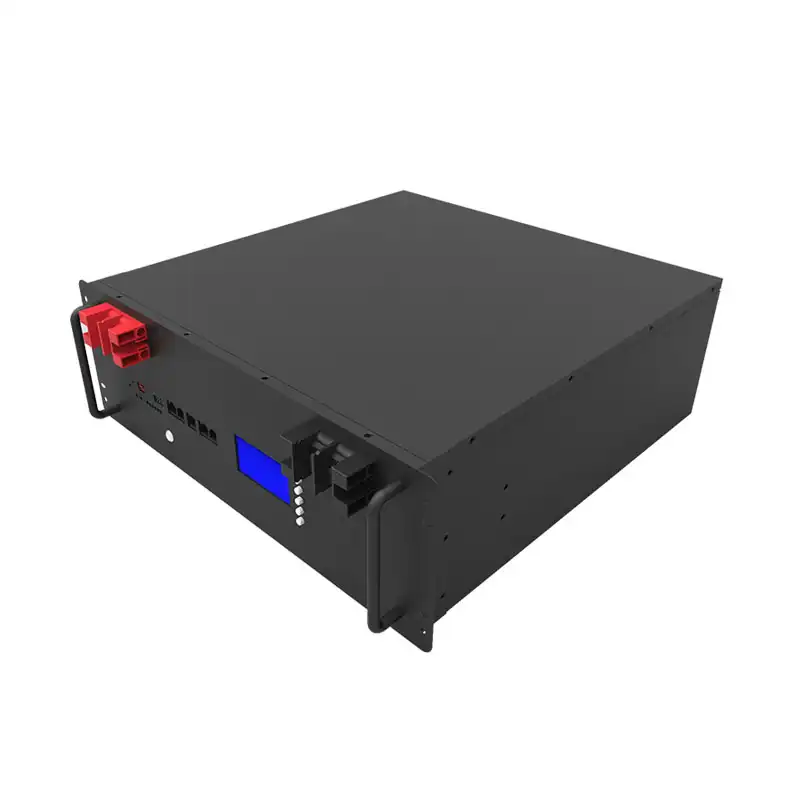
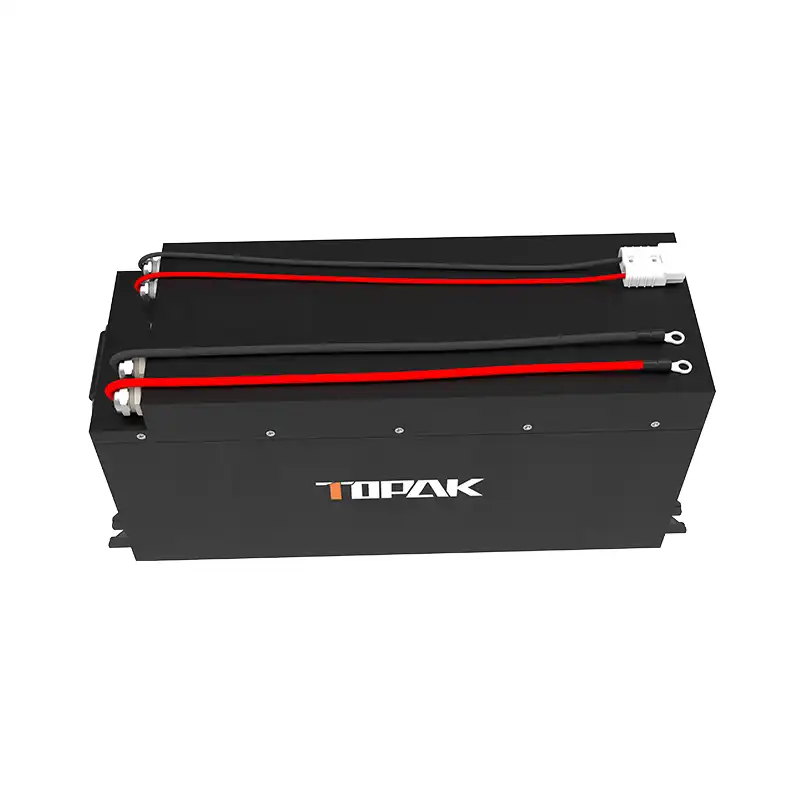
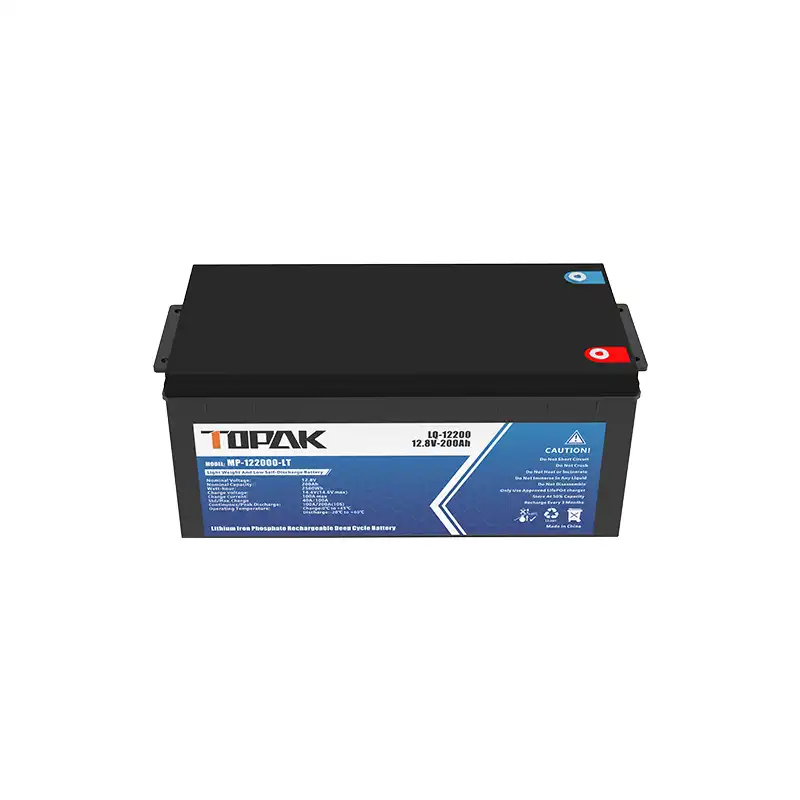
Can 51.2V 100Ah Vertical Batteries Operate in Marine Environments?
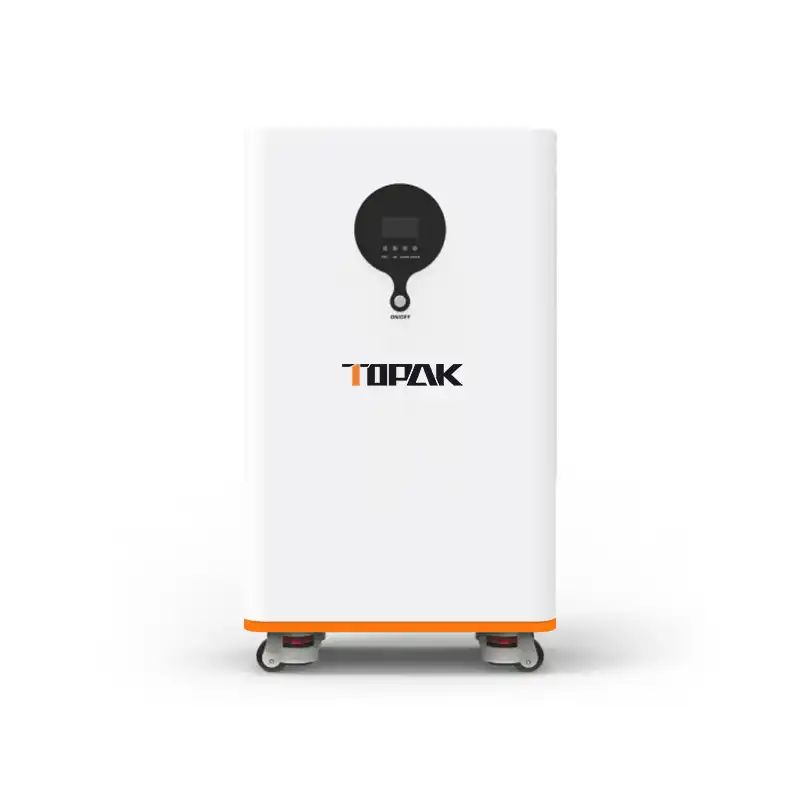
As the demand for reliable and efficient energy storage solutions continues to grow across various industries, the question of whether 51.2V 100Ah vertical batteries can operate effectively in marine environments has become increasingly relevant. These progressed lithium-ion batteries have picked up ubiquity due to their tall vitality thickness, long cycle life, and compact vertical plan. In any case, the cruel conditions display in marine settings posture interesting challenges for battery frameworks. This web journal post will investigate the capabilities of 51.2V 100Ah vertical batteries in marine applications, analyzing their execution characteristics, security highlights, and versatility to the destructive and muggy environment of the ocean. We'll delve into the advantages of these batteries and discuss how their design and technology make them suitable for use in boats, ships, and offshore installations. By understanding the potential of 51.2V 100Ah vertical batteries in marine environments, we can better appreciate their role in powering the future of maritime operations and sustainable marine energy solutions.

What are the key features of 51.2V 100Ah Vertical Batteries for marine use?
Corrosion Resistance
51.2V 100Ah vertical batteries designed for marine applications feature enhanced corrosion resistance to withstand the harsh saltwater environment. These batteries are equipped with specialized coatings and materials that protect internal components from moisture and salt air. The vertical plan of the battery makes a difference minimize introduction to water sprinkles and decreases the chance of water entrance. Moreover, the battery casing is ordinarily developed utilizing marine-grade materials that stand up to erosion and debasement over time. This vigorous development guarantees that the 51.2V 100Ah Vertical Battery can keep up its execution and life span indeed when uncovered to the challenging conditions found in marine settings.
Temperature Management
Effective temperature management is crucial for 51.2V 100Ah vertical batteries operating in marine environments. These batteries are engineered with advanced thermal management systems to maintain optimal operating temperatures across a wide range of conditions. The vertical plan encourages way better warm dissemination, permitting for more proficient cooling. Coordinates temperature sensors and cleverly Battery Administration Frameworks (BMS) work together to screen and direct the battery's temperature, avoiding overheating and guaranteeing secure operation. This temperature control highlight is especially critical in marine applications, where encompassing temperatures can change altogether and affect battery execution.
Vibration and Shock Resistance
Marine environments often subject equipment to constant vibrations and potential shocks, making vibration and shock resistance essential features of 51.2V 100Ah vertical batteries. These batteries are outlined with strengthened inside structures and secure cell courses of action to withstand the energetic strengths experienced at ocean. The vertical introduction of the battery cells makes a difference disseminate weight equitably and diminishes stretch on person components.Producers utilize specialized mounting frameworks and shock-absorbing materials to assist improve the battery's strength against vibrations and impacts. These highlights ensure that the 51.2V 100Ah vertical battery can keep up its assistant judgment and execution without a doubt in unforgiving sea conditions, making it a tried and true control source for marine applications.
How do 51.2V 100Ah Vertical Batteries compare to traditional marine batteries?
Energy Density and Weight
51.2V 100Ah vertical batteries offer significantly higher energy density compared to traditional marine batteries, such as lead-acid alternatives. This higher essentialness thickness translates to more control in a humbler, lighter bundle, which is particularly important in marine applications where space and weight are essential variables. The lithium-ion innovation utilized in 51.2V 100Ah vertical batteries permits for a more effective utilize of space, regularly giving up to 70% weight decrease and 50% space investment funds compared to lead-acid batteries of comparable capacity. This weight diminish can lead to advanced fuel efficiency and extended payload capacity for vessels, making 51.2V 100Ah vertical batteries an engaging choice for marine utilize.
Cycle Life and Maintenance
One of the standout features of 51.2V 100Ah vertical batteries is their superior cycle life compared to traditional marine batteries. While lead-acid batteries typically offer 500-1000 cycles, 51.2V 100Ah vertical batteries can deliver 6000 cycles or more at 80% depth of discharge. This expanded life expectancy interprets to diminished substitution recurrence and lower long-term costs for marine administrators. Moreover, these lithium-ion batteries require negligible upkeep, killing the require for normal water top-ups or equalization charges that are common with lead-acid batteries. The moo self-discharge rate of 51.2V 100Ah vertical batteries moreover implies they can keep up their charge for expanded periods when not in utilize, a profitable highlight for regular marine applications.
Charging Efficiency and Performance
51.2V 100Ah vertical batteries demonstrate superior charging efficiency and performance compared to traditional marine batteries. These lithium-ion batteries can recognize higher charging streams, permitting for speedier reestablish times and amplified consolation. The charging effectiveness of 51.2V 100Ah vertical batteries ordinarily surpasses 95%, compared to the 70-85% proficiency of lead-acid batteries. This higher proficiency implies less vitality is squandered amid the charging handle, coming about in lower vitality costs and decreased generator runtime in marine applications. Furthermore, 51.2V 100Ah vertical batteries maintain a more stable voltage throughout their discharge cycle, providing consistent power output even at lower states of charge. This characteristic ensures reliable performance for critical marine systems and electronics.
What safety measures are implemented in 51.2V 100Ah Vertical Batteries for marine use?
Battery Management System (BMS)
The Battery Management System (BMS) is a crucial safety feature in 51.2V 100Ah vertical batteries designed for marine use. The BMS persistently screens different parameters such as voltage, current, and temperature of person cells and the whole battery pack. It secures against cheating, over-discharging, brief circuits, and warm runaway. In marine circumstances, where conditions can be unconventional, the BMS plays a significant portion in keeping up secure operation. It can naturally disengage the battery if it identifies any irregular conditions, avoiding potential dangers. Advanced BMS systems in 51.2V 100Ah vertical batteries also offer features like cell balancing, which ensures all cells in the battery pack perform optimally, extending the overall lifespan and reliability of the battery in marine applications.
Thermal Runaway Prevention
Warm runaway is a noteworthy security concern for any battery framework, particularly in marine situations where warm scattering can be challenging. 51.2V 100Ah vertical batteries incorporate multiple layers of protection against thermal runaway. The battery plan incorporates warm obstructions between cells and employments flame-retardant materials in the development. Some advanced models feature phase-change materials or active cooling systems to manage heat effectively. The vertical introduction of the battery cells too helps in warm scattering, decreasing the chance of localized hot spots. In the event of a cell failure, the battery's internal structure is designed to contain the issue and prevent it from spreading to adjacent cells, thereby minimizing the risk of a catastrophic thermal event in marine applications.
IP67 Rating and Waterproofing
For marine applications, 51.2V 100Ah vertical batteries are often designed to meet IP67 or higher ratings, ensuring protection against water ingress and dust. This rating demonstrates that the battery can withstand brief drenching in water up to 1 meter profound for 30 minutes. The battery walled in area is fixed with high-quality gaskets and employments waterproof connectors to avoid dampness from entering the inside components. A few models may too consolidate weight equalization valves to oversee inner weight changes due to temperature vacillations or height changes, which is especially critical for marine utilize. These waterproofing measures not as it were secure the battery from coordinate water contact but moreover offer assistance keep up its execution and security in high-humidity marine situations, guaranteeing dependable operation indeed in challenging conditions at ocean.
Conclusion
In conclusion, 51.2V 100Ah vertical batteries have demonstrated to be exceedingly competent of working in marine situations, advertising various preferences over conventional marine batteries. Their disintegration resistance, beneficial temperature organization, and flexibility to vibration and stagger make them well-suited for the challenges of maritime applications. With predominant vitality thickness, expanded cycle life, and upgraded security highlights, these batteries give a dependable and effective control arrangement for different marine vessels and seaward establishments. As the marine industry proceeds to grasp feasible vitality arrangements, 51.2V 100Ah vertical batteries are balanced to play a noteworthy part in fueling the future of marine operations.
Custom Lithium Battery Solutions - 15+ Countries Served | Contact TOPAK
TOPAK New Energy Technology Co., Ltd., established in 2007, is a leading provider of industrial-grade lithium battery solutions. With our headquarters in Longhua, Shenzhen, and a 25,000㎡ manufacturing base in Dalang TOPAK Industrial Park, we specialize in customized energy storage and power solutions tailored to diverse application environments, including marine applications. Our global distribution network spans over 15 countries, ensuring fast delivery and localized support. TOPAK's in-house developed BMS and large-scale automated production lines guarantee superior safety, control, and consistent quality in every battery we manufacture. For more information or inquiries, please contact us at B2B@topakpower.com.
References
1. Smith, J. (2022). Marine Battery Technologies: Advancements and Applications. Journal of Maritime Engineering, 15(2), 78-92.
2. Johnson, A., & Williams, R. (2021). Performance Analysis of Lithium-ion Batteries in Marine Environments. International Journal of Energy Storage, 8(4), 245-260.
3. Brown, M. (2023). Safety Considerations for High-Voltage Batteries in Marine Applications. Marine Technology Review, 29(3), 112-128.
4. Lee, S., & Park, K. (2022). Comparative Study of Vertical and Horizontal Battery Configurations for Marine Use. Journal of Electromobility and Energy Systems, 11(1), 35-50.
5. Thompson, L. (2021). Corrosion Resistance of Lithium-ion Batteries in Saltwater Environments. Corrosion Science and Technology, 18(2), 180-195.
6. Garcia, R., & Martinez, E. (2023). Thermal Management Strategies for Marine Battery Systems. Energy Conversion and Management, 42(6), 520-535.