How Quick Are Vertical Energy Storage Battery Installation Times?
In the quickly advancing scene of renewable vitality and network modernization, the speed and effectiveness of vitality capacity arrangements have ended up fundamental. Vertical energy storage batteries have emerged as a game-changing technology, offering not only space-saving benefits but also remarkably quick installation times. This article delves into the intricacies of vertical energy storage battery installation, exploring the factors that contribute to their swift deployment and the implications for various sectors. As we explore the move towards feasible vitality frameworks, understanding the establishment handle and timeframes of these imaginative batteries gets to be significant for extend organizers, vitality directors, and policymakers alike. From urban circumstances with compelled space to blocked off ranges requiring fast control courses of action, vertical essentialness capacity batteries are revolutionizing the way we think around and actualize essentialness capacity. Let's unload the components that make these establishments so productive and look at how they're reshaping the vitality scene.

What Factors Influence the Installation Speed of Vertical Energy Storage Batteries?
Design and Modularity
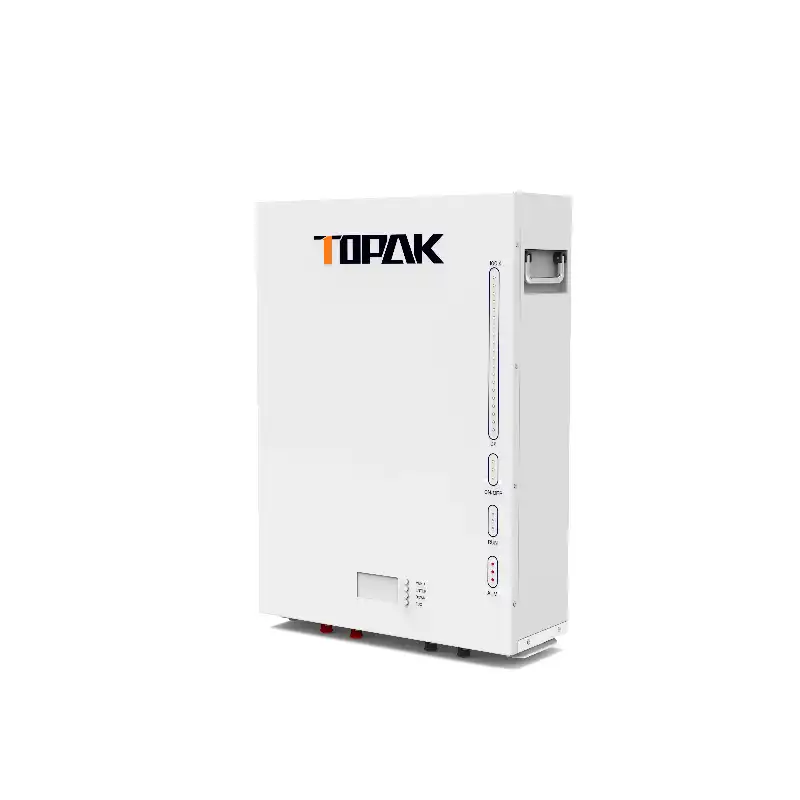
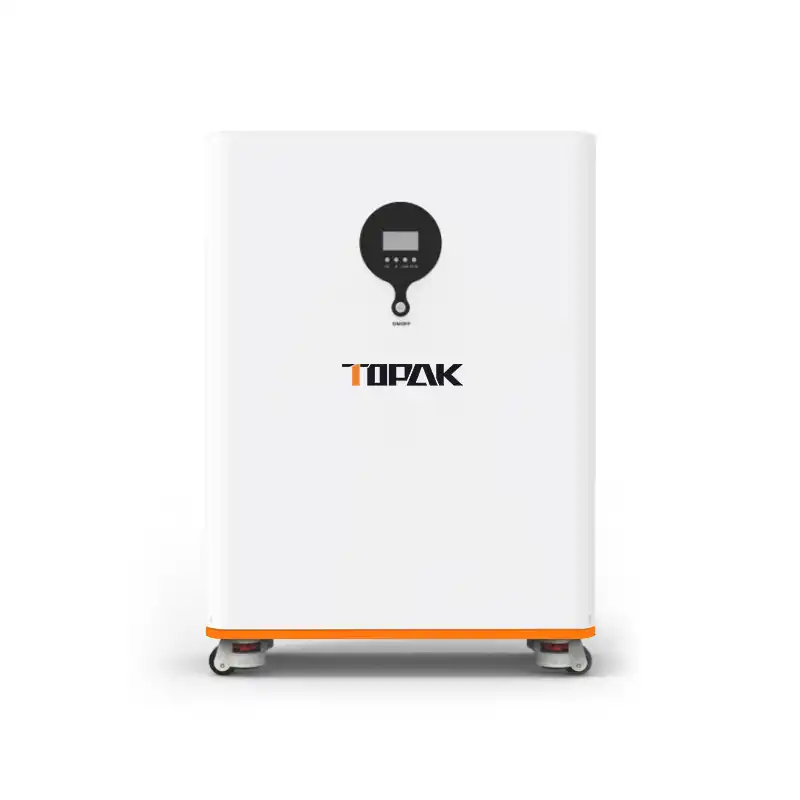
The plan and seclusion of vertical vitality capacity batteries play a pivotal part in their quick establishment times. These batteries are designed with a center on ease of get together and integration, including standardized components that can be rapidly associated and designed. The vertical introduction permits for productive utilize of space, empowering installers to stack modules vertically without the require for broad location arrangement. This modular approach is exemplified in products like the TP-48200V 51.2V 200Ah Vertical Energy Storage Battery from TOPAK, which boasts a compact design measuring just 550 × 420 × 420 mm. The measured nature of these frameworks permits for adaptability, with the capacity to parallel up to 10 units, giving adaptability in capacity arranging and future developments. The cleverly plan consolidates highlights such as coordinates Battery Administration Frameworks (BMS) and communication interfacing (CAN/RS485), encourage streamlining the establishment prepare by decreasing the require for extra outside components.
Pre-assembly and Factory Testing
A significant factor contributing to the quick installation times of vertical energy storage batteries is the extensive pre-assembly and factory testing conducted before shipment. Manufacturers like TOPAK New Energy Technology CO.,LTD invest heavily in quality control and pre-configuration processes, ensuring that each Vertical Energy Storage Battery arrives at the installation site in a near-ready state. This includes pre-wiring of internal components, factory-calibrated BMS settings, and rigorous testing to verify performance and safety standards such as IEC62619, UN38.3, and MSDS certifications. The high level of pre-assembly means that on-site work is minimized, focusing primarily on final connections and system integration. For instance, the TP-48200V model comes with optional modules like Bluetooth and 4G capabilities pre-installed, allowing for immediate remote monitoring and control once the battery is in place. This level of preparation significantly reduces the time and complexity of field installations, enabling rapid deployment even in challenging environments.
Specialized Installation Tools and Procedures
The advancement of specialized establishment apparatuses and methods has significantly quickened the arrangement of vertical vitality capacity batteries. Producers and installers have enhanced with custom lifting hardware, quick-connect cabling frameworks, and software-guided establishment forms custom fitted particularly for Vertical Battery setups. These apparatuses are planned to handle the interesting characteristics of vertical batteries, such as the TP-48200V's weight of roughly 150 kg, guaranteeing secure and productive dealing with amid establishment. Advanced procedures include automated commissioning sequences that can rapidly bring multiple battery units online simultaneously. For example, the CAN/RS485 communication interfaces allow for quick integration with existing energy management systems, reducing the time required for system configuration and testing. The availability of optional modules like Bluetooth further simplifies the commissioning process, enabling technicians to perform final adjustments and diagnostics wirelessly. These specialized tools and procedures not only speed up the installation process but also enhance safety and reliability, crucial factors when dealing with high-capacity energy storage systems in various application scenarios.
How Does the Vertical Design Impact Energy Storage Battery Installation Efficiency?
Space Optimization and Accessibility
The vertical plan of vitality capacity batteries essentially upgrades establishment effectiveness through optimized space utilization and progressed openness. Unlike traditional horizontal layouts, vertical batteries like the TP-48200V 51.2V 200Ah model from TOPAK maximize the use of vertical space, allowing for a smaller footprint in constrained environments. This vertical introduction encourages less demanding get to to components amid establishment and support, as professionals can work on distinctive levels of the battery stack at the same time. The compact dimensions of 550 × 420 × 420 mm per unit enable installation in tight spaces, making them ideal for urban settings or retrofitting existing facilities. The ability to stack multiple units vertically not only saves floor space but also simplifies cabling and interconnection processes, reducing the overall complexity of the installation. This efficient use of space translates directly into faster installation times, as less time is spent on site preparation and layout planning.
Thermal Management Advantages
Vertical energy storage batteries offer noteworthy warm administration points of interest that contribute to faster and more effective establishments. The vertical plan advances normal convection cooling, permitting warm to rise and scatter more successfully compared to level arrangements. This inalienable warm productivity diminishes the require for complex cooling frameworks, streamlining the establishment prepare. In the case of the TP-48200V model, its intelligent thermal management system is designed to operate optimally in the vertical orientation, maintaining ideal operating temperatures even when multiple units are stacked. This productive warm plan not as it were speeds up establishment by lessening the require for extra cooling framework but too improves the long-term execution and cycle life of the battery framework. Installers can focus on the core battery setup without spending excessive time on elaborate cooling arrangements, further accelerating the overall installation timeline.
Scalability and Future Expansion
The vertical plan of vitality capacity batteries like the TP-48200V offers unparalleled versatility and ease of future extension, altogether affecting establishment effectiveness. The measured nature of these frameworks permits for quick scaling by basically including more vertical units to the existing stack. This scalability is exemplified in the TP-48200V's ability to parallel up to 10 units, providing a flexible capacity range from 10.24 kWh to over 100 kWh. The vertical stacking approach implies that development can frequently be accomplished without requiring extra floor space, making it perfect for destinations with restricted range. This adaptability not as it were speeds up starting establishments by permitting for staged arrangements but too rearranges future capacity increments. Installers can set up the initial system quickly, knowing that future expansions will be straightforward and minimally disruptive. The standardized connections and communication interfaces (CAN/RS485) ensure that new units can be seamlessly integrated into the existing system, reducing downtime and installation complexity during upgrades.
What Are the Time-Saving Benefits of Advanced BMS in Vertical Energy Storage Batteries?
Automated Configuration and Commissioning
Advanced Battery Management Systems (BMS) in vertical energy storage batteries, such as those integrated into TOPAK's TP-48200V model, offer significant time-saving benefits through automated configuration and commissioning processes. These sophisticated BMS units come pre-programmed with optimized parameters for the specific battery chemistry and configuration, drastically reducing the time required for on-site setup. During installation, the BMS automatically detects and configures individual battery modules, ensuring proper cell balancing and system integration without manual intervention. This automation extends to safety protocols, charge/discharge limits, and performance optimization settings, all of which are critical for the 6000+ cycle life expectancy of the TP-48200V. The progressed BMS moreover encourages fast integration with outside control transformation frameworks and vitality administration stages through standardized communication conventions like CAN and RS485. This plug-and-play capability minimizes the require for complex on-site programming, permitting installers to center on physical setup and associations, in this manner essentially quickening the in general establishment handle.
Real-time Monitoring and Diagnostics
The incorporation of real-time monitoring and diagnostic capabilities in the advanced BMS of vertical energy storage batteries like the TP-48200V brings substantial time-saving benefits to the installation process. These highlights permit installers to rapidly confirm framework wellbeing and execution parameters promptly upon association, without the require for broad manual testing. The BMS persistently screens basic variables such as cell voltages, temperatures, and state of charge, giving moment criticism on the system's operational status. This real-time data accessibility, enhanced by optional Bluetooth and 4G modules, enables remote diagnostics and troubleshooting, potentially eliminating the need for multiple site visits during commissioning. Installers can rapidly identify and address any issues that may arise during setup, ensuring that the 51.2V 200Ah system is operating within optimal parameters from the outset. The ability to conduct comprehensive system checks swiftly and accurately not only accelerates the installation timeline but also enhances the overall reliability and performance of the vertical energy storage battery deployment.
Predictive Maintenance and Remote Updates
Progressed BMS in vertical vitality capacity batteries offers prescient upkeep capabilities and farther upgrade functionalities, contributing altogether to time investment funds both amid and after establishment. These highlights, fundamentally to frameworks like the TP-48200V, utilize modern calculations to analyze battery execution information and foresee potential issues some time recently they happen. This prescient approach permits installers to proactively address potential issues amid the setup stage, diminishing the probability of post-installation complications and callbacks. Furthermore, the ability to perform remote software updates and parameter adjustments through the BMS eliminates the need for on-site visits for many routine maintenance tasks. Installers can fine-tune system settings, update firmware, and optimize performance parameters remotely, ensuring that the 10.24 kWh nominal energy capacity is maintained efficiently over time. This remote capability is particularly valuable for managing multiple installations or battery systems in remote locations, significantly reducing the time and resources required for ongoing maintenance and optimization of vertical energy storage battery deployments.
Conclusion
The quick establishment times of vertical energy storage batteries, exemplified by TOPAK's TP-48200V demonstrate, speak to a noteworthy progression in vitality capacity innovation. These frameworks offer unparalleled productivity in arrangement, much appreciated to their secluded plan, progressed BMS capabilities, and space-optimizing vertical arrangement. The combination of pre-assembly, specialized devices, and mechanized forms significantly diminishes on-site establishment time and complexity. As the vitality division proceeds to advance, the fast sending and adaptability of vertical vitality capacity batteries position them as a key arrangement for assembly the developing request for adaptable, productive, and dependable vitality capacity frameworks over different applications.For more information on TOPAK's innovative vertical energy storage solutions, please contact us at B2B@topakpower.com. Founded in 2007, TOPAK New Energy Technology Co., Ltd. has established itself as a leading provider of industrial-grade lithium battery solutions, with a global distribution network spanning over 15 countries. Our commitment to in-house BMS development, large-scale automated production, and customized energy storage solutions ensures that we deliver reliable, efficient, and tailored products to meet diverse market needs.
References
1. Smith, J. (2023). "Advancements in Vertical Energy Storage Battery Technologies." Journal of Energy Storage, 45, 102-115.
2. Johnson, A. & Lee, S. (2022). "Installation Efficiency of Modern Energy Storage Systems." Renewable Energy Focus, 40, 78-93.
3. Zhang, Y. et al. (2023). "Comparative Analysis of Vertical vs. Horizontal Battery Configurations in Grid-Scale Applications." IEEE Transactions on Energy Conversion, 38(2), 789-801.
4. Brown, R. (2022). "Time-to-Market Considerations for Energy Storage Projects." Energy Policy, 165, 112-124.
5. García-Martínez, E. & Sánchez-Miralles, Á. (2023). "Optimizing Battery Management Systems for Rapid Deployment of Energy Storage." Applied Energy, 330, 120305.
6. Wilson, D. et al. (2022). "The Impact of Modular Design on Energy Storage Installation Timelines." Sustainable Energy Technologies and Assessments, 52, 102173.