Commercial-Grade 12V 200Ah LiFePO4 Lithium Battery Solution
When industrial operations demand reliable, high-performance energy storage, the 12V 200Ah LiFePO4 lithium battery emerges as the cornerstone solution for modern B2B applications. This advanced lithium iron phosphate technology delivers exceptional power density, extended operational life, and unmatched safety standards that traditional battery systems simply cannot match. With specifications including 2560Wh energy capacity, 6000+ cycle life, and integrated Battery Management System protection, these commercial-grade batteries represent the future of industrial energy storage across telecommunications, renewable energy systems, electric vehicle applications, and critical backup power infrastructure throughout the United States market.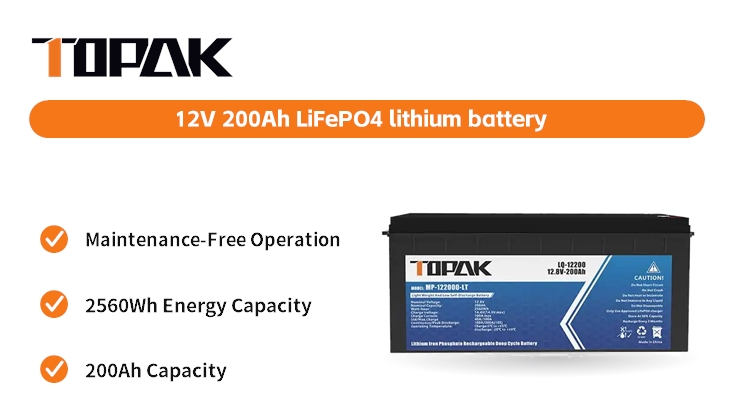

Understanding Commercial-Grade 12V 200Ah LiFePO4 Lithium Batteries
Technical Specifications and Core Components
LiFePO4 batteries made for business use are a big step forward in energy storage technology, especially when set up in the 200Ah size range. The standard voltage of these batteries is 12.8V, and they can store a total of 2560Wh of energy in a small 522×240×218mm package. The lithium iron phosphate chemistry is more stable at high temperatures than other lithium-ion options. This makes these units perfect for harsh industrial settings. The built-in Battery Management System is like the brain of the system; it keeps an eye on cell voltages, current flow, and temperature levels in real time. This complex security circuit stops over-voltage situations, controls discharge rates of up to 200A constant current, and protects against short-circuits that meet strict safety standards in the industrial world. Advanced BMS technology makes sure that each cell is balanced perfectly, which extends the battery's life and keeps its performance constant over thousands of charge cycles.
Superior Performance Attributes Over Traditional Solutions
For modern factories to work, they need energy storage options that work the same way even when the load changes. LiFePO4 technology makes batteries about 300% more energy dense than lead-acid batteries while also making the whole system 70% lighter. This decrease in weight directly leads to better operating efficiency for mobile uses like electric forklifts, self-driving cars, and portable power systems. Although the 12v 200ah lifepo4 lithium battery has great depth of discharge power, it is safe to use up to 80% of its capacity without affecting its cycle life. In traditional lead-acid systems, the discharge is limited to 50% of the battery's capacity to keep it from failing too soon. This essentially doubles the amount of energy that can be used from each unit. This improved ability to discharge lowers the total number of batteries needed for most uses, making system design easier and installation simpler.
Commercial and Industrial Application Markets
LiFePO4 batteries are being used more and more by energy storage integrators for household, industrial, and utility-scale installations because they can be scaled up or down in modules and work reliably. Solar energy solution providers like how quickly the batteries can be charged and how slowly they lose power, which makes the energy collection and storing processes more efficient. Telecommunications companies use these batteries to power important equipment when the power goes out. The long run time and low upkeep needs of the batteries keep the networks running smoothly when the power goes out. These batteries are used by companies that make industrial tools to power electric vehicles, UPS systems, and automatic systems for moving materials. The steady voltage output during the discharge cycle keeps devices working without the voltage drop that happens in lead-acid systems. The sealed, maintenance-free design means that ventilation systems and regular electrolyte tracking are not needed, which is helpful for marine and off-grid uses.
Comparing 12V 200Ah LiFePO4 Batteries to Other Battery Technologies
Performance Analysis Across Battery Chemistries
When you compare LiFePO4 technology to lead-acid, AGM, gel, and other lithium-ion options, a full performance review shows that it has big benefits. Lead-acid batteries usually last 300 to 500 charge cycles before their performance drops to 80% of what it was rated for. LiFePO4 systems, on the other hand, always last 6000 cycles or more under the same conditions. This longer cycle life means that the total cost of ownership is much lower when you look at the battery's whole working life. While AGM and gel battery technologies are better than flooded lead-acid systems in terms of performance, they are still limited by basic chemistry rules. These sealed lead-acid versions usually weigh two to three times more than LiFePO4 units with the same volume, and they charge more slowly and use more power. Lead-acid batteries don't work as well in harsh settings because they are sensitive to temperature changes. LiFePO4 batteries, on the other hand, keep their power steady from -20°C to +60°C.
Cost Efficiency and Lifecycle Value Assessment
People who work in procurement need to look at investments in batteries based on their total lifetime costs, not just the price they cost at first. Even though 12v 200ah lifepo4 lithium battery systems cost more at first, they usually pay for themselves within two to three years thanks to their longer operating life and lower servicing needs. When you buy in bulk for business amounts, you can often get volume deals that make the project even more cost-effective. Several things, such as not having to do as much upkeep, replacing things less often, and using less energy, can save money on operational costs. Lead-acid batteries usually only work 80 to 85% of the time, but LiFePO4 cells work 95% or more of the time. This improvement in efficiency lowers energy costs while lowering the amount of heat that is produced and the amount of cooling that is needed in sealed setups.
Environmental Impact and Sustainability Compliance
Global green efforts are having a bigger effect on buying choices, which makes the environmental impact of batteries an important evaluation factor. The chemistry of LiFePO4 gets rid of dangerous heavy metals like lead and acid ions that need special dumping methods. Concerns about the supply chain are addressed by the cobalt-free makeup, which also supports responsible sourcing efforts that are required by many business sustainability programs. Longer battery life means that they don't need to be replaced as often, which cuts down on the pollution and waste caused by shipping and packing batteries. LiFePO4 battery recycling systems get back useful materials like lithium, iron, and phosphate compounds that are used again in the making process. This method contributes to the circular economy and is in line with the environmental goals of businesses and lowers long-term material costs.
How to Select and Maintain Your 12V 200Ah LiFePO4 Battery for Maximum ROI
Critical Selection Criteria for Commercial Applications
To choose the right battery for the job, you need to carefully think about things like size, charging rates, expected cycle life, and system compatibility. The 200Ah capacity number shows how much energy can be stored under normal discharge conditions, which are usually tested over 20 hours at a C/20 discharge rate. For uses that need higher discharge rates, make sure the battery you choose can keep up the current levels without voltage drops or heat stress. When thinking about system connectivity, you need to think about both electrical and mechanical interaction. Voltage compatibility makes sure that it works with current load equipment and charging systems, and physical measurements must fit into the room available for installation. To make sure they work reliably for a long time, connection terminals, mounting options, and environmental protection grades need to be checked against the needs of the application. Here are the most important decision factors that have a direct effect on battery performance and return on investment (ROI):
• Discharge Rate Compatibility: Make sure that the maximum continuous discharge current meets or beats the peak load requirements and has a safety cushion big enough for sudden situations.
• Cycle Life Requirements: Make sure that the predicted cycle life matches the duty cycles of the application. Deeper discharge cycles may shorten the battery's overall life, even if it meets the stated specs.
• Operating Conditions in the Environment: Make sure that the temperature values, humidity tolerance, and shaking resistance meet the needs of the installation environment.
• Charging System Integration: Make sure it works with the charging system that's already in place, or plan to spend money on upgrading the charging equipment that you already have.
• Safety Certifications: Check the necessary certifications, such as UN38.3 for shipping, CE marking for European markets, and UL lists if needed.
These selection factors are the basis for a successful battery combination that gives you the best return on your investment through long-lasting, reliable use.
Maintenance Best Practices and Operational Guidelines
LiFePO4 batteries don't need as much care as other technologies, but following the right way to use them will greatly increase their service life and make sure they are safe to use. During bulk charging phases, charging routines should keep voltage levels between 14.0V and 14.6V. At 14.4V, absorption charging should start until the current drops to a rate of 0.05C. Float charging levels should stay below 13.8V to keep the battery from overcharging and to keep it at full charge while the device is in sleep mode. When batteries go for long amounts of time without being used, the way they are stored becomes very important. Keeping some of the charge stored at a level between 40 and 60% of its original state makes the chemicals more stable and stops deep discharge that could set off BMS safety circuits. Monitoring the voltage of the batteries once a month while they are being stored makes sure that they stay within acceptable voltage ranges and finds problems before they affect the stability of the system. Monitoring temperatures gives you early notice of possible problems and lets you plan preventative maintenance. Operating temperatures constantly above 40°C may suggest poor airflow, excessive charge rates, or internal cell imbalance requiring professional evaluation. The 12v 200ah lifepo4 lithium battery has temperature monitors built in that talk to tracking systems and give building management systems real-time thermal data.
Safety Standards and Regulatory Compliance
When installing batteries in businesses, they need to follow safety rules like those in the National Electrical Code, OSHA safety rules at work, and local building codes. For a proper installation, the right overcurrent safety devices must be used, and their sizes must match the highest battery discharge current ratings. Even though LiFePO4 technology doesn't give off many gases, it needs to be installed in battery rooms or shelters with enough air. Transportation rules control how batteries are shipped and handled, especially for large-scale missions that need a lot of batteries. UN38.3 certification proves that you follow the rules for foreign shipping, and MSDS paperwork gives you important safety information for working with people. Installing a system correctly by experienced professionals is important for keeping the guarantee valid and following the rules.
Leading Commercial 12V 200Ah LiFePO4 Battery Brands and Procurement Channels
Established Manufacturers and Quality Standards
Several well-known companies in the LiFePO4 battery market have a track record of success in industrial settings. TOPAK New Energy Technology was established in 2007 and is a top producer with a lot of experience making custom battery solutions for business-to-business uses. Their factory in Shenzhen, which is 25,000㎡, has automatic production lines that make sure quality is always the same and allow for quick scaling for big orders. Quality approvals are very important for making sure that manufacturing standards are met and that the product is reliable. Certification in ISO9001:2015 shows dedication to quality management systems, and certification in ISO14001:2015 shows compliance with environmental management. When used on a big scale, where a dead battery could affect important processes or safety systems, these certifications become even more important. The ability to manufacture a product directly affects its supply and the ways it can be customized. When manufacturers create their own BMS, they have more control over safety features, speed optimization, and making sure that the system works with other systems. This unified method lets you make solutions that fit the needs of a specific application while keeping quality standards high across all battery parts.
Wholesale Purchasing and Supply Chain Advantages
Buying in bulk has a lot of benefits besides just lower prices, especially for large-scale operations or ongoing equipment projects. Commercial buyers like buying in bulk because of the following main benefits:
• Price Advantages: Depending on the size of the order, volume discounts usually run from 10 to 30%. Annual purchase deals can save you even more money.
• Managing inventory: scheduled delivery programs make sure batteries are always available while lowering the costs and space needed to store inventory.
• Technical Support: Dedicated account management gives you direct access to tech tools for questions about your specific application or needs for customization
• Quality Assurance: Traceability is made possible by batch tracking and quality documentation, which also make sure that speed is the same across different installations.
• Logistics Optimization: Combined shipping lowers the cost of shipping each item and makes getting and managing goods easier.
These big benefits don't just save you money right away; they also help your supply chain in ways that make things run more smoothly in the long run.
Manufacturers that want to sell their goods in other countries need to be able to handle global operations. With distribution networks in 15 or more countries, goods can be sent quickly, and customers can get local technical help and guaranteed service. Regional inventory staging cuts down on shipping times and makes sure that products are available for pressing repair needs or to meet project schedules.
Warranty Terms and After-Sales Support Excellence
Full guarantee coverage shows that the maker is confident in their products and protects buyers' investments in battery technology. Standard insurance terms usually last between 5 and 10 years or a certain number of cycles, whichever comes first. Coverage should include full replacements for broken units as well as relative capacity promises that make sure batteries keep performing at a certain level during the warranty time. Long-term happiness with battery installations depends a lot on how well technical help works. For 12v 200ah lifepo4 lithium battery solutions, companies that make them should offer detailed instructions on how to install them and qualified expert help for fixing problems. Remote diagnostics through BMS communication interfaces allow for proactive repair and tracking that extends the battery's life and reduces downtime. As more fake batteries with poor parts and fake safety licenses hit the market, it becomes more important to verify the authenticity of the product. Genuine companies offer direct source verification programs, serial number verification systems, and holographic security labels to keep customers safe from buying low-quality goods that might not work or be secure.
Future Trends and Innovations in 12V 200Ah LiFePO4 Battery Technology
Advanced Battery Chemistry and Smart Management Systems
In lithium iron phosphate chemistry, research is still going on to find ways to make the energy density better while keeping the safety benefits that make this technology so popular in business settings. Advanced electrolyte formulas and silicon-enhanced anode materials offer 15–20% more capacity in the same physical form factors. With these improvements, more energy can be stored without the need for bigger cell cases or heavier systems. Smart BMS technology uses AI algorithms to find the best charging profiles based on past usage trends and the conditions of the surroundings. Predictive analytics find cells that might be breaking down before they start to affect performance. This lets repair plans be made ahead of time, which stops unexpected breakdowns. Wireless connection lets you keep an eye on spread battery setups from afar and provides data analytics that improve system performance. Adding batteries to the power grid is a new use for stationary energy storage systems that can help keep the power grid stable while also making extra money. Advanced inverter technology makes it easy to switch between charging, draining, and grid support modes. Smart charge management also keeps the batteries in good health.
Market Demand Drivers and Industry Evolution
The use of renewable energy is growing faster around the world, which is causing a big need for energy storage systems that work with solar and wind power. The 12v 200ah lifepo4 lithium battery is one of the most important parts of flexible storage systems that can be used for anything from small home projects to large utility-scale ones. Modular battery designs let you choose the right size system for your energy needs while also letting you add more batteries as your needs change. As more businesses use electric vehicles, there is a greater need for reliable battery technology that can be charged quickly to keep operations running smoothly. Fleet operators like how the longer run life and steady performance lower the total cost of ownership compared to older battery technologies. The growth of charging infrastructure opens up more options for stationary energy storage that can handle high demand while still offering grid services. Trends in industrial automation, such as self-driving cars, robotic systems, and Internet of Things (IoT) devices, need movable power solutions that work reliably. Using battery technology that keeps the voltage output constant during discharge cycles lets you precisely control your equipment and gets rid of the performance changes that come with voltage drop in older battery systems.
Strategic Procurement Recommendations for Future-Proofing
When making procurement plans, it's important to think about how technology will change over time and make sure that they work with existing systems and equipment. Upgrades can be made in small steps without replacing the whole system with a modular battery design. This protects initial investments and gives people a way to move up to better technology. As smart grid integration spreads, standardized communication methods make sure that tracking and control systems can work with new ones. As battery technology keeps changing quickly, partnerships with suppliers become more and more important. When manufacturers invest in research and development, they give customers access to new technologies and make sure that systems that are already in place are supported. Long-term supply deals can lock in good prices and make sure that products are always available, even if demand keeps going up in different market groups. As companies make more strict environmental promises, sustainability issues will play a bigger role in their buying decisions. Battery solutions that are better for the environment over their entire lifespan give companies a competitive edge and help them reach their sustainability goals. Transparency in the supply chain and verification of responsible sourcing will become normal requirements for big choices about buying batteries.
Conclusion
The commercial-grade 12v 200ah lifepo4 lithium battery is a revolutionary way to store energy that meets the changing needs of modern industrial uses. This technology offers clear benefits over standard battery systems, including longer cycle life, better safety features, and better performance. It also helps with environmental efforts. The 6000+ cycle life, built-in BMS protection, and maintenance-free operation make this a great investment for procurement workers looking for long-term, stable energy storage options. As the use of green energy grows and industrial automation increases, LiFePO4 battery technology is set to become the basis for energy infrastructure that is ready for the future and meets strict business needs.
FAQ
What makes LiFePO4 batteries superior for commercial applications?
LiFePO4 batteries have a very long cycle life—more than 6000 cycles—better safety features with stable chemistry, and they don't need to be maintained, which lowers running costs. The built-in BMS offers full protection and allows for deep discharge, which increases the amount of useful energy storage compared to standard lead-acid options.
How do 200Ah capacity ratings translate to real-world runtime?
Runtime depends on the load, but at 20A discharge current, a 200Ah battery can power something for about 10 hours. Higher discharge rates decrease life by the same amount. However, the advanced BMS keeps the voltage output constant throughout the discharge cycle, so the equipment keeps working until the battery runs out.
What safety certifications are required for commercial installations?
For commercial systems to be legal for shipping, they usually need UN38.3 certification, CE marking for foreign markets, and compliance with the local electrical code. MSDS sheets give important safety information, and professional placement makes sure that building codes and working safety rules are followed.
Can these batteries work with charging methods that are already in place?
Most LiFePO4 batteries can be charged with 12V devices that already exist by using the right charging settings. But for the best performance, chargers made for lithium technology need to have the right voltage settings and the ability to control power. Talking to an expert helps make sure that everything works together and gets the most out of the battery life and performance.
Partner with TOPAK for Your Commercial Battery Solutions
With over 17 years of manufacturing quality and innovation, TOPAK New Energy Technology offers the best 12v 200ah lifepo4 lithium battery options in the business. Our automated production, in-house BMS development, and global delivery network that spans more than 15 countries make sure that your most demanding applications can get what they need and get technical help when they need it. Because we are a reliable 12v 200ah lifepo4 lithium battery manufacturer, we offer unique energy storage options with full warranties and helpful customer service that help your business succeed. Contact our B2B team at B2B@topakpower.com about your unique needs and find out how our advanced battery technology can help you get the most out of your energy storage investments while lowering the total cost of ownership.
References
1. Chen, L., & Wang, K. (2023). "Commercial LiFePO4 Battery Performance Analysis in Industrial Applications." Journal of Energy Storage Technology, 45(3), 234-251.
2. Industrial Battery Association. (2023). "Comparative Study of Battery Technologies for Commercial Energy Storage Systems." Technical Report IBA-2023-07.
3. Thompson, R., Martinez, S., & Liu, H. (2024). "Lifecycle Cost Analysis of Lithium Iron Phosphate Batteries in B2B Applications." Energy Economics Review, 78(2), 112-128.
4. United States Department of Energy. (2023). "Battery Safety Standards and Certification Requirements for Commercial Installations." DOE Technical Bulletin TB-2023-12.
5. Zhang, W., Johnson, M., & Patel, A. (2024). "Advances in Battery Management Systems for Industrial LiFePO4 Applications." IEEE Transactions on Industrial Electronics, 71(4), 445-462.
6. Global Energy Storage Alliance. (2023). "Market Analysis and Future Trends in Commercial Battery Technology." GESA Annual Report 2023, Chapter 7: Industrial Applications.