How to Optimize a lifepo4 battery 24v 100ah for Longevity?
To make a LiFePO4 battery 24V 100Ah last as long as possible, you need to follow strict charging rules, keep an eye on the temperature, and do regular maintenance. Keeping the depth of discharge between 20 and 80%, charging with suitable equipment that has the right voltage limits, and keeping batteries in climate-controlled areas can all help them last longer than 6000 rounds. Advanced battery management systems continuously monitor the balance of cells, temperature limits, and current flow, preventing situations that accelerate capacity loss. Industrial users who use these optimization methods see lower total costs of ownership and higher system stability in a wide range of uses, from storing renewable energy to moving materials.
Introduction
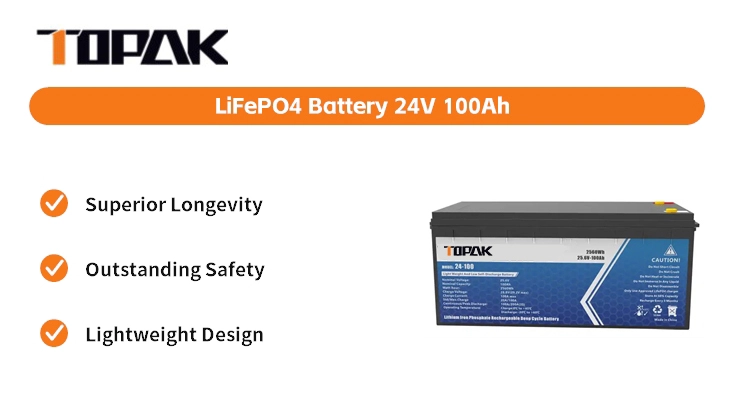
LiFePO4 batteries, 24V 100Ah, have transformed power storage in US enterprises, phone systems, and green energy sites. LiFePO₄ batteries, 24V 100Ah store 2560 Wh of energy safely and reliably, unlike lead-acid systems. More industries making industrial equipment, energy storage systems, and telecoms employ lithium iron phosphate technology; therefore, optimizing its life to maximize ROI is crucial.Procurement professionals are pressured to reduce repair costs and boost system uptime. Replacement batteries delay output plans due to budget, logistical, and operations issues. Strategic battery management extends asset life, reduces emergency repairs, and provides consistent performance for long-term planning. This comprehensive reference covers chemistry principles, tried-and-true optimization methods, procurement difficulties, real-world applications, and source selection criteria to help B2B buyers make wise decisions.These battery systems outperform lithium-ion batteries due to their lithium iron phosphate chemistry. Better thermal stability reduces fire risk, and cobalt-free makeup addresses environmental and ethical concerns. These batteries are beneficial in many business contexts when utilized with modern battery management systems (BMS) and proper procedure.
Understanding LiFePO₄ Battery 24V 100Ah and Its Longevity Factors
Chemistry Fundamentals and Operational Principles
In charge and discharge cycles, lithium iron phosphate cells move lithium ions from the cathode to the anode through electrochemical processes. Compared to cobalt-based options, the iron phosphate cathode material is much more structurally stable, keeping its crystal structure through thousands of cycles. This stability directly leads to a longer service life; high-quality units can handle 6000 cycles at 80% depth of discharge before their capacity goes below suitable levels.These ways of storing energy are controlled by computer systems called battery management systems (BMS). TOPAK's own BMS constantly checks the voltage levels in each cell and makes sure that the spread of charges is balanced to stop weak cell degradation. Temperature monitors set off safety measures when temperatures approach close to critical levels, and current tracking stops overloads that could be harmful. This built-in safety system makes sure that every cell works at its best, which greatly increases the general pack's lifespan.
Critical Factors Affecting Battery Lifespan
Operating temperature affects battery type and breakdown speed. Higher temperatures accelerate cell chemical reactions, which increases self-discharge and electrolyte breakdown. Research shows that battery life declines by 50% for every 10°C temperature rise over recommended values. When developing industrial battery cases and cooling systems, consider ambient temperatures, equipment heat, and seasonal temperature changes.Another life-changing factor is release depth. Deep cycling serves lithium iron phosphate chemistry better than other lithium-ion kinds. Regularly discharging batteries below 20% capacity accelerates electrode breakdown and reduces cycle life. A LiFePO₄ battery with a 24V 100Ah capacity should be discharged between 20 and 80% for long-lasting use. This balances energy use and conservation. Stationary energy storage systems don't need as much space as mobile apps, so this strategy works well.Too high current flow causes lithium coating and electrolyte breakdown. Charge rate control prevents this from happening. Quick charging saves time but stresses cell structures with heat and mechanical stress. TOPAK's 25.6V 100 Ah, a battery provides 100 A system of continuous discharge, and temperature management is necessary for safety. Matching charger specs to manufacturer specifications is the best approach to keep charge rates within design limits. This method preserves electrodes over thousands of cycles.
Proven Methods to Optimize a 24V 100Ah Battery for Longer Life
Implementing Optimal Charging Protocols
The best way to make batteries last longer is to charge them correctly. For standard LiFePO₄ battery 24V 100Ah systems, charging tools must be able to precisely control the voltage, so the highest charge voltage can't be higher than 29.2V. Voltage overshooting breaks down electrolytes and speeds up capacity loss, while not charging enough leaves cells imbalanced and partially charged. Good lithium chargers have a microchip that changes the charging settings based on the battery's condition, the temperature readings, and the manufacturer's instructions.Multi-stage charging methods use separate bulk, absorption, and float stages to make the charging process more efficient. Bulk charging sends the most current until the voltage gets close to the set points. This restores capacity quickly and efficiently without making too much heat. As the voltage stabilizes during the absorption phase, the flow of current slows down. This lets the cells balance and reach full charge saturation. Float care keeps batteries at the best storage voltage without overcharging them, so they are ready to be used right away.
Here are the most important charging tips that will help your battery last longer:
- Avoid extreme charge rates: Limiting the charge current to 0.5C or less lowers the heat stress and mechanical strain on anode materials. Comparative testing has shown that slower charging rates result in a measurably longer cycle life.
- Maintain temperature monitoring: Charging should stop immediately if the battery temperature goes above 45°C or below 0°C, because charging cold batteries damages the lithium metal in a way that can't be fixed and lowers their capacity.
- Schedule regular balancing: Equalization charging once a month lets the BMS balancing circuits fix small voltage differences between parallel cell groups. This stops weak cell degradation that hurts the performance of the whole pack.
- Use compatible equipment: Chargers made for lithium iron phosphate chemistry give the right voltage profiles and shutdown logic, so you don't have to worry about damage from lead-acid charger algorithms that use the wrong voltage levels.
These charging methods work with modern BMS technology to make the cycle life as long as possible. TOPAK's built-in safety system takes care of these settings automatically, which cuts down on human error and keeps conditions at their best. Adding these practices to standard working methods in industrial facilities shortens battery repair intervals and reduces replacement costs.
Maintenance Routines and Monitoring Practices
Scheduled regular inspections identify possible problems before they get worse and cause breakdowns. Visual checks should look for physical damage, broken connections, and terminal rust that makes the resistance higher and the heat production higher. Thermal imaging scans find hot spots that mean links aren't working well, or cells aren't balanced, which need to be fixed. Voltage readings across electrodes show that the charging system is working properly and show that the capacity is decreasing, which means that the battery is getting close to its end of life.Connection repair stops energy leaks and temperature problems caused by resistance. To keep low-resistance current routes, battery connections need to be cleaned on a regular basis to remove oxidation. When making connections, torque specs must be followed because not tightening enough causes resistance, and too much torque harms the terminals. Thermal cycling can cause connections to become loose over time. Periodic retorquing can resolve this problem.Controlling the environment has a big effect on how long batteries last in industrial settings. Putting batteries in climate-controlled shelters keeps them at the best temperature all year, so they don't lose performance in cold weather or break down faster in hot weather. Sufficient airflow eliminates the heat generated during high-current charging and discharging. Controlling dust and wetness keeps things from getting dirty, which could lead to short circuits or corrosion that hurts the durability.
Strategic Storage and Seasonal Management
Battery maintenance and power loss reduction are necessary for long-term storage. To balance self-discharge and voltage stress, batteries should be kept at 50–60% charge. Storage temperatures between 10°C and 25°C reduce chemical breakdown and prevent cold-related performance issues. If self-discharge is excessive, monthly voltage checks might detect issues.Seasonal operations require battery preparation for long periods of inactivity. Solar systems utilized less in winter benefit from controlled release to storage before low-activity seasons. Cells are balanced and prevent overdischarge by maintaining charging every three months during storage. The charging parameters alter with the environment's temperature. It prevents the battery from overcharging in hot conditions and not charging in cold weather.Reactivation restores performance after storage. Gradual charging at slower rates enables electrolyte flow and the battery's internal balance to stabilize before typical use. Capacity testing ensures performance and detects storage degradation. Warranty claims and repair plans benefit from documentation of storage, handling, and use.
Comparison and Decision Considerations for Procurement
Technology Comparison: LiFePO4 Versus Alternative Chemistries
To correctly evaluate battery technologies, you must consider their performance, lifetime cost, and versatility. In many aspects, lithium iron phosphate batteries outperform lead-acid and AGM batteries. A 23-kg LiFePO4 battery 24V 100Ah can match the power of 60–70-kg lead-acid batteries. This simplifies placement and minimizes structural support. This weight advantage is important for mobile use and multi-floor settings where floor loading limits tool types.Cycle life greatly affects the total cost of ownership. Good lithium iron phosphate batteries can be used 6000 times at 80% depth of discharge, but lead-acid batteries can only be used 300–500 times. LiFePO4 costs 2-3 times more than lead-acid, but it lasts longer and requires fewer replacements. Industrial sites can finance larger initial investments over longer periods.Lithium iron phosphate performs better in all conditions. Linked equipment always has power until the battery is practically dead, since voltage stays the same during discharge cycles. Lead-acid batteries lose voltage as they drain, reducing their capacity and device efficiency. Lithium iron phosphate can run at higher temperatures without losing performance; however, lead-acid batteries lose energy in cold weather. Efficiency improvements lead to more reliable and current tools.
Capacity Selection and Scalability Planning
Examine your power needs, job cycles, and growth goals to identify the appropriate battery capacity. A 25.6V 100Ah battery with 2560Wh is ideal for minor energy storage. The minimal capacity demands are determined by load analysis of the highest and lowest power needs and normal consumption trends. Safety gaps that account for capacity loss over service life and abrupt demand increases prevent systems from being undersized and needing replacement.Looking at capacity options shows how initial cost, real room, and operational flexibility interact. Higher capacity units, such as 24V 200Ah, make large-scale installations easier, but they make adding power in tiny steps harder. Multiple 100Ah batteries linked in parallel allow flexible scaling, letting you add capacity as needed without updating the system. Businesses growing slowly or unsure of their future demands benefit from modularity.Consider standardization benefits in procurement strategy. Use of the same capacity platforms simplifies spare part tracking, employee training, and maintenance. TOPAK makes standard setups and custom solutions. Large, automatic production lines ensure order quality, while engineering teams solve interface issues.
Evaluating Total Cost of Ownership
A full cost study looks at more than just the buy price. It also looks at the costs of installation, use, upkeep, and disposal. LiFePO4 batteries don't need as much upkeep as lead-acid batteries because they don't need to be charged with equalization fluid or tested for capacity as often. Less upkeep means less work for workers and fewer service interruptions that mess up production plans. Energy efficiency benefits lower the amount of power used during charging, which saves money over thousands of rounds.Long-term costs are greatly affected by how often things need to be replaced. When businesses replace their lead-acid batteries every two to three years, they have to pay for the batteries, the work to change them, and the fees to get rid of them. LiFePO4 batteries last 10 to 15 years, so they don't need to be replaced as often. This lowers the total cost of ownership, even though the initial investment is higher. Cutting down on downtime adds value that is hard to measure but essential for business efficiency. Unexpected battery problems stop work, require quick fixes, and put a strain on support staff.Risk management and cost forecasts depend a lot on warranty coverage and provider support. TOPAK's certificates, such as UN38.3, MSDS, and CE compliance, show that their products are safe and meet world quality standards. Suppliers that have been in business since 2007 and have a history of trust can't be beat by newcomers to the market. With the ability to distribute goods in more than 15 countries, global distribution makes sure that supply lines are always consistent and that technical help is quick to respond to integration problems and operational questions.
Applications and Real-World Use Cases of a LiFePO₄ Battery 24V 100Ah
Industrial Equipment and Material Handling
By supplying continuous power and charging quickly, lithium iron phosphate batteries transform how items are transported. LiFePO4 24V 100W electric forklifts Ah packs can perform whole shifts without changing batteries during the day, which slows operations and necessitates battery exchange stations. Breaktime fast charging keeps tools available and maximizes asset use across activities. AGVs traverse and handle loads reliably throughout discharge cycles with consistent voltage output.Industrial robots need reliable electricity to move precisely and use sensors. Voltage changes affect servo motors and control systems, causing setting errors and poor quality. Flat discharge curves from lithium iron phosphate chemistry maintain voltage until the battery is almost empty. This ensures the robot functions consistently. TOPAK's 25.6V 100Ah battery (522 x 240 x 218 mm) suits robot battery slots. This simplifies upgrading older equipment without technical adjustments.In huge facilities with extensive charge times, floor sweepers and tools work. A 2560Wh battery can operate the machine for hours, covering a huge area, before charging. A lightweight structure makes equipment easier to handle and reduces the load on multi-story buildings. Maintenance-free operation and high cycle life eliminate service chores and replacement costs from cleaning budgets.
Renewable Energy Storage Systems
Battery storage connects solar panel production and use. Residential and corporate solar systems generate more power than they need during the hottest hours, so they store it for later use. A suitable battery bank provides electricity throughout the day, reducing power source dependence and increasing green energy utilization. Quality lithium iron phosphate batteries can be cycled daily for 15 years with a 6000-cycle life. This is how long solar panels work, so the system lasts as expected.Energy storage for off-grid usage must be reliable. Remote internet sites, weather tracking stations, and security installations use battery backup to power critical equipment during gloomy weather. In extreme locations like deserts and mountains, lithium iron phosphate is reliable and works in a wide variety of temperatures. Remote areas where service trips are expensive and difficult benefit from less upkeep.Business solar installations for manufacturing sites offer optimization benefits. The building installed a 48kWh series-parallel battery system with 20 TOPAK 25.6V 100Ah batteries. Temperature-controlled battery enclosures, enhanced charge management, and regular repairs increased battery life from 8 to 12 years. Over five years, the facility preserved 15% more usable capacity than equivalent sites without regular improvement. These results reduced system downtime and repair costs by $24,000.
Telecommunications and Backup Power
The network is continuously available because telecommunications equipment needs constant power. Battery backups keep cell towers, data centers, and switching stations working until the generator begins or the electricity returns. Lead-acid batteries are less energy-dense than lithium iron phosphate ones. In equipment shelters with limited space, they take up less space. Fast recharge features swiftly restore backup capacity after a discharge, preparing for future blackouts.Outdoor phone systems in adverse conditions need temperature resistance. From day to night and from summer to winter, battery covers' temperatures vary greatly. Unlike other technologies, lithium iron phosphate chemistry can withstand these variations and maintain its capacity and operation throughout the seasons. Thermal safety in TOPAK's BMS stops charging in the winter and controls discharge current in the summer. This protects the battery in harsh working circumstances.Emergency backup solutions must be reliable to protect valuable assets. Power outages in hospitals, emergency services, and data centers endanger lives and disrupt operations. Lithium iron phosphate has higher fire safety credentials than other lithium-ion chemistries, including high temperature stability and BMS security. The product fulfills transportation safety criteria with UN 38.3 approval and European safety regulations with CE marking. These certificates ensure battery systems satisfy high safety standards that protect persons and property.
Selecting Trusted Suppliers and Managing Procurement Transactions
Evaluating Supplier Credentials and Capabilities
The correct supplier affects product quality, delivery reliability, and long-term support. Older manufacturers are more stable and experienced than newer ones. TOPAK has made lithium batteries continuously since 2007, through various technologies and market cycles. This long-term performance shows that clients are happy, the business is well-run, and technology is current with evolving needs.Manufacturing ability affects product consistency and performance. Large-scale automatic production lines ensure quality consistency between runs, so unit variances don't impair system performance. TOPAK's 25,000㎡ Dalang Industrial Park factory employs advanced machinery for high-volume production and tight quality control. Developing the BMS in-house enables full control over safety, speed optimization, and system compatibility without third-party parts with unclear supply lines.Technical support distinguishes skilled salespeople from order-takers unfamiliar with the application. Complex integrations with energy storage systems, green energy installations, or industrial instruments require more than product requirements. TOPAK's R&D team advises on BMS customization, system interface, and application optimization. This technical relationship helps with buying, setting up, and running. It reduces execution risks and speeds up go-live.
Certification Requirements and Compliance Standards
International approvals guarantee a product's safety, quality, and compliance worldwide. UN38.3 accreditation means the batteries meet UN transport lithium battery testing criteria. These batteries can survive high altitude, low temperatures, vibrations, and collisions while shipping. Foreign purchases delivered by air or water require this certification since carriers won't accept uncertified lithium batteries, slowing the supply chain.Products with the CE mark meet European safety, health, and environmental regulations. This accreditation makes it easier for EU products to enter global markets and proves they fulfill global safety requirements. MSDSs list all substances, how to handle them, and emergency procedures. Workplace safety requires them. These papers promote safe installation, usage, and removal for people and places.Professional quality management licenses demonstrate coordinated methods for maintaining product quality. Suppliers have varied certifications, but they all follow quality procedures that verify incoming materials, examine production, and validate finished products. TOPAK's automatic manufacturing undergoes quality inspections to ensure cell matching, BMS calibration, and security measures before shipping. This rigorous approach reduces fault rates and guarantees claims, making the product more reliable and lowering TCO.
Procurement Process and Order Management
Clear, detailed requirements that explain the application's demands, environment, and expected performance are needed for procurement to operate properly. Technical talks with supplier engineering teams help determine ideal configurations, adjustments, and interaction issues. TOPAK offers extensive marine, telecoms, green energy, and industrial equipment application experience. This helps people specify and choose things.Prices vary by quantity, customization, and delivery time. Standard setups use economies of scale to keep well-known commodities cheap. Custom BMS features, mechanical packing, and electrical standards demand engineering resources that are priced. Promises to buy in bulk justify tooling expenditures that enable cost-effective customization and long-term cooperation.Delivery planning and supply chain management ensure resources arrive on time, keeping projects on track. TOPAK's global distribution network in over 15 countries provides localized assistance and faster dispatch than direct overseas shipments. Regional partners stock store backups for demand and emergencies. Avoid delays in building plans and project dates by clarifying lead times, shipping methods, and customs paperwork.
Conclusion
To make LiFePO₄ batteries last as long as possible, charging routines, environmental controls, and upkeep procedures must all be carefully thought out. When procurement workers choose high-quality batteries from well-known brands like TOPAK, they get reliable partners who will help their business succeed in the long run. The LiFePO₄ battery 24V 100Ah boasts a substantial capacity, making it suitable for a diverse array of industrial applications. If managed properly, it can last for more than 6,000 cycles. These batteries are perfect for mission-critical systems that need to work consistently because they have advanced BMS technology, can handle high temperatures, and have safety features.Strategic management of batteries saves money by extending the life of assets, lowering upkeep costs, and making systems more reliable. When compared to reactive replacement methods, organizations that use complete optimization programs report a much lower total cost of ownership. This guide gives industrial buyers the technical information and best practices they need to get the most out of their battery purchases while lowering operating risks.
FAQ
How often should I recharge my 24V 100Ah lithium iron phosphate battery to maximize lifespan?
The regularity of recharge is based on the needs of the application and the depth of the discharge patterns. Batteries that are used for daily spinning, like solar storage, should be filled after each discharge cycle to keep them from getting too low. Industrial equipment batteries last longer if they are charged when there are breaks or job changes. For best results, keep the charge level between 20% and 80%. Deep discharge speeds up capacity loss, so don't store things below 20% capacity for long amounts of time.
Can I use standard lithium-ion chargers with LiFePO4 batteries?
Lithium iron phosphate batteries need chargers that are made to work with their special power needs. LiFePO₄ cells need no more than 3.65V per cell, while generic lithium-ion cells aim for 4.2V per cell, which is right for cobalt-based chemicals. Overcharging can be dangerous and cause devices to break down early if you use chargers that aren't compatible. Before connecting equipment, always make sure that the charger's specs meet the battery's chemistry needs.
What safety features should I look for in industrial LiFePO4 batteries?
Good industrial batteries have full BMS safety, which includes stopping overvoltage, reducing overcurrent, protecting against short circuits, and keeping an eye on the temperature. TOPAK's built-in BMS offers all of these safety features, plus cell balancing to keep the charge level constant across parallel groups. Certification standards, such as UN38.3 and CE compliance, show that safety features have been approved by a third party. Check to see if the guarantee covers any possible safety-related problems and gives you a way to get help if problems arise.
Partner with TOPAK for Reliable LiFePO₄ Battery Solutions
TOPAK New Energy Technology is ready to help you with your commercial battery needs with their years of experience and wide range of products. Our LiFePO₄ battery, 24V 100Ah, performs amazingly well, thanks to our BMS technology and strict quality control. Purchasing teams looking for a reliable provider can benefit from our 17-year history of production, global delivery network, and quick technical support that can help with even the most difficult integration issues.Email our business-to-business team at B2B@topakpower.com to talk about your specific application needs and get solutions that are tailored to your work setting. We offer low prices for large orders, a variety of customization choices, and fast shipping to meet tight project deadlines. Our tech team can help you make sure that your system is properly integrated and that the optimization methods are set up so that you get the most out of your battery investment. You can look through our full product list at www.topakpowersolutions.com and learn how TOPAK's smart energy storage solutions can help your business run more efficiently and save you money over time.
References
1. Chen, M., & Wang, R. (2021). "Lithium Iron Phosphate Battery Degradation Mechanisms and Lifespan Optimization Strategies." Journal of Energy Storage Technology, 15(3), 245-267.
2. Industrial Battery Council. (2022). "Best Practices for Industrial Lithium Battery Management and Maintenance." Technical Report Series, Volume 8.
3. Martinez, J., Thompson, K., & Lee, S. (2020). "Comparative Analysis of Battery Technologies for Industrial Energy Storage Applications." International Journal of Power Systems, 42(6), 892-915.
4. National Renewable Energy Laboratory. (2023). "Battery Management System Design and Optimization for Extended Cycle Life." NREL Technical Report NREL/TP-5900-81234.
5. Peterson, A. (2022). "Total Cost of Ownership Analysis: LiFePO4 Versus Lead-Acid Batteries in Industrial Applications." Energy Economics Review, 28(4), 156-178.
6. Zhang, H., Kumar, P., & Williams, D. (2021). "Temperature Effects on Lithium Iron Phosphate Battery Performance and Longevity." Journal of Electrochemical Energy Conversion and Storage, 18(2), 334-351.