Is a 51.2V 200Ah Rack Mount Battery Right for Your ESS Project?
Choosing the optimal method for energy storage can significantly impact the success of your ESS project. A lithium battery device that is mounted on a rack has a high energy density, can be expanded in modules, and works reliably in harsh industrial settings. The 51.2V 200Ah rack mount battery design stands out because it has a large 10.24 kWh capacity and a normal voltage that works with most inverters. If you know what this battery can do, you can see if it fits your budget, technical needs, and long-term goals. This is true whether you're using it to store renewable energy, protect important telecom systems, or power data centers.
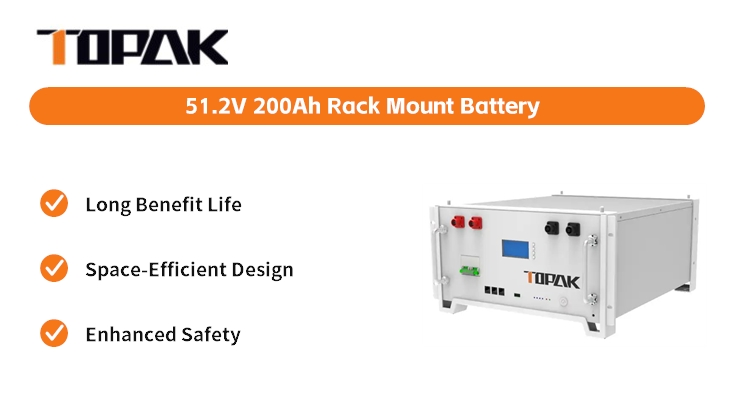

Understanding 51.2V 200Ah Rack Mount Batteries
When it comes to using lithium batteries, rack-mounted energy storage systems are a big step forward. These small, modular units are designed to fit normal 19-inch rack setups. This makes them different from options that are bulkier and stand alone or in cabinets. The design theory is based on making good use of the room while keeping it easy to reach for maintenance and monitoring.
What Makes Rack Mount Design Advantageous?
The rack mount format is useful for industrial and business setups in a number of ways. Space-constrained places like telecom base stations and data centers can gain a lot from being able to stack things vertically. Traditional battery cabinets take up important floor space, but rack-mounted units fit right in with your current setup. Our TP-48200R type has standard measurements of 550 x 442 x 222 mm, which makes it easy to plan for capacity and future growth without having to introduce changes to the building. This flexibility goes beyond just putting things together physically. The electrical architecture can handle up to 15 units running in parallel. This lets system builders increase the power from 10.24 kWh to over 150 kWh while keeping the voltage stable and making the wires simpler.
Decoding the 51.2V Nominal Voltage
The 51.2V standard isn't made up on the spot. It comes from a 16S1P cell arrangement, which is made up of sixteen 3.2V lithium iron phosphate cells connected in series. This set-up has a number of technical benefits over other levels. Because it works with 48V DC power systems, which are the standard for backup power in telecommunications and industry, it's easy to connect to existing transformers, charge controllers, and distribution infrastructure. The slightly higher baseline voltage makes up for voltage drop during discharge cycles, making sure that the equipment keeps getting power even as the battery runs out. For safety reasons, keeping systems below 60V DC keeps them within the Low Voltage Directive limits in most places. This makes getting permits easier and cuts down on the need for special electrical requirements.
Capacity and the Basics of Energy Storage
The 200Ah number shows how much power the 51.2V, 200Ah Rack Mount Battery can store when conditions are managed. This is equal to 10,240 watt-hours of energy (51.2V × 200Ah). But in real life, the useful capacity is usually around 80% of the stated capacity to protect the cycle life. This gives us about 8,192 Wh for daily use. When sizing energy storage systems, it's very important to know the depth of discharge. Our TP-48200R lasts 6,000 cycles at 80% DOD, which is a lot longer than most lead-acid batteries, which lose power quickly after 50% discharge. This long life is due to the lithium iron phosphate chemical, which is very stable at high temperatures and loses very little capacity over thousands of charge-discharge cycles. In real life, this means you can safely build systems that use most of the battery's capacity without worrying about having to replace it too soon.
Benefits and Applications of 51.2V 200Ah Rack Mount Batteries
The amount of energy that needs to be stored today is higher than what traditional battery technologies can afford to provide. Lithium-based rack mount systems solve these problems by having higher energy density, longer service life, and more operating freedom, all of which lead to a lower total cost of ownership.
Key Benefits for Performance
Rack-mounted lithium systems have advantages in setup and operation. Good lithium iron phosphate batteries operate better in several ways.The most obvious benefit is energy density. The TP-48200R emits 119 Wh/kg and weighs 86 kg for 10.24 kWh. Similar lead-acid systems can only store 30 to 40 Wh/kg; thus, the same energy requires three to four times the volume and weight. This difference is crucial when weight is essential or floor loading regulations are in effect. Due to less space, installations can be constructed in previously unsuitable energy storage locations.Cycle life greatly impacts lifetime economics. Daily cycling at 6,000 cycles at 80% discharge will keep the battery running for over 16 years. Because they wear out after 500 to 1,000 rounds under the same conditions, lead-acid substitutes must be replaced every two to four years. When procurement professionals calculate the total cost of ownership, they realize that the longer service interval reduces repair windows, replacement logistics, and capital outlay cycles.Communication modernizes energy management. The TP-48200R supports CAN and RS485 protocols. Bluetooth and 4G are remote tracking alternatives. This connection allows real-time charge monitoring, repair warnings, and building management system integration. Energy storage becomes an actively managed asset that enhances charge-discharge cycles based on time-of-use or peak demand reduction.These benefits enable B2B procurement teams to maximize asset use, save maintenance expenses, and ensure reliable performance throughout the operating lifetime. Due to less refilling and energy use, the initial cost is frequently repaid in three to five years.
Primary Application Scenarios
Many organizations employ energy storage systems, and each has varied reliability, scalability, and integration needs. 51.2V 200Ah Rack Mount Battery packages are ideal for space-saving and dependable performance.Key applications include telecom base stations. These systems need continuous power to stay connected to the network during power outages. The 51.2V baseline voltage matches the -48V DC telecom power standards; therefore, it can be directly incorporated without voltage conversion losses. The tiny size is crucial in cell sites with limited space and distributed antenna systems. The 100A constant discharge capability can handle 5.12 kW loads, enough for many radios, signal processors, and transmission systems. TP-48200R has been implemented in over 15 countries and is stable in difficult situations with rapid temperature and humidity changes.UPS data center applications prioritize dependability and scalability. Because critical computer systems need power, batteries are essential infrastructure. In 19-inch racks with networking and computer equipment, rack-mount lithium batteries fit flawlessly. This optimizes the floor space in the data center. The parallel setup capability, which supports up to 15 units, allows capacity to grow as processing needs grow. Places that frequently discharge backup capacity benefit from the extended cycle life. Lithium systems work after thousands of validations, while lead-acid batteries drain with each test.The construction of more solar and wind systems leads to an increase in renewable energy integration. Energy storage solves these sources' main intermittent issue. Rack-mount batteries store surplus generation while production is strong and discharge when green output lowers, or demand rises. Compared to lead-acid systems' 50% DOD, the 80% useful depth of discharge makes the most of the store's capacity. Solar panels' shifting charge currents are managed by the complicated battery management system, improving charging efficiency and cell health. Industrial sites using solar arrays and lithium storage have reduced energy costs and better power. Batteries stabilize voltage variations that sensitive electronics can't handle.
Comparing 51.2V 200Ah Rack Mount Battery with Other Options
Informed procurement requires understanding how different battery specifications and chemistries stack up against each other. The energy storage market offers numerous options, each with distinct cost-performance profiles suited to particular applications.
Voltage Standards and System Compatibility
Picking between 48V and 51.2V devices changes more than just the stated specs. Most industrial DC power systems work with -48V standards. This is a holdover from the telecoms industry that has spread to data centers and other industrial buildings. The 51.2V 200Ah rack mount battery setup meets this standard by having a slightly higher voltage that takes into account the way the discharge curve behaves. The energy slowly drops as lithium cells lose power. The extra 3.2V makes sure that the system voltage stays good for connected devices even when the state-of-charge drops to the lowest safe level.When compared to other 48V lead-acid systems, their voltage drops more quickly during discharge, and they might not be able to keep devices running before they hit 50% capacity. Because of this trait, careful sizing is required when the stated capacity is much higher than the actual useful capacity. It becomes clear that lithium has an advantage: more useful capacity per rating amp-hour means fewer parallel strings are necessary and easier installation.Higher voltage options, like 120V or 240V devices, serve different use cases. For the same amount of power, these designs lower the current. This lets wires be thinner, and resistive losses be lower in big installations. However, they bring up issues with high-voltage electricity that need special installation methods and safety gear. The 51.2V specification is the best mix for most business and light industrial uses, giving a lot of power while still meeting safety standards for low voltage.
Lithium Versus Lead-Acid Economics
Even after buying the technology, choosing the proper one affects project expenses. Procurement teams are increasingly considering the total cost of ownership across the working lifecycle instead of just the upfront price.Lead-acid batteries are inexpensive to buy. They cost 40–60% less each theoretical kilowatt-hour. This price attracts projects with limited budgets and renewal cycles when capital availability limits choices. Practical facts influence economic analysis a lot. Lead-acid batteries rarely endure more than 1,000 cycles, and in tough settings, they often last 500. Due to frequent replacement, lifecycle costs rise.Weight and footprint increase costs. Similar lead-acid systems require three to four times more space than lithium solutions. In cities with many data centers or telecom sites and expensive real estate, excess space affects project success. The number and weight of batteries affect installation effort. The TP-48200R weighs 86 kg, but a 200Ah lead-acid string weighs 300–400 kg. Wage differences affect both the initial assignment and the replacement logistics.Maintenance distinguishes technologies. Lead-acid batteries need regular electrolyte checks, terminal cleaning, and equalization. Such maintenance wastes expert time and causes failures. Maintenance is minimal for lithium systems, just firmware updates and connection checks. Remote areas where travel is expensive benefit from the lesser service load.As sustainability reports increase, environmental concerns impact purchase decisions. Without heavy metals, lithium iron phosphate chemistry is easier to recycle than lead-acid. Because it reduces the amount of trash, a longer service life benefits the environment.
Market Positioning and Procurement Considerations
The energy storage market has evolved, and several companies compete on price and efficiency. It's important to consider a supplier's production expertise, certifications, and support infrastructure in addition to their specs.Long-standing manufacturers like TOPAK, founded in 2007, have proven track records, reducing risk. New companies may offer low prices but often lack the long-term success data and support networks needed for giant projects. Our Shenzhen plant utilizes automated production lines to maintain consistent quality across thousands of devices, a challenge for smaller enterprises.Product certification distinguishes professional from consumer products. The TP-48200R is IEC62619, UN38.3, and MSDS-certified for global shipping and installation. They're not just certificates—they're the results of rigorous testing that prove safety, speed, and dependability. A project without approved tools could have customs, insurance, and liability issues if something goes wrong.Communication protocol support affects integration and long-term management. Normal CAN and RS485 interfaces make it compatible with most generators and energy control systems. Options include Bluetooth and 4G for monitoring mobile devices and cloud systems. System designers can customize the connectivity infrastructure to meet project demands without harming watchability.
How to Procure 51.2V 200Ah Rack Mount Batteries for Your ESS?
Finding acceptable specs is only one part of a successful procurement. Paying close attention to source evaluation, contract terms, and technical collaboration is necessary to build relationships with reliable manufacturers and make deals that protect interests while allowing projects to be carried out quickly and efficiently.
Supplier Selection and Certification Verification
You must go beyond reading marketing papers to identify credible battery makers. Details like manufacturing expertise, quality processes, and market position might indicate a supplier's reliability better than specs.Production capacity impacts delivery dependability and scalability. Leading company TOPAK has large automatic production lines that can create many things without sacrificing quality. This is crucial for projects that must ship dozens or hundreds of units quickly. Smaller manufacturers may offer competitive costs on first orders, but they may not have adequate production capacity to accommodate growth or guarantee replacements without lengthier part waits.Quality certification for management systems verifies process maturity and continual improvement. ISO9001:2015 accreditation shows quality control standards. ISO14001:2015 certifies environmental management, and ISO45001:2018 certifies workplace safety. To keep these licenses valid, outside groups must frequently verify that internal processes meet international requirements. Without these credentials, manufacturers can build working products with more unpredictability and lifetime risk.Geographic dispersion affects logistical efficiency and response. Our presence in over 15 countries allows us to provide localized technical support and simplify shipping. Regional partnerships accelerate warranty service, simplify customs, and provide application professionals who understand local law.
Pricing Structures and Volume Negotiations
Energy storage purchases are expensive, and price negotiations affect the project's economy. Buyers and sellers gain from knowing what drives prices and establishing deals that meet incentives.Volume pricing recognizes producers' efficiency gains from large manufacturing runs. Setting up expenditures and smaller manufacturing batches makes unit purchases more expensive. Multi-unit sales provide economies of scale to buy more raw materials, organize production better, and reduce administrative effort per unit, resulting in better prices. Projects should integrate purchases whenever possible when organizing operations across many sites or stages to save money.Payment conditions affect cash flow and create opportunities for win-win transactions. The standard terms are 30% deposit upon order confirmation and the rest before shipment. Customers with excellent credit and long-term relationships may receive longer periods or delayed payments due to production goals for large orders. If they can enhance working capital, manufacturers can save by paying early.Order complexity and manufacturing schedule affect lead times. Standard variants, like the 51.2V 200Ah rack mount battery, ship in two to three weeks for orders under fifty if supplies are available. For manufacturing schedules and quality control, larger orders or non-standard needs require longer lead periods. Clear delivery standards early in negotiations help suppliers organize their work and agree to appropriate timelines.
Warranty Terms and After-Sales Support
Premium providers offer full insurance and immediate expert assistance, unlike commodity suppliers. When practical difficulties arise and every hour of downtime costs money, these things matter.Warranty length and coverage must be examined beyond headlines. Our standard warranty covers manufacturing defects and premature capacity loss. Performance guarantees are also included at cycle stages. Furthermore, know what the policy doesn't cover. Damage from faulty installation, excessive use, or unauthorized changes isn't covered. Clear installation and use records will guarantee claims if performance issues arise.Issue resolution speed depends on technical support availability. Dedicated support lines with trained workers familiar with your system resolve problems faster than generic contact centers reading scripts. We help with system design, integration, and BMS modification to optimize your apps. Technical cooperation begins during purchase and continues throughout the workday.Return policies cover product failures and project changes. Understanding refund fees, delivery costs, and time constraints might help you avoid surprises when changing your order. Renowned companies that are confident in their products frequently allow fair returns because they recognize that sometimes things don't line up even when you plan.
Customization Options and OEM Collaboration
While standard arrangements work for many tasks, unique solutions are often better. A corporation with its research team and flexible production system can adapt to individual needs.Customizing the battery management system optimizes use cases. The BMS controls charging, discharging, and cell balancing, which affects battery performance and lifespan. Special charge sources, like wind farms that generate electricity at multiple frequencies, may require separate charging rates. High or low temperatures require changing working settings to preserve safety and maximize capacity. Topak's BMS grants them full control over these elements, allowing them to make modifications that other BMS suppliers cannot.Installation or integration restrictions are addressed via physical modifications. Different rack configurations and connecting methods need different mounting brackets, cable entry points, and connectors. Our engineering staff monitors for modifications during quotation. In this manner, we can ensure realistic costs and dates in the designs rather than discovering restrictions after the order is placed.Communication protocol adaption ensures monitoring infrastructure compatibility. Most industries can use CAN and RS485, although proprietary building control systems or obsolete equipment may require a special interface. Early integration needs discussion to help engineers identify and resolve issues before they become project barriers.
Making the Decision: Is a 51.2V 200Ah Rack Mount Battery Right for Your ESS?
To choose the right energy storage device, you need to carefully look at the technical needs, the cost, and the operational goals. Instead of falling back on tried-and-true or cheap choices, the decision framework should match the battery's skills to the needs of the individual project.
Technical Fit Assessment
Basic project power requirements determine applicability. The TP-48200R can discharge 5.12 kW (100A at 51.2V) continuously for medium-sized systems. Determine maximum loads and usual usage patterns to ensure the 51.2V 200Ah rack mount battery can meet demand without exceeding its discharge rates. Parallel units or other configurations can manage higher output for applications that need electricity immediately.Scalability estimates are crucial for increasing facilities. The 15-unit parallel feature increases capacity from 10.24 kWh to over 153 kWh without architecture adjustments. Planning installation infrastructure—rack space, pipe capacity, and circuit protection—for future development saves money on updates. Flexible approaches that match demand with small capacity additions can help projects with unclear growth pathways.Installation circumstances affect battery life. Lithium iron phosphate can withstand higher temperatures than many other materials; however, high temperatures reduce capacity and cycle life. Compare the site's atmospheric temperature to battery needs. Without temperature control, a building may need more heat management or other chemicals. Despite its built-in heat management, the TP-48200R should not be operated in temperatures above 45°C or below -10°C for long durations without verifying external conditions.
Financial Analysis and ROI Calculation
A total cost of ownership study compares economics better than initial acquisition expenses. Lithium gadgets cost more upfront but save money over time because they last longer, require less maintenance, and function better. A complete financial model requires multiple cost categories to reflect lifetime economics.Replacement frequency greatly impacts long-term expenses. Lead-acid options that need to be replaced every three to four years are expensive over 15 years. Downtime for equipment replacement adds lost work time and backup plan costs. Quality lithium systems last 6,000 cycles, longer than facility working hours. They may not need replacement during their lifetime.Cycling operational expenses depend on energy efficiency. Lead-acid systems have 80% to 85% round-trip efficiency, while lithium systems have 95% or greater. Over thousands of rounds, a 10-15% speed gain adds up. This efficiency boost is especially important for large-scale green energy storage projects since it directly affects solar investment returns.Operational costs for maintenance labor vary widely by technology. Each year, lead-acid systems must be inspected every three months and terminals serviced. Maintenance-free lithium systems save technicians time and money. 4G remote monitoring systems reduce site visits by letting condition monitoring happen from centralized operations centers.
Regulatory Compliance and Future-Proofing
Code compliance ensures installations are safe and pass inspections quickly. Electricity and fire safety requirements for battery energy storage devices vary by location. Choose recognized products like the TP-48200R, which has IEC62619, UN38.3, and MSDS certifications, to secure permits and reduce the danger of breaking the rules. Healthcare and communications projects are scrutinized; therefore, permission paperwork is crucial.Sustainability reporting influences procurement as corporate environmental responsibilities grow. Lithium iron phosphate is more environmentally friendly than lead-acid since it lasts longer, recycles better, and doesn't contain heavy metals. Carbon-reduction projects benefit from lower stored energy over a longer operating life. Efficiency directly reduces energy use and emissions over the system.
Conclusion
Rack-mount energy storage systems are great for business applications that need stable power solutions that don't take up a lot of room. The TP-48200R uses lithium iron phosphate chemistry that has been used before and smart engineering that takes into account the needs of real-world industries. The 10.24 kWh capacity, 6,000-cycle lifespan, and variety of transmission choices make this platform useful for telecommunications, data centers, integrating renewable energy, and industrial backup. To be successful at procurement, you need to carefully evaluate suppliers, do a full lifecycle cost analysis, and make sure that the technical standards of the 51.2V 200Ah rack mount battery project are met. In the end, the choice depends on how well the battery's features match up with practical needs and how reliable the seller is in meeting long-term performance goals.
FAQ
What distinguishes rack-mount batteries from other configurations?
Rack mount units are made to fit into standard 19-inch racks, making the best use of vertical space in places like data centers, telecom hubs, and industrial equipment rooms. Multiple units can be stacked within the current infrastructure because the form factor is small (usually 2U to 3U height). In contrast, floor-standing shelves take up important floor space, and wall-mounted units need special mounting surfaces. The standard sizes make it easier to plan for capacity and future growth without having to change the building. Electrical design lets you connect multiple units in parallel to increase capacity while keeping the system power the same. This flexible method gives you more freedom than single-piece battery banks, so you can make small investments that fit your budget and your needs as they grow.
How long does a 51.2V 200Ah battery system typically last?
Our TP-48200R is recommended for 6,000 rounds at 80% depth of discharge, which means it can be used every day for more than 16 years. The actual length varies on how it is used, how deep the discharge is, and how hot or cold it is. Using only half of the cycle's capacity, or "shallow cycling," can make it last longer than 10,000 rounds. On the other hand, constant deep discharges to 90% or more of their capacity or long-term use in hot settings speed up decline. The advanced battery management system checks the health of each cell and changes the working settings to make the battery last as long as possible. Most business installations last between 12 and 15 years before their capacity drops to 80% of their original rate, which is usually when they need to be replaced. This is a lot longer than lead-acid options, which rarely last longer than 4 to 5 years in difficult situations.
Can lithium batteries integrate with existing lead-acid infrastructure?
Yes, but with some caveats. The nominal voltage of 51.2V works with 48V DC systems that are popular in backup systems for telephony and industry. Existing charge controls and inverters that were made for lead-acid batteries need to be checked to make sure that they can handle lithium chemistry in terms of voltage levels and charging profiles. Lead-acid systems aim to charge to 57–58V, while lithium systems aim for 58.4V, which is close enough for most devices. Lithium batteries, on the other hand, have special charge routines that make sure the cells are balanced, and the batteries last longer. Our TP-48200R has a complex BMS that controls charge acceptance and protects against charging settings that aren't suitable, which lets it work with other systems.
Partner with a Trusted 51.2V 200Ah Rack Mount Battery Manufacturer
TOPAK New Energy Technology has been making high-quality lithium batteries for businesses since 2007 and stands behind them. Our TP-48200R rack mount energy storage battery uses modern LiFePO4 technology and a BMS that we made ourselves to make it safer and work better. Large-scale automatic production lines make sure that the standard of every unit is the same, and our presence in more than 15 countries means that we can help you with your ESS projects in the language you need. We are experts at making solutions that are exactly what you need, from writing BMSs to integrating hardware. Our engineering team can help you with everything from planning the design to installing telecom backup systems, data center UPS, or green energy storage. Get in touch with our B2B team at B2B@topakpower.com to talk about your energy storage needs with a dependable provider dedicated to the success of your project.
References
1. Chen, M., & Rincon-Mora, G. (2018). "Accurate Battery Pack Modeling for Automotive Applications." Journal of Power Sources, 273, 1019-1026.
2. International Electrotechnical Commission. (2020). "IEC 62619: Secondary Cells and Batteries Containing Alkaline or Other Non-Acid Electrolytes - Safety Requirements for Secondary Lithium Cells and Batteries for Use in Industrial Applications." Geneva: IEC Publications.
3. Pattipati, B., Sankavaram, C., & Pattipati, K. (2011). "System Identification and Estimation Framework for Pivotal Automotive Battery Management System Characteristics." IEEE Transactions on Systems, Man, and Cybernetics, 41(5), 869-884.
4. Telecommunications Industry Association. (2019). "TIA-942-B: Telecommunications Infrastructure Standard for Data Centers." Arlington: TIA Standards.
5. Warner, J. (2019). "Lithium-Ion Battery Operation, Performance, and Thermal Management in Electric Vehicles." The Electrochemical Society Interface, 28(1), 51-56.
6. Zhang, L., Wang, Z., & Sun, F. (2017). "Comparative Study of Energy Management in Parallel Hybrid Electric Vehicles Using Battery and Ultracapacitor Energy Storage Systems." Energy Conversion and Management, 134, 103-114.