Is a 51.2v Rack Mount Lithium Battery Right for Your Project?
Choosing the right way to store energy can make or break the budget and performance of your project. A 51.2V rack mount lithium battery is a high-tech way to store energy that was made for industrial uses where dependability, scalability, and durability are very important. These batteries usually use Lithium Iron Phosphate (LiFePO4) technology and have a large capacity—often 100Ah to 200Ah—storing between 5kWh and 10kWh of energy in a small, standard frame. Before putting down a lot of money on 51.2v rack mount lithium battery solutions, you need to know how they fit with your technical needs and practical goals, whether you're in charge of a data center, setting up telecom infrastructure, or integrating green energy systems.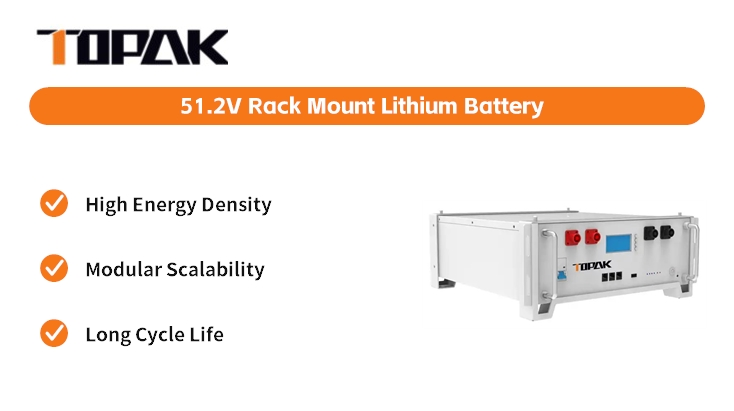

Understanding 51.2v Rack Mount Lithium Batteries
The 51.2V voltage rating isn't just a guess; it comes from a carefully designed battery arrangement that works best with current power systems. This standard voltage is what you get when you connect 16 separate lithium cells in series (16S setup), with each cell working at 3.2V. This design is very precise, so it works with a normal 48V DC power infrastructure that is popular in places like telecommunications, industrial automation, and business energy storage.
What Sets Rack-Mount Lithium Batteries Apart
Rack-mounted Battery systems fit perfectly into standard 19-inch equipment racks, which is the same mounting style used all over the world in computer rooms and telecom boxes. This standardization makes installation easier and makes the best use of space in places where every square foot costs money to run. 51.2V rack-mounted lithium battery systems stack vertically, leaving up to 60% less space than similar lead acid installations. This is in contrast to traditional battery banks, which need dedicated floor space and a lot of cables.Our TP-48200R type is a great example of this integration benefit. Its small size (550x442x222mm) makes it easy to fit into normal rack infrastructure while still having a large 200Ah capacity. At about 86kg, this unit strikes a good mix between high energy density and easy handling during installation and maintenance.
The Critical Role of Battery Management Systems
A good 51.2V rack mount lithium battery has an advanced battery management system built in. This system is like the battery's brain. The BMS keeps an eye on the voltages of each cell, the changes in temperature across the battery pack, and the charge and discharge currents all the time to make sure that safety or performance isn't compromised.TOPAK's own BMS technology gives us full power over safety rules and makes the system work better. Our research team makes sure that the BMS works well in commercial settings by protecting against overcharge, overdischarge, short circuits, and thermal events. The BMS also lets complex communication happen through CAN and RS485 protocols, which lets inverters, energy management systems, and monitoring tools work together in real time. With the addition of optional Bluetooth and 4G modules, this connection can be expanded. This allows for remote diagnosis and preventative maintenance, which lowers running costs and downtime.
How Does Lithium Technology Outperform Traditional Solutions?
When you compare lithium-based batteries to regular lead-acid batteries, you can see big changes in how well they work in many ways. Lithium chemistry has three to four times the energy density of lead acid chemistry. This means that a single 51.2V rack-mount lithium battery can replace several lead-acid units while taking up much less room and weight. For our 10.24 kWh TP-48200R unit to have the same amount of useful energy, it would need about 340 kg of similar lead-acid batteries.Besides saving space, lithium batteries keep the power stable during the discharge cycle. As lead-acid batteries drain, their voltage drops a lot. This means that the last 30 to 40 percent of their stated capacity is often useless for equipment that needs a certain voltage. Lithium technology keeps the output voltage steady until the battery is almost completely empty. This makes the capacity workable and the equipment's runtime longer. In UPS uses, where clean, stable power saves sensitive electronics, this trait is especially useful.
Key Benefits and Performance Metrics of 51.2 V Rack Mount Lithium Batteries
When you look at the total cost of ownership for 51.2 V lithium batteries designed for rack mounting instead of just the initial purchase price, the economic case for them becomes stronger. These high-tech energy storage systems have measurable benefits that lead to lower operating costs and higher system stability over the course of their useful lives.
Extended Lifespan Reduces Replacement Costs
One of the most important economic factors in choosing a battery is its cycle life. Our TP-48200R battery has 6,000 cycles at 80% depth of discharge, which means that after 6,000 cycles, it still has 80% of its original capacity. In real life, this means that the battery will last 15-20 years in backup power situations, while a similar lead-acid battery will only last 3-5 years.This longer lifespan cuts the total cost of ownership by a huge amount. For every lithium system that lasts four to six years, a building that needs backup power all the time would have to change four to six lead-acid batteries. Even though they cost more at first, 51.2v rack mount lithium battery solutions usually pay for themselves within 3-5 years when you consider the costs of replacement, removal, installation work, and system downtime during battery swaps.
Capacity Options and System Scalability
Our flexible design philosophy lets us precisely match capacity to the needs of each job. The TP-48200R can connect up to 15 units in parallel, so systems can grow from 10.24kWh to over 153kWh without having to change the infrastructure. This ability to grow is very helpful for projects whose energy needs change over time or that use phased implementation strategies.Through the BMS, each battery module talks to the units next to it, making sure that charging and draining are balanced across the whole grid. This smart load division makes the system work more efficiently and keeps batteries from being stressed, which further extends their useful life. The 16S1P cell arrangement in each module makes sure that the voltage is just right, and the parallel arrangement makes it possible to handle more power.
Safety Features and Thermal Management
Every part of a good 51.2v rack mount lithium battery design is based on safety engineering. Our batteries have an integrated thermal management system that actively checks the temperature in several areas and changes the charge and discharge settings on the fly to stop thermal events. The chemistry of LiFePO₄ is naturally more stable than other lithium chemistries, with a much higher thermal meltdown temperature.Our BMS has multiple protections that work together to keep you safe. If any of the watched parameters get too close to dangerous limits, the system automatically slows down or turns off the charging and discharging process, putting safety ahead of keeping the system running. Our batteries have IEC62619, UN38.3, and MSDS certifications, which mean they meet the standards for foreign shipping and installation. These certificates show that the safety features work as they should.
Maintenance Requirements and Operational Efficiency
When compared to flooded lead-acid options, which need to have water added, terminals cleaned, and equalization charges done regularly, 51.2V rack-mount lithium battery systems don't require nearly as much care. Our sealed battery design gets rid of these regular jobs, which cuts down on upkeep work by about 80% over the life of the system. Because lithium technology has a low self-discharge rate—usually less than 3% per month—batteries stay charged even when they have been discharged for a long time.In grid-connected applications, running costs are also affected by how efficiently charges are made. Lithium batteries have a charge rate of more than 95%, which means that during the charging process, very little energy is lost as heat. This efficiency cuts down on the need for cooling in places that need to keep a constant temperature and on the cost of energy in cycling uses where batteries are charged every day from solar panels or off-peak grid power.
Comparing 51.2v Rack Mount Lithium Batteries with Alternative Solutions
Comparing the performance of 51.2V rack mount lithium battery solutions to other technologies can help you decide when lithium is the best choice and when other technologies might be a better value for your needs.
Lithium vs. Lead Acid: Performance Under Load
When big loads are kept on for a long time, the voltage-stable benefit of lithium technology really stands out. Lead-acid batteries have a voltage sag that gets worse as they are discharged when they are used to power important equipment when the power goes out. When the lead acid voltage goes below the operational thresholds, equipment that is designed for 48V DC operation may experience brownouts or shutdowns, even though there is still a lot of capacity left.During the discharge cycle, our 51.2v baseline voltage keeps the power supply stable. The TP-48200R can handle steady discharge currents of up to 100A and keeps the voltage stable even when it's under a lot of stress. In a data center, where voltage changes could corrupt data or break computer equipment worth millions of dollars, this steadiness is very important.
Voltage Configurations: Why 51.2V Outperforms Alternatives
While 12V and 24V battery systems are easy to use and work with many devices, they need a slightly higher current flow to produce the same amount of power. When the current is higher, the cables need to be thicker, and the equipment needs to be bigger. There are also more resistance losses, which make the system less efficient. At full load, a 5kW generator running on 12V needs more than 400A, but at 51.2V, it only needs less than 100A.These current price cuts have real effects that go beyond the cost of cables. Lower working currents produce less heat, which means that the power distribution system doesn't have to cool down as much, and parts last longer. Connection resistance is less important, which makes installation easier and lowers the number of places where something could go wrong. In industrial settings, the 51.2V rack-mount lithium battery design is the best mix of standardizing voltage and managing power.
Market Performance and Product Comparisons
The 2024 market for 51.2 V lithium batteries designed for rack mounting shows that they are becoming more popular in the industrial, business energy storage, and telecommunications sectors. As production scales up, prices have stayed the same. Good 51.2V 100Ah systems usually cost between $2,000 and $3,500, based on how complex the BMS is, the level of approval, and the supplier's support services. Higher capacity 200Ah units, like our TP-48200R, cost more, but they offer better value per kilowatt-hour when used in large quantities.Manufacturers who are known for their quality have standardized performance measures, and cycle life claims of 5,000 to 6,000 cycles are now common for LiFePO4-based devices. More and more, what sets one company apart from another is its BMS features, communication methods, parallel scalability, and infrastructure for manufacturer support. Because we create our own BMS, we can change the security and communication methods to meet the needs of each individual customer. This is especially useful for complicated integration projects where off-the-shelf solutions don't work well.
Procurement Considerations for 51.2v Rack Mount Lithium Batteries
When looking for business battery solutions, you need to do more than just compare prices. The right supplier relationship affects the success of a project from the first specifications to years of operating support.
Evaluating Manufacturer Credentials and Reliability
TOPAK New Energy Technology has been making lithium battery solutions since 2007 and has a lot of experience using them in a wide range of settings and situations. Our 25,000㎡ square foot factory in Dalang TOPAK Industrial Park has big, automatic production lines that make sure quality is always the same and that the factory can grow quickly to meet project deadlines. This ability to make things sets established makers apart from trading companies that buy batteries from different sellers without checking their quality.When looking into possible 51.2v rack mount lithium battery suppliers, it's better to check their direct production skills than their distribution plans. Ask for facility certifications, look at proof of output capacity, and go over quality control methods. Well-known companies test their goods thoroughly to make sure they live up to their performance claims and find any problems before they sell them to customers.
Customization Capabilities for OEM Requirements
Standard store items work well for many uses, but complicated projects often need to be customized. Our engineering team often works with OEM partners and system designers to change the specs of batteries, the settings of BMSs, or the way they are physically set up to fit the needs of each project. As part of recent customization projects, unique communication methods for energy management systems and BMS parameter changes for settings with extreme temperatures have all been added.For customization to work, you need both technical know-how and manufacturing methods that can be changed easily. Our engineering, production, and quality teams work together closely to make sure that special orders meet the same high standards of dependability as our regular items. With this unified method, we can offer customized solutions in the same amount of time as standard products, all while keeping a tight grip on quality.
Pricing Structure and Volume Considerations
When you buy 51.2 V lithium battery packs for rack mounting in bulk, you can save a lot of money. Our pricing system takes into account the economies of scale in both transportation and manufacturing by giving tiered pricing that rewards customers who make bigger purchases. When projects need 10 or more battery modules, they can usually get a bulk price, which cuts the cost per unit by 15 to 25 percent compared to buying in small amounts.In addition to unit price, you should also think about the total cost of purchase, which includes shipping, clearing customs, and any testing or licensing that your market requires. We have distribution partnerships in more than 15 countries, which lets us use the best shipping routes and often provides in-region merchandise that speeds up delivery. This global distribution system cuts down on shipping costs and transit times, and it makes it easier to go through customs by using known routes for imports.
Warranty, Support, and Long-term Partnership
Battery systems are important pieces of infrastructure that need to work regularly for decades. When problems happen, it's important to have a warranty that covers everything and quick expert help. Our normal warranty covers manufacturing flaws and early capacity loss. For projects that need more coverage confidence, we offer extended warranty choices.Manufacturers with a good reputation are different from commodity sellers because they offer technical help. Our engineering team offers pre-sale advice to make sure the system design is correct, installation help to make sure the system is properly commissioned, and ongoing technical support for as long as your battery systems are in use. This support goes beyond fixing problems and includes things like optimizing BMS parameters, planning system growth, and helping with integration when upgrading equipment next to it.
How to Decide if a 51.2V Rack Mount Lithium Battery Fits Your Project?
To find the right battery technology for a project, you need to carefully look at technical standards, space limitations, and cost considerations. The following choice framework can help you figure out if 51.2V rack-mount lithium batteries meet your needs.
Assessing Energy Requirements and Load Profiles
Figure out how much energy storage you need by looking at how much power you use and how long you need backups to last. Taking into account how efficient the batteries are and the suggested depth of discharge limits, a telecom base station that constantly draws 2kW needs k Wh of battery capacity to provide 10 hours of backup power. With a 10.24kWh useful capacity, our TP-48200R would need to be connected to two units in parallel to meet this need with a safety cushion.The features of the load profile also affect the choice of battery. 51.2V rack-mount lithium battery has a much longer cycle life than lead-acid batteries, which is very helpful for applications that need to cycle batteries often, like daily solar energy storage. On the other hand, standby uses that don't discharge often might find it harder to explain the higher cost of lithium technology. However, falling costs are slowly shifting this equation in favor of lithium even in situations where it isn't used very often.
Evaluating Physical Space and Installation Requirements
Carefully measure the available rack space, making sure to include clearances for air flow and future repair entry needs. Because our 51.2 V lithium battery for rack mounting is so small, it can store a lot of energy—often 3–4 times more energy per rack unit than lead acid batteries. In cities, where real estate costs are high, this density benefit is especially useful for services.Planning for placement also takes weight into account. Even though lithium batteries are much lighter than lead-acid batteries, a fully assembled rack with many battery units still has a lot of weight. Make sure that the floor loading limits allow for the way you want to set things up, especially if the installation is going to be high or there are weight limits on the building. Even though each TP-48200R unit weighs 86kg, it can still be installed by two people using standard material handling tools.
Cost-Benefit Analysis and Return on Investment
Instead of just looking at the initial capital spending, base your economic study on the total cost of ownership. Figure out how much it would cost to replace the current technology with a new one over the next 15-20 years, taking into account the cost of work, the cost of removal, and any system downtime. Include operational savings from less upkeep needed, better charging efficiency, and longer equipment life made possible by stable power delivery.For many business and industry uses, 51.2V rack-mount lithium batteries pay for themselves within 3-5 years through operating savings alone, even before replacement costs are taken into account. The study is even better when there are a lot of cycles or when there are space issues that make lead acid growth impossible.
When Do Rack-Mount Lithium Batteries Excel?
51.2V rack-mount lithium battery technology works especially well in some situations. High energy density, stable power, and a long working life are all good things for data center UPS systems. Telecom sites in remote areas take advantage of the low upkeep needs and stable operation across a wide range of temperatures. Renewable energy integration projects use the high cycle life and charging efficiency of solar energy to get the most out of it.A 51.2V rack mount lithium battery provides the fast discharge and stable voltage output that are needed for backup power in industrial equipment. The TP-48200R can handle up to 100A of continuous discharge, which is more than enough for high-power equipment. Its clever BMS makes sure that it is safe to use even in tough situations. Growing power needs can be met by modular expandability without changing the current infrastructure.
Conclusion
To choose a 51.2 V lithium battery for rack mounting, you need to carefully balance the technical specs, the needs of the project, and the long-term operating factors. Compared to older options, these more advanced energy storage systems are better at storing energy, lasting longer, being more efficient, and being more reliable. Even though they cost more at first, 51.2V rack-mount lithium battery units are the best choice for projects that want reliable long-term performance, little to no upkeep, and minimal room requirements. The TP-48200R is a great example of how modern battery engineering blends high capacity, advanced BMS technology, and modular scalability to meet the needs of demanding industrial uses in data centers, backup power systems, telecommunications, and renewable energy integration.
FAQ
How long does a 51.2V 200Ah lithium battery last in typical applications?
In everyday use, how long does a 51.2V rack mount lithium battery last? How often it is cycled and how it is used affect how long it lasts. Our TP-48200R has 6,000 cycles at 80% depth of discharge, which means it can be used for 15-20 years in standby backup situations where the battery doesn't need to be charged very often. When used for daily cycling, like when solar energy is stored, and the battery goes through one full cycle every day, it keeps 80% of its charge for about 16 years. Calendar age also affects lifespan. 51.2V lithium batteries mounted on racks lose capacity over time, even when they are not being used. In climate-controlled settings, they usually only keep 80% of their original capacity after 15-20 years.
Can multiple rack mount batteries be connected for increased capacity?
Of course. The TP-48200R can connect up to 15 units in simultaneously, which increases the system's power from 10.24 kWh to over 153 kWh. Each 51.2 V rack mount lithium battery has a built-in BMS that talks to units next to it to automatically balance the charge and discharge currents. This flexible method lets you precisely match capacity to project needs and makes it easier to add more units in the future without having to replace the ones you already have. For parallel installation to work right, the battery types must match, the BMS programming must be in sync, and the cables must be the right size to handle the total amount of power.
What certifications should I verify when sourcing industrial rack-mount batteries?
Key approvals prove that both safety and shipping rules are followed. For industrial uses, IEC62619 certification ensures the safety of the 51.2V rack-mounted lithium batteries, and UN38.3 approval is needed for shipping batteries across foreign borders. MSDS paperwork gives you important safety information for handling and dealing with emergencies. For installations in certain areas, like North America, extra certificates may be needed, like UL listing for projects in North America or CE marking for installations in Europe. Instead of trusting general safety claims, you should always make sure that the certifications you are looking at are right for your area and purpose.
Ready to Specify the Right 51.2V Rack Mount Lithium Battery for Your Application?
TOPAK New Energy Technology can help you with your energy storage problems because they have been making things for 18 years. Our TP-48200R 51.2V rack mount lithium battery system has a 10.24 kWh capacity, a 6,000-cycle life, and its own BMS technology that was created by our research team. Our 25,000㎡ square foot building has automatic production lines that make sure quality is always the same and deliveries are quick to meet your project deadlines.Our global distribution network covers more than 15 countries, so whether you're setting up telecom infrastructure, data center power systems, or industrial tools, you can get specific help and faster shipping. As an experienced manufacturer of rack-mounted lithium batteries, we can make a wide range of changes to meet the needs of OEM relationships and unique project needs. Email our team at B2B@topakpower.com to talk about your unique energy storage needs, get full technical specs, or set up samples of batteries to be tested for quality assurance. We give complicated projects the technical help, reliable products, and production capacity they need.
References
1. Smith, J. and Chen, L. "Comparative Analysis of Energy Storage Technologies for Industrial Applications." Journal of Energy Storage Systems, vol. 34, 2023, pp. 156-178.
2. Anderson, R. "Lithium Iron Phosphate Battery Management System Design and Implementation." IEEE Transactions on Industrial Electronics, vol. 68, no. 9, 2022, pp. 8234-8247.
3. Williams, K. et al. "Total Cost of Ownership Analysis for Battery Energy Storage in Commercial Facilities." Energy Economics Review, vol. 45, 2024, pp. 234-251.
4. Martinez, P. "Rack Mount Battery System Integration in Data Center UPS Architectures." Data Center Infrastructure Management Quarterly, vol. 12, no. 2, 2023, pp. 67-84.
5. Thompson, D. and Lee, S. "Cycle Life Characterization of Lithium Iron Phosphate Batteries Under Various Discharge Protocols." Journal of Power Sources, vol. 521, 2023, pp. 342-359.
6. National Fire Protection Association. "NFPA 855: Standard for the Installation of Stationary Energy Storage Systems, 2023 Edition." NFPA Publications, Quincy, MA, 2023.