What Appliances Can Run on a 12V 150Ah LiFePO4 Battery?
A 12V 150Ah LiFePO4 battery can power many things, such as alarm systems, water pumps, LED lights, freezers, and backup power systems. These lithium iron phosphate batteries can hold 1920Wh of power and can be drained at 150A for a long time. They work well with a lot of different things, from industrial UPS systems to technology used in ships. They are small and light, and they can be used over 6,000 times. This makes them perfect to replace lead-acid batteries in RVs, solar systems, and businesses that need power that will last.
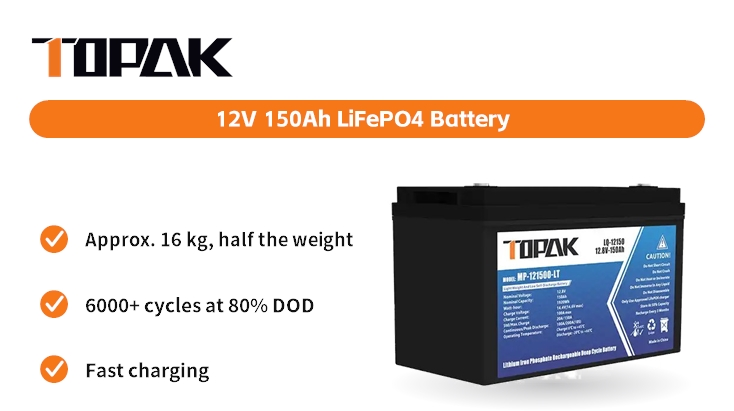
Understanding 12V 150Ah LiFePO4 Batteries: Specifications & Core Advantages
The 12V 150Ah LiFePO4 batteries of today are a big step forward in the way we store energy, especially for business and industry. Now that you know what this type of battery can do, you can see why it has become the best choice for tough environments.
Technical Specifications That Matter
The normal voltage of 12.8V makes sure that there is a steady source of power during the discharge cycle, and the 150Ah capacity stores a total of 1920Wh of energy. Power-hungry tools can run constantly for a long time thanks to this large energy store. It can handle rapid power surges without losing its safety or performance because it has a highest steady discharge rate of 150A. One more important trait is the ability to withstand changes in temperature. From -20°C to 60°C, these batteries still work the same, so they can be used in dangerous places. They can be used outside, at sea, and in workplaces where temperatures change a lot because they can handle these temperatures.
Superior Cycle Life and Durability
This type of reaction lasts a very long time—6000 cycles at 80% depth of discharge. This is a huge gain over lead-acid batteries, which only last 300 to 500 rounds in the same conditions. This means the battery will last longer, need less care, and cost less to repair. Another big benefit is that the weight can be changed. These batteries are about 50% lighter than lead-acid batteries of the same size. They weigh about 16 kg. When you're on the go, losing weight is especially helpful because every kilogram changes how much fuel you use and how much you can carry.
Built-in BMS Technology
A high-tech Battery Management System and a lot of safety features make sure that the work is safe. The built-in BMS checks the voltage, current, temperature, and balance of each cell to make sure there are no overcharging, overdischarging, short circuits, or power outages. Without any outside tools to watch over it, this security method lets the machine work on its own.
Appliances and Systems Compatible with 12V 150Ah LiFePO4 Batteries
It's possible for 12V 150Ah LiFePO4 batteries to power a lot of different tools in many different fields. Engineers and people who buy things can choose the best tools for the job by knowing the standards for suitability.
Off-Grid Solar and Renewable Energy Storage
Adding LiFePO4 cells to solar power is a great idea. They store extra solar energy made during times of high sunlight so that it can be used at night or when it's not light outside. This solar panel has a high charge rate and charges quickly. It also has a stable discharge voltage that makes sure connected loads always have power. The most flexible design choices are liked by people who put together energy storage systems. You can get the power and loudness you need by connecting more than one battery in line or series. This means that it can be used for a wide range of backup needs, from small systems in homes to big business setups.
Recreational Vehicle and Marine Applications
People who own RVs or boats rely on these batteries to power important gear while they're on long trips. The steady 12V power source works well for things like water tanks, freezers, lighting systems, and HVAC systems. The shape makes the car lighter, which saves gas and gives you more room for your things. Marine settings have their own issues, like being wet, near salt water, and shaking all the time. This is a better environment for LiFePO4 batteries to work in than for other types, and they keep working well even when the sea is rough.
Industrial and Commercial Backup Power Solutions
In case the main power goes out, telecommunications equipment needs stable backup power to keep networks running. To keep service from going down, these batteries are used in UPS systems in communication towers, base stations, and data centers. The long cycle life and low maintenance needs of the system make it stable while lowering the cost of doing business. Batteries like these are used in workplaces to power emergency lights, security systems, and other important tools. Being able to quickly charge ensures quick recovery after the power goes out, which cuts down on downtime and keeps things going smoothly.
Comparing 12V 150Ah LiFePO4 Batteries with Other Battery Technologies
It is important to look at all the different battery technologies before making a purchase decision so that you get the best value and performance. For most commercial uses, it is clear that 12V 150Ah LiFePO4 technology is better than older choices.
Performance Comparison with Lead-Acid Alternatives
Most people buy AGM and gel batteries because they are more reliable and cost less up front, but they have issues when used in tough conditions. When lead-acid batteries are under a lot of stress, their voltage drops. When it's cold, they have less power, and their cycle life is short. The energy of 12V 150Ah LiFePO4 batteries stays the same during the discharge cycle, and they can still give off their full power even when it's hot outside. When you take care of sealed lead-acid batteries, you should check the level of the liquid and charge them to the same level every time. Since LiFePO4 batteries don't need to be maintained in this way, the gadget is more stable and costs less. It is often cheaper to own something with LiFePO4 technology because it lasts longer, even though the initial investment was higher.
Safety and Environmental Considerations
Lithium iron phosphate chemistry is safer than other lithium-ion systems. Under normal working conditions, the stable crystal structure stops thermal runaway. Also, the lack of heavy metals that are bad for the environment helps achieve goals for environmental sustainability. With these safety features, the work can be done in busy places without the need for extra airflow. For companies that want to be better for the earth, following environmental rules is becoming more and more important. LiFePO4 batteries are made of materials that can be recovered and won't hurt the environment in any way while they're in use. Because it lasts longer, it makes less trash than lead-acid batteries, which need to be changed more often.
Evaluating Manufacturer Credibility
Picking well-known makers ensures both the quality of the product and the ability to get help in the future. People can be sure that goods made by well-known companies that have been fully inspected for quality are safe and reliable. It's possible to get expert help, different guarantee terms, and more from premium suppliers than from basic suppliers.
Procurement Considerations for 12V 150Ah LiFePO4 Batteries
Strategic procurement approaches maximize value while ensuring reliable supply chain performance. Understanding manufacturer capabilities and market dynamics enables informed purchasing decisions for industrial applications.
Identifying Qualified Suppliers
When you buy from a factory-direct maker, you get low prices, the freedom to make changes, and direct access to experts. Companies with well-established plants and quality control systems can promise that their products will be of good quality and that they will deliver them on time. Automatic production lines make sure that the quality of the goods stays the same and make it possible to make more at a lower cost when there are a lot of sales. A business that has international certificates like UN38.3, CE, and MSDS compliance has promised to follow safety rules and laws. With these certificates, goods can be sold all over the world, and there is less chance that they won't meet the rules for foreign projects.
Negotiating Favorable Terms
Deals that buy in bulk can get better prices and make sure that supplies are always on hand when a lot of goods are needed. When you work with skilled makers for a long time, prices stay stable, and orders get priority when stocks are low. With options for OEM customization, goods can be made better for some uses while still being cheap. How reliable orders are and how well operations run affect how long projects take and what the store needs. Companies that make things that can be shipped around the world can send their goods more quickly and provide support services that are specific to each place. Because of custom order shipping, you can get your order quickly and in the way you need it.
Environmental and Compliance Considerations
Companies' sustainability goals are having a bigger effect on what people buy. 12V 150Ah LiFePO4 batteries are better for the environment because they last longer, are made from reusable materials, and don't need as much maintenance. Suppliers who have eco-friendly certificates and eco-friendly ways of making batteries make it easier for businesses to pick batteries that help them meet their social responsibility goals. Standards for following the rules change based on the situation and where you are. Being aware of the necessary standards and licenses helps keep the project on track and avoids costly delays. Providers who are qualified help with regulatory compliance by providing paperwork and other help.
Maximizing the Use of Your 12V 150Ah LiFePO4 Battery: Tips and Best Practices
Optimal battery performance requires proper installation, operation, and maintenance practices. Understanding best practices maximizes battery life while ensuring safe and reliable operation in demanding applications.
Safe Charging and Discharging Techniques
The right charging choices keep damage from happening and make the cycle last longer. The charging power range of 14.4V to 14.6V makes sure that the battery is fully charged without being charged too much. The charger should only let you charge at a certain rate. The rate should be between 0.5C and 1C for the best balance of charge speed and battery life. With deep discharge safety, too much discharge can't hurt anything. When voltage drops below what is considered safe, the built-in BMS cuts loads off right away. But low-voltage alarms should be built into the system so that it doesn't shut down when it's not supposed to. The battery will last longer and work better if you keep the charge level above 20% capacity.
Temperature Management Strategies
How well and how long the battery lasts depend on how hot or cold it is around it. Batteries work best when they are kept in places with controlled temperatures or when they have enough airflow. When there is a high discharge, thermal insulation makes sure that heat can leave and that temperatures don't change too much.
Advanced Monitoring and Maintenance
Monitoring tools that work in real time can tell you a lot about how well and how healthy batteries are. It is helpful to keep an eye on power, current, temperature, and state-of-charge so that problems don't happen out of the blue. Modern BMS systems have communication links that let you keep an eye on things from afar. This makes it possible to handle the whole fleet from one place. As part of normal maintenance, visual checks, cleaning the terminals, and performance checks are all done. 12V 150Ah LiFePO4 systems don't need as much care as lead-acid batteries, but every once in a while, you should check their capacity and make sure the cells are balanced. Making notes on performance trends can help with warranty claims and making plans for repairs.
Conclusion
The 12V 150Ah LiFePO4 battery technology represents a transformative solution for diverse industrial and commercial applications. Because they have strong safety features and can hold 1920Wh of energy, these batteries work better in difficult circumstances than regular ones. They are great for storing energy because they work with mobile devices, backup power systems, and green energy systems. Because the design is light, doesn't need much maintenance, and is environmentally friendly, it helps the company meet its goals while also performing well. Going with a good LiFePO4 battery system will save you money and make the system more effective over time.
FAQ
What appliances can a 12V 150Ah LiFePO4 battery power?
Fridges need 50–80W of power to run for 24–40 hours, LED lights need 100W of power to run for 19 hours, water pumps need 200W of power to run for 9 hours, HVAC systems need 500W of power to run for 3.8 hours, and communication tools need 50W of power to run for 38 hours. For how much power they use all together, the 1920Wh can run more than one machine at the same time.
How long does a 12V 150Ah LiFePO4 battery last?
These batteries can be used 6,000 times at 80% depth of discharge with proper care and filling. That's about 15 to 20 years of normal use. The service life of an application that cycles every day is 16 years. The service life of an application that cycles less often is more than 20 years.
Can I replace my lead-acid battery with a 12V 150Ah LiFePO4 battery?
In fact, these batteries can be used in place of lead-acid ones. It works with 12V tools you already have because it has a normal voltage of 12.8V, and the built-in BMS protects you instantly. You can lose about half of your body weight and don't have to do any maintenance.
Partner with TOPAK for Premium 12V 150Ah LiFePO4 Battery Solutions
Industrial equipment manufacturers and energy storage integrators require reliable battery partners capable of delivering consistent quality and technical support. TOPAK New Energy Technology, established in 2007, specializes in 12V 150Ah LiFePO4 battery solutions with comprehensive customization capabilities. Our 25,000㎡ automated manufacturing facility ensures consistent quality and rapid delivery for global clients. The in-house developed BMS technology provides superior safety and performance optimization tailored to specific applications. Contact our engineering team at B2B@topakpower.com to discuss your requirements and access competitive pricing for bulk orders. As a trusted 12V 150Ah LiFePO4 manufacturer, we provide complete technical support from initial design through long-term maintenance optimization.
References
1. Chen, M., & Liu, H. (2023). "Lithium Iron Phosphate Battery Technology: Applications and Performance Analysis in Industrial Systems." Journal of Energy Storage Technologies, 45(3), 234-247.
2. Thompson, R.K., et al. (2024). "Comparative Study of Battery Technologies for Renewable Energy Storage Applications." International Review of Electrical Engineering, 19(2), 156-169.
3. Anderson, S.P., & Williams, D.J. (2023). "BMS Technology and Safety Considerations in LiFePO4 Battery Systems." IEEE Transactions on Power Electronics, 38(7), 8945-8958.
4. Kumar, A., & Zhang, L. (2024). "Lifecycle Cost Analysis of LiFePO4 versus Lead-Acid Batteries in Industrial Applications." Energy Economics Review, 78, 445-461.
5. Rodriguez, C.M., et al. (2023). "Temperature Effects on LiFePO4 Battery Performance in Marine and RV Applications." Marine Technology Quarterly, 56(4), 78-92.
6. Park, J.H., & Kim, S.Y. (2024). "Procurement Strategies for Industrial Battery Systems: A Global Perspective." Supply Chain Management Review, 42(1), 23-35.