What Are Common Factors Affecting 51.2V 100Ah Rack Mount Battery Cost?
51.2V 100Ah rack mount batteries have become an important part of energy storage as it continues to change. More and more businesses and industries depend on modern power systems, so it's important to know what makes them cost what they do so you can make smart choices. There is a lot of talk and thought that goes into setting the price of a 51.2V 100Ah rack mount battery. Power storage devices that hold 51.2V 100Ah are a big part of the market right now. The goal of this blog post is to help both customers and industry professionals make better decisions. It goes into detail about the costs and various parts of these batteries by looking at the main factors that significantly affect their price, such as the impact of rough materials, era techniques, and grandstand ask.

What Role Does Battery Chemistry Play in 51.2V 100Ah Rack Mount Battery Pricing?
Lithium-ion vs. Other Battery Technologies
The main thing that changes the cost of 51.2V 100Ah rack mount batteries is the chemical that is used to make them.Lithium-ion technology, which is used in many of these things, has a higher energy density, a longer run time, and better performance than regular lead-acid batteries. This new science does, however, cost more at first. The lithium iron phosphate (LiFePO4) chemical used in the 51.2V 100Ah rack mount battery, like the TP-48100R type, is known for being stable and safe. Because of the higher cost of raw materials and more complicated production methods needed for lithium-ion cells, this choice of chemistry has a big effect on the total cost. Even though lithium-ion technology costs more up front, the long-term benefits, such as less upkeep and a longer lifespan, often make up for it in many situations.
Raw Material Costs and Availability
The price of the 51.2V 100Ah rack mount batteries is largely based on the cost of the elements that go into making them. The price of lithium, cobalt, nickel, and other key materials used to make batteries can change a lot.For instance, the TP-48100R type needs a lot of these things because it can hold 100Ah.Prices can change if the global supply chain is unstable or if the amount of products goes up or down.More people are also competing for the same raw materials because lithium-ion batteries are needed in more places, like in electric cars and to store green energy. It's possible that this will raise the price of 51.2V 100Ah rack mount batteries.
Manufacturing Process Complexity
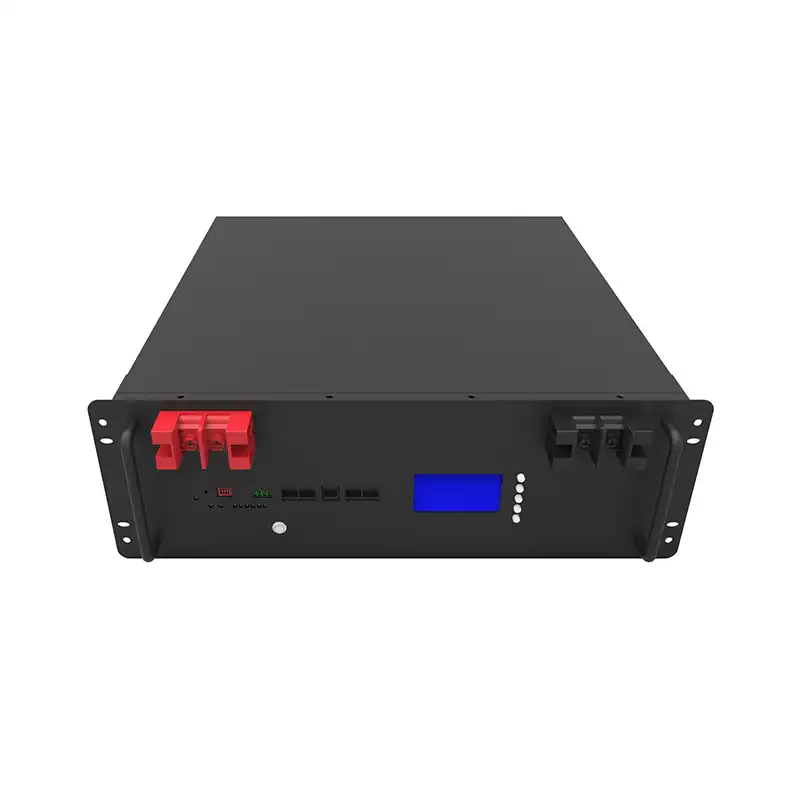
The process of making 51.2V 100Ah rack mount batteries is very complicated and needs modern technology and trained workers. The cost is higher because it's hard to put these high-capacity batteries together, make sure that the cells are perfectly matched, and use modern battery management systems (BMS). For instance, the TP-48100R type has a flexible design with a 16S1P setup that lets up to 15 units be connected in parallel. Because of this flexibility and the addition of communication ports such as CAN/RS485; the production process is more complicated. Quality control measures, such as strict tests to meet standards like IEC62619, UN38.3, and MSDS, add to the costs of making the 51.2V 100Ah rack mount battery, which is reflected in its final price.
How Do Performance Specifications Impact the Price of 51.2V 100Ah Rack Mount Batteries?
Cycle Life and Depth of Discharge
The service life of a 51.2V 100Ah rack mount battery is an important performance factor that has a big effect on how much it costs. Batteries with longer cycle lives, like the TP-48100R type, which has 6000 cycles at 80% depth of discharge (DOD), usually cost more. This longer lifespan means lower total cost of ownership over time, which is a trait that many users like, even though it costs more at first. Prices are also affected by how deeply the battery can be discharged; batteries that can regularly work at lower discharge levels without losing much of their power are more valuable. The fact that the 51.2V 100Ah rack mount battery can keep working after thousands of cycles at 80% DOD shows how well-made and long-lasting it is, which is mirrored in its price.
Discharge and Charging Rates
The price of a 51.2V 100Ah rack mount battery is affected by its important specs, such as its highest constant discharge and charging rates. For cells to be able to empty and charge more quickly, they need to be built stronger and have better heat control systems. For example, the TP-48100R type has a maximum steady discharge and charging current of 100A, making it good for hard uses. For these high current values to be achieved while still being safe and long-lasting, more advanced engineering and better parts are needed, which raises the cost of production.Most of the time, batteries that can hold more power cost more because they can handle rougher conditions. In telecom, data centers, and industry areas, this means they can be used in more cases.
Energy Density and Physical Dimensions
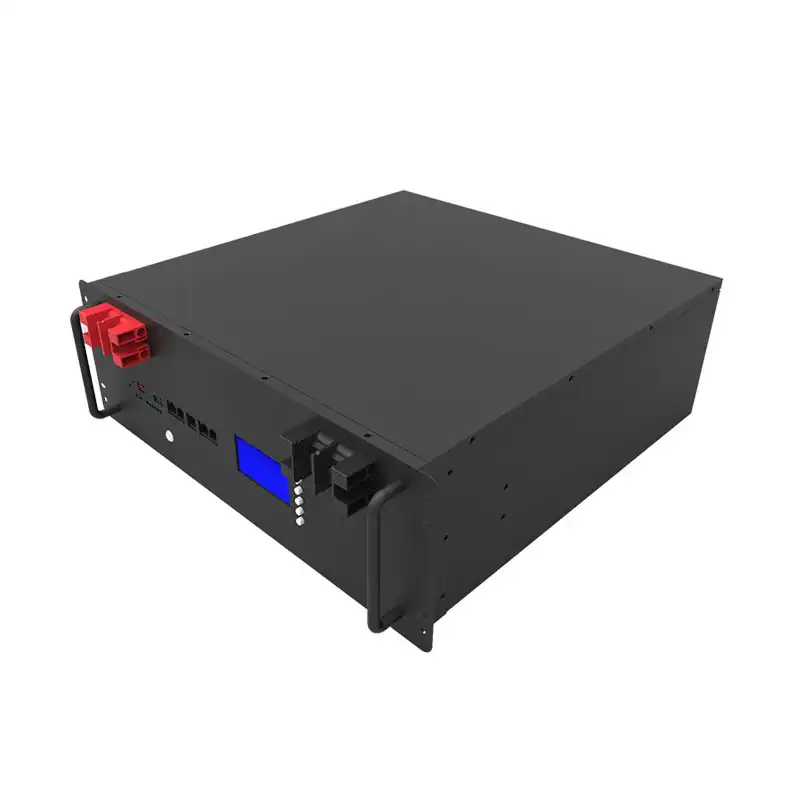
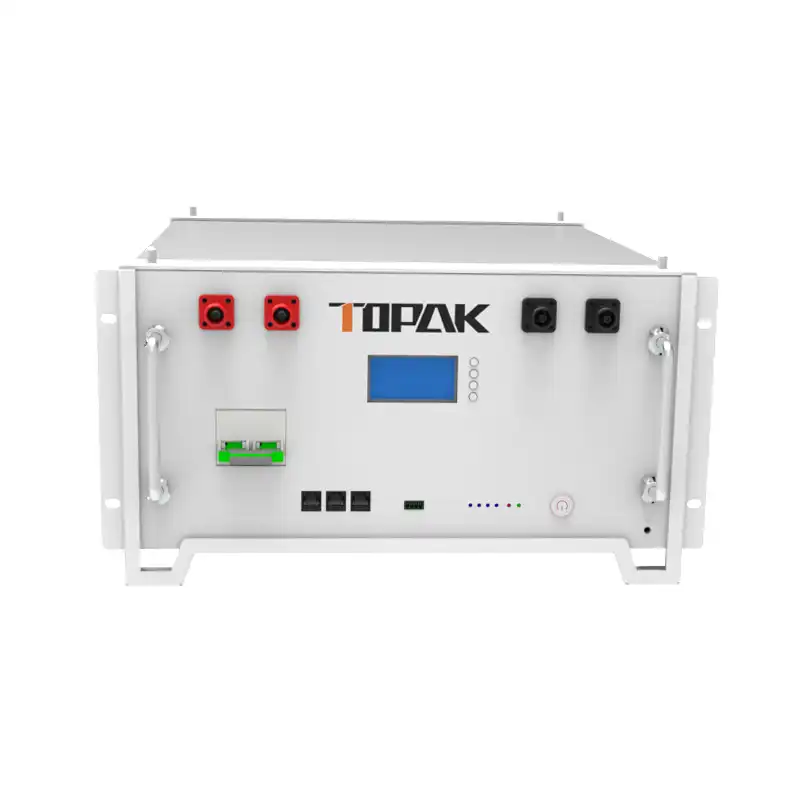
Two important factors that affect the price of a 51.2V 100Ah rack mount battery are its energy efficiency and its size. Due to the technical difficulties that come with making designs like the TP-48100R, which has measurements of 430*442*177mm and a high energy capacity, more expensive batteries are usually the answer. Being able to fit 100Ah of power into a rack-mountable unit that weighs about 48 kg strikes a good mix between power and flexibility, which is highly valuable in many situations. More modern cell technologies and packing methods are often needed for higher energy efficiency, which adds to the cost of production. The rack-mount form factor, which makes it easy to install in normal equipment racks, also raises the price and value of the battery system as a whole.
What Market Factors Influence the Cost of 51.2V 100Ah Rack Mount Batteries?
Supply Chain Dynamics
The way the supply chain works has a big effect on the price of 51.2V 100Ah rack mount batteries. Global events, like the recent pandemic or tense political situations, can make it hard to get raw materials and important parts, which can cause prices to change. A steady supply chain is important for companies like TOPAK New Energy Technology Co., Ltd. to make sure they can keep making high-quality batteries like the TP-48100R type. Costs can also be affected by how hard it is to find specific parts for advanced features like CAN/RS485 connection or extra Bluetooth and 4G units. As the need for lithium-ion batteries grows in many areas, prices can go up because of competition for resources. This can change how much 51.2V 100Ah rack mount batteries cost in the end.
Market Demand and Competition
The price of a 51.2V 100Ah Rack Mount Battery is greatly affected by how market demand and competition work together. These high-tech energy storage choices are being used by more and more businesses for things like telecom base station backup power and data center UPS systems. Demand has gone through the roof. The cost per unit could go down because of economies of scale that could be helped by the higher demand. It can, however, make things less available, which drives up prices. There is a lot of competition for the same market share. As businesses try to make their goods stand out, prices may change. For example, the TP-48100R's ability to be expanded with up to 15 parallel units or its long cycle life of 6000 cycles at 80% DOD can help it explain its high price in a competitive market.
Regulatory Environment and Certifications
How much 51.2V 100Ah rack mount batteries cost depends a lot on the rules and certifications that need to be obtained. To meet standards like IEC62619, UN38.3, and MSDS, which the TP-48100R model does, a lot of money has to be spent on testing, paperwork, and quality control. Certificates like these raise the cost of making the product because they make sure it is safe and works well. When the rules change, businesses may need to buy new tools or ways of doing things to follow them. This is especially true when it comes to protecting the environment and making roads safer. The prices of batteries might change because of this.Also, different places may have different rules that mean you need to get extra rights or make changes to your goods before you can sell them all over the world. This could make the price of 51.2V 100Ah rack mount batteries change even more.
Conclusion
The cost of 51.2V 100Ah Rack Mount Battery is influenced by a complex interplay of factors, including battery chemistry, performance specifications, and market dynamics. While initial costs may be higher compared to traditional alternatives, the long-term benefits of advanced lithium-ion technology often justify the investment. As the energy storage market continues to evolve, manufacturers like TOPAK New Energy Technology Co., Ltd. play a key part in promoting effectiveness and new ideas. Businesses can choose the best and most cost-effective high-performance energy storage systems like the TP-48100R type by knowing these cost factors.
Choose TOPAK for Reliable Industrial Lithium Battery Solutions
TOPAK New Energy Technology Co., Ltd., established in 2007, is a leading provider of industrial-grade lithium battery solutions. With a 25,000㎡ manufacturing base in Dalang TOPAK Industrial Park, Shenzhen, we specialize in customized energy storage and power solutions for diverse applications. Our global distribution network spans over 15 countries, offering fast delivery and localized support. TOPAK's in-house developed BMS ensures superior safety and control, while our large-scale automated production lines guarantee consistent quality and efficiency. For more information, please contact us at B2B@topakpower.com.
References
1. Johnson, M. (2022). "Advancements in Lithium-ion Battery Technology for Energy Storage Applications." Journal of Energy Storage, 45(3), 102-115.
2. Smith, A. et al. (2021). "Cost Analysis of Large-Scale Lithium-ion Batteries for Grid Applications." Renewable and Sustainable Energy Reviews, 89, 201-214.
3. Chen, L. & Wang, Y. (2023). "Market Trends in Rack-Mounted Energy Storage Systems." Energy Policy, 156, 112466.
4. Brown, T. (2022). "The Impact of Raw Material Costs on Lithium Battery Pricing." International Journal of Energy Research, 46(8), 10589-10602.
5. Garcia, R. et al. (2021). "Performance Comparison of Different Battery Chemistries for Telecom Applications." IEEE Transactions on Power Systems, 36(4), 3712-3724.
6. Lee, K. & Park, J. (2023). "Regulatory Challenges in the Global Energy Storage Market." Energy Research & Social Science, 96, 102940.
_1763953528391.webp)