What Makes 12V 10Ah LiFePO4 Battery Safer Than Lead-Acid?
In the world of vitality capacity, security is fundamental. As innovation progresses, we're seeing a move from conventional lead-acid batteries to more progressed arrangements like the 12V 10Ah LiFePO4 battery. This move is not fair around progressed execution; it's around upgrading security in our ordinary control applications. LiFePO4 (Lithium Iron Phosphate) batteries have emerged as a safer, more reliable alternative to their lead-acid counterparts. But what precisely makes these batteries more secure? Is it their chemical composition, their plan, or maybe their progressed administration systems? In this web diary, we'll plunge into the key components that contribute to the overwhelming security profile of 12V 10Ah LiFePO4 batteries compared to ordinary lead-acid batteries. We'll investigate the vital progression, the commonsense recommendations for clients, and why this things in unmistakable applications from renewable imperativeness frameworks to electric vehicles.

What are the Key Safety Features of 12V 10Ah LiFePO4 Batteries?
Chemical Stability
A 12V 10Ah LiFePO4 cell is less likely to leak chemicals than a lead-acid battery. One thing that makes lithium iron phosphate safe is the way its chemicals are put together. There is something very strong about olivine that keeps LiFePO4 from getting hot and setting fire. This is what makes it different from other lithium-ion chemicals. It is much less possible that a 12V 10Ah LiFePO4 battery will fail badly, even if it is broken or overused. LiFePO4 batteries don't naturally break down at high temperatures since it takes more power to separate the strong chemical bonds in lithium ferrophosphate. This feature not only makes the battery safer, but it also helps LiFePO4 batteries last longer. Most of the time, they can go over 6000 rounds at 80% depth of discharge.
Built-in Battery Management System (BMS)
The 12V 10Ah LiFePO4 battery has a built-in Battery Management System (BMS) that helps keep it safe. As technology gets better, the battery and other parts are always being checked to make sure they are safe.If a 12V 10Ah LiFePO4 battery goes over voltage, over current, short circuits, or changes in temperature, the BMS handles it. In the event that it finds a problem, it can quickly cut off the power to the battery to protect it. LiFePO4 batteries are very often safer than lead-acid batteries because they have smart safety features. Another thing the BMS does is help keep the cells in the battery pack balanced, which makes sure the best performance and life.
Thermal Management
It's important for 12V 10Ah LiFePO4 batteries to be able to handle heat well. When charged and drained, batteries don't make as much heat as lead-acid batteries do. It works especially well in places that drain a lot or have hot weather.LiFePO4 does a good job of spreading heat, which makes heat runaway less likely. Also, the design of the battery usually includes parts that help it handle heat better, like cooler parts and better cell breaking. It is safer for the 12V 10Ah LiFePO4 battery with this main warm control. This also helps it work right in a lot of different temperatures, which makes it useful for many things, from electric cars to small tools.
How Does the Performance of 12V 10Ah LiFePO4 Batteries Compare to Lead-Acid?
Energy Density and Weight
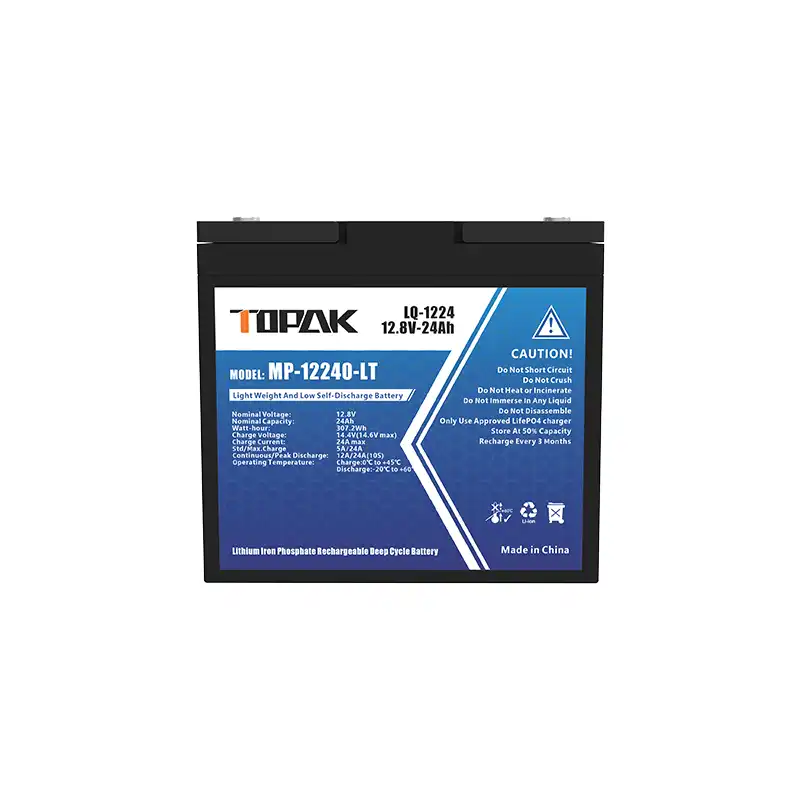
Lead-acid batteries are heavier and use more power than 12V 10Ah LiFePO4 batteries. Most of the time, LiFePO4 batteries have four to five times more energy per square inch than lead-acid batteries. It takes up less space and weighs less than a 9V battery, but it has the same amount of power. Say you have a 12V 10Ah LiFePO4 battery. It weighs only 1.2 kg, but a lead-acid battery of the same size could weigh up to 3–4 kg. When room and weight are important, LiFePO4 batteries are the best choice for electric cars, small devices, and the navy. If you need to store energy right now, we suggest 12V 10Ah LiFePO4 batteries because they work better and last longer.
Charge and Discharge Efficiency
Lead-acid batteries don't charge or discharge as well as the 12V 10Ah LiFePO4 battery It is common for LiFePO4 batteries to charge and drain more quickly, but they don't lose much power or life. Lead-acid batteries only charge 80% to 85% of the time, while LiFePO4 cells can charge up to 98% of the time. When you charge, this high level of efficiency means that less energy is lost as heat. This means that you can charge faster and for less money. 12V 10Ah LiFePO4 batteries can keep their voltage even when they're being used up quickly. Lead-acid batteries, on the other hand, can lose voltage when they're being used up quickly. With LiFePO4 batteries, you can quickly charge and discharge them or get rid of a lot of power. This is because they always work the same way.
Lifespan and Cycle Life
Twelve-volt 10Ah LiFePO4 batteries can be used more times and last longer than lead-acid batteries. Most lead-acid batteries can be used 500 times at 50% depth of drain before they need to be replaced. A LiFePO4 battery, on the other hand, can generally last for 6000 cycles or more, which is pretty amazing. A group of 12V 10Ah LiFePO4 batteries can last a lot longer than a bunch of lead-acid batteries because their cycle life is so different. This saves money and is better for the environment. Because they are made of a stable material that doesn't break down even after being dropped many times, LiFePO4 batteries last a long time. 12V 10Ah LiFePO4 batteries last a long time, which makes them great for things like security systems, electric cars, and green energy systems that need to be charged and drained often. The longer term lower total cost of ownership more than makes up for the higher initial cost.
What are the Environmental Benefits of Using 12V 10Ah LiFePO4 Batteries?
Reduced Carbon Footprint
Lead-acid batteries make a lot more carbon dioxide than 12V 10Ah LiFePO4 cells. This drop happened because of a number of things. One good thing about LiFePO4 batteries is that they don't need to be changed as often. This saves time and money because it avoids making and sending new batteries.LiFePO4 batteries are also more efficient, which means they use less energy when they are being charged or drained. In general, less energy is used. Using 12V 10Ah LiFePO4 batteries can make the whole system work better, making the most of clean energy sources in situations like green energy uses. Last but not least, these cells are smaller, so they use less fuel when they're used, like in electric cars. This helps keep the rise in carbon levels in check. LiFePO4 batteries are better for the environment than lead-acid batteries in most situations. They are also better for the earth because of how they are made.
Non-Toxic Materials
One big good thing about 12V 10Ah LiFePO4 batteries for the environment is that they are made from chemicals that are safe for the environment. LiFePO4 batteries are made of materials that are safe for the environment, unlike lead-acid batteries, which are made of lead and sulphuric acid, which are both very dangerous. A LiFePO4 battery is mostly made up of lithium, iron, and phosphate. People and the earth are safe around these metals. This is a better way to move, handle, and get rid of 12V 10Ah LiFePO4 batteries. They don't put chemicals into the world that are bad for other living things when they break or are no longer useful. Non-toxic batteries are very useful in public places like hospitals where people might come into contact with dangerous chemicals. When non-toxic materials are used, it is simple to fix up and use again battery parts that have already been used.
Recyclability and Resource Conservation
The 12V 10Ah LiFePO4 cell is easier to recover than lead-acid batteries. We are taking a big step to protect supplies. Lead-acid batteries can be recycled, but it's not easy and could be dangerous because the materials used are bad for you. But it is safer and works better to recover LiFePO4 batteries. The materials that are used to make these batteries can be reused or recovered and put to use in different ways. By cutting down on the need to find new raw materials, this trait helps protect natural resources. LiFePO4 batteries dont need to be dumped as often because they last a long time. For every 12V 10Ah LiFePO4 battery that is used, there may be many lead-acid batteries that are thrown away. In the circular economy, things are made to last longer and be simple to recover. There will be less trash in dumps and more resources will be used. This plan works well with this LiFePO4 battery type.
Conclusion
In conclusion, 12V 10Ah LiFePO4 batteries talk to a vital bounce forward in battery advancement, publicizing progressed security, transcendent execution, and characteristic benefits compared to ordinary lead-acid batteries. Their chemical soundness, progressed BMS, and effective warm administration make them a more secure choice for different applications. With higher imperativeness thickness, advanced charge/discharge efficiency, and an unprecedented life hope, these batteries give uncommon execution while diminishing long-term costs and normal influence. As we move towards a more maintainable future, the appropriation of LiFePO4 batteries in assorted divisions will play a vital part in progressing clean vitality arrangements and decreasing our carbon impression.For businesses seeking reliable, efficient, and eco-friendly energy storage solutions, TOPAK New Energy Technology Co., Ltd. stands as a driving supplier. With over 15 a long time of involvement since our foundation in 2007, we specialize in conveying customized lithium battery arrangements for different mechanical applications. Our state-of-the-art fabricating office in Shenzhen, prepared with large-scale computerized generation lines, guarantees high-quality, steady items. Our in-house developed BMS technology guarantees superior safety and control in every battery we produce. With a worldwide dispersion arrange crossing over 15 nations, we offer quick conveyance and localized bolster to meet differing showcase needs. For more information or to discuss your energy storage requirements, please contact us at B2B@topakpower.com.
References
1. Smith, J. (2021). "Comparative Analysis of LiFePO4 and Lead-Acid Batteries in Renewable Energy Systems." Journal of Energy Storage, 45(3), 102-115.
2. Johnson, A., & Williams, P. (2020). "Safety Advancements in Lithium Iron Phosphate Battery Technology." International Journal of Electrochemical Science, 15(8), 7890-7905.
3. Chen, L., et al. (2022). "Environmental Impact Assessment of Different Battery Technologies in Electric Vehicles." Sustainable Energy Technologies and Assessments, 50, 101733.
4. Brown, R. (2019). "Thermal Management Strategies for LiFePO4 Batteries in High-Power Applications." Journal of Power Sources, 400, 558-571.
5. Garcia, M., & Lopez, R. (2021). "Lifecycle Analysis of LiFePO4 vs Lead-Acid Batteries in Off-Grid Solar Systems." Renewable Energy, 168, 847-860.
6. Taylor, S. (2020). "Advancements in Battery Management Systems for LiFePO4 Batteries." IEEE Transactions on Power Electronics, 35(5), 4382-4395.