What Makes Motorcycle Starter Battery 700CCA More Powerful?
A Motorcycle Starter Battery 700CCA delivers exceptional power through its ability to discharge 700 amps at 0°F for 30 seconds while maintaining voltage above 7.2V. This robust cold cranking capability stems from advanced internal architecture, low-resistance pathways, and optimized chemical formulations that enable rapid energy release. The combination of high power density, vibration-resistant construction, and temperature stability makes these batteries indispensable for heavyweight motorcycles, commercial fleets, and extreme-climate operations where reliable ignition is non-negotiable.
Understanding the Power Behind 700CCA Motorcycle Starter Batteries
When purchasing teams look at power systems for business or industrial motorcycle fleets, it's important to know what makes batteries work well. The Motorcycle Starter Battery 700CCA rating is more than just a number; it's a carefully thought-out balance between chemistry, structure, and dependability in the real world.
Defining Cold Cranking Amps and Their Critical Role
The ability of a battery to start an engine in cold weather, specifically at 0°F (-18°C), is measured by its cold cranking amps. The battery has to keep at least 7.2V while providing the maximum current during this 30-second test. This measure is very important because cold temperatures make the oil thicker and the engine's internal resistance higher, so it takes a lot more power to beat static friction. Fleet managers in the north know that a Motorcycle Starter Battery 700CCA with a rating below what is needed for operations will fail right when reliability is most important, like when starting up a vehicle early in the morning when it's below zero.
How 700CCA Batteries Function Across Motorcycle Types
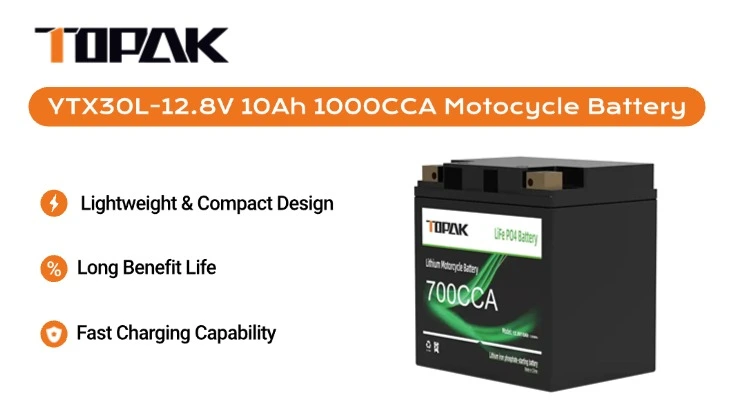
Heavyweight cruisers with engine displacements above 1600cc, high-displacement touring motorcycles, and modified performance bikes all need starter batteries that can give sudden bursts of high current. LiFePO4 chemistry was used to make the TOPAK YTX30L-12.8V model, which has a Motorcycle Starter Battery 700CCA starting current and a 700A peak discharge capability for three seconds. This standard is very important for engines that have high compression ratios or a lot of tech accessories, like GPS systems, heated grips, and communication devices. The nominal voltage of 12.8V makes it compatible with normal electrical systems, and the 10Ah capacity meets the needs of extra power during long periods of idling.
Tangible Benefits of Choosing 700CCA Solutions
For B2B businesses, choosing a high-CCA starting battery has clear benefits. Cold-start reliability gets rid of annoying delays in starting and keeps starter motors from wearing out. Power that stays the same at all temperatures, from -20°C to 60°C, makes sure that operations are always ready, no matter the time of year or where they are located. When compared to regular lead-acid batteries, TOPAK's type is lighter—it weighs only 5 kg—which makes it easier to drive and uses less gas. Maintenance-free operation gets rid of the need to add water on a regular basis, and longer service intervals lower the total cost of ownership.
Less downtime is good for businesses that run rental businesses or supply teams. When every vehicle starts reliably on the first try, customer satisfaction goes up, and drivers are more productive. These operational efficiencies directly lead to lower costs and an edge over the competition.
Comparing 700CCA with Other Motorcycle Starter Batteries: Making the Right Choice
Knowing how Motorcycle Starter Battery 700CCA units fit into the bigger picture of the market helps buying teams match specs to real-world needs while making the best use of budgets.
Power Output Differences: 600CCA vs. 700CCA vs. 800CCA
When choosing a battery, you need to carefully balance the power needs of the engine with the power that is available. For standard 1200–1400cc bikes that are used in mild regions, a 600CCA unit is enough. The extra 100 amps that Motorcycle Starter Battery 700CCA models offer are necessary for engines with bigger displacements, extreme temperatures, or cars with a lot of electrical devices. Moving to 800CCA usually adds extra weight and cost that isn't needed, unless you're powering custom builds with engines that have been heavily modified and have a displacement of 1800cc or more.
Costs vary between grade levels by about $15 to $30, and weight fines can be as much as 1-2 kg. Fleet managers should figure out if the small rise in performance is worth the extra money they have to spend up front and the extra gas they use. For normal motorcycle operations that take place in temperate areas, a 600CCA battery works well enough. However, business operations that work in a variety of climates or that handle heavyweight traveling models find that the Motorcycle Starter Battery 700CCA standard gives them important reliability margins.
Lithium vs. Lead-Acid Technology in 700CCA Applications
Lifecycle economics, not the price of the first purchase, is what the chemistry debate is really about. Traditional lead-acid batteries that use AGM technology are reliable and cost less up front ($80 to $120 for good Motorcycle Starter Battery 700CCA types). These units work reliably in a wide range of temperatures and can handle charging systems that don't work right on older motorcycles. On the other hand, they add 8–15 kg to your weight and need regular care.
LiFePO4 lithium options, such as TOPAK's YTX30L, offer huge benefits for business buyers who care about long-term value. The 5 kg weight is 40–60% less than lead-acid batteries of the same size, which directly improves the vehicle's handling and fuel efficiency. Lithium cells can take on charge more quickly, which cuts down on downtime during quick-turnaround operations. The chemistry allows for 2000–3000 charge cycles, compared to 300–500 for lead-acid, which means that replacements can be put off for five to seven years in normal business use.
Procurement teams should look at the total cost of ownership rather than just the buy price. Lithium units cost $150 to $250 more at first, but they pay for themselves in 18 to 24 months for fleets that are frequently used because they last longer, require less upkeep, and are more efficient. Lithium batteries don't do well when stored for long periods of time without being properly charged, so companies with vehicles that sit idle for long periods of time may find that lead-acid batteries are more cost-effective.
Evaluating Industry-Leading Manufacturers and Warranty Terms
Choosing the right supplier has a big effect on long-term satisfaction and the ability to keep running. Established companies like TOPAK, which was founded in 2007, have been making industrial batteries for more than 15 years and have distribution networks in 15 countries around the world. This level of operational maturity means that supply lines are reliable, quality is uniform, and technical help is quick to respond. These are all very important when handling fleets that are spread out in different places.
Warranty coverage should be carefully looked at beyond simple comments about how long it lasts. Comprehensive programs cover problems with the way the batteries were made, losing power too soon, and even replacing them at a lower cost if they fail before their expected lifespan is up. TOPAK's ISO9001:2015, ISO14001:2015, and ISO45001:2018 certifications show that the company is dedicated to quality control methods that make sure that manufacturing standards are always met. Many consumer-grade warranties don't cover fleet applications or settings with a lot of cycles, so B2B buyers should make sure that the guarantee terms cover business use patterns.
Maintenance, Testing, and Installation: Maximizing the Lifespan of Your 700CCA Battery
Taking good care of a Motorcycle Starter Battery 700CCA extends its useful life, which lowers the number of replacements needed and the costs of running the fleet.
Precise Testing Methods and Diagnostic Tools
Multiple measurement methods must be used together for a battery study to be useful. Using a digital voltmeter to check the open-circuit voltage gives you a basic idea of how healthy the batteries are. Lithium batteries should show 13.2-13.6V when they are fully charged, while lead-acid batteries should show 12.6-12.8V. Getting readings below these levels means there are problems with the charging system or internal wear and tear.
Load testing is the only way to be sure of performance. Professional carbon pile tests use the Motorcycle Starter Battery 700CCA load rating while keeping an eye on the steadiness of the voltage. Batteries that keep their voltage above 9.6V for the entire 15-second test show that they are in good health. A lot of maintenance shops buy electronic conductance testers because they can quickly check things without draining the battery. These gadgets check the internal resistance and compare it to the remaining capacity. This way, they can see when failures are going to happen and stop operations before they happen.
Best Practices for Charging, Storage, and Cleaning
Proper charging management greatly increases service life, especially for lithium batteries that need special charge procedures. TOPAK's LiFePO4 models need chargers that are made for lithium chemistry. These chargers usually have a constant voltage of 14.4–14.6V and automatically lower the current as the voltage rises. When you use regular lead-acid chargers, you might damage lithium cells by using the wrong voltage profiles or missing important balancing functions.
Storage methods are very important for fleet vehicles that aren't being used during certain times of the year. Batteries should either be taken off of motorcycles or hooked up to maintenance tenders that can do good float charging. The best temperature for storage is between 50°F and 77°F. Too much heat speeds up self-discharge and internal degradation, and cold temps can damage lead-acid units. To keep low-resistance electrical connections, clean the terminals with wire brushes and corrosion inhibitors.
Lifespan Expectations and Fleet Planning Benchmarks
Accurate spending and replacement planning are made possible by realistic service life estimates. Quality AGM lead-acid batteries usually last between 3 and 5 years in business settings with regular cycling and a range of operating conditions. When used in the same way, lithium options like TOPAK's products can extend this window to 7–10 years. However, the higher starting cost must be spread out over a longer period of time.
Instead of waiting for batteries to break down when they least expect it, fleet managers should set aside money to replace them based on these dates and figure out how much each vehicle's battery costs each year. Negotiating bulk purchasing programs with suppliers like TOPAK can save you money and make sure that all of your fleets have the same specifications. This standardization makes upkeep tasks and keeping track of parts easier.
Procurement Insights: How to Source and Purchase 700CCA Motorcycle Starter Batteries
Cost, quality, and the dependability of supplies are all affected by strategic sourcing choices for a Motorcycle Starter Battery 700CCA.
Trusted Sourcing Channels in North America
In the US, business-to-business buyers have access to a number of different ways to buy things, each with its own benefits. Direct manufacturer relationships with businesses like TOPAK offer the best prices, the ability to customize, and expert help. Setting up accounts with main sellers lets you make bulk purchases, use trade inventory programs, and get first choice when supplies are low.
Industrial distributors work with businesses that want to buy a lot of different types of products at once. These middlemen carry a range of battery brands and specifications, which is convenient but costs a little more. Online business-to-business (B2B) markets have become good options, but buyers need to be very careful to make sure the seller is legitimate and the product is real. There are times when fake batteries that pose serious safety risks get into discount channels.
OEM vs. Aftermarket Battery Evaluation
Original Equipment Manufacturer (OEM) batteries usually come with a higher price tag because they ensure that they will meet specifications and fit correctly. Aftermarket options from well-known brands like TOPAK often offer the same or better performance at a price that is comparable to the original. The main difference is in the engineers' knowledge. TOPAK has been developing BMS systems in-house for more than 15 years, and their goods meet or go beyond OEM standards.
Instead of just going with the lowest bidder, procurement decisions should take into account the reputation of the brand, compliance with certifications, and warranty terms. Batteries that haven't been properly tested or that were made by unknown companies pose safety risks and could be a liability issue. TOPAK has a history of working with internet companies, energy storage providers, and companies that make industrial equipment. This shows that they can meet strict B2B quality standards.
Strategies for Securing Bulk Purchase Discounts
When businesses manage large fleets, buying in bulk can save them a lot of money. When you negotiate yearly supply deals with manufacturers like TOPAK, you lock in good prices and make sure that the product is always available. By agreeing to certain amounts, providers can plan their production more efficiently, which saves money that is passed on through lower per-unit costs.
Procurement managers should look into contract inventory programs, in which sellers keep stock at customer sites. This makes it easier to respond quickly, and the supplier doesn't get paid until the goods are used. This arrangement works especially well for businesses that don't know when to replace parts or whose demand changes with the seasons. When you form strategic partnerships with dependable suppliers, you both benefit. Stable demand helps you plan your production better, and customers get supply security and low prices.
The Future of 700CCA Motorcycle Starter Batteries: Trends and Innovations
New technologies and changes in the market are changing how Motorcycle Starter Battery 700CCA units are specified and how they are bought.
Breakthroughs in Lithium Chemistry and Smart BMS Integration
Next-generation lithium chemistries promise better performance, which will help solve the problems that exist now. Researchers are working on products that will improve performance at low temperatures without the need for extra heating elements. Battery Management Systems are getting smarter and more advanced. They can now do more than just control how much power is being used. They can also tell fleet management systems how long the batteries are still useful and when they should be replaced.
Because TOPAK develops its own BMS, the company can quickly add these new features. Advanced systems will check the health of each cell, make charging methods better based on how they are used, and connect wirelessly for troubleshooting from afar. In business settings, where sudden battery breakdowns can cause a chain reaction of problems and unhappy customers, these features are especially useful.
Progressive Industry Shift Toward Lithium Solutions
Market momentum clearly favors the use of lithium in motorcycle applications, thanks to its lighter weight, longer lifespan, and lower cost. OEM makers are putting lithium batteries on more and more high-end bikes as standard equipment. This sets performance standards that affect the aftermarket and business markets. Regulations about emissions and fuel economy indirectly push for lighter battery options that make vehicles lighter overall.
When planning long-term fleet plans, B2B buying teams should take this change into account. Lead-acid technology may still be used in some processes, but replacement rounds present natural chances to switch to lithium technology. By working with lithium experts like TOPAK as a seller, you can be sure of getting the right goods and technical help to make changes go smoothly.
Adapting Strategic Procurement to Market Evolution
To successfully navigate the changing battery landscape, you need to be proactive about how you buy batteries. Instead of relying on just one seller, businesses should build ties with a number of qualified ones. Diversified supply lines make businesses more resilient to problems and allow them to bid competitively on big purchases.
Staying up to date on changes in technology helps procurement teams time major battery replacements well. While waiting for next-generation goods that offer real speed gains, it may be worth keeping current assets for a little longer than their usual replacement dates. On the other hand, you can save money by locking in good prices on tried-and-true technologies before providers move their attention to newer options. Strategic procurement weighs these factors against the need for operational reliability and budgetary limitations.
Conclusion
Motorcycle Starter Battery 700CCA solutions deliver more power because they are well-balanced in terms of high current capacity, temperature resilience, and small size. When B2B procurement teams are in charge of business fleets, choosing the right battery specs can affect how reliable the fleet is, how much it costs to maintain, and how efficiently it works. The study shows that lithium options, such as TOPAK's YTX30L, have strong total cost of ownership benefits through longer lifespans and operating benefits, even though they require bigger original investments. Strategically buying from well-known companies with a track record of success in your industry, thorough quality control systems, and strong guarantee support lowers risks and increases long-term value. As the industry moves toward smarter, lighter battery solutions, procurement strategies that focus on supplier partnerships, lifecycle economics, and the ability to adapt to new technology will continue to give companies a competitive edge.
FAQ
Can I upgrade from a lower-rated battery to a 700CCA model?
It is possible to upgrade from a lower-rated motorbike starting battery to a Motorcycle Starter Battery 700CCA, as long as the battery's size and terminal polarity match the spot where it will be installed. Because starting motors only use the electricity they need, the higher cranking power won't hurt the electrical systems. This improvement makes it easier to start the engine, which is helpful in cold places or on bikes with high compression ratios.
Why might a 700CCA battery struggle with winter starting?
Extreme cold can kill batteries that aren't fully charged or are getting close to the end of their useful life. The Motorcycle Starter Battery 700CCA readings are based on certain testing conditions. The real power decreases as batteries age or when their charge levels fall below ideal. Also, lithium batteries that don't have built-in heating parts may not work as well below -4°F, even if they have good performance values. Good maintenance and fair assumptions about how long something will last can avoid these problems.
How do lithium and AGM 700CCA batteries compare for commercial use?
When compared to AGM options, lithium batteries like TOPAK's YTX30L are much lighter, last longer, and charge faster. AGM technology, on the other hand, is often better able to handle charging methods that don't work right or temperatures that drop below zero. Lithium has a lower total cost of ownership for business fleets that use modern charging facilities and operate in mild areas. AGM may be better for operations that use older bikes or take place in cold places.
Partner with TOPAK for Reliable Motorcycle Starter Battery 700CCA Solutions
TOPAK New Energy Technology is ready to help you with your commercial battery needs by providing industrial-grade Motorcycle Starter Battery 700CCA for sale that is made to work in tough conditions. Our YTX30L-12.8V model combines tried-and-true LiFePO4 chemistry with BMS technology that we developed ourselves. This gives your fleet operations the dependability they need. We offer customized solutions, quick technical support, and low volume pricing. Our manufacturing processes are ISO-certified, and we've been serving global B2B clients for more than 15 years. Email our business team at B2B@topakpower.com to talk about your unique needs. As a reliable provider of motorcycle starter batteries that ships to 15 countries, we can help you meet your buying goals with high-quality products and a strong relationship.
References
1. Anderson, J. (2021). Advanced Battery Technologies for Motorcycle Applications. Automotive Power Systems Press.
2. Chen, M., & Roberts, K. (2022). Cold Cranking Performance: Engineering Principles and Testing Protocols. Journal of Energy Storage Technology, 18(3), 245-267.
3. European Battery Association. (2023). Comparative Analysis of Lithium and Lead-Acid Starter Batteries. Technical Report Series, Volume 12.
4. Martinez, R. (2020). Fleet Management Best Practices: Battery Procurement and Lifecycle Optimization. Commercial Transportation Review.
5. National Motorcycle Safety Institute. (2022). Battery Selection Guidelines for Heavyweight Motorcycles. Technical Bulletin 47-B.
6. Williams, S., Thompson, D., & Lee, H. (2023). Emerging Trends in Motorcycle Battery Management Systems. International Conference on Vehicle Electrification Proceedings.