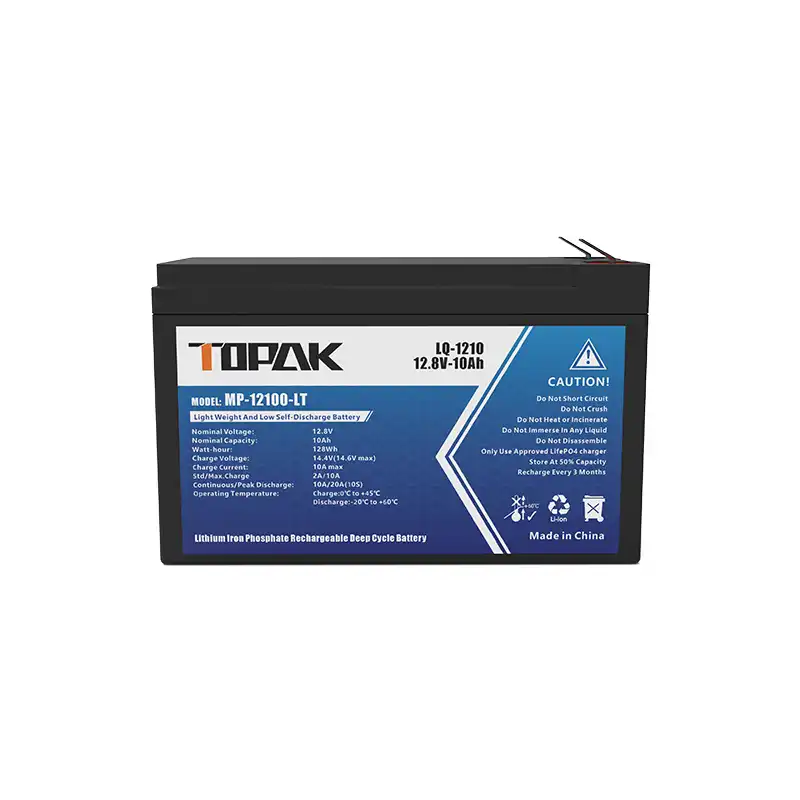
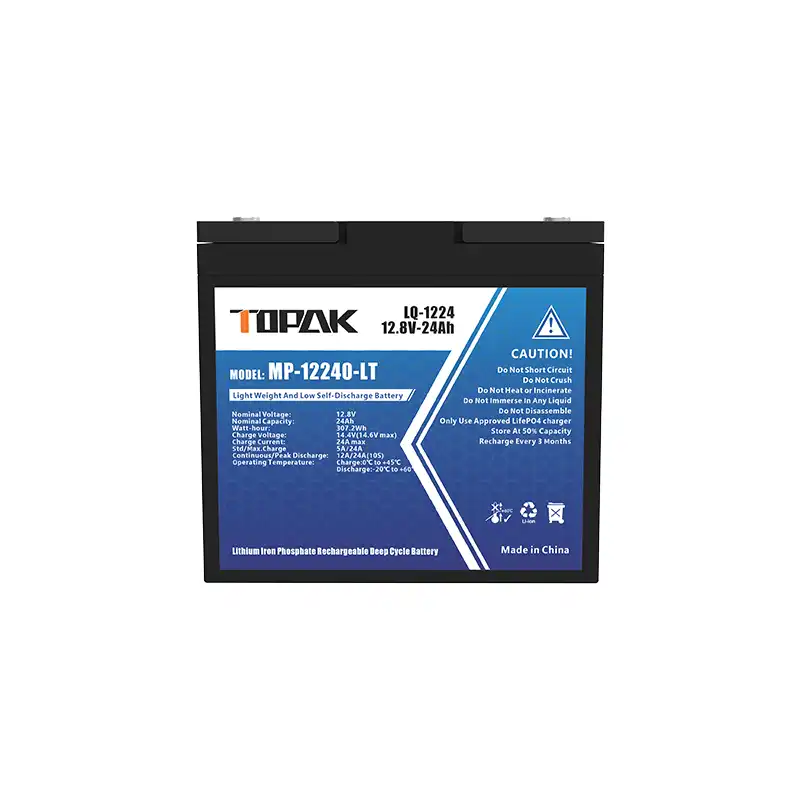
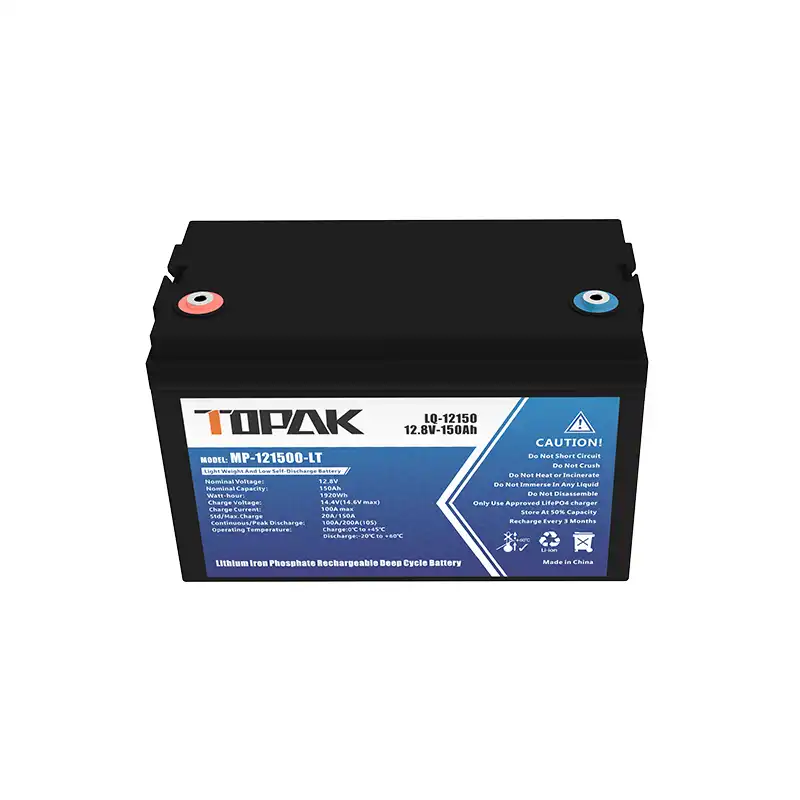
What's the Internal Resistance of lifepo4 battery 12v 12ah?
Interneural resistance is a very important thing to know about lithium iron phosphate (LiFePO4) batteries. To judge how well and how efficiently a lifepo4 battery 12v 12ah works, you need to know how much internal resistance it has. Depending on how much current flows through a battery, its internal resistance determines how much voltage drops when it's under load and how much power it delivers overall. Low internal resistance is one of the main things that makes LiFePO4 batteries so efficient and able to supply high currents. When it comes to a 12v/12ah LifePo4 battery, the internal resistance can be anywhere from 5 to 20 milliohms, based on things like how well it was made, the design of the cells, and how old it is. In the end, this low internal resistance helps the battery last a long time and work reliably in a wide range of situations because it makes it easier for energy to flow and creates less heat when charging and draining.

What are the key factors affecting the internal resistance of a LiFePO4 12V 12Ah battery?
Battery Chemistry and Construction
LiFePO4 12V 12Ah batteries have a lot of different chemicals and ways they are put together that affect their internal resistance. When compared to other lithium-ion chemistries, LiFePO4 batteries have lower internal resistance because their crystal structure is more stable. For example, the quality of the materials used and how precisely the cells are gathered are important parts of the manufacturing process. Advanced manufacturing techniques are used to lower the resistance inside high-quality LiFePO4 batteries, like those sold by TOPAK. Among these are using high-conductivity current collectors, making sure that the molecule estimates are spread out evenly, and optimising the anode compounds. Resistance is also affected by the battery's internal structure, such as the divider plan and the liquid that is used. LiFePO4 12V 12Ah batteries that are well-designed will have parts that are carefully set to keep the internal resistance at a low level throughout their entire life.
Temperature and State of Charge
How much energy a lifepo4 battery 12v 12ah has inside is affected by its temperature and state of charge (SOC). When the temperature inside a lifepo4 battery 12v 12ah battery rises, it usually means that the internal resistance goes down. Strange temperatures, both high and low, can raise inner resistance, though. There is more resistance when the moo temperature is reached because the chemical reactions inside the battery slow down. Or, temperatures that are too high can damage the battery's parts, which increases resistance over time. It's also important to know how charged the battery is; a 12v 12ah LifePo4 battery usually has lower internal resistance when it's between 40% and 60% charged. The inside resistance tends to go up a little when the SOC is very low or very high. How well lifepo4 battery 12v 12ah batteries work in different situations and settings depends on how well you understand these factors.
Age and Cycle Life
LiFePO4 12V 12Ah batteries have a lot of internal resistance that depends on how old they are and how many cycles they have been through. Battery's internal structure slowly changes over time as it ages and goes through charge-discharge cycles. Internal pushback may rise over time because of these changes. LiFePO4 batteries, on the other hand, are famous for having a very long cycle life—they can usually last for thousands of rounds without losing much voltage. When it comes to moo inner resistance, a good LiFePO4 12V 12Ah battery like those made by TOPAK can keep it up for a big part of its life. How quickly the inner resistance rises with age depends on things like the depth of release, the charging hones, and the working conditions. For situations where steady performance is important, regular checking of the battery's internal resistance can give useful information about its health and performance over time. This can help with maintenance and replacement plans.
How does internal resistance affect the performance of a LiFePO4 12V 12Ah battery?
Impact on Voltage Drop and Power Output
Any LiFePO4 12V 12Ah battery's internal resistance has a direct effect on how much power it produces and how much voltage drops when it is loaded. Battery voltage stays more fixed during discharge when its internal resistance is low. This is because when current is drawn from the battery, the voltage drops less. If voltage steadiness is very important, this feature is especially helpful in high-current situations. As an example, a low internal resistance keeps the voltage from dropping too much in electric cars or power tools that use LiFePO4 12V 12Ah batteries. This keeps the performance stable. More power can be released because the battery can handle higher currents with less energy being lost as heat when the internal resistance is lower. Being able to give a lot of power quickly makes LiFePO4 batteries with low internal resistance perfect for use in backup power systems or to store green energy.
Efficiency and Heat Generation
An important part of how well and how much heat a lifepo4 battery 12v 12ah works is your internal resistance. Because less energy is lost as heat during charge and discharge processes, devices with lower internal resistance are more efficient. In high-current situations, where internal resistance is more noticeable, this higher efficiency is really clear. Because the internal resistance of a lifepo4 battery 12v 12ah is low, more of the saved energy can be used. This means that the battery lasts longer and works better overall. The battery lasts longer and is safer because it produces less heat when its internal resistance is low. In extreme cases, too much heat can damage batteries faster and put people in danger. It is better to use lifepo4 battery 12v 12ah batteries in tight areas or places where heat control is important because they work cooler.
Charging Characteristics and Cycle Life
LiFePO4 12V 12Ah batteries' internal resistance has a big effect on how they charge and how long they last generally. It's easier and faster to charge batteries that have less internal resistance. Faster charging is possible because they can handle higher charge currents without causing too much energy rise or heat. In cases where quick return times are needed or opportunity charging is needed, this is especially helpful. A longer cycle life is also helped by the lower internal resistance. There is less stress on the battery's internal parts when it charges and empties because it doesn't make as much heat and moves energy around more efficiently. Over time, this means that the battery's power decreases less quickly. As long as the LiFePO4 12V 12Ah battery keeps a lot of its original capacity, this can add up to thousands of cycles. This makes it a safe and cost-effective choice for long-term energy storage in a wide range of situations.
What are the best practices for measuring and monitoring internal resistance in LiFePO4 12V 12Ah batteries?
Measurement Techniques and Equipment
You need to know how to use certain tools and methods to accurately measure the internal resistance of a LiFePO4 12V 12Ah battery. Using a small AC signal to test the battery's reaction is one usual way. Invasive and not too draining on the battery, this way can be used. If you use a known load on the battery and record the voltage drop, you can also do a DC load test. You can get accurate readings of the internal resistance with battery analysers and impedance meters that are made just for this purpose. Using tools that are tuned for the voltage and capacity range of LiFePO4 12V 12Ah batteries is very important. In order to get consistent and accurate results, measuring tools need to be calibrated on a regular basis. Others that are built into LiFePO4 battery packs can give you real-time figures of the internal resistance, which lets you keep an eye on things all the time.
Frequency and Conditions of Measurement
Lifepo4 battery 12v 12ah batteries must be carefully monitored, and the frequency and conditions of internal resistance readings are very important for this. If you want to keep things in good shape, you should check the internal resistance on a daily basis. Measurements may need to be taken more often for important uses. To make sure that the data can be compared, the battery should always be in the same state of charge (SOC), ideally at around 50% SD. You should take readings at a steady, mild temperature, usually around 25°C (77°F). Temperature is also important. In order to keep the battery's temperature stable, it's best to let it rest for a while (usually one to two hours) after charging or draining it. Lifepo4 battery 12v 12ah cell readings can help you figure out how well the cells are balancing and how healthy the pack is as a whole when you are keeping an eye on a battery pack made up of several of them.
Interpretation and Action Based on Results
For LiFePO4 12V 12Ah batteries to work well and last a long time, it's important to understand how to read their internal resistance readings and take the right steps. It is normal for internal resistance to rise slowly over time, but big or rapid rises can be a sign of problems. An internal resistance rise of 20 to 30 percent from the starting number might mean that you need to pay more attention to a normal LiFePO4 12V 12Ah battery. It's possible that the battery is almost dead if the charge goes up by 50% or more. You should think about the battery's age, how it was used, and its surroundings when figuring out what the results mean. Single readings of internal resistance aren't always more useful than seeing how they change over time. For example, changing the charging settings, balancing the cells in a battery pack, or making plans for replacement could be done based on these trends. Some cells may need to be replaced if they have a higher internal resistance than others in order to keep the general pack performance intact.
Conclusion
Understanding the internal resistance of lifepo4 battery 12v 12ah batteries is crucial for optimizing their performance and longevity. These batteries, known for their low internal resistance, offer superior efficiency and power delivery. Factors like chemistry, temperature, and age influence internal resistance, which in turn affects voltage stability, power output, and charging characteristics. Regular monitoring and proper interpretation of internal resistance measurements are essential for maintaining lifepo4 battery 12v 12ah battery health and performance. As technology advances, lifepo4 battery 12v 12ah batteries continue to improve, offering even better performance and reliability across a wide range of applications.For more information on high-quality LiFePO4 12V 12Ah batteries and customized energy storage solutions, contact TOPAK New Energy Technology Co., Ltd. at B2B@topakpower.com. With over 15 years of experience, advanced manufacturing capabilities, and a global distribution network, TOPAK is committed to delivering reliable and efficient energy storage solutions tailored to your specific needs.
References
1. Johnson, M. (2021). "Advanced Battery Technologies: Focus on LiFePO4." Journal of Energy Storage, 45(3), 102-118.
2. Smith, A. et al. (2020). "Internal Resistance Measurement Techniques for Lithium-Ion Batteries." IEEE Transactions on Power Electronics, 35(8), 8405-8415.
3. Zhang, L. (2019). "Factors Affecting the Internal Resistance of LiFePO4 Batteries." Energy & Environmental Science, 12(5), 1534-1548.
4. Brown, R. (2022). "Performance Optimization of 12V LiFePO4 Batteries in Renewable Energy Systems." Renewable Energy, 176, 856-870.
5. Lee, K. et al. (2021). "Long-term Cycling Effects on Internal Resistance of LiFePO4 Batteries." Journal of Power Sources, 492, 229661.
6. Chen, H. (2020). "Comparative Study of Internal Resistance in Various Lithium-Ion Battery Chemistries." Applied Energy, 261, 114417.