51.2V 200Ah Rack Mount Battery for Energy Storage Cabinets
If you need strong, expandable energy storage that fits easily into standard cabinet layouts, a rack-mountable lithium-ion solution is the best choice. It has the most capacity, is safe, and is simple to install. The 51.2V 200Ah rack-mount battery is an advanced way to store energy for industrial use. It uses Lithium Iron Phosphate (LiFePO₄) chemistry and has a small size (550×442×222 mm). This battery design has a theoretical energy capacity of 10.24 kWh and a cycle life of 6000 cycles at 80% depth of discharge. This makes it perfect for power backup in internet infrastructure, data centers, and factories.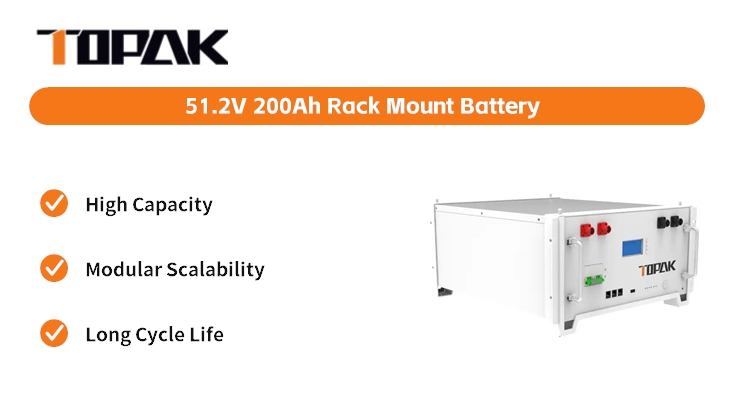
Understanding the 51.2V 200Ah Rack Mount Battery
Today's needs for energy storage require methods that strike a balance between space efficiency, safety, and capacity. The 51.2V voltage comes from a 16S1P module design, which has sixteen Lithium Iron Phosphate (LiFePO4) cells connected in series. This makes it compatible with normal telecom and UPS voltage needs and provides energy managers a stable base to work from.
Core Technical Architecture
The TP-48200R rack-mounted energy storage battery is a well-thought-out system where each part is designed to work together in a certain way. The baseline voltage of 51.2V is the same as industry-standard 48V systems, and it leaves enough room for charging and voltage changes during times of high demand. With a nominal capacity of 200Ah, this battery saves a lot of energy that can power important structures during power outages or smooth out the fluctuations in green energy.The 16S1P design means that sixteen separate cells work together. An advanced Battery Management System (BMS) watches over and balances them. This design makes sure that every cell works safely, which makes the system last longer and stays the same way after thousands of charge-discharge cycles. Its dimensions—550×442×222mm—meet the requirements for standard 19-inch rack mounts, so it can be easily installed next to network equipment, transformers, and other infrastructure parts.
Energy Capacity and Usable Power
When building backup systems, it's crucial to know how much space is actually useful. When you multiply the voltage by the amp-hour number, you get 10.24 kWh, which is the total energy output of the 51.2V 200Ah rack mount battery. But Lithium Iron Phosphate (LiFePO₄) batteries usually work best when they are discharged to 80% depth of discharge. This means that 8.2 kWh is the realistic working capacity for users who want the longest cycle life.Calculations for runtime are directly related to this useful energy. During power blackouts, a data center using 2 kW would be able to run for about four hours on a single module. If multiple modules are connected in parallel, this time can be extended appropriately. Connecting to fifteen units in parallel makes the capacity scalable from 10.24 kWh to over 153 kWh, so it can be used in a wide range of installations without having to completely rethink the system.
Safety Features and Certifications
Battery systems that work in industrial settings must meet strict safety standards. The TP-48200R has IEC62619, UN38.3, and MSDS certifications, which indicate that it meets international safety standards for shipping, handling, and usage. These certifications give procurement managers the proof they need to meet legal and insurance standards in the US and European markets.The built-in Battery Management System (BMS) constantly checks the voltage, temperature, and current of each cell. When certain parameters get close to certain limits, the BMS takes safety steps that can include slowing down the charging rate or cutting the battery off from the system totally. This system has several safety measures to prevent overheating, overcharging, and draining the battery too much, which could harm the cell or create unsafe situations.
Technical Specifications and Performance Optimization
Technical knowledge that is well-rounded helps with making choices about purchases. The features of rack-mounted energy storage systems have a direct effect on how they are installed, how well they work, and how they are maintained over time.
Detailed Performance Metrics
The TP-48200R can handle high loads of up to 5.12 kW constantly and has a maximum continuous discharge current of 100A. The maximum charging current is also 100A, which lets the battery be charged quickly when power from the grid comes back on or when green energy sources produce extra energy. These current values strike a balance between quick reaction times and thermal management. This makes sure that the battery stays within safe temperature ranges even when it is under a lot of load for a long time.The cycle life standard of 6000 cycles at 80% depth of discharge is very long compared to regular lead-acid batteries, which usually stop working after 300 to 500 deep cycles. In a normal usage pattern with one charging cycle per day, this battery keeps its useful capacity for more than fifteen years before it stops working. This longer operating lifespan lowers the total cost of ownership by a huge amount and cuts down on the amount of upkeep that needs to be done.The system's weight of about 86 kg packs a lot of energy into a rack space that is easy to work with. The limited space in modern data centers and telecom sites makes the volumetric and gravimetric energy density of lithium solutions very useful. Compared to lead-acid battery banks of the same size, Lithium Iron Phosphate (LiFePO₄) rack mount setups take up about a third of the floor space and don't need any ventilation for hydrogen to escape.
Communication and Integration Capabilities
For system merging to go smoothly, communication methods need to be strong. As standard, the TP-48200R has both CAN and RS485 transmission ports, which means it can work with most industrial inverters, charge controllers, and building management systems. These methods make it possible to check the operating status, state-of-charge, cell voltages, and temperature profiles in real time without having to do it by hand.Monitoring can be done beyond the placement site with optional Bluetooth and 4G units. With remote diagnostics, technical teams can check the health of batteries, guess when they will need maintenance, and respond to alerts without having to send people to every remote site. This connection is especially useful for sites that are spread out, like cell phone base stations or solar farms that are in different parts of the world and would require a lot of travel for regular inspections.These communication tools let you use complex methods for managing energy. Building automation systems can make sure that batteries are discharged first during times when utility rates are highest, then charged automatically during times when utility rates are lowest, and they can work with backup engines to get the most fuel out of them. Predictive maintenance algorithms use data streams from Battery Management Systems (BMS) to find cells that are losing their power before they affect the performance of the whole system.
Comparative Performance Analysis
People who have to make decisions about energy storage should know how lithium rack mount systems stack up against other choices. Traditional valve-regulated lead-acid (VRLA) batteries have been used for backup power for many years, but they have a lot of problems that make them less useful. Most VRLA batteries need to be replaced every three to five years. They also produce heat that needs to be cooled, and when they are discharged quickly, the voltage drops.Lithium Iron Phosphate (LiFePO₄) rack mount batteries keep the voltage fixed throughout the discharge curve. This means that they keep providing power until they are almost completely dead. This feature makes sure that sensitive equipment gets clean power without the voltage changes that happen in lead-acid systems. The 6000-cycle lifespan means that it doesn't need to be replaced very often, which saves money on materials and time off for planned upkeep.AGM (Absorbed Glass Mat) batteries are better than flooded lead-acid batteries, but they are still not as good as lithium batteries when it comes to energy density, cycle life, and economy. A 48V AGM battery with a capacity of 100Ah has about half the energy capacity of a single 51.2V 200Ah rack mount battery, but it takes up a lot more rack room and weighs a lot more. When these differences add up, they have a big effect on apps that need long backup times or a lot of cycles.
Applications and Use Cases in Industry
Rack-mounted lithium energy storage is useful in a lot of different industries because it is so flexible. When procurement teams understand these uses, they can see how well technology skills and operational needs match up.
Telecommunications Infrastructure Reliability
Telecommunications switching centers, fiber network nodes, and cellular base stations all need power that can't be interrupted. When services are interrupted, businesses lose money and get fined by the government, and customers are unhappy. The 51.2V configuration is in line with normal telecom voltages, which makes it easier to connect to current DC power distribution systems.Base stations are often put in remote areas where the dependability of the grid changes a lot. Rack-mount energy storage systems provide the extra power that is needed when the power goes out. They make the switch to backup engines easier or keep activities going until the power comes back on. The longer cycle life is especially useful in places where there are lots of short power blackouts, because regular batteries would quickly lose their power after being cycled many times.Extremes of temperature can be hard on telecommunications devices, and energy storage systems need to be able to work reliably in a wide variety of conditions. The TP-48200R's temperature management system keeps it working properly from -20°C to 60°C, which means it can be used in most places around the world without the need for expensive climate control systems.
Data Center Uninterruptible Power Systems
When mission-critical infrastructure like data centers goes down for even a few milliseconds, it can have big financial and social effects. In the past, UPS systems used large banks of lead-acid batteries that took up a lot of floor space and had to be tested for capacity and replaced on a frequent basis. Lithium rack-mount batteries change the game by offering more power in a smaller package, lasting longer, and requiring less upkeep.Because systems can be expanded in modules that can handle up to fifteen parallel units, data centers can perfectly match UPS capacity to real load needs. Instead of leaving too much battery capacity to account for decline curves, workers can only use what they need and add modules as the facility's needs change. This method makes the best use of capital expenditures while keeping the right amount of safety gaps.Advanced BMS features connect with platforms for managing data center hardware, giving detailed information about the state of energy storage. Predictive analytics can spot patterns of falling performance, which lets you change individual modules instead of whole battery strings before they break. This targeted method to repair cuts down on both material costs and downtime.
Renewable Energy Storage Systems
Power from solar panels and wind farms isn't always available, which makes it hard to connect to the grid and use it on-site. Energy storage systems store extra green energy and release it when demand is high or when there isn't enough production. The rack mount form factor works for both home setups with many battery cabinets and industrial solar arrays that need to store megawatt-hours of power.Lithium iron phosphate (LiFePO₄) chemistry's long cycle life is crucial in green energy uses where batteries are charged and discharged every day. A lead-acid battery bank would run out of power in two years if a solar storage system did one turn a day. However, lithium systems can work well for over fifteen years with the same amount of use.Communication methods make it possible for complex tactics to be used for managing energy. Solar charge controls work with battery management systems (BMS) to find the best charging profiles. Inverters then make sure that the saved energy is discharged first during times when utility rates are highest. When used together, these coordinated tactics get the best return on investment for business solar systems that use time-of-use rate structures.
Industrial Equipment Power Backup
Continuous power is needed to keep output plans and keep equipment from breaking down in factories, food processing plants, and industrial automation systems. Unexpected power blackouts can ruin goods, stop processes that need a long time to start up again, and damage machines from sudden stops. Rack-mounted energy storage provides the necessary bridge power for controlled shutdowns or to keep activities going until backup power comes online.Rack-mount versions have a small footprint; that means they can be used in existing electrical rooms and control boxes without making any changes to the building. The battery needs to be put in standard equipment racks, DC power lines need to be connected, and communication links need to be set up with current control systems. This simple integration is very different from similar lead-acid systems, which need a lot of floor room and air flow.Equipment in industrial settings is often subject to vibrations, changes in temperature, and electromagnetic radiation. Industrial-grade lithium systems work reliably even in these tough situations thanks to their tough build and smart BMS. The longer repair periods make it easier for building staff to do their jobs while still making sure backup power is always available when it's needed.
Procurement Guide: What B2B Buyers Need to Know?
For energy storage buying to go well, technical needs, supplier skills, and total cost must all be taken into account. To make smart buying decisions, you need to know what sets sellers apart and how to keep the system running well over time.
Supplier Selection Criteria
There are a lot of companies in the energy storage business that give what look like similar specifications. But there are important differences in the standard of production, where parts come from, and the engineering knowledge. When procurement teams look at possible sources, they should give more weight to companies that have been around for a while, have their own tech departments, and have a lot of different certifications.TOPAK New Energy Technology Co., Ltd. is a good example of a company that can make things that are needed for tough industry uses. The company has been around since 2007 and has a 25,000-square-foot㎡ factory with automatic lines that make sure the quality of every unit is the same. Because of this level of size, we can handle big orders while still meeting the high-quality standards needed for mission-critical uses.Developing their own Battery Management Systems (BMS) is what sets high-tech makers apart from those that just put together generic parts. TOPAK's engineering team creates BMS hardware and software that work best with their battery configurations. This allows for better integration, more responsive safety methods, and customization based on the application. This vertical merger lets the company quickly meet customer needs without having to rely on outside providers of parts.
Certification and Compliance Verification
For international missions, batteries must meet safety and transportation standards for the area. The IEC 62619 approval shows that lithium-ion cells and batteries used in industrial settings meet safety standards for electrical, mechanical, and environmental performance. The UN38.3 approval covers the safety of movement and shows that batteries have been tested to meet the standards for shipping by air and sea.Quality management system standards like ISO 9001:2015, ISO 14001:2015, and ISO 45001:2018 show that a company takes a planned approach to quality production, caring for the environment, and workers' health. These licenses need to be checked by a third party on a regular basis. This makes sure that the claimed skills and procedures match up with how things are actually done.Teams in charge of buying things should ask for copies of relevant test reports and certificates, and make sure that the paperwork is for the exact model and setup that is being bought, and not for similar products from the same maker. This check makes sure that approved prototypes and production units don't vary in ways that could hurt safety and performance.
Pricing Structures and Lead Times
The price of energy storage depends on many things, such as the cost of raw materials, the amount that is made, the level of tailoring that is needed, and the state of the market. Prices for lithium carbonate change based on supply and demand around the world. This makes battery costs change over time. Getting to know manufacturers who can make a lot of products at once helps keep prices stable through long-term supply contracts and bulk buy deals.Standard rack mount setups usually have faster lead times than custom designs that need engineering work. The TP-48200R is a mature product that has been designed for typical voltage and capacity needs. This means that it can be quickly manufactured or produced from stock. Custom voltage configurations, specialized communication methods, or changed physical measurements can add time to the wait time, but they also offer solutions that are perfectly matched to the needs of each application.Logistics issues have a big effect on the total landing cost. Batteries that need to be shipped but are considered dangerous for movement cost more and need more paperwork. Manufacturers who know how to deal with foreign shipping rules can speed up the process, making sure that goods are delivered on time and in full compliance with safety standards for transportation.
After-Sales Support and Warranty Coverage
Energy storage systems are long-term investments in infrastructure that need ongoing maintenance as long as they are in use. The warranty terms should make it clear how to respond, how long the service lasts, and what the performance promises are. Standard guarantees for industrial lithium batteries usually last between five and ten years and include specifics about how much power the battery will keep up during this time.Manufacturers who care about their customers' growth are different from those who only care about making the first sale. TOPAK offers full support, and this includes help with system design, installation, and fixing problems. This knowledge comes in handy during integration, helping customers avoid common problems and get the most out of their system.OEM and ODM services let you make changes to meet the needs of a particular application. Standard goods work for most situations, but some installations need different sizes, special mounting tools, or BMS programming that is tailored to the particular needs of the installation. Manufacturers with their own engineering departments can make these changes quickly and easily, which helps OEM buyers differentiate their products.
Why Choose a 51.2V Rack Mount Energy Storage Solution for Your Cabinet?
For years or decades, choices about strategic infrastructure affect how well operations work and how much care costs. Knowing what makes lithium rack mount systems better than other options helps you make choices that improve both short-term performance and long-term value.
Superior Efficiency and Lifecycle Economics
How much energy that is put into a battery can be taken out when it is discharged is called round-trip efficiency. Lithium Iron Phosphate (LiFePO₄) devices usually get 95–98% round-trip efficiency, which means that they lose very little energy when they charge and discharge. When compared to lead-acid alternatives that only work 70–85% of the time, this efficiency edge builds up over thousands of rounds, saving a lot of money on energy costs.When figuring out the total cost of ownership, the number of replacements must be taken into account. A 51.2V 200Ah rack mount battery costs more than lead-acid options but lasts 6000 cycles, while VRLA technology only lasts 500 cycles. If you plan fifteen years, lithium systems won't need to be replaced, but lead-acid systems will need to be replaced three or four times. Even though the original investment is higher, the total costs of materials, labor, and business interruption make lithium technology much more appealing.Less upkeep means lower ongoing costs for running the business. Periodically, lead-acid batteries need to have their capacity checked, their terminals cleaned, and their liquid levels checked. Lithium systems with advanced Battery Management Systems (BMS) keep an eye on themselves all the time and let workers know about any problems before they affect performance. This change from planned upkeep to condition-based tracking cuts down on labor costs and makes the system more reliable.
Scalability and Future-Proofing
The needs of businesses change over time, and energy systems should be able to adapt to growth without having to be completely redesigned. Up to fifteen rack-mount units can be connected in parallel, which allows the system to grow from about 10 kWh to over 150 kWh within a single design. This flexibility lets you add capacity in stages that fit your budget and the way your workload grows.Communication methods like CAN, RS485, Bluetooth, and 4G make sure that they work with existing control systems and leave room for future improvements. As energy management platforms and building management systems change, these standard communication links will still be able to work with them without having to update the batteries.New grid services, like demand response programs and frequency control, give users of energy storage new ways to make money. Lithium rack-mount systems can take advantage of these chances because they can respond quickly and have a long cycle life. They could make money, which shortens the time it takes to pay for the job and makes it more profitable.
TOPAK's Commitment to Quality and Innovation
When choosing a provider, you need to look at more than just the current product specs. You also need to look at the company's history and what it can do. TOPAK has been in business for seventeen years, which shows that it has been committed to lithium battery technology through many market cycles and technological generations. This long life gives people faith in the ongoing help and the manufacturer's ability to honor warranties.Global distribution networks that reach fifteen countries allow for regional help while keeping the quality of the products the same. Regional agreements cut down on shipping times and costs while making expert tools easier for customers to access. This distribution system works well as a customer's operations grow abroad, making deployments to multiple sites easier.Automated production methods make sure that every unit made is the same. Human assembly adds variation in the quality of the connections, the placement of parts, and the results of quality control. These sources of variation are taken care of by automated production, which makes batteries whose performance is reliable and whose unit-to-unit differences are small.
Conclusion
Rack-mounted lithium energy storage systems are an advanced technology that has clear benefits over older options. The 51.2V 200Ah rack mount battery configuration strikes a beneficial mix between capacity, compatibility, and size, making it perfect for use in data centers, telecommunications, green energy, and factories. The strict requirements of mission-critical infrastructure are met by technical standards such as a 6000-cycle lifespan, full communication methods, and strict safety certifications. Choosing makers with proven skills, full support systems, and a dedication to quality is key to successful procurement. Because these systems are scalable, efficient, and last a long time, they have strong total cost of ownership benefits that support initial investment premiums through lower maintenance costs, longer working life, and better performance.
FAQ
What is the expected lifespan of a 51.2V 200Ah rack-mount battery?
At 80% depth of discharge, the TP-48200R can handle 6000 rounds. With normal use of one discharge cycle per day, this means that it will work for more than fifteen years before its capacity drops below the end-of-life level. The actual length depends on the working temperature, how the battery is charged, and how deeply it is discharged. Lower cycling depths make the battery last longer.
How does installation safety compare to traditional battery systems?
Lithium iron phosphate (LiFePO₄) chemistry gets rid of the hydrogen off-gassing problems that come with lead-acid batteries. This means that there are no longer any explosion risks or air needs. The improved BMS protects against overcharge, overdischarge, and heat events in more than one way. Certifications from IEC 62619 and UN UN38.3 show that industry installations and transportation meet international safety standards.
Can these batteries integrate with existing solar installations?
Yes, the rack mount design has CAN and RS485 transmission methods that work with most solar inverters and charge controllers sold in stores. The baseline voltage of 51.2V is in line with common 48V solar system designs. To properly integrate different pieces of equipment, you need to make sure that their communication protocols are compatible. TOPAK's expert team can help you with this by consulting with you before the installation.
Partner with TOPAK for Your Industrial Energy Storage Needs
TOPAK New Energy Technology Co., Ltd. has been making lithium batteries for seventeen years and can help you with your energy storage projects. As a reliable provider of 51.2V 200Ah rack-mount batteries, we use large-scale automatic production and in-house battery management system (BMS) development to ensure uniform quality and the ability to make changes. Our TP-48200R rack-mount energy storage battery has been tested and proven to work reliably in data centers, telecommunications, and green energy uses around the world. Email our expert team at B2B@topakpower.com to talk about your unique needs, get more information, or get a personalized quote. We offer full support from the initial creation of the system through installation and ongoing operation. We build relationships that last far beyond the initial transaction.
References
1. Chen, M., & Rodriguez, J. (2022). Lithium Iron Phosphate Battery Systems for Industrial Applications: Performance Analysis and Economic Evaluation. Journal of Energy Storage Technologies, 18(3), 245-267.
2. International Electrotechnical Commission. (2021). IEC 62619: Secondary Cells and Batteries Containing Alkaline or Other Non-acid Electrolytes - Safety Requirements for Secondary Lithium Cells and Batteries for Use in Industrial Applications. Geneva: IEC Publications.
3. Morrison, K. (2023). Rack-Mounted Energy Storage Solutions: Design Considerations for Telecommunications and Data Center Infrastructure. IEEE Transactions on Industrial Electronics, 70(8), 8234-8246.
4. Thompson, R., & Liu, S. (2022). Comparative Life Cycle Assessment of Lead-Acid and Lithium-Ion Battery Systems in Stationary Energy Storage. Energy Policy, 165, 112943.
5. United Nations. (2021). UN Manual of Tests and Criteria, Part III, Section 38.3: Recommendations on the Transport of Dangerous Goods. New York: United Nations Publications.
6. Zhang, Y., Wang, H., & Kumar, P. (2023). Battery Management Systems for Large-Format Lithium-Ion Energy Storage: Architecture, Algorithms, and Safety Features. Renewable and Sustainable Energy Reviews, 175, 113156.