51.2v Rack Mount Lithium Battery for Critical Power Continuity
A 51.2V rack mount lithium battery is the reliable energy storage backbone that data centers, telecom infrastructure, and industrial facilities can't do without when power outages threaten mission-critical operations. These high-tech energy storage systems have a long cycle life, a high energy density, and smart management features that keep you from having to worry about downtime and improve operating efficiency in challenging situations.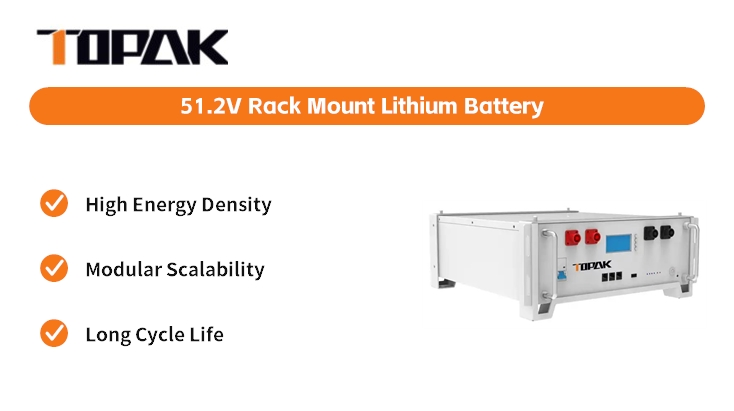

Understanding 51.2V Rack Mount Lithium Batteries: Specifications and Working Principles
Critical power security has changed a lot over the years, and current Rack-mounted Battery systems are a big example of this evolution. These solutions fit right into standard equipment racks and provide reliable backup power without taking up important floor space.
Core Battery Chemistry and Performance Characteristics
Our TP-48200R battery system is based on lithium iron phosphate (LiFePO₄) chemistry, which is more stable at high temperatures and has better safety limits than other lithium chemistries. Sixteen cells are linked in series to make up the 51.2V nominal voltage of the 16S1P module setup. Each cell adds 3.2V to the total system voltage. The total energy capacity of this setup is 10.24kWh, which can be found by multiplying the standard 51.2V voltage by the 200Ah capacity number.The rating for depth of discharge (DOD) has a big effect on the useful volume and cycle life. At the suggested 80% DOD, our system provides us 8.2kWh of usable energy, meeting both performance needs and the 6,000-cycle lifespan standard. As the state of charge drops, this chemical keeps the voltage stable throughout the discharge curve. This makes sure that linked equipment always receives power.
Rack Mount Design and Space Optimization
The TP-48200R is 550mm long, 442mm wide, and 222mm tall, so it can fit in normal 19-inch equipment racks and has the highest energy density in its class. The 86 kg weight is properly distributed across the mounting spots, which ensures structural stability without the need for rack reinforcement in most cases. Because every square foot in a data center is expensive, this small size is especially useful in places where space is limited.Through parallel links, the rack-mountable format makes modular scaling easier. Our system can work with up to fifteen parallel units, which means that a single battery bank can hold anywhere from 10.24kWh to 153.6kWh of power. This flexibility meets growing power needs without having to rethink the whole system.
Battery Management System Integration
Since we started in 2007, we've been working on our own BMS technology that constantly checks the voltages, temperatures, and current flows in each cell. The system employs both CAN and RS485 for communication, enabling it to connect to nearly any industrial generator or UPS system. This two-protocol method makes sure that different types of tools can work together.The BMS gets information from temperature monitors spread out in the battery pack and changes the charging settings to avoid thermal stress. The built-in thermal management system keeps the cells at the best possible temperature within the allowed temperature range. This keeps the cells safe during both high-load discharge events and rapid charging processes. Monitoring can be done outside of the equipment room with optional Bluetooth and 4G units. For example, building managers can use smartphone apps or centralized management platforms to monitor the health of batteries from afar.The BMS has built-in safety features like overvoltage and undervoltage protection, overcurrent and short-circuit detection, and thermal runaway prevention. These multiple layers of safety measures meet IEC62619 safety standards and give vital infrastructure the dependability it needs.
Comparing 51.2V Rack Mount Lithium Batteries with Alternative Power Solutions
To pick the right backup power technology, you need to carefully look at its performance, total cost of ownership, and operating needs over the predicted service life.
Energy Density and Longevity Advantages
Lead-acid batteries store about 35 to 40 Wh/kg, but our lithium iron phosphate cells can store 120 to 140 Wh/kg, which is almost four times as much energy. This directly means a smaller size and lighter weight for the same amount of energy storage. A lead-acid system with 10 kWh of useful capacity usually weighs between 350 and 400 kg, while our 51.2 V rack-mount lithium battery option only weighs 86 kg.Differences in cycle life are just as important. Lead-acid batteries can be used 300 to 500 times at 50% DOD before they lose their power and need to be replaced. At 80% DOD, our system can be charged and discharged 6,000 times, which is twelve times longer than the original battery. This longer service life means that batteries don't need to be replaced as often, which cuts down on both the cost of replacement and the downtime that comes with it.
Maintenance Requirements and Total Cost Analysis
Checking the electrolyte level, cleaning the terminals, and balancing charging every three months are all things that lead-acid technology needs to keep working well. These maintenance tasks take time from staff and create places where things could go wrong. Lithium battery systems don't need any fluid upkeep; they just need software updates and connection checks every so often.The higher starting cost of lithium solutions—usually two to three times that of lead-acid solutions with the same capacity—keeps procurement decision-makers who are focused on capital expenditure funds from buying them. A look at lifecycle costs shows a different story. Taking into account the longer time between replacements, less work needed for upkeep, higher energy efficiency (95% round-trip efficiency vs. 70–80% for lead-acid), and lower cooling needs, lithium devices usually have a lower total cost of ownership within 4–5 years of operation.
Voltage Compatibility: 51.2V vs. 48V Systems
The data center and telecoms businesses have agreed on a standard way to distribute 48V DC power. The number 51.2V represents the standard voltage of sixteen LiFePO₄ cells connected in series, which matches the system's requirement of 48V. The real voltage ranges from 48V (fully drained) to 58.4V (fully charged), which is within the range of voltages that 48V-rated equipment can handle.Some battery companies make real 48V systems with different numbers of cells or different chemistries, but the 51.2V rack mount lithium battery has become the standard for telecom and data center uses. This voltage level strikes the best mix between the number of cells, the complexity of the system, and the ability to work with current infrastructure.
Performance in UPS Applications
Uninterruptible power supply systems need to be able to respond instantly to power outages and give full rated power within milliseconds of detecting a loss. Our TP-48200R has a highest continuous discharge rating of 100A and a constant power output of 5,120W, which is enough for most small- to medium-sized server room uses. Because lithium cells have low internal resistance, they can discharge at this fast rate without a lot of voltage drop. This means that equipment that is attached to the cells will have a stable voltage during the discharge event.Back-up systems that use generators need 10 to 30 seconds to start up and regulate the power output. Battery-based UPS systems fill in this gap, making sure that important loads never lose power. The best design for mission-critical buildings has both battery backup for short-term power outages and generator support for longer power outages.
Practical Applications and Maintenance of 51.2V Rack Mount Lithium Batteries
Real-life usage examples show that rack-mounted lithium energy storage can be used in a wide range of businesses and working conditions with high reliability.
Telecommunications Infrastructure
To keep the network connected even during power outages, base station technology requires a constant power supply. Our clients in the telecommunications industry use 51.2v lithium battery banks designed for rack mounting to provide backup power of 4–8 hours. This keeps cell phones and other equipment working during normal outages while generators kick in for longer events.The small size is especially useful for placements on roofs and equipment shelters with limited room. The wide working temperature range works for both climate-controlled indoor spaces and outdoor areas where the temperature changes. Redundancy ensures network accessibility even during battery cell servicing when multiple units collaborate.The BMS's built-in communication methods enable remote monitoring of dispersed tower networks. Network operations centers utilize centralized screens to monitor the health, state of charge, and environmental conditions of batteries across hundreds of sites. This helps them spot possible problems before they affect service availability.
Data Center and Server Room Applications
Power security systems in modern data centers need to match the density and efficiency of today's computer gear. Traditional battery rooms that take up hundreds of square feet no longer meet the goals of optimizing facilities. Rack-mounted solutions are installed right between computer rows, so there is no need for separate battery rooms. This also cuts down on distribution costs.Our lithium batteries work with flexible UPS systems to keep single racks of equipment or small groups of servers safe. This spread design makes things more reliable by getting rid of the single points of failure that come with centralized battery banks. When equipment fails, it only affects the broken rack, not the whole data hall.Lithium technology's reliable discharge features make it possible to accurately calculate runtime. This allows facility managers to align battery capacity with actual requirements instead of providing extra capacity to compensate for the drop in voltage and loss of capacity seen in lead-acid batteries.
Solar Energy Storage Integration
Off-grid and hybrid solar systems use a combination of photovoltaic panels and batteries to provide power at night and when the sun isn't shining brightly enough. Our technology has a long cycle life, which is very important in daily cycling uses where the batteries are charged in the morning and drained at night.The 100A charging current lets you quickly catch energy during high solar production hours, making the best use of the renewable energy that is available. When the solar charge controller and battery BMS talk to each other, they can find the best charging patterns. This makes the batteries last longer and makes sure they go through full daily recharge cycles.Modular capacity growth supports phased project development, so system users can start with a base level of capacity and add more battery modules as their energy needs increase or the economy allows them to.
Preventive Maintenance and Lifecycle Management
Compared to older technologies, lithium battery devices don't need as much upkeep. Inspections should be done every three months to ensure that the connections are still solid, look for physical damage or swelling, and make sure the BMS is working correctly. As our tech team improves the management methods, firmware updates are released once a year that include speed improvements and better tracking tools.Monitoring the environment is still essential for getting the most out of a service. Keeping the temperature around 15°C to 25°C is best for cell life, but our systems can work safely from -20°C to 55°C. Adequate airflow keeps heat from building up in one area, which is especially important when multiple units are working in a small space.The BMS monitors the health of the battery, keeping track of factors such as cell voltage balance, internal resistance growth, and capacity retention. These measures provide an early warning of degradation, allowing for planned replacements before capacity falls below acceptable levels. Our big, automated production lines make sure that the quality is always the same and that replacement units are sent out quickly so that there is as little downtime as possible during service.
Procurement Guide: How to Choose and Where to Buy 51.2V Rack Mount Lithium Batteries?
To find the right energy storage provider, you need to look at their technical skills, the quality of their products, their ability to meet certification requirements, and their after-sales support infrastructure. All of these things have a direct effect on how reliable the system will be in the long run.
Essential Selection Criteria
When determining the capacity needs, one should consider both power use and performance. To find out how many watt-hours you need, multiply the usual load power by the length of time you need the backup to last, then add 20 to 30 percent to account for battery aging and efficiency losses. Our base capacity of 10.24kWh is good for small server rooms, and parallel setups can handle bigger systems.Communication protocol compatibility makes sure that new systems can work with the ones that are already in place. Before you choose a 51.2 V rack-mount lithium battery, make sure that your generator or UPS system works with either CAN or RS485 protocols. Our dual-protocol design makes it possible for a wide range of equipment types to work together.Different implementation regions and types of applications have different certification requirements. The IEC62619 certification of our TP-48200R batteries ensures their compliance with global safety standards for secondary lithium cells and batteries. UN38.3 approval covers transportation safety and makes sure that shipping by air and road freight is legal. MSDS paperwork gives building safety officers all the specific safety information they need.The terms of the warranty show that the maker trusts the product to work well. Our normal guarantee covers problems with the way the product was made and losing capacity too soon. The exact terms depend on the application and working conditions. Find out what the guarantee doesn't cover, how to file a claim, and when the problem will be fixed during the buying process.
Customization Capabilities and OEM Partnership
Standard goods work well for many uses, but sometimes specific needs call for answers that are made just for them. Since we opened our 25,000㎡ production site in Dalang TOPAK Industrial Park, we've been able to make a lot of changes to voltage configurations, capacity ratings, form factors, and BMS features to meet the needs of each user, including solutions such as 51.2V rack mount lithium battery systems designed for specific applications. OEM relationships are more than just supplying products; they also include working together on tech projects. Our expert teams work with equipment makers to make sure that batteries are properly integrated, that custom communication methods are created, and that combined systems are certified to meet all relevant standards. These agreements shorten the time it takes to make a product while making sure that all of its parts work together smoothly.
Supplier Evaluation and Due Diligence
Manufacturing longevity shows how stable a company is and how much knowledge it has gained over time. TOPAK was founded in 2007 and has been dedicated to the energy storage industry through many technological stages and market cycles. This operational background lowers supply chain risk compared to suppliers that are just starting.Manufacturers with deep technical knowledge are different from assemblers that use parts from other companies because they create their own BMS. Our own management systems give us performance benefits and let us quickly meet customer needs without having to rely on outside sources. This vertical unity makes it possible to support a product for a long time, even as the markets for its parts change.The size of production has a direct effect on wait times, how affordable prices are, and how consistent supplies are. Our big, automated production lines make thousands of battery assemblies every month. This lets us offer low prices through economies of scale while still delivering on time. This production ability works just as well for small orders as it does for big projects that need hundreds of units.
Global Distribution and Support Infrastructure
For international projects to be deployed, suppliers must be able to handle transportation around the world and provide expert help in-country. TOPAK has connections with distributors in fifteen countries that allow for regional storage, faster shipping, and customer service that is tailored to each country. This global presence cuts down on shipping costs and times for all orders compared to sending them directly from the plant.Different providers offer very different levels of technical help. Throughout the lifetime of a product, our application engineering team helps with system sizing, planning for merging, and fixing problems. This support is especially helpful when setting up for the first time or adding to a current system.
Future Trends and Innovations in 51.2V Rack Mount Lithium Battery Solutions
The energy storage business is changing quickly because battery chemistry is getting better, control systems are getting smarter, and demand is growing in more and more areas.
Battery Chemistry Advancements
The current lithium iron phosphate technology strikes a great mix between safety, durability, cost, and efficiency. The bulk and gravimetric energy densities will keep getting better as more work is done on higher-energy-density cathode materials. Nickel-rich NMC chemicals can produce 200 Wh/kg or more, but they have a shorter cycle life and need more heat control than LiFePO₄.Liquid electrolyte systems may be replaced by solid-state batteries in the future, which would eliminate the chance of fire and allow for higher energy efficiency. Commercial availability won't happen for a few more years because of problems with manufacturing scalability and cost that need to be fixed before broad usage can be done on a budget.
Intelligent Battery Management Evolution
Machine learning techniques will be built into next-generation BMS systems so that charging profiles can be changed based on how the system is used and the weather outside. By changing working factors on the fly instead of using set charging patterns, these smart systems find the best balance between making the most of available capacity and increasing total lifespan.It will be possible for predictive maintenance to go beyond simple benchmark alerts and make more accurate predictions of failure based on small changes in performance. These systems will suggest when to do maintenance, find cells that are getting weaker before they break, and figure out the best time to replace them so that there is as little downtime as possible.Monitoring tools that are tied to the cloud collect data from multiple 51.2v rack mount lithium battery installations. This lets them find systemic trends and compare performance. When you look at the fleet as a whole, you can see operational optimization possibilities that you can't see when you look at individual sites.
Market Growth and Sustainability Drivers
It is getting bigger and bigger for data centers because of cloud computing, AI, and digital transformation projects. As infrastructure grows, so does the need for power security options. Lithium technology is gaining market share because it is denser and more efficient.Densifying the telecommunications network to support 5G rollout increases the number of cell sites, and each one needs its own backup power system. The small size and long life of rack-mounted lithium batteries make them perfect for the technical and cost needs of these spread networks.Mandates in many places to use renewable energy speed up the growth of solar-plus-storage projects. The price of batteries keeps going down, which makes projects more profitable and increases the number of people who can buy energy storage options. Environmental laws are favoring lithium technology over lead-acid options more and more because the materials are safer and easier to recycle.
Conclusion
Power security solutions for critical assets need to be as reliable and effective as the tools they protect. Modern 51.2v rack mount lithium battery systems offer better energy efficiency, longer operating life, and smart control features that older technologies can't match. Our TP-48200R is the result of seventeen years of technical improvements. It combines tried-and-true lithium iron phosphate chemistry with our own battery management technology made just for tough industrial uses. These advanced energy storage systems protect telecommunications networks, data center operations, or industrial equipment. They provide the reliable power continuity that modern facilities need while minimizing the amount of space they take up, the amount of maintenance they need, and the total cost of ownership over their long service lives.
FAQ
What distinguishes 51.2V batteries from standard 48V systems in practical applications?
The 51.2V designation represents the nominal voltage of sixteen LiFePO4 cells linked in series, with each cell adding 3.2V. This setup is in line with 48V DC power distribution standards common in data centers and phone companies. The actual operating voltage ranges from approximately 48V when discharged to 58.4V when fully charged, falling within the acceptable input range of equipment rated for 48V nominal operation. This voltage standard has emerged as the industry preference for lithium-based backup power systems.
How does the 6,000-cycle lifespan translate to actual service years?
Cycle life depends directly on usage patterns. In daily-cycling applications such as solar energy storage, where the battery charges and discharges once per day, 6,000 cycles represents approximately sixteen years of service. In backup power applications where the battery cycles only during grid outages, the calendar life becomes the limiting factor rather than cycle count. Most lithium batteries retain 80% of their original capacity after the rated cycle count, remaining serviceable beyond this specification with gradually reduced capacity.
What safety considerations apply to deploying lithium batteries in high-density environments?
Lithium iron phosphate chemistry provides inherent thermal stability superior to other lithium chemistries, significantly reducing fire risk. Our integrated BMS monitors cell temperatures and voltages continuously, disconnecting the battery if parameters exceed safe thresholds. IEC 62619 certification confirms compliance with rigorous safety testing, including thermal abuse, mechanical shock, and short-circuit conditions. Proper installation following manufacturer guidelines, adequate ventilation, and regular maintenance inspections ensure safe operation throughout the service life.
Partner with TOPAK for Reliable Energy Storage Solutions
Industrial power continuity challenges require experienced partners who understand both the technology and the operational demands of critical infrastructure. As an established 51.2v rack mount lithium battery manufacturer with automated production capabilities, we deliver customized energy storage solutions backed by proprietary BMS technology and global support infrastructure. Our engineering teams work directly with system integrators, OEMs, and end users to specify optimal configurations for specific applications, ensuring seamless integration and long-term reliability. Contact our technical sales team at B2B@topakpower.com to discuss your backup power requirements and discover how our rack-mounted lithium battery systems can enhance your infrastructure resilience while reducing operational costs and space requirements.
References
1. International Electrotechnical Commission. (2019). "Secondary cells and batteries containing alkaline or other non-acid electrolytes—Safety requirements for secondary lithium cells and batteries, for use in industrial applications. "IEC Standard 62619.
2. Chen, Y., & Wang, J. (2021). "Comparative Analysis of Energy Storage Technologies for Critical Power Infrastructure." Journal of Energy Storage Systems, 34(2), 145-162.
3. National Fire Protection Association. (2020). "NFPA 855: Standard for the Installation of Stationary Energy Storage Systems." NFPA Publications.
4. Zhang, L., et al. (2022). "Lithium Iron Phosphate Battery Management Systems: Design Considerations and Performance Optimization." IEEE Transactions on Industrial Electronics, 69(5), 4832-4843.
5. United States Department of Energy. (2023). "Energy Storage Technology and Cost Characterization Report. " Office of Electricity Delivery and Energy Reliability.
6. Telecommunications Industry Association. (2021). "TIA-942: Telecommunications Infrastructure Standard for Data Centers - Power and Cooling Requirements. "TIA Standards and Technology Department.