Best rack mount battery backup Manufacturer Selection Guide
Rack mount battery backup systems are essential for modern businesses, as even milliseconds of power loss can cause huge amounts of data loss or service outages. These specialized energy storage units are built right into IT infrastructure and make sure that computers, network switches, and telephony equipment always have power. For business-to-business buyers, the stakes are very high—picking the wrong maker can cause batteries to fail early, not enough runtime during grid instability, and expensive emergency repairs. Buying managers and engineering teams need to find a mix between performance requirements and price limits. This selection guide helps them do that. We look at what makes great manufacturers different from average suppliers. We focus on things like production capabilities, the benefits of battery chemistry, certification compliance, and long-term support infrastructure. When you know about these things, you can negotiate from a position of strength and build relationships that will protect important infrastructure for years to come.
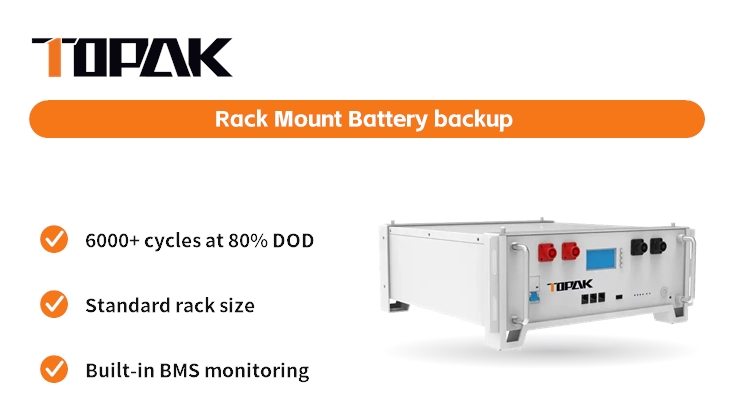
Understanding Rack Mount Battery Backup Systems
Core Definitions and System Architecture
A rack mount battery backup is designed to fit into standard equipment racks and works as both an uninterruptible power supply and an energy buffer. These systems mount horizontally in 1U, 2U, or 3U configurations, making them fit perfectly with servers and networking gear. This is better than freestanding tower units that take up important floor space. The small size hides a complex internal structure, with battery cells set up in series-parallel configurations, battery management systems keeping an eye on voltage differences, and inverter circuits turning DC storage into clean AC output.
Lithium Iron Phosphate (LiFePO4) chemistry is used in most modern designs. This type of chemistry has many benefits over standard valve-regulated lead-acid batteries. LiFePO4 cells have three times the energy density of other cells, so they can run for longer in the same amount of space. The chemistry is very stable at high temperatures, which lowers the risk of fire in rack environments that are hard on temperature. Unlike lead-acid batteries, which usually only last 300 to 500 cycles, this one can handle over 6,000 charge-discharge cycles at 80% depth of discharge.
Primary Application Environments
Rack-mounted energy storage is used by data center managers to protect mission-critical databases and cloud infrastructure between when the power goes out and when the generator starts up. Telecommunications companies use these systems for rural base stations where grid reliability isn't always reliable. This keeps the 5G signal going all the time. Backup power is built right into control boxes in industrial automation facilities. This keeps production lines from stopping, which could damage precision manufacturing equipment or cause dangerous process breaks.
The physical integration is very important. Putting backup power in the same rack as protected equipment keeps voltages from dropping over long cable runs and makes managing heat easier by letting multiple cooling systems work together. This architectural method makes the system more efficient overall while making installation less complicated. This makes it the best choice for places with limited room that need a lot of power.
Key Criteria for Selecting a Rack Mount Battery Backup Manufacturer
Manufacturing Capability and Production Scale
Legitimate makers don't hire outside companies to put together their products; they run their own factories. Large-scale automated production lines make sure that thousands of units are all the same, which lowers the variation between cells that causes packs to fail too soon. When looking at possible suppliers, find out how big their manufacturing footprint is. Dedicated facilities that are bigger than 20,000 square meters and have automated welding, testing, and quality control stations show that they are serious about making the product.
The past of production is very important. Manufacturers that have been around since before 2010 have been through many changes in technology and market cycles, which has given them historical knowledge that younger companies don't have. They have improved their BMS algorithms by putting them to use in thousands of real-world situations and learning how systems work in different temperature ranges and with different types of users. This experience directly leads to dependability, which means fewer guarantee claims and a longer life for your investment.
Battery Management System Technology
The BMS is the brain that controls each cell in the battery pack. It checks temperatures, balances charge states, and shuts down the batteries safely when something goes wrong. When a manufacturer develops BMS technology in-house, they have full control over safety rules and improving performance. When you do your own development, you can quickly make changes that fit your needs, like changing the charge rates for cold climates or the communication methods so they work with your own building management systems.
Modern BMS systems work with CAN and RS485 protocols for transmission, which lets data center infrastructure management software keep an eye on things in real time. Optional modules like Bluetooth connectivity let technicians figure out problems without having to open rack doors, and 4G integration lets installations that are spread out geographically be monitored from afar. With these features, battery systems go from being inactive parts to active players in energy management plans for the whole building.
Certification and Compliance Standards
International certificates show that a product meets strict standards for safety and efficiency. IEC62619 talks about the safety of lithium-ion batteries in industrial settings. It talks about cell building, pack assembly, and testing in different environments. UN38.3 certification shows that transportation rules have been followed, which is important for global distribution networks. MSDS documents contain important safety information that is required by laws about workplace health.
Not only do these certifications show that a company follows the rules, but they also show that they invest in a full testing infrastructure and keep their quality management systems audited by outside groups. The certification process itself weeds out suppliers who skimp on materials or assembly methods. This gives procurement teams an objective baseline to compare against.
Service Infrastructure and Technical Support
Support after the sale is what sets makers who care about their customers apart from those who only care about the first sale. Comprehensive support includes help with installation, regular upkeep plans, and quick fixing when problems happen. Manufacturers with global distribution networks keep regional service centers open. These centers cut down on downtime by making parts available locally and keeping technicians close by.
Technical support includes more than just fixing problems; it also helps with integrating systems. Engineers who know about both battery technology and IT infrastructure can help with correct sizing calculations, suggest the best ways to manage charges, and start up complicated installations with many units. This knowledge is very helpful when expanding deployments or adding extra power to systems that use green energy. An industrial rack mount battery backup provider must offer this depth of service.
Comparing Leading Rack Mount Battery Backup Manufacturers
Performance Specifications and Scalability
Top makers offer flexible designs that let multiple units work together in parallel, which lets capacity grow as power needs do. Being able to connect 15 or more units in parallel in a single system makes it possible to build architectures that can grow from small office setups to large-scale energy storage. When comparing brands, look at their highest continuous discharge ratings. A 100A rating can handle heavy loads while still keeping thermal economy high.
The success during runtime depends on both the capacity and the discharge properties. A 51.2V 100Ah configuration gives you 5.12kWh of usable energy, which is enough to power most rack-mounted equipment for hours. Changing the chemistry affects the amount of runtime that can be used when the discharge rate changes. LiFePO4 keeps the voltage stable during discharge cycles, providing steady power output until the cells hit their depletion thresholds. In contrast, with lead-acid chemistry, voltage drops gradually, which could cause equipment to lose power before the batteries are fully discharged.
Total Cost of Ownership Analysis
The purchase price is only the first part of the total costs over the life of the product. Changing batteries often has a big effect on long-term costs. LiFePO4 systems last 8–10 years, so they don't need to be replaced as often as lead-acid systems that only last 3–5 years. Using less energy during charge-discharge cycles can lower utility costs, especially in installations that cycle every day to cut down on peak demand or add renewable energy.
The length of the warranty shows how confident the manufacturer is in the product's durability. Standard warranties that last 5 years or more and include specific cycle life guarantees, like 6,000 cycles at 80% depth of discharge, reduce risk in a real way. Carefully read the guarantee terms; some don't cover units that work outside of certain temperature ranges or that connect to equipment that isn't allowed, which could mean you're not covered by your rack mount battery backup warranty when you need it the most.
Real-World Deployment Case Studies
Telecommunications companies that are in charge of thousands of faraway sites put dependability above all else because it costs a lot to send technicians to these sites and fix problems. When compared to older lead-acid installs, deployments using industrial-grade rack-mounted lithium systems report a big drop in repair calls. Electrolyte tracking, cleaning of terminal corrosion, and early cell failures are no longer needed. This means that running costs are lower and service level agreements are better.
Operators of data centers stress the importance of intelligent tracking tools that allow for planned repair. Facilities teams can find cells that are losing their power before they affect the system's performance by using building management tools to get information about each cell's energy and temperature. This proactive approach stops sudden power outages and figures out the best time to replace batteries, so working units aren't thrown away too soon, and cells that are too old fail catastrophically.

Procurement Guide: How to Buy Rack Mount Battery Backup from Top Manufacturers
Assessing Your Power Requirements
Accurate load calculations are the first step to good procurement. Make a list of all the equipment that needs backup power and write down its rated power consumption and startup surge requirements. During boot processes, server power sources produce a lot of inrush current. Battery systems that are too small may be able to power running equipment, but they may fail during recovery situations that need multiple system restarts at the same time. Conservative size adds 20–30% capacity leeway, which lets you add equipment in the future without having to improve the rack mount battery backup system right away.
Customization and Volume Considerations
Manufacturers that sell to business markets usually offer a lot of ways to customize their products. Voltage configurations change based on local utility standards or the needs of DC-powered tools. The physical measurements can be changed to fit rack levels that aren't standard or to work with specific mounting hardware. By making changes to the BMS firmware, you can connect it to your own monitoring system or change the charge profiles for harsh operating conditions.
Buying in bulk has big economic benefits that go beyond lower unit prices. Manufacturers may offer faster production schedules, dedicated tech help for problems with integration, or longer guarantee terms for big operations. When planning rollouts to multiple sites, make sure you negotiate full agreements that cover both the initial deployment and future expansion phases. This will protect your prices and make sure that the product is the same throughout all of the implementation timelines.
Logistics and Deployment Planning
Because lithium battery systems are dangerous, they need to be handled and documented in a certain way when they are shipped internationally. Manufacturers with a lot of experience handle this level of complexity by working with established logistics partners and providing full documentation support. Check to see if delivery is possible to your exact location. Some areas have extra limits or need local import permits, which can make delivery take longer.
Installation help changes a lot from one company to the next. Some offer detailed instructions and support over the internet, but they expect customers to handle the actual installation. Others give commissioning services on-site, with factory-trained workers installing, setting up, and teaching operators. Comprehensive installation help is worth the extra cost for complicated operations or organizations that don't have specialized battery knowledge. It lowers the risk of implementation and speeds up the time to operation.
Maintenance, Testing, and Troubleshooting Best Practices
Routine Maintenance Protocols
Lithium-based rack mount battery backup systems don't need as much care as their lead-acid predecessors, but they still need to be checked regularly. Visual checks are done every three months to look for physical harm, make sure ventilation paths are still clear, and make sure wire connections are still tight enough. Thermal imaging scans find strange temperature patterns that mean cells are failing or there isn't enough wind to cool them down. This lets problems be fixed before they get worse and cause the whole system to fail.
Battery management systems keep an eye on the health of cells all the time by keeping track of power, temperature, and state-of-charge information. When these logs are looked at during scheduled maintenance windows, problems that can't be seen at first glance become clear. Gradual loss of capacity, rising internal temperatures, or increasing cell voltage divergence are all signs that a cell is getting close to the end of its useful life. This information helps with planning replacements and budgeting. With proactive monitoring, maintenance goes from being an emergency response to being planned, predictable activities.
Testing Procedures and Performance Validation
Every year, discharge testing compares actual usage to specs. This makes sure that systems work as expected in real situations. Under closely watched conditions, controlled discharge tests safely check the capacity and find weak cells that need extra care. Instead of using simple constant-current discharges, testing methods should mimic real load profiles. This will show how well the device works in real-life situations, such as when it starts up and the power needs change.
Environmental controls have a big effect on how long batteries last and how well they work. Keeping the temperature of the environment between 20°C and 25°C improves the speed of chemical reactions, which increases both capacity delivery and cycle life. Rack-level cooling systems or temperature-controlled boxes are helpful for installations that are in places that are hard on the temperature. Controlling humidity keeps electrical connections from rusting because of condensation, and filtering the air keeps conductive dust from building up and creating short-circuit paths.
Conclusion
When choosing a rack-mount battery backup maker, you need to carefully look at their production skills, technical know-how, and long-term support systems. The most reliable partnerships are made with manufacturers that can show they have complete in-house development, a large production scale, and a track record that spans multiple market cycles. Choosing the right battery chemistry, especially the benefits of LiFePO4 technology, has a direct effect on both the initial investment and the costs over the life of the battery because it lasts longer and needs less maintenance.
A good procurement process combines technical requirements with practical deployment issues like customization options, shipping operations, installation support, and guarantee protection. By giving more weight to makers with global distribution networks and committed technical support, you not only get goods, but also relationships that can change with the needs of your infrastructure and help you meet your operating continuity goals for the whole life of the system.
FAQ
What distinguishes LiFePO4 chemistry from traditional lead-acid in backup power applications?
LiFePO4 has three times the energy density of other materials, so it can be used in smaller spaces and for longer periods of time. The chemistry allows for 6,000+ cycles, compared to 300–500 cycles for lead-acid, which greatly lowers the number of replacements needed and the cost of the whole lifespan. The thermal stability is still better, with almost no degradation at high or low temperatures and almost no risk of thermal runaway when there is a fault in a rack mount battery backup unit.
How do I figure out how much extra space I need for my deployment?
Add up how much power all the protected equipment is supposed to use and leave an extra 25% for starting spikes and future growth. To find out how many watt-hours of power you need, multiply by the number of hours of runtime you want. To get amp-hours, you have to divide the kilowatt-hours by the system voltage. For example, 5 kWh at 51.2V equals about 98Ah, which is the same as a normal 100Ah setup.
Can multiple units work at the same time to raise the total capacity?
Advanced BMS implementations coordinate charge-discharge cycles across multiple units in systems made by reputable manufacturers that are designed to work in parallel. To make sure that the current is distributed evenly, the cells must have the same firmware version and characteristics. Scalable architectures that can grow from kilowatts to megawatts are possible with systems that support 15 or more parallel units.
What kind of support should I expect from a guarantee from a reputable company?
Standard contracts last between 5 and 8 years and promise a certain number of rounds, usually 6,000 at 80% depth of discharge. Defective materials, manufacturing flaws, and early capacity loss should all be covered. Make sure you read the warranty terms carefully to make sure they cover things like operating environment restrictions and connecting to third-party equipment.
Partner with TOPAK for Industrial-Grade Rack Mount Battery Backup Solutions
TOPAK New Energy Technology has been making industrial-grade lithium battery systems that meet the needs of difficult B2B clients around the world since its start in 2007. Our 25,000㎡ factory in Shenzhen has many automated production lines that make sure the quality of every rack mount battery backup for sale we send out is the same. Our technical skills are shown by the TP-48100R model, which has a 51.2V 100Ah capacity, a 6,000-cycle lifespan, and flexible communication through CAN/RS485 protocols with Bluetooth and 4G connection options.
Because we develop our own BMS, we have full control over safety features and performance optimization, which means we can make changes that off-the-shelf solutions can't. Our goods are safe for use around the world because they have IEC62619, UN38.3, and MSDS paperwork, among other certifications. We have formed partnerships with distributors in more than 15 countries, and we offer localized support backed by our technical know-how and large manufacturing scale.
Our team creates solutions that work best for your business, whether you're an energy storage system integrator, a telecommunications infrastructure provider, or a manufacturer of industrial equipment looking for a reliable supplier. Get in touch with us at B2B@topakpower.com to talk about your power security needs and find out how our experience since 2007 can help you get more reliable products and quick technical support throughout the lifecycle of your operation.
References
1. Smith, J. & Anderson, K. (2022). "Lithium-Ion Battery Management Systems for Industrial Applications: Design Principles and Safety Standards." Journal of Energy Storage Technology, 45(3), 234-251.
2. International Electrotechnical Commission (2021). "IEC 62619: Secondary Cells and Batteries Containing Alkaline or Other Non-Acid Electrolytes - Safety Requirements for Secondary Lithium Cells and Batteries, for Use in Industrial Applications." IEC Standards Publication.
3. Chen, L., Wang, Y., & Liu, R. (2023). "Comparative Analysis of Energy Storage Technologies for Data Center Backup Power Systems." IEEE Transactions on Industrial Electronics, 70(8), 7845-7859.
4. Martinez, D. (2021). "Total Cost of Ownership Modeling for UPS Battery Systems in Telecommunications Infrastructure." Telecommunications Industry Association Technical Report, TR-2021-17.
5. National Fire Protection Association (2022). "NFPA 855: Standard for the Installation of Stationary Energy Storage Systems." NFPA Code Standards for Electrical Safety.
6. Thompson, R., Garcia, M., & Patel, S. (2023). "Lifecycle Performance Evaluation of Lithium Iron Phosphate Battery Systems in Mission-Critical Applications." Energy Storage Journal, 18(2), 112-134.