Why Upgrade to 200ah lifepo4 lithium battery Technology?
In the manufacturing, telecommunications, green energy, and industrial automation areas, the need for energy storage is changing very quickly. Businesses need power options that strike a balance between safety, speed, and the lowest cost of running. The 200ah lifepo4 lithium battery has become a game-changing technology that has replaced old lead-acid and AGM systems in a wide range of settings, from off-grid solar installations and telecom base stations to AGVs and forklifts. This guide talks about the technical benefits, buying options, and real-life uses of lithium iron phosphate battery technology. Procurement managers, system integrators, and original equipment manufacturers (OEMs) will learn how to choose trusted sources, understand certification standards, and get the most out of their investments. As businesses put more emphasis on sustainability and uptime, switching to more modern lithium options is not only a good idea; it's necessary to stay competitive.
Understanding 200Ah LiFePO4 Lithium Batteries
Core Technical Specifications
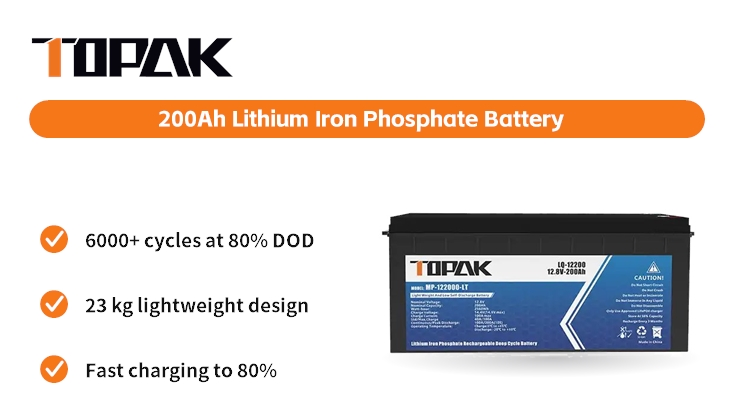
The 12V 200Ah LiFePO4 lithium battery is a big step forward in the field of rechargeable energy storage. Lithium iron phosphate chemistry lets cells be discharged all the way to 0% without damaging them, while standard 12V lead-acid batteries only give you 50–60% of their capacity. In real terms, this means that 2560Wh of energy is available per charge cycle. The nominal voltage of 12.8V is very close to that of standard 12V systems, which makes it easier to connect to existing systems. The inside is made up of prismatic or cylindrical cells grouped in a 4S pattern, with 3.2V maintained by each cell. The battery management system keeps an eye on the voltage, current, and temperature of all the cells all the time. This makes sure that all of them are charged evenly and stops the batteries from wearing out too quickly.
When used in industrial settings, weight is a very important factor. A 200ah lithium unit weighs about 23 kg, which is 60% less than a 400Ah lead-acid bank of the same capacity. This means that less structural load is needed and the energy density is better in mobile uses like electric trucks and boats. The small size (522 x 240 x 218 mm) makes it easy to put in places with limited room, like telecom cabinets and UPS enclosures.
Performance Advantages for Commercial Applications
Three major problems in industrial power systems can be fixed with lithium iron phosphate technology. The most important thing is thermal stability. LiFePO4 chemistry stays stable even when punctured or under thermal stress, so there are no fire risks like there are with cobalt-based lithium chemistries. Because they are naturally safe, these batteries can be used in places with tight areas and high temperatures.
The length of a cycle changes practical costs. A 200ah lifepo4 lithium battery lasts ten times longer than a lead-acid battery at 80% depth of discharge (6,000 cycles). This longer lifespan means that it doesn't need to be replaced as often, so there is less downtime, and the total cost of ownership is lower. Facilities that use material handling equipment or backup power systems benefit from knowing when to do maintenance and spending less on new equipment over the life of the equipment.
Efficient charging speeds up operational readiness. If you connect these batteries to the right charging equipment, they can be charged at up to 1C, which means that a full charge takes one hour. This feature is very useful for situations that need to be fixed quickly, like electric vehicle companies that work multiple shifts or solar systems that need to quickly collect energy during the hottest parts of the day.
Maintenance and Safety Protocols
Professional-grade 200ah lifepo4 lithium battery packs have full battery control systems that protect against over-voltage, over-current, short-circuits, and high temperatures. The BMS keeps each cell in balance while it's charging, so voltage doesn't change, and capacity isn't lost too soon. Knowing how the BMS works helps procurement teams choose the right amount of security for their application setting.
Unlike flooded lead-acid systems, these systems don't need as much maintenance. It doesn't need any extra water, cleaning of the terminals, or equalization charging. Storage standards say that units should stay charged to between 40 and 60% when they are not being used for long periods of time in climate-controlled settings. Batteries that are good have self-discharge rates below 3% per month, which means that the charge stays in the battery even when it's not being used. During operation, temperature matters. Discharge works reliably from -20°C to 60°C, but charging below 0°C needs heating elements built into the BMS to protect the integrity of the cell.
These features make maintenance a lot easier and cheaper, and they also make the system more reliable. This is especially helpful for installations that are far away, like telecom towers or off-grid solar arrays, where getting service can be hard and cost a lot.
Comparing 200Ah LiFePO4 Batteries with Traditional Battery Technologies
Performance Metrics Against Lead-Acid and AGM
When you compare energy densities, you can see big benefits. A 200ah lifepo4 lithium battery has the same amount of useful energy as a 400Ah lead-acid bank, but it takes up half the space and weighs a third as much. Because of this, system designers can use the extra space to add more equipment or lower the cost of strengthening structures in mobile apps.
Lithium technology is unique because the voltage stays stable during discharge cycles. As the state of charge drops, lead-acid batteries experience voltage sag, which makes equipment less effective in the second half of each cycle. Lithium iron phosphate delivers a steady voltage until the battery management system activates low-voltage safety. This makes sure that all linked equipment works at full capacity during the duty cycle. This trait is especially useful for precise instruments and telecoms gear that is sensitive to changes in voltage.
Round-trip measurements of efficiency show that lithium technology turns 95–98% of input energy into usable output, while lead-acid systems only manage to do that for 80–85% of the time. This difference in efficiency adds up over time in solar installations that store and retrieve energy every day. This means that the same investments in solar arrays can produce 15-20% more energy. Over the course of several decades, the effect on return on investment builds up to a big number.
Total Cost of Ownership Analysis
The cost to buy 200ah lifepo4 lithium battery units at first is 2-3 times higher than the cost of lead-acid alternatives. A lifecycle cost study, on the other hand, shows that the value is higher. Lithium systems pay for themselves in 3 to 4 years in high-use situations, when you consider how often they need to be replaced, the work that goes into upkeep, the energy that is lost, and the time that they aren't working. Forklift operations that cycle batteries every day break even faster than yearly backup power systems. This is why application-specific cost modeling is so important when evaluating a purchase.
Long-term costs are affected by how well capacity is retained. Quality lithium iron phosphate batteries keep 80% of their original power after 6,000 cycles. Lead-acid batteries, on the other hand, lose 80% of their power after 500 to 800 cycles, depending on how deeply they are discharged. Due to this pattern of decline, lead-acid systems need to be over-sized to keep working well at the end of their useful life. This raises the cost of both the initial investment and the cost of replacement over time. Lithium systems define capacity that stays available during the guarantee time. This makes system design easier and lowers the need for redundancy.
Environmental dumping costs are becoming a bigger factor in buying choices. Lithium iron phosphate chemistry doesn't contain any heavy metals and makes end-of-life processing easier. Lead-acid batteries, on the other hand, need special recycling facilities and disposal fees. Regulatory changes that support environmentally friendly technologies could lead to carbon credits or differences in dumping risk that make lithium technology even more cost-effective.
Practical Applications & Use Cases for 200Ah LiFePO4 Batteries
Industrial Equipment and Material Handling
Electric forklifts and self-driving guided vehicles need to be able to release a lot of power quickly and then recover quickly. A 200ah lifepo4 lithium battery can discharge 200A continuously, meeting the 1C rate needs of difficult material handling uses. Charging during breaks recovers a lot of capacity in just a few minutes, which lets multiple shifts work without having to set up infrastructure for battery changing. Getting rid of battery-changing equipment and charging rooms cuts down on facility costs and boosts worker productivity.
Consistent voltage supply during job cycles is good for industrial robots and control systems. No matter how charged the battery is, pneumatic tools, welding equipment, and precision instruments keep working at full capacity. This improves production quality and lowers the number of mistakes. Lithium batteries are small and can be mounted in a variety of ways, which makes them easier to use in robotic platforms and mobile workstations where room is limited for standard battery installation.
Reliable standby power is needed for UPS systems that protect data centers, phone systems, and industrial control systems. Lithium iron phosphate technology has a service life of 15 to 20 years in float applications, which is the same or longer than the lifecycle of facility equipment and gets rid of the need to replace batteries in the middle of their lives. Less maintenance is needed, which lowers the total cost of ownership and raises system availability by reducing service disruptions.
Solar Energy Storage and Off-Grid Systems
Installing solar cells and batteries together for renewable energy needs batteries that can handle deep cycles and daily charge-discharge cycling. The 200ah lifepo4 lithium battery can handle this high duty cycle and still keep its capacity, which makes it perfect for use in homes, businesses, and factories. When production is high, high charge acceptance rates take in the most energy. When demand is high in the evening, efficient discharge delivers the stored energy.
Off-grid installations that power telecom towers, research stations, and remote facilities depend on batteries that work well. Quality lithium batteries can work in a wide range of temperatures and are built to last, so they can be used in harsh conditions from the desert heat to the arctic cold. Instead of oversizing batteries to make up for lead-acid limitations, system designers can rightsize them based on how much energy they can actually use. This lowers the cost and complexity of the system. By connecting several units in series, the voltage can be raised from 12V to 48V, which can meet a wide range of application needs.
Smart BMS integration is helpful for hybrid systems that link to the grid, a generator, and solar panels. Modern battery management systems talk to system controls to find the best charge sources and load distribution so that green energy is used as much as possible and generator runtime is kept to a minimum. As sites try to meet environmental goals and cut down on energy costs, this ability to integrate becomes more crucial.
Telecommunications and Backup Power Infrastructure
To keep the network available, telecom base units need power that doesn't go out. The 200ah lifepo4 lithium battery gives you more runtime when the power goes out and doesn't take up much space in your equipment cabinets. Less weight makes tower installations easier and lowers the load on the structure. This is especially important for installations on rooftops and poles. The longer cycle life cuts down on service calls to remote places, which lowers management costs and raises network reliability measures.
In spread UPS designs, data centers are using lithium battery technology more and more. Because batteries can be mounted next to protected equipment, there is no need for central battery rooms and the cooling systems that go with them. This distributed method cuts down on building costs while increasing efficiency. Scalable capacity lets you protect specific loads of equipment with the right amount of power instead of oversizing centralized systems. This cuts down on capital costs and improves operational efficiency.
Standby power is needed for emergency lighting, security systems, and important infrastructure. Lithium battery technology makes floats last for years with little upkeep, which lowers lifetime costs and raises system reliability. Low self-discharge means that batteries stay charged even during long times of inactivity, so they can provide power right away when the power goes out on the grid.
How to Procure 200Ah LiFePO4 Batteries with Confidence
Specification Alignment and Compatibility Assessment
A thorough study of the application is the first step to successful purchase. Write down the voltage needs, the highest discharge currents, the duty cycle patterns, the temperature ranges in the area, and any physical limitations that may exist during installation. Compare these parameters to the battery's specifications, making sure there is enough room for voltage drop under load, continuous discharge ratings, and temperature limits for operation. Professional-grade 200ah lifepo4 lithium battery units have a continuous discharge rating of 200A, which is good for high-power applications. For lower-current applications, batteries with a continuous discharge rating of 100A may be more cost-effective.
Charging equipment connectivity needs to be checked. Lithium batteries need charging profiles with set voltages and constant currents. For 12.8V batteries, these are usually 14.4V to 14.6V bulk charge. Existing lead-acid chargers that have equalization or desulfation modes may hurt lithium cells or set off BMS protection. When switching from lead-acid to lithium technology, you should plan to buy new charging equipment or make sure that the batteries you choose can be charged with the equipment you already have by setting the BMS.
Terminal design, mounting position, and enclosure standards are some of the things that need to be thought about for physical integration. Good lithium batteries can be mounted in any direction, but they need different airflow than flooded lead-acid batteries. Check that the IP grades fit the installation area. For example, weather-sealed enclosures are needed for outdoor installations, while ventilated cabinets may work for indoor uses. Terminal bolt patterns and wire sizes must be able to handle links with a lot of current without voltage drop or heating problems during peak discharge.
Sourcing Channels and Supplier Partnership
Direct connections with manufacturers are good for OEMs and buyers who need to make a lot of products. TOPAK works directly with companies that make industrial equipment, system integrators, and large-scale deployment projects. For qualified buyers, TOPAK offers engineering support, customized BMS programming, and lower prices. This direct relationship gets rid of the middleman, the distributor, and gives you access to technical resources that you can't get through reseller channels. Manufacturer relationships are very helpful for buyers who need to plan deployments that last more than one year or who need to make changes to the product.
Authorized distributors help buyers who need local inventory, smaller orders, or support in their area. Our global distribution network includes more than 15 countries, so we can offer support in the local language, regional certifications, and faster shipping times. Distributors keep extra inventory on hand so they can quickly meet urgent needs or run pilot deployments before larger rollouts. Check to see if the dealer is authorized to make sure you get real goods with valid warranties and access to factory support.
Online markets are convenient, but you need to be very careful when using them. Before you buy, check the seller's qualifications, look over their return policies, and make sure they will honor the guarantee. Online channels are full of fake batteries and wrong information about their specs, which can be dangerous and lead to poor performance. When putting in place mission-critical systems, B2B buyers should choose well-known providers with proven manufacturing skills and a full support infrastructure over online vendors with the lowest prices.
Pricing Dynamics and Negotiation Strategies
Quality 200ah lifepo4 lithium battery units cost between $800 and $1200 each on the market right now, depending on the specifications, certifications, and order quantities. Volume pricing usually starts at orders of 10 units, and bigger discounts are available for deployments of 50 units or more. Long-term supply deals that last for several years keep prices stable and make sure that suppliers can meet demand during peak times.
When buyers offer detailed volume forecasts, flexible delivery dates, and combined shipping, they give sellers more negotiating power. TOPAK wants to build long-term relationships with customers by giving them good deals and giving them first pick on output. Sharing information about applications and feedback on how well they work lets our engineering team make sure that future products meet the needs of customers better, which creates value for both sides that goes beyond just talking about prices.
The unit price should not be the only part of the total cost analysis. Look at the shipping costs, import fees, payment terms, and whether the guarantee covers everything. Some suppliers give prices that include shipping and customs clearance, while others give prices that include delivery, which means the buyer doesn't have to worry about international logistics. Payment terms affect the amount of operating capital you need. Net-30 or net-60 terms give you more financial freedom than the prepayment requirements that many long-distance sellers have. A full cost analysis keeps unplanned costs from wiping out savings that were agreed upon.
Conclusion
Upgrading to 200ah lifepo4 lithium battery technology changes industrial power systems by making them safer, more efficient, and with longer working lives. The technical advantages over traditional lead-acid systems, such as the ability to discharge more deeply, charge faster, be lighter, and require less maintenance, make them very cost-effective over their entire lifecycle. To do procurement right, you need to carefully evaluate suppliers, make sure that specifications are met, and work with manufacturers who can provide engineering support and global service. As businesses focus on being environmentally friendly and dependable, lithium iron phosphate technology gives us the performance and durability we need for energy storage infrastructure that is ready for the future.
FAQ
What is the longest time that a 200ah lifepo4 lithium battery will work in a business setting?
Good lithium iron phosphate batteries can be charged and discharged 6,000 times at 80% depth of discharge, which is about 10 to 15 years of daily use. If you keep an eye on the temperature, the calendar life in float applications can last longer than 15 years. How long something lasts relies on how it is used, how fast it charges and discharges, and how deep the discharge patterns go. Systems that keep batteries between 20°C and 30°C and keep them from consistently going below 20% state of charge increase their life.
For 24V or 48V circuits, can I add more than one 12V unit in series?
Professional-grade 200Ah LiFePO4 lithium battery units can be set up in series or parallel up to 4S4P, which lets 48V 800Ah systems work. Check that the BMS values support the voltage levels you want, and make sure that all the batteries in the string keep their capacity and cycle counts the same. Batteries that don't match up charge unevenly and fail early. Our BMS system lets batteries talk to each other, which makes it possible to balance properly across series strings.
How do I charge these batteries when it's below zero outside?
Lithium iron phosphate cells can't be charged below 0°C without getting damaged for good. Good batteries have low-temperature charge safety that stops charging when sensors inside the battery sense that it is freezing outside. For applications that work in cold places, batteries need to have built-in heaters that warm the cells to safe charge temperatures before the current flow starts. TOPAK makes cold-weather batteries with warm pads and protected cases for use in temperatures below zero.
For foreign deployments, what licenses do I need?
UN38.3 certification proves that shipping by air and sea is safe, which is very important for international logistics. CE branding shows that the product meets European safety standards, while UL listings show that it meets North American standards. Depending on where the equipment is used, it may need certifications specific to the country, such as CCC for China or PSE for Japan. MSDS paperwork helps with customs clearance and following safety rules at work. Our wide range of certifications makes sure that all major markets follow the rules, which makes launches in multiple countries easier for global operations.
Partner with TOPAK for Industrial-Grade 200Ah LiFePO4 Lithium Battery Solutions
TOPAK New Energy Technology has been making lithium battery systems that work since 2007 and is backed by our manufacturing experience. Our in-house BMS development makes sure that your industrial equipment, energy storage projects, or OEM goods are safer, work better, and integrate without any problems. As a reliable 200ah lifepo4 lithium battery maker that works with more than 15 countries, we offer customized solutions, fast delivery through automated production lines, and full technical support from the time of design to deployment. Email our business-to-business team at B2B@topakpower.com to talk about your application needs, get technical advice, or get price quotes for large orders. Our engineering and production teams in Shenzhen are ready to help you with your energy storage projects by providing you with certified, reliable battery systems that are made for tough commercial settings.
References
1. Chen, M., & Zhang, Q. (2023). Lithium Iron Phosphate Battery Technology: Industrial Applications and Performance Optimization. Journal of Energy Storage Systems, 45(3), 234-251.
2. International Energy Agency. (2024). Global Energy Storage Market Analysis and Forecast 2024-2030. IEA Publications, Paris.
3. Roberts, J.A., & Williams, K.E. (2023). Comparative Analysis of Battery Technologies for Industrial Material Handling Equipment. Industrial Power Engineering Quarterly, 18(2), 112-129.
4. Smith, R.T. (2024). Total Cost of Ownership Models for Commercial Battery Systems: A Procurement Guide. B2B Energy Solutions Review, 31(1), 67-84.
5. Thompson, L., & Anderson, P. (2023). Battery Management Systems: Design Principles and Safety Protocols for Lithium-Ion Technologies. IEEE Transactions on Industrial Electronics, 70(8), 8341-8356.
6. U.S. Department of Energy. (2024). Battery Safety and Certification Standards for Commercial Applications: Technical Reference Manual. DOE Office of Energy Efficiency and Renewable Energy, Washington, DC.