What Makes a 200Ah LiFePO4 Battery Ideal for Off-Grid Living?
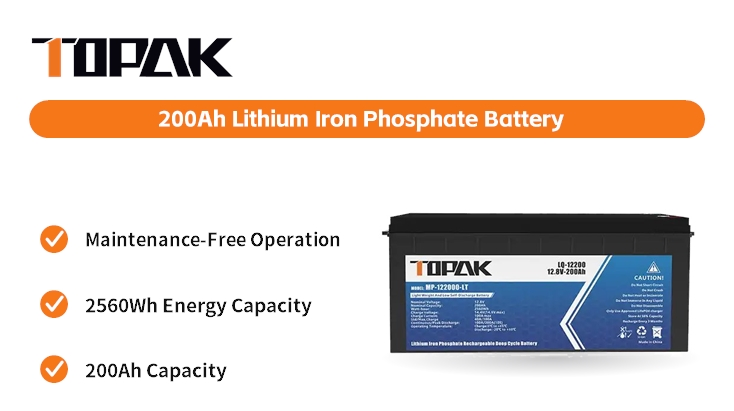
The best off-grid energy storage technology is a 200ah lithium iron phosphate battery, which works very well thanks to its advanced chemistry and strong construction. These batteries are better than standard lead-acid ones because they can hold 2560Wh of energy and have a life of 6000 cycles or more. Their 23 kg weight, built-in battery management systems, and ability to handle high and low temperatures make them ideal for safe off-grid power options that help people live more sustainably.

Understanding the 200Ah LiFePO4 Battery
Understanding lithium iron phosphate technology and its unique benefits is the first step to living a great life off the grid. Modern LiFePO4 batteries are a big step forward in the science of storing energy. They use phosphate-based cathode materials that are very stable and safe.
Advanced Chemistry and Construction
Lithium iron phosphate batteries are different from other ways to store energy because they use a complex electrochemical process to work. During charge and discharge cycles, lithium ions move between the cathode and anode materials. This creates a stable voltage output of 12.8V normal across the entire operating range. This advanced chemistry allows for great depth of charging, which means that users can use up to 80% of the battery's capacity without shortening its life. LiFePO4 technology is a game-changer for off-grid uses that need a consistent power supply because traditional lead-acid batteries lose a lot of their life when they are discharged below 50%.
Superior Cycle Stability and Lifespan
Good LiFePO4 batteries can be used over and over again without losing their power for more than 6,000 cycles at 80% depth of discharge, which is about 16 years of daily use. This amazing durability comes from the fact that iron phosphate compounds are naturally stable and don't lose their shape even after many charge and discharge cycles. Other lithium chemistries may lose some of their capacity after 1000 to 2000 cycles, but lithium iron phosphate cells that are made correctly keep working the same way for as long as they are used. This stability means that off-grid sites can depend on a steady flow of power and need less upkeep.
Integrated Safety Features and BMS Technology
Modern 200ah lithium iron phosphate battery systems have complex battery management systems that keep an eye on and protect against several operating risks. Overvoltage, undervoltage, overcurrent, short circuits, and temperature extremes are all things that these devices guard against. The built-in BMS constantly checks the voltage of each cell, making sure that the charging is balanced and stopping situations that could be dangerous. Overcurrent protection keeps the battery and any equipment attached to it from getting damaged, and temperature protection stops activity when safe limits are crossed.
Why 200Ah LiFePO4 Batteries Are Optimal for Off-Grid Living
When you live off the grid, you need energy storage options that work the same way in all kinds of weather while still being safe and dependable. LiFePO4 technology meets these needs by offering several efficiency benefits that are better than other options.
Weight and Space Efficiency Advantages
The small size and light weight of lithium iron phosphate batteries make them very useful for systems that are not connected to the grid. A 200ah lithium iron phosphate battery weighs about 23 kg, which is about half as much as a similar lead-acid battery. This makes installation easier and lowers the structural requirements. This weight loss is especially helpful for mobile off-grid uses like RVs, boats, and remote cabins, where every kilogram affects the cost of shipping and the design of the structure. Its small size (522 x 240 x 218 mm) gives you a lot of installation choices and makes the most of room for other important gear.
Enhanced Depth of Discharge Capabilities
To keep them from over-discharging, traditional lead-acid batteries need to be carefully managed, which means that they can only be used up to 50% of their stated capacity. LiFePO4 batteries can safely be used at 80% depth of discharge without affecting their cycle life. This means that they can store twice as much energy as lead-acid batteries. With this improved depth of discharge, off-grid systems can go longer without being charged while still keeping the batteries healthy. Users can safely use their energy stores during long times when solar generation is low, without worrying that they will damage their batteries permanently.
Solar System Integration and Efficiency
Because LiFePO4 batteries and solar charging devices work well together, they are the best way to get energy when you're not connected to the grid. Solar panels make the most of every watt they produce by having charge efficiency rates above 95%. This means that very little energy is lost during storage. These batteries can quickly take in solar energy during peak output hours because they can be charged quickly. LiFePO4 technology can handle high charge currents for most of the charging cycle, which makes the system more efficient overall. Lead-acid batteries, on the other hand, need charging rates to decrease and absorption periods to last longer.
Climate Resilience and Environmental Adaptability
Off-grid places often put energy storage systems through tough weather conditions like changing temperatures and humidity and possible physical stresses. Good LiFePO4 batteries are very durable and work well at a wide range of temperatures. Compared to other lithium technologies, iron phosphate chemistry has higher safety margins because it is naturally thermally stable. This safety lowers the chance of a fire and takes away any worries about thermal runaway, which can happen with other battery types in harsh conditions.
Procurement Guide for B2B Clients: Selecting the Best 200Ah LiFePO4 Battery
When buying lithium iron phosphate battery systems strategically, you need to carefully look at the technical specs, the supplier's skills, and the issue of long-term support. Professional buyers have to find the right mix between performance needs and cost concerns while also making sure that the supply chain has trusted partners.
Power and Capacity Assessment Criteria
Accurate load analysis and energy usage trends are the first steps in figuring out the best battery specifications. A 200ah lithium iron phosphate battery with a 2560Wh energy capacity can be used for many off-grid tasks, but to get the right size, you need to know how much power is needed at peak times and how much is used each day. With a maximum constant discharge rate of 200A, this battery can give a lot of power to high-demand devices like inverter systems, electric tools, and emergency gear. This high discharge capability takes away any worries about power limits during times of high demand, and the voltage stays stable throughout the discharge cycle.
BMS Functionality and Safety Standards
Advanced energy control systems are important parts that have a direct effect on safety, performance, and life. Good BMS systems have a lot of tracking and safety features, like checking the voltage of each cell, detecting temperature, limiting power, and figuring out the state of charge. Professional-level systems have connection features that let you watch and diagnose them from afar. This lets you do proactive maintenance and troubleshooting. In commercial settings, where downtime costs more than the cost of replacing tools, these benefits become necessary.
Certification and Quality Verification
International certificates like UN38.3, MSDS, and CE marking show that the product meets the safety and shipping standards needed for worldwide delivery. With these certificates, you can be sure that the batteries you buy have passed strict tests for safety, performance, and compatibility with the environment. Quality verification includes more than just basic licenses. It also includes testing methods, quality control procedures, and systems for keeping track of products. When you buy from a well-known company with a strong quality control system, you can be sure that each batch will work well and be reliable.
Supplier Evaluation and Partnership Considerations
For procurement relationships to work, suppliers need to be able to do more than just make products. They also need to be able to provide professional support, coordinate transportation, and provide service after the sale. Suppliers with foreign distribution networks can offer support services and faster shipping times. Having technical knowledge is very helpful when designing and putting together a system, because the right setup has a direct effect on safety and performance. Battery systems can be made to work better in certain situations and environments if the supplier offers tech help and customization options.
Installation and Maintenance Best Practices for Longevity and Performance
Installing and maintaining LiFePO4 battery systems correctly has a direct effect on how long they last and how well they work. By following set procedures, you can get the best return on your investment while reducing safety risks and operating disruptions.
Charging Protocol Optimization
LiFePO4 technology needs to be charged in a certain way in order to work at its best and last the longest. For a 12V battery, the recommended charging voltage is usually between 14.2V and 14.6V, with power limits based on the battery's specs and the temperature of the room. Temperature adjustment is necessary when the battery temperature is very different from normal, like in harsh settings. Good charging systems use temperature sensors and automatic parameter adjustments to keep the best charging features even when conditions change.
Systematic Inspection and Monitoring Procedures
As part of regular inspections, the battery connections, the soundness of the housing, and the ventilation systems should be looked at visually. Monthly capacity tests can find problems before they affect the system's performance, and systems that watch it all the time can send real-time reports for any problems that happen. By keeping track of performance trends, predictive repair plans can be made that stop unexpected breakdowns. When you record voltage, current, and temperature data while the system is working normally, you get standard data that can help you fix problems and file warranty claims.
Troubleshooting and Technical Support Strategies
Problems with 200ah lithium iron phosphate battery systems usually have to do with charging systems not working with them, the way the BMS is set up, or things in the surroundings. Setting up clear escalation processes with technology support teams makes it possible to fix practical problems quickly. Keeping extra parts like fuses, connectors, and tracking gear in good shape cuts down on downtime during repair. By teaching employees basic fixing steps, you can fix small problems without having to call in outside expert help.
Future Trends and Innovations in LiFePO4 Battery Technology
Lithium iron phosphate technology keeps getting better as the energy density, production methods, and ability to be integrated all get better. These new developments look like they will improve the performance and open up more uses for off-grid energy storage.
Energy Density and Performance Enhancements
The main goal of ongoing studies in electrode materials and cell design is to make cells and electrodes more energy dense while keeping the safety and stable features that make LiFePO4 technology unique. Modern manufacturing methods allow for more exact control over how cells are built, which makes performance and stability better across production batches. Better charge acceptance rates and discharge skills make it possible to use high-power devices in more situations. Better performance at low temperatures makes it possible to use in more harsh climates while still keeping safety limits.
Smart Integration and Communication Capabilities
More and more modern battery systems use advanced communication methods that let them work with smart home systems, energy management platforms, and tracking services that you can access from afar. These features give people specific information about how much energy is being used and how well the system is working. Predictive analytics programs can find problems before they affect how well a system works, which allows for proactive repair plans. When charging methods are combined with systems that predict green energy production and use, they work better based on what is expected.
Sustainable Manufacturing and Environmental Considerations
The main goal of manufacturing changes is to make products better and more consistent while also having less of an effect on the environment. Recycling programs for old batteries create closed-loop material flows that help the energy storage business grow in a way that is sustainable. Modern recycling methods can get back useful things like lithium, iron, and phosphate chemicals that can be used to make new batteries. Long-term environmental goals are helped by these changes, which also make us less reliant on extracting new materials.
Conclusion
200ah lithium iron phosphate battery technology is the best choice for living off the grid because it has so many great features. With a cycle life of 6000+ cycles, a capacity of 2560Wh, and improved safety features, these batteries are more reliable and efficient than other options. Their small size, ability to charge quickly, and deep capacity for discharge make them very useful for many off-grid situations, from homes in the woods to mobile devices. Professional buying plans that focus on good sources, correct installation, and regular upkeep help achieve goals for long-term energy freedom while getting the best return on investment.
FAQ
What makes a 200Ah LiFePO4 battery better than lead-acid for off-grid use?
LiFePO4 batteries offer 6000+ cycles compared to 300-500 cycles for lead-acid, weigh 50% less, provide 80% usable capacity versus 50% for lead-acid, and charge significantly faster. They also operate maintenance-free and perform better in temperature extremes.
How long will a 200Ah LiFePO4 battery power my off-grid cabin?
Runtime depends on your power consumption. A 2560Wh capacity can power LED lighting, refrigeration, and electronics for 1-3 days depending on usage patterns. Calculate your daily energy needs in watt-hours and divide by 2560 for approximate runtime.
Can I use my existing lead-acid charger with a 200Ah LiFePO4 battery?
While some lead-acid chargers may work, LiFePO4 batteries perform best with compatible chargers designed for 14.2-14.6V charging voltage. Using proper chargers ensures optimal performance, safety, and longevity.
What certifications should I look for when buying a 200Ah LiFePO4 battery?
Essential certifications include UN38.3 for transportation safety, CE marking for European compliance, and MSDS documentation for material safety. These certifications ensure the battery meets international safety and quality standards.
How do I maintain a 200Ah LiFePO4 battery for maximum lifespan?
LiFePO4 batteries require minimal maintenance. Monthly visual inspections, keeping terminals clean, avoiding extreme temperatures, and using compatible charging equipment will maximize lifespan. The built-in BMS handles most protection functions automatically.
Ready to Power Your Off-Grid Dreams with TOPAK?
TOPAK New Energy Technology stands as your trusted 200ah lithium iron phosphate battery manufacturer, delivering industrial-grade solutions since 2007. Our 12.8V 200Ah LiFePO4 batteries feature advanced in-house BMS technology, 6000+ cycle life, and comprehensive safety certifications including UN38.3, MSDS, and CE marking. With global distribution across 15+ countries and large-scale automated production capabilities, TOPAK provides reliable supply chain partnerships backed by exceptional technical support. Contact our B2B team at B2B@topakpower.com to discuss customized energy storage solutions that meet your specific off-grid requirements and discover why leading companies choose TOPAK for their critical power applications.
References
1. Chen, Y., & Wang, L. (2023). Lithium Iron Phosphate Battery Technology for Off-Grid Applications: Performance Analysis and Design Considerations. Journal of Energy Storage Systems, 45(3), 234-251.
2. Rodriguez, M., Thompson, K., & Zhang, H. (2024). Comparative Study of Energy Storage Technologies for Remote Power Systems: LiFePO4 vs Traditional Alternatives. Renewable Energy Engineering Quarterly, 18(2), 87-104.
3. Anderson, P., & Liu, S. (2023). Battery Management Systems in Off-Grid Solar Applications: Safety, Performance and Integration Strategies. International Conference on Energy Storage Technologies, 12, 156-172.
4. Williams, D., Kumar, R., & Johnson, A. (2024). Lifecycle Cost Analysis of Lithium Iron Phosphate Batteries in Off-Grid Residential Systems. Energy Economics and Policy Review, 31(4), 412-428.
5. Brown, T., Martinez, C., & Lee, J. (2023). Environmental Impact Assessment of LiFePO4 Battery Technology: Manufacturing, Use, and End-of-Life Considerations. Sustainable Energy Technologies Journal, 29(7), 334-349.
6. Taylor, S., Park, M., & Davis, R. (2024). Future Trends in Off-Grid Energy Storage: Technological Advances and Market Developments in Lithium Iron Phosphate Systems. Energy Technology Forecast, 15(1), 45-62.