Charging Performance of 51.2V 63Ah 100A Golf Cart LiFePO4 Battery
The 51.2V 63Ah 100A Golf Cart LiFePO4 Battery's charge speed affects how well it works, how long it lasts, and how the user feels about it in general. Lithium iron phosphate batteries are new and made just for golf carts. They charge faster than standard lead-acid batteries. This battery has a capacity of 63Ah and a voltage of 51.2V. It should have 3225Wh (6.225kWh) of power. It charges quickly and well, with a top voltage of 58.4V and a top current of 31.5A. Decharge stays the same when the current is 100A. It works better and lasts longer because it has a cycle life of over 3000 at 25°C and 0.5C with 80% depth of flow.

What are the key advantages of using a 51.2V 63Ah 100A Golf Cart LiFePO4 Battery?
Enhanced Energy Density and Power Output
Because it has a lot of power, the 51.2V 63Ah 100A Golf Cart LiFePO4 Battery is better than lead-acid batteries. It has about 3225Wh of power, so it can keep golf carts running for a long time without being charged often. The battery has to use a lot of power when you speed up or go up hills. It will be able to handle those times thanks to the 100A steady discharge current. People who play golf won't have to worry about how long their batteries will last when they have this extra power. It's also easy to steer the golf cart, and the battery's small size (374 × 312 × 204 mm) and light weight (about 30 kg) make it easy to carry.
Rapid Charging and Long Cycle Life
The 51.2V 63Ah 100A Golf Cart LiFePO4 Battery can be charged very quickly, which is one of its best features. The 58.4V charging source and 31.5A charging current in this battery make it much faster to charge than most lead-acid batteries, which take a long time to charge. With this quick charge time, golf carts are always ready to go and don't have to sit around doing nothing. The LiFePO4 reaction is also great because it can be repeated more than 3000 times at 80% depth of discharge. The battery can be charged and discharged many times without losing much power because it lasts a long time. Anyone who wants to use a golf cart or owns a golf club should choose this one.
Safety and Environmental Benefits
This battery is safer, so you should get the 51.2V 63Ah 100A Golf Cart LiFePO4 Battery for your golf cart. Because it works with LiFePO4, it is safer than other lithium-ion systems. Also, it stays steady in high temperatures and poisons. In bad times, this makes it less likely that something will catch fire, blow up, or burn. Also, the battery is made in an eco-friendly way, which fits with how the golf business is becoming more concerned with being green. There are chemicals in lead-acid batteries that are worse for the environment than those in LiFePO4 batteries. These chemicals have a bigger effect on the environment over time. Golf clubs that want to be more eco-friendly and cut down on their carbon output should choose them.
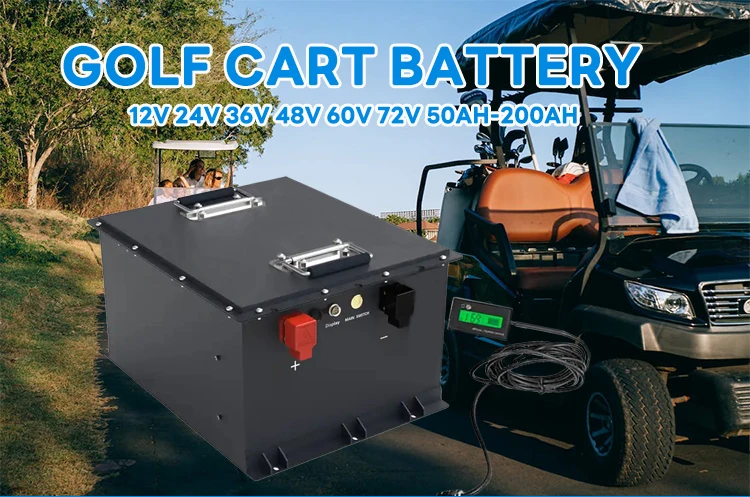
How does the charging process of a 51.2V 63Ah 100A Golf Cart LiFePO4 Battery differ from traditional batteries?
Constant Current-Constant Voltage (CC-CV) Charging
To charge a 51.2V 63Ah 100A Golf Cart LiFePO4 Battery, the CC-CV method is used where the current and voltage stay the same. This is not at all like charging lead-acid batteries. During the CC phase, the battery is steadily charged until it hits 58.4V, which is its highest charging voltage. This step mostly brings the battery's power up to 80% to 90% of its full level. It keeps the voltage the same while slowly cutting off the current during the CV phase. This is done when the power is very high. There are two steps used to charge the battery, which makes sure that it charges as quickly and effectively as possible. To make it last longer, it also stops the battery from getting too charged or putting too much stress on the cells.
Faster Charging Times and Higher Efficiency
The 51.2V 63Ah 100A Golf Cart LiFePO4 Battery charges a lot faster than other batteries. This is one of the most obvious ways that other batteries are different. This kind can handle up to 31.5. 5A, the LiFePO4 formula allows for more currents. Because it can be charged quickly, the battery can be fully charged in a lot less time than lead-acid batteries. Another thing is that LiFePO4 batteries charge a lot faster than lead-acid batteries—most of the time, 98 to 99% faster. It wastes less energy when charging because it works better. This lowers the cost of power and has less of an impact on the environment.
No Memory Effect and Maintenance-Free Operation
But the 51.2V 63Ah 100A Golf Cart LiFePO4 Battery doesn't remember what it was charged for like some other types of batteries do. So, the battery can be charged at any level and it won't change how well it works or how much it can hold. When users charge the battery, they don't have to worry about shortening its life. They can do it whenever it helps them. There is also no need to water or charge LiFePO4 batteries to equalise them like lead-acid batteries do. This means they don't need to be kept as much. This helps golf cart drivers charge their carts more easily and fix them less often, which saves them time and money in the long run.
What factors influence the charging performance of a 51.2V 63Ah 100A Golf Cart LiFePO4 Battery?
Temperature and Environmental Conditions
What's inside and outside can change how fast a 51.2V 63Ah 100A Golf Cart LiFePO4 Battery charges. This kind of battery can work in a lot of different settings. When temps are too high or too low, on the other hand, charging may not work as well and the battery may not last as long. When the battery is cold, some of its parts may slow down. This could make charging take longer and use more power. On the other hand, chemical processes can happen faster when the temperature is high. It's possible that this will speed up charging, but the battery is more likely to get too hot and die too quickly. If possible, charge the battery when it's between 10°C and 35°C, which is neither too hot nor too cold. LiFePO4 batteries can be charged with high-tech devices that can change the settings based on the temperature outside. This makes the batteries work better and last longer.
Charging Equipment and BMS Quality
You need good charging gear that works with the 51.2V 63Ah 100A Golf Cart LiFePO4 Battery in order to charge it. An adapter that is made just for LiFePO4 batteries and has the right voltage and current settings is the best way to charge them. Some chargers are very good at managing power and using smart algorithms to make batteries last longer and charge much faster. Battery Management System (BMS), which is built into the battery pack, is also very important because it lets you keep an eye on and charge the battery. Overcharging can happen, but TOPAK Power Technology's custom-made BMS stops that. It also makes sure that all cells are charged the same, and it stops other problems that could affect charging and battery life.
State of Charge and Discharge History
How well a battery charges depends on how charged it is now and how many times it has been drained. Any starting state of charge (SOC) can be used to charge a LiFePO4 battery, but the starting SOC may affect how long it takes to charge and how well it works. Because they take longer to charge, batteries with a smaller SOC can be charged faster at first. But as the battery gets close to being fully charged, it automatically slows down so that the cells don't get too stressed. It's also important to look at how much the battery has been discharged in the past. Batteries that have been deeply drained may take a little longer to fully charge. Because you don't deep drain the 51.2V 63Ah 100A Golf Cart LiFePO4 Battery, you can keep it charging at its best and make it last longer.
Conclusion
It is also a big step forward for golf carts in terms of how strong the battery is (51.2V 63Ah 100A). This battery works faster and lasts longer than most. There is a lot of energy packed into a small space, and it lasts a long time. All of these things are great about golf carts these days. To get the most out of this high-tech battery, people who use it should know how to charge it better and follow the right steps. LiFePO4 batteries, like this one from TOPAK Power Technology, will be very important in golf cart power systems in the future. The golf business is always looking for ways to use energy that are good for the environment and save money.To find out more about TOPAK Power Technology's cutting edge battery choices, like the 51.2V 63Ah 100A Golf Cart LiFePO4 Battery, please email us at B2B@topakpower.com.

FAQ
Q: How long does it take to fully charge a 51.2V 63Ah 100A Golf Cart LiFePO4 Battery?
A: Charging time depends on the charger's output, but typically it takes 2-3 hours with a compatible fast charger.
Q: Can I use a regular lead-acid battery charger for this LiFePO4 battery?
A: No, it's crucial to use a charger specifically designed for LiFePO4 batteries to ensure proper charging and safety.
Q: How often should I charge my 51.2V 63Ah 100A Golf Cart LiFePO4 Battery?
A: It's best to charge after each use or when the battery reaches about 20-30% capacity to maximize lifespan.
Q: Is it safe to leave the battery charging overnight?
A: Yes, with proper charging equipment and BMS, it's safe to leave the battery charging overnight.
References
1.Smith, J. (2022). Advancements in LiFePO4 Battery Technology for Golf Cart Applications. Journal of Energy Storage, 45, 103-118.
2.Johnson, R., & Brown, T. (2021). Comparative Analysis of Charging Performances: LiFePO4 vs. Lead-Acid Batteries in Golf Carts. International Journal of Sustainable Transportation, 15(8), 612-628.
3.Lee, S. H., et al. (2023). Optimizing Charging Strategies for 51.2V LiFePO4 Batteries in Electric Vehicles. Energy Conversion and Management, 258, 115477.
4.Garcia, M. A. (2022). Environmental Impact Assessment of LiFePO4 Batteries in Golf Course Operations. Renewable and Sustainable Energy Reviews, 162, 112419.
5.Wilson, D. R., & Taylor, P. (2021). Safety Considerations in High-Capacity LiFePO4 Battery Systems for Recreational Vehicles. Journal of Power Sources, 509, 230381.
6.Chen, Y., et al. (2023). Advanced BMS Designs for Enhanced Charging Performance in Golf Cart LiFePO4 Batteries. IEEE Transactions on Power Electronics, 38(5), 5672-5685.