The short answer is yes. A 51.2V 100Ah battery backup rack mount is designed to fit normal 19-inch computer racks that are popular in data centers and other industrial settings. These lithium battery systems are built to EIA-310 standards, which means they will work perfectly with current rack infrastructure. Modern 51.2V 100Ah battery backup rack mount units are made up of separate modules that can be put together in different ways to fit different depth needs. They also have the best power density and are easy to get to for repair work.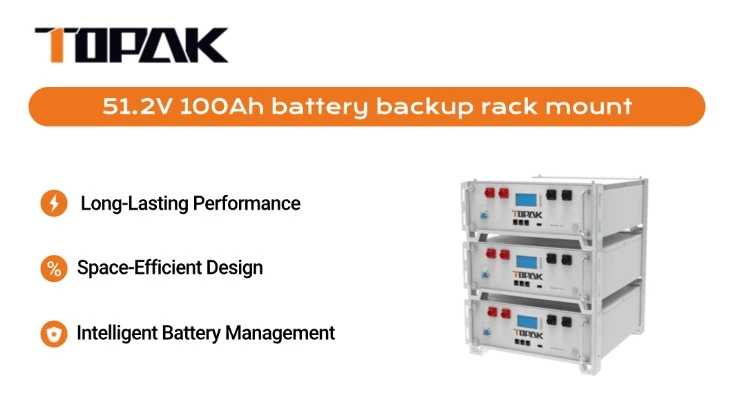
Understanding the Dimensions and Compatibility of 51.2V 100Ah Battery Backup Rack Mount
Standard rack support depends on exact size requirements that match mounting standards set by the industry. The 19-inch rack standard, which is actually called EIA-310, sets the measures for the unit height and the distance between mounting rails so that all makers and users can use the same equipment.
Physical Dimensions and Form Factors
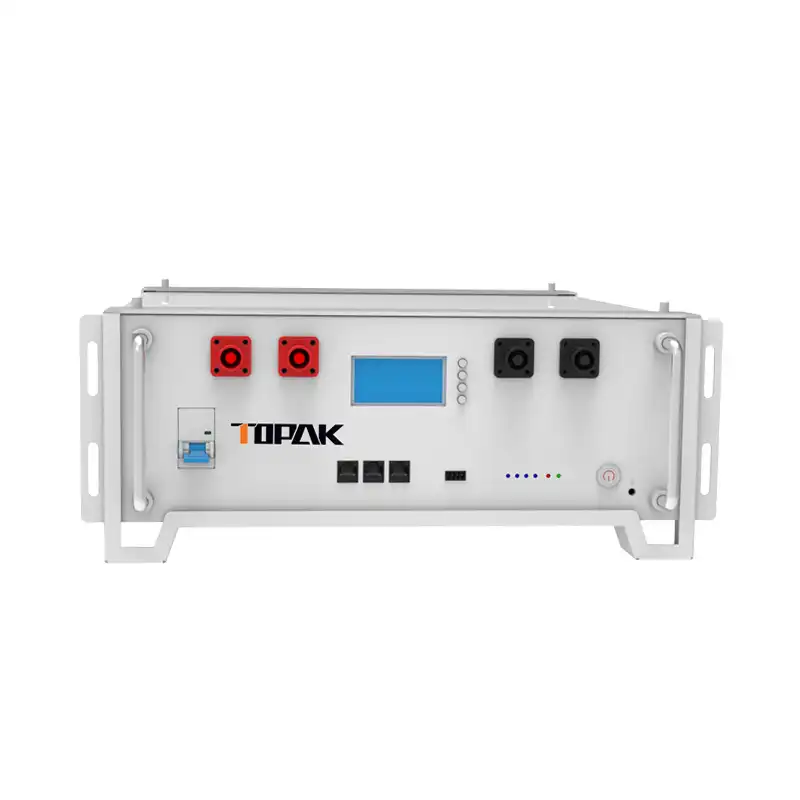
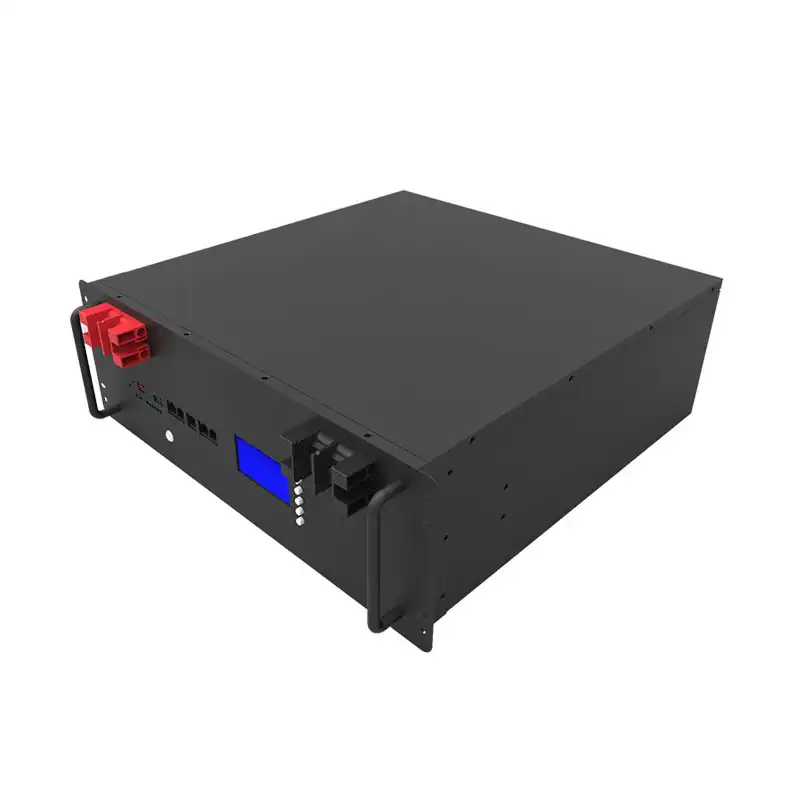
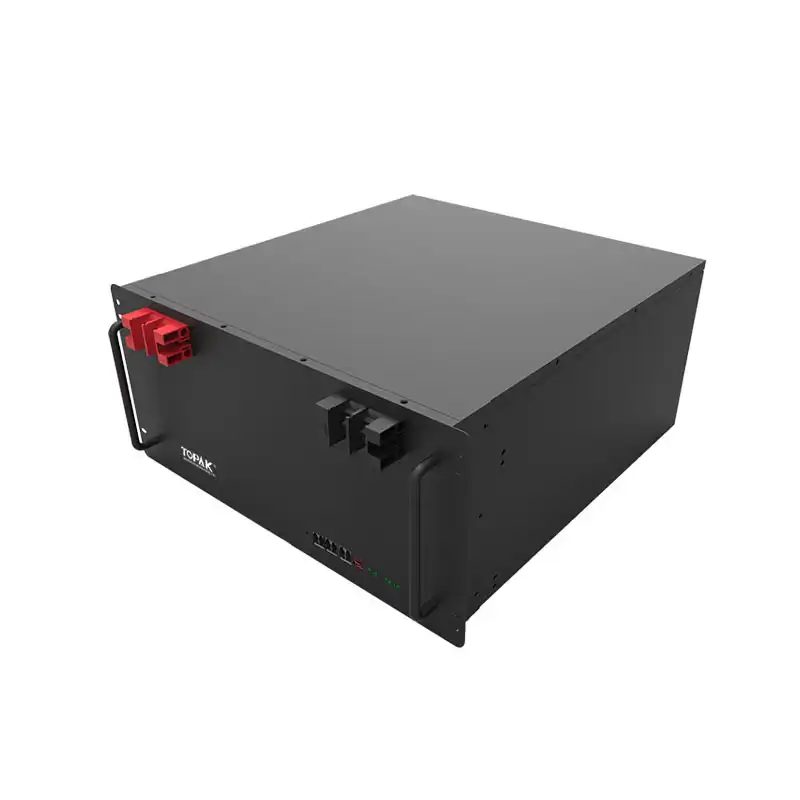
The TOPAK TP-48100R, which is 430x442x177mm and weighs about 48 kg, is a great example of how a rack should be designed. Standard 4U rack space calls for these measurements, which make it possible for multiple units to stack efficiently inside a single box. The small size improves power output while still leaving enough space for wire handling and managing heat.
Rack Standard Compliance
Compatibility goes beyond just basic sizes and includes things like attaching tools and the strength of the structure. Standard mounting brackets work with both square-hole and round-hole rack setups, and changeable depth rails make sure the right fit in racks with depths from 600mm to 1000mm. The sturdy design allows for even weight distribution, which keeps the rack from warping when the batteries are fully charged.
Technical Specifications Impacting Rack Compatibility and Performance
The chemical makeup and electrical properties of batteries have a direct effect on how well they work and how safe they are to use. Lithium iron phosphate (LiFePO4) technology is better at withstanding high temperatures and being stronger than standard lead-acid technologies. This makes it perfect for settings with a lot of racks.
Battery Chemistry and Safety Features
Throughout its 6000-cycle life, the 16S1P design maintains balanced cell performance and a steady 51.2V 100Ah battery backup rack mount output. Advanced Battery Management Systems (BMS) keep an eye on the voltages, temperatures, and current flows of each cell. This way, they can protect against overcharging, overdischarging, and thermal runaway in real time. These safety features meet the requirements of IEC62619 and UN38.3, which means they can work reliably in sensitive rack settings.
Electrical Integration and Communication
Standardized communication standards make it easy for modern Rack-mounted Battery systems to work with current UPS and tracking systems. The CAN bus and RS485 connections let you report the battery state in real time, and the extra Bluetooth and 4G units let you keep an eye on things from afar. The 100A constant discharge and charge rates can handle high-power tasks without affecting the cooling needs of the rack.
Installation and Maintenance: Ensuring Proper Fit and Longevity
Professional installation methods increase the effectiveness of the system and make sure that safety rules are followed. When batteries are mounted correctly, their weight is spread out evenly across the rack structures. This prevents mechanical stress and ensures stable operation over long periods of time.
Installation Best Practices
The first step in installation is to check the rack's ability to make sure it can hold the weight of several battery units. Because each unit weighs 48 kg, rack loading limits need to be carefully thought through, especially when placing the maximum 15 units in parallel. Mounting gear should be tightened to the manufacturer's specs, which for M6 bolts is usually 10-15 Nm, and there should be enough space between them to allow heat to flow.
Maintenance Protocols and Safety
Schedules for routine upkeep should be in line with the needs of the program and the surroundings. Every six months, visual checks make sure that the fixing is stable, that the connections are clean, and that there are enough airflow gaps. The modern BMS gives troubleshooting information that lets maintenance plans be made ahead of time. This cuts down on surprise breakdowns and makes the battery last longer than the stated 6,000 cycles at 80% depth of discharge.
Comparing 51.2V 100Ah Battery Backup Rack Mount with Other Battery Systems
Choosing the right voltage has a big effect on how well the system works and how many racks are used. When it comes to power output and mounting options, the 51.2V setup is clearly better than standard 48V systems and lower voltage options.
Voltage and Capacity Advantages
The standard voltage of 51.2V is more efficient than 48V systems because it lowers the amount of power needed and the amount of heat lost through cables. Modern telecommunications and data center equipment work with this voltage level, so there is no need for extra voltage adjustment steps. The 100Ah capacity stores 5.12kWh of energy in a single 4U rack space, which is more energy dense than lead-acid options, which usually need 6–8U for the same amount of room.
Scalability and Modularity Benefits
Through parallel links, the modular design allows for flexible capacity scaling, allowing setups ranging from a single unit to 15-unit groups with a total capacity of 1.536MWh using the 51.2V 100Ah battery backup rack mount. This scalability lets you meet growing power needs without having to update the whole system. This is a great way to protect your investment in sites that are growing. Parallel action keeps the voltage stable at 51.2V while growing the available power and backup time in a linear way.
Procurement and Sourcing: Finding the Right 51.2V 100Ah Battery Backup Rack Mount
When choosing a supplier, you need to look at their production skills, compliance with certifications, and long-term assistance promises. Product quality and supply are more likely to be guaranteed by well-known makers with a track record of success.
Manufacturer Evaluation Criteria
TOPAK New Energy Technology, which has been around since 2007, has the production skills that are needed for battery systems to work well. The company's 25,000-square-foot factory in Shenzhen has large-scale automatic production lines that make sure quality is always high and deliveries are quick. When you create your own BMS, you have full control over safety features and speed improvement, so you don't have to rely on outside sources.
Global Distribution and Support
International marketing networks that reach more than 15 countries make sure that local help is available and that shipping costs are low for large sales. In many countries, clearing customs and following the rules is easier with full certifications like IEC62619, UN38.3, and MSDS paperwork. To get the most out of a system's performance and life, technical support should be able to customize the BMS, help with system integration, and give advice on ongoing upkeep.
Conclusion
For current data centers and factories that need to back up their power, the 51.2V 100Ah battery backup rack mount is the best option. Advanced lithium iron phosphate technology, standard rack connectivity, and smart management systems work together to provide reliable performance in places with limited room. Installing and maintaining systems correctly will make them last as long as possible, and scalable setups can be used to meet growing power needs. When you choose a well-known maker with proven knowledge and global support, you can be sure that the system will work well and your investment will be safe for a long time.
FAQ
Q1: Can a 51.2V 100Ah battery backup rack mount fit into all standard 19-inch racks?
A: Most 51.2V 100Ah rack mounts are designed for standard 19-inch EIA-310 racks, but verifying depth clearance and mounting bracket compatibility remains essential due to variations in rack manufacturers and specific cabinet configurations.
Q2: What safety features should I look for in rack-mounted battery backups?
A: Essential safety features include thermal management systems, BMS with cell-level monitoring, compliance certifications such as IEC62619 and UN38.3, integrated protection circuits for overcurrent and overvoltage conditions, and fire-resistant housing materials.
Q3: How often should maintenance be performed on a rack-mounted battery backup?
A: Regular visual inspections every 6 months are recommended, with comprehensive system checks annually. The advanced BMS provides continuous monitoring, enabling condition-based maintenance strategies that optimize service intervals based on actual operating conditions.
Partner with TOPAK for Reliable 51.2V 100Ah Battery Solutions
Ready to enhance your facility's power backup capabilities with industry-leading 51.2V 100Ah battery backup rack mount systems? TOPAK's proven manufacturing expertise and comprehensive global support network ensure seamless integration with your existing infrastructure. Our TP-48100R model delivers exceptional performance with 6000-cycle longevity and advanced BMS technology. As a trusted lithium battery manufacturer since 2007, we provide complete customization capabilities and technical support tailored to your specific requirements. Contact our engineering team today at B2B@topakpower.com to discuss your project specifications and receive detailed quotations for bulk procurement opportunities.
References
1. Electronic Industries Alliance. "EIA-310-D: Cabinets, Racks, Panels, and Associated Equipment." Telecommunications Industry Association Standards, 2005.
2. International Electrotechnical Commission. "IEC 62619: Secondary cells and batteries containing alkaline or other non-acid electrolytes - Safety requirements for secondary lithium cells and batteries for use in industrial applications." IEC Publications, 2017.
3. Institute of Electrical and Electronics Engineers. "IEEE 1188: Recommended Practice for Maintenance, Testing, and Replacement of Valve-Regulated Lead-Acid (VRLA) Batteries for Stationary Applications." IEEE Standards Association, 2018.
4. Telecommunications Industry Association. "TIA-942-B: Telecommunications Infrastructure Standard for Data Centers." TIA Engineering Standards, 2017.
5. Battery University Research Group. "Lithium Iron Phosphate Battery Technology: Performance Characteristics in Industrial Applications." Battery Technology Journal, Volume 45, 2022.
6. Data Center Infrastructure Management Institute. "Rack Mount Battery Systems: Design Standards and Installation Best Practices." DCIM Technical Publication Series, 2023.