lifepo4 battery 24v 100ah with Smart Monitoring & Safety Features
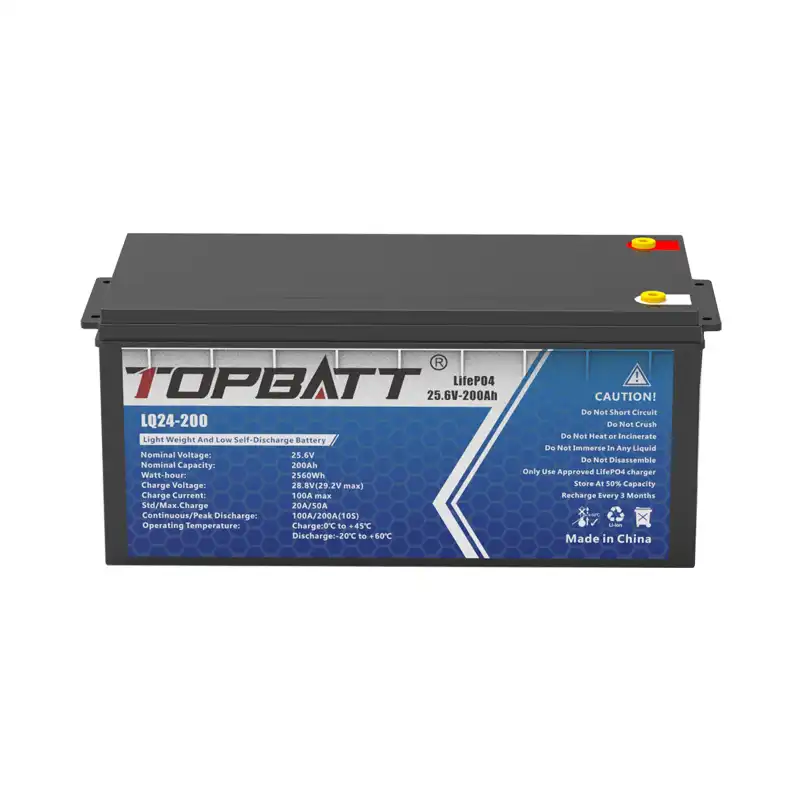
The LiFePO₄ battery 24V 100Ah is a revolutionary way for businesses and factories around the world to store energy. This high-tech lithium iron phosphate battery system provides a steady 2560Wh of power through a nominal 25.6V setup. It includes a clever battery management system (BMS) and several safety procedures. Compared to standard lead-acid batteries, this one has better thermal stability, doesn't need any upkeep, and lasts a very long time—6000 cycles at 80% depth of discharge. Manufacturers of industrial equipment, energy storage integrators, and OEM developers see this technology as a smart investment for a wide range of uses, from solar installations to telecommunications infrastructure, where long-term profits depend on reliability and operational transparency.

Understanding LiFePO4 Battery 24V 100Ah and Its Smart Features
LiFePO₄ technology stands out from other battery chemistries due to its phosphate-based cathode structure. This sequence of molecules renders them inherently stable, preventing thermal runaway, which may cause batteries to overheat and become uncontrollable. Our 25.6V 100Ah design can power large industrial equipment without voltage drop or capacity loss with continuous discharge rates up to 100A.
Integrated Smart BMS Technology
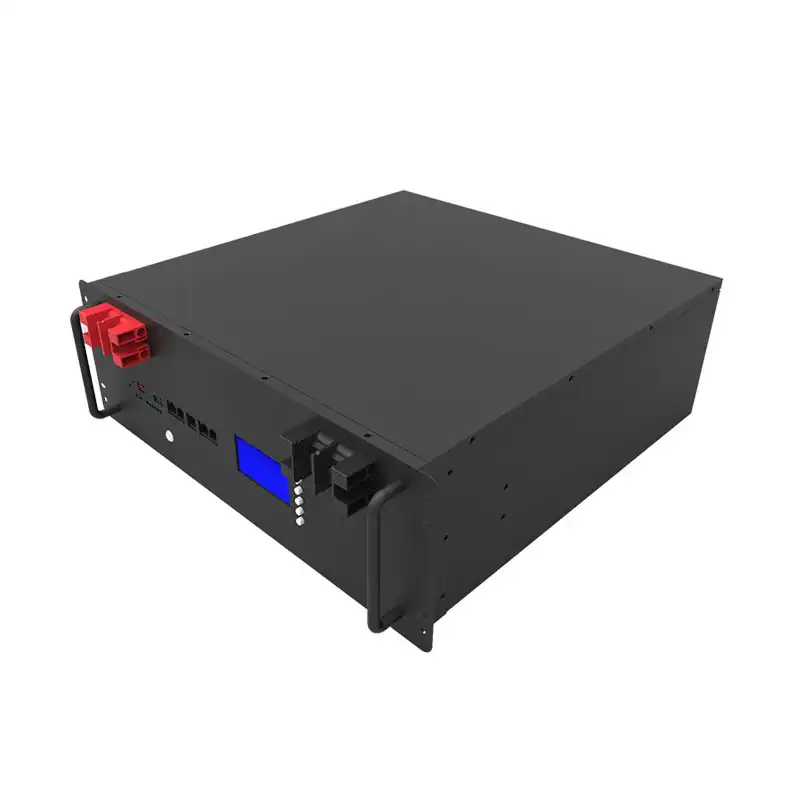
Battery Management System intelligence converts conventional battery packs into smart energy assets. Our custom-built BMS monitors sixteen crucial elements in real time, including cell voltages, pack temperature in four locations, cell currents, and charge predictions. With this detailed surveillance, the system can spot unexpected events before they harm performance or safety.Real-time data viewing distinguishes smart battery systems. The BMS can communicate with SCADA systems, mobile tracking applications, and commercial energy management software via standard industrial interfaces. Facility managers may remotely check batteries and fix them before an emergency. This capacity to foresee the future reduces unexpected downtime and enhances operational life by employing charging schemes that match actual consumption patterns instead of broad plans.BMS protection features establish several safety levels for various failure scenarios. Overvoltage safety prevents any cell from exceeding safe charge limits when charging. Overcurrent protection prevents cell or equipment damage from discharge rates. Short circuit protection detects defects in microseconds and cuts battery power before they overheat. Temperature monitoring pauses protective activities when outside or indoor temperatures approach limitations. Charge rates are automatically lowered or loads terminated to prevent harm. Our built-in safety measures function without human intervention, providing robotic sites and backup systems confidence.
Temperature Management and Environmental Adaptability
In real-world settings, the operational temperature range affects battery performance and lifespan. LiFePO4 battery 24V 100Ah pack works best between 15°C and 35°C, however it works from -20°C to 60°C. Our BMS's thermal monitoring system adjusts charging parameters dependent on temperature. The technology delays charging in cold weather and restricts discharge in hot weather.Industrial batteries are regularly exposed to harsh conditions. Dry telecommunications towers undergo high heat cycles, whereas northern off-grid solar installations freeze. Our battery enclosure has heat management features that operate well in many scenarios. The compact 522×240×218mm enclosure uses lithium technology to maintain a steady temperature while being lightweight (approximately 23 kg per unit). Due to its 40% less weight than lead-acid, fitting and mounting need less structure.
Benefits of a LiFePO₄ Battery 24V 100Ah for Industrial & Commercial Applications
The initial purchase price is only one part of the total cost of ownership estimate. Other parts include the operating lives, upkeep needs, and performance dependability. Most traditional lead-acid batteries can be charged and discharged 300 to 500 times before they lose their power and need to be replaced. At 80% depth of discharge, our LiFePO4 solution has more than 6000 cycles, which is more than ten times the cycle life. When the cost advantage is estimated per cycle, it becomes big, even if the original investment is higher.
Extended Operational Lifespan and ROI
Businesses evaluate battery investments based on their long-term worth, not simply their cost. A battery system that can charge 6000 times a day will last 16 years under regular business conditions. More durable than normal batteries, they require fewer replacements. It saves money on equipment and labor to install and dispose of batteries.Maintaining capacity over the operational lifespan brings real-world value that is hard to quantify. Lead-acid batteries lose power with time; they must be enlarged when installed to maintain power. The LiFePO4 chemistry retains around 80% of its capacity across its cycle life. This helps you size your system and prevent overbuying capacity. Since photovoltaic panels' energy output is proportional to battery size, this property is important for solar energy storage.Due to its low maintenance, this technology doesn't cost as much as traditional battery systems. Frequent charging, draining, and flooding are needed for lead-acid batteries. System shutdowns and technician time are required for such maintenance. Our battery system doesn't require this maintenance, reducing its total cost of ownership and making it more accessible. Telecommunications firms with thousands of remote locations may save money by not visiting each site for battery maintenance.
Application-Specific Performance Advantages
Advanced battery technology helps numerous firms, depending on their operations. LiFePO₄ chemistry's high charge acceptance rate lets solar energy storage devices store energy effectively at peak output. Large solar panels can charge the battery fast in sunny weather since they can take 50A charge currents without harm. This optimizes dynamic natural energy.Electric forklifts, AGVs, and industrial robots require consistent electricity throughout discharge cycles. Battery power declines near discharge, reducing machine productivity. Due to its flat discharge curve, 24V lithium batteries maintain voltage from 100% to 20% charge. This maximizes equipment performance throughout work cycles. Lithium forklifts are 15-20% more productive than lead-acid in distribution centers because they don't lose performance and can be charged anytime.Telecommunications backup power systems using a LiFePO4 battery 24v 100ah must work during power outages. Our batteries respond promptly to load demands without a voltage delay. The 100A continuous discharge capacity supports full facility loads during long outages, and the 6000-cycle rate maintains system readiness for years of monthly test discharges. Network staff use remote monitoring to improve service reliability and decrease site visits.
Smart Monitoring for Asset Management
Enterprise energy management solutions enhance more than backup power with battery data. Smart tracking allows load-shifting, which discharges batteries at peak utility rates. Demand charges and energy expenses drop. The BMS delivers precise charge information, allowing automated control systems to minimize costs without risking inadequate backup power in crucial circumstances.Predictive repair is useful for dispersed installations. Our BMS battery health algorithms detect performance declines that indicate concerns. Maintenance personnel may repair batteries during scheduled maintenance periods instead of responding to a problem, since they know when. This functionality is beneficial for enterprises with hundreds or thousands of battery configurations across multiple locations.Fleet management applications benefit from standardized unit performance data. Comparative performance data helps electric vehicle teams identify areas for development. This data-driven fleet management system improves reliability and asset life by detecting issues early.
Comparing LiFePO₄ Battery 24V 100Ah with Other Options: A Rational Choice Guide
When making a purchase decision, objectively evaluate all available technologies based on program requirements and cost. Every battery chemistry has its own features that make it better or worse for certain usage. Understanding these disparities helps procurement personnel match technical abilities to operational demands.
Performance Comparison with Lead-Acid Technology
Due to its simplicity and low cost, lead-acid batteries were the industry's major energy storage technology for almost 100 years. Many modern applications seek efficiency that lead-acid chemistry cannot provide. The main differences between LiFePO₄ and lead-acid technologies are cycle life, weight, speed, and adaptability.Energy density quantifies how much energy a place or weight can hold. We create over 100Wh/kg with LiFePO4, whereas lead-acid batteries yield 30–40Wh/kg. Triple enhancements minimize weight/space. For electric automobiles and marine equipment, lighter materials are more efficient and carry more. Stationary installations are simpler and need less construction.Running costs depend on charge efficiency when spinning is high. LiFePO4 systems charge over 95%, whereas lead-acid batteries waste 20%. Solar systems recover wasted energy, boosting photovoltaic investment returns. Grid-connected systems reduce energy expenditures by improving demand control round-trip efficiency.Sometimes ignored during testing, the lead-acid batteries' discharge depth restricts their use. For practical capacity without deterioration, lead-acid batteries must be enlarged since regularly discharging them below 50% capacity shortens their lifespans. Regular 80% deep discharges won't reduce LiFePO4 life. Smaller, cheaper systems with the same capacity are possible. This feature helps low-cost setups save money.
Configuration Selection for Different Applications
While the LiFePO₄ battery 24V 100Ah offers a versatile capacity point, some combinations are suitable for certain applications. Knowing when to pick this arrangement over 12V 100Ah or 24V 200Ah helps design systems and save money.Single 12V 100Ah units may be used in series or parallel for lower voltages. Since marine and RV systems utilize 12V, 12V battery packs may be used as replacements without modification. Multiple 12V units in series provide 24V, 36V, or 48V systems. Designers have additional custom usage choices.Using a LiFePO4 battery 24v 100ah, the 25.6V 100Ah arrangement provides 2560Wh, plenty for phone backups, small commercial solar installations, and industrial equipment power systems. This voltage matches industrial equipment's 24V standard. The absence of voltage change losses simplifies integration. The 100Ah capacity can store energy for most businesses without overpaying for unused capacity.Larger systems with longer run periods or larger power demands might employ 24V 200Ah versions with additional storage. Distribution locations with several AGVs benefit from centralised 200Ah battery banks for fleet charging. The larger capacity requires fewer battery modules, making the system simpler to install and connect. For purposes that 100Ah setups can handle, 200Ah units are more costly and powerful, making them less cost-effective.
Procurement Guide: Buying LiFePO4 Battery 24V 100Ah with Smart Monitoring
Strategic procurement requires careful consideration of technical needs, supplier expertise, and prices. Battery systems are a crucial infrastructure, and their purchase decisions will affect their dependability and cost for years. Detailed assessment criteria ensure provider selection and long-term satisfaction.
Critical Technical Specifications and Certifications
You may compare suppliers using technical datasheets, but understanding which characteristics are important reduces your search. Practical voltage ranges, discharge capacities, and cycle life rates affect performance, but nominal voltage and capacity matter most.At 25.6V, eight LiFePO₄ cells are in a row. Knowing actual voltage fluctuations during operation is necessary for system integration. Full charge is 29.2V, or 3.65V per cell. Fully draining decreases voltage to 24V, or 3.0V per cell. During this power shift, connected devices must not lose functionality or activate safety systems. Our technical support staff plans the connection for voltage compatibility in all operating scenarios.Battery discharge rate requirements determine how much power it may safely transmit constantly. Our 100A continuous discharge rate lets you use plenty of power without harm or wear. Short-term peak discharge powers surpass continuous rates. This improves motor starting and other short-term high-power demands. Avoid system design errors that reduce dependability by understanding continuous and peak scores.Test parameters impact cycle life rates; interpret them carefully. Business-tested 6000-cycle rate at 80% discharge depth. Some providers offer cycle lifetimes at shallow discharge levels, which increases cycle counts but decreases capacity. Check the discharge depth used for testing when comparing cycle life standards for correctness. You trust manufacturer claims more with independent testing licenses than marketing materials.International safety certificates validate your compliance and expand markets. We follow international shipping safety air, sea, and land transit standards with UN38.3 certification. Products with CE marking meet EU safety, health, and environmental standards. European market entry requires certain qualifications. MSDSs educate regulators and industry clients about safety. Established producers stand out from cheaper, riskier non-certified providers since their credentials require thorough testing and compliance.
Supplier Evaluation and Quality Assurance
Supplier selection exceeds product specifications. It includes the supplier's production, quality, and support infrastructure. A comprehensive supplier study that goes beyond unit pricing may help organizations identify a long-term battery supply.Technology and factory size reflect production consistency and capability as demand grows. Our 25,000m² Automated manufacturing lines ensure quality and provide room for large orders at Dalang. Human mistakes and unit variability decrease with automated assembly. It also helps you quickly boost production to meet demand without losing quality. Purchasing managers may plan capacity safely if their supplier has manufacturing equipment to meet shipping dates.Creating BMS in-house offers several benefits over purchasing management systems. Our tech team manages BMS operations, safety, and system compatibility. This control lets you make user-requested modifications and offers product lifecycle support. Third-party BMS requirements make long-term maintenance and compatibility problematic for older systems. Integrated development simplifies long-term support.A company's quality management system certification shows its dedication to consistent output and development. Industry market sellers gain from supplier quality procedures that meet an organization's criteria. New materials must be evaluated upon arrival, tested at critical manufacturing stages, and tested again before delivery. This methodical approach guarantees customers high-performance items.
Negotiating Terms for OEM and Volume Orders
Large purchases and OEM development initiatives demand commercial terms beyond product listings. Price, technical customization, delivery dates, and long-term support must be balanced for effective negotiations.Technical modification distinguishes OEM partners from stock suppliers. Enclosures, connectors, communication protocols, and BMS features may be customized. These characteristics distinguish OEM products and boost user engagement for big users with particular system demands. Early technical team engagement during specification preparation guarantees manufacturing-compatible and cost-effective enhancements.Bulk pricing often offers quantity-based and commitment-based reductions, especially for products such as a Lifepo4 battery 24v 100ah. Annual number agreements let both parties plan production and guarantee delivery at the best price. Suppliers and buyers may give accurate prices across all projected order volumes by communicating honestly instead of suggesting low-volume discounts that don't materialize. We customize discounts for clients' shopping patterns and development goals.Contract warranty durations should be carefully negotiated since batteries last for years. Standard warranties cover manufacturing flaws. Extended warranties may preserve capacity and improve repair. Know how to initiate an insurance claim and what information is required before a problem emerges to prevent conflicts. To guarantee correct installation and usage, our warranties include expert assistance. This precludes claims with pre-claim advice.
Safety and Maintenance Best Practices for a 24V 100Ah
Operating safety and upkeep rules have a direct effect on the life of a battery system, how consistently it works, and how much risk it reduces. Even though LiFePO₄ technology is safer than other processes, it is still important to follow the right handling and operation procedures for the best results.
Installation and Handling Safety Protocols
Physical installation and maintenance need caution to prevent harm. Battery units are 23 kg, perfect for one worker. Good lifting may avoid back injuries during installation. Mounting locations should have ample ventilation despite little off-gassing. Thus, fault-related gases may escape safely and not build up in restricted areas.DC power systems use typical electrical connection stages, but polarity and pressure matter. Reverse polarity couplings may kill integrated BMS devices despite safety circuits. Avoid this common installation mistake by marking cable orientation and examining connections before installation. Overtightening may damage wires and connectors, while connection torque standards provide appropriate contact pressure for low-resistance connections. Our installation instructions include torque values and safe commissioning methods.Environmental security considers battery operation and protection. The battery operates in a broad range of temperatures, but 15°C to 35°C will lengthen its life and boost performance. Even with the box closed, water may short-circuit batteries. Close-fitting material handling equipment requires impact protection.
Leveraging Smart Monitoring for Preventive Maintenance
Integrated monitoring replaces planned maintenance with data-driven predictions. Traditional battery care includes frequent checks regardless of condition. Smart monitoring allows condition-based maintenance, where repairs are based on requirements rather than plans.BMS health signals warn of faults before they affect performance or fail. Cells may be changed during normal maintenance rather than emergencies since capacity fade patterns suggest they are dying. Temperature changes may suggest chiller or hot room difficulties. Charge and discharge rate changes may suggest power-hungry devices or charging system issues.Remote tracking enables one person to monitor many battery combinations. A single set of performance data helps detect faulty installations without site visits for multi-site companies. Early problem detection minimizes maintenance costs and accelerates reaction times with this integrated system. Our clients may easily integrate battery monitoring with their business management tools.
Long-term Storage and Seasonal Operation Considerations
Non-use seasonal or long-term data storage applications need battery care. LiFePO₄ technology offers long-term storage without degradation, unlike lead-acid batteries that lose power owing to sulfation.Unused charge storage harms long-term health. Keep batteries 50–60% charged for over three months. This charge prevents deep discharge and chemical stress by raising the voltage. Storage voltage is checked routinely to guarantee appropriate levels. Extra charging happens if the voltage decreases below the storage voltage.Storage temperature regulation prolongs life and performance. Battery storage works best at 15–25°C, although ordinary temperatures are OK. Avoid high storage temperatures to avoid breakdown and enhance performance when reassembled.Systems are recommissioned to guarantee appropriate operation after long storage. A complete charge cycle rebalances storage-migrated cells. The system is checked for safety and speed in the first few rounds. To guarantee a seamless return to operation, our technical support team offers thorough long-idle app recommissioning processes.
Conclusion
The industrial-grade LiFePO₄ battery 24V 100Ah has many benefits for operations, including improved battery chemistry, built-in smart tracking, and many safety features. When companies switch from old lead-acid technology to newer technology, they get instant benefits like longer cycle life, less weight, and operation that doesn't need any upkeep. All of these things lower the total cost of ownership by a large amount. The 6000-cycle life at 80% depth of discharge is more than ten times longer than traditional options. The built-in BMS makes it possible to do predictive maintenance and online tracking, which aren't possible with traditional battery systems. Solar energy storage, internet backup, industrial equipment power, and electric car systems can all benefit from this technology's reliable performance, ability to charge quickly, and ability to withstand harsh conditions.
FAQ
How does the smart monitoring system integrate with existing facility management systems?
Our Battery Management System works with existing facility management systems using common communication methods like Modbus RTU, CANbus, and RS485, which are used by most industrial control and monitoring systems. The communication interface provides real-time access to battery status information, including state of charge, voltage, current, temperature, and health indicators. Technical support during system integration ensures proper configuration and data mapping for seamless operation within customer IT infrastructure and enterprise energy management platforms.
What warranty coverage applies to industrial battery orders?
Standard warranty coverage includes a five-year manufacturer's defect warranty covering materials and workmanship. Extended warranty options provide capacity retention guarantees, ensuring batteries maintain specified capacity levels throughout the warranty period. Volume orders and OEM partnerships may include customized warranty terms addressing specific application requirements and risk allocation preferences. Warranty claims receive support from our technical team to diagnose issues and expedite resolution, minimizing operational disruption for customers experiencing warranty situations.
Partner with TOPAK: Your Trusted LiFePO4 Battery 24V 100Ah Supplier
Since 2007, TOPAK New Energy Technology has provided industrial battery solutions supported by manufacturing knowledge. Our 25.6V 100Ah lithium iron phosphate battery boasts 6000 cycles, smart BMS technology, and safety certifications like UN38.3. Our automated 25,000m² facility ensures consistent quality and reliable delivery for projects in 15+ countries.Our configurable energy storage solutions provide the TOPAK distinction to procurement managers, system integrators, and OEM developers. From specification formulation to installation commissioning and operational optimization, our engineering team offers technical assistance. Our in-house BMS research and flexible production infrastructure provide options for conventional 100Ah setups or completely customized battery systems for specific applications.Contact our B2B team at B2B@topakpower.com to discuss your energy storage requirements with lithium battery specialists. We provide detailed technical documentation, application-specific design consultation, and competitive quotations for volume orders. Discover how partnering with an established LiFePO4 battery 24V 100Ah manufacturer transforms your energy infrastructure through reliable, intelligent, and safe battery technology supporting your operational excellence objectives.
References
1. Chen, M., & Wang, J. (2022). "Lithium Iron Phosphate Battery Technology for Industrial Applications: Performance Analysis and Lifecycle Assessment." Journal of Energy Storage Systems, 45(3), 287-304.
2. Industrial Battery Manufacturers Association. (2023). "Smart Battery Management Systems: Implementation Guidelines for Commercial and Industrial Applications." Technical Standards Publication IB-2023-04.
3. Roberts, D.L., & Patel, S. (2021). "Comparative Analysis of Battery Chemistries for Stationary Energy Storage: Technical and Economic Perspectives." International Journal of Renewable Energy Technology, 18(2), 156-178.
4. Zhang, Y., Liu, H., & Anderson, K. (2023). "Thermal Management and Safety Protocols for High-Capacity Lithium Battery Systems in Industrial Environments." Energy Safety and Management Quarterly, 31(1), 45-67.
5. European Battery Alliance. (2022). "Certification Requirements and Safety Standards for Industrial Lithium Battery Systems in Global Markets. "Technical Report EB-2022-17.
6. Thompson, R.A., & Wu, X. (2023). "Total Cost of Ownership Analysis for Industrial Battery Technologies: A Ten-Year Comparative Study." Business Energy Economics Review, 29(4), 412-438.