The Future of Low Speed Vehicle Batteries in Autonomous Vehicles
The automotive industry is undergoing a revolutionary transformation with the advent of autonomous vehicles. As we look towards the future, one crucial aspect that demands attention is the development of low speed vehicle batteries for these self-driving marvels. The integration of advanced battery technology in autonomous vehicles is not just a matter of powering the vehicle; it's about enabling a new era of transportation. Low speed vehicle batteries are set to play a pivotal role in shaping the future of urban mobility, last-mile delivery solutions, and even specialized industrial applications. These batteries must not only provide sufficient energy for propulsion but also power the complex array of sensors, computers, and communication systems that make autonomous driving possible. As we delve into this topic, we'll explore the current state of battery technology, the challenges that lie ahead, and the innovative solutions that are paving the way for a sustainable and efficient autonomous future.

What are the key advancements in low speed vehicle batteries for autonomous vehicles?
Improved Energy Density
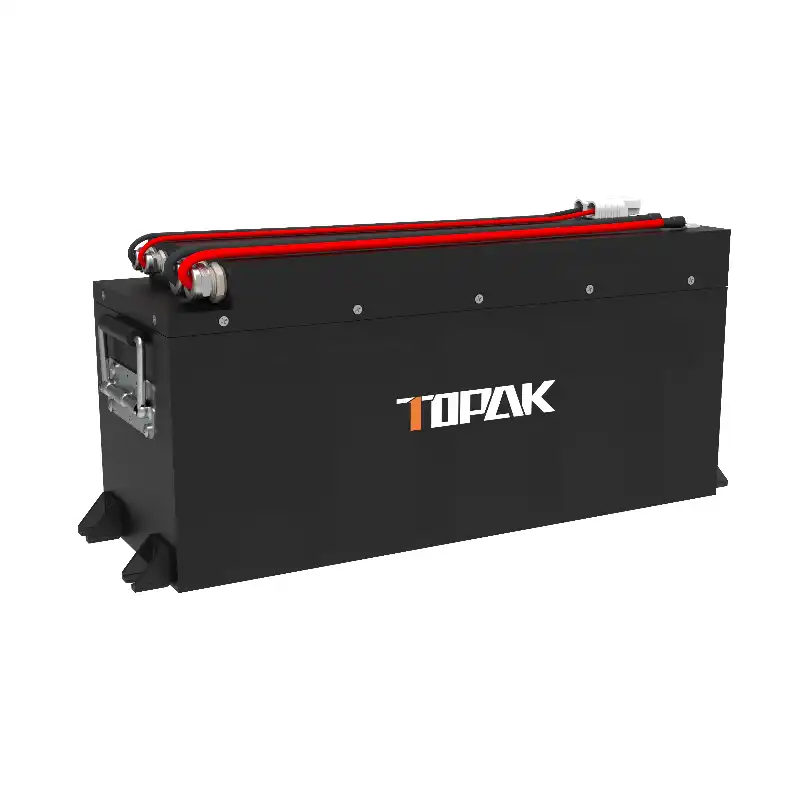
The development of low speed vehicle batteries for autonomous vehicles has seen significant advancements in energy density. Manufacturers like TOPAK New Energy Technology Co., Ltd. in the forefront of this breakthrough with their E-Vehicle Lithium Battery TP-A895, which has an extraordinary energy density. With a rated energy of 3344Wh and a nominal capacity of 55Ah, these batteries are pushing the boundaries of tiny designs like never before. Autonomous vehicles may now go greater distances between charges because to advancements in energy density, a key component of practical and economical self-driving systems. Advances in the size and performance of batteries for low-speed vehicles are expanding the potential uses of autonomous vehicles in many industries, including industrial and public transportation.
Enhanced Safety Features
Safety is paramount when it comes to low speed vehicle batteries, especially in the context of autonomous vehicles. The latest advancements in battery technology have led to the integration of sophisticated Battery Management Systems (BMS) like those developed in-house by TOPAK. To avoid problems like overcharging or overheating and to ensure optimal operation, these technologies provide real-time monitoring and management of battery performance. For example, the TP-A895 battery is perfect for use in autonomous vehicles since it has sophisticated safety mechanisms that shield it from a variety of dangers. One major issue with electric car safety—thermal runaway—has been mitigated because to the usage of lithium-ion technology in low speed vehicle batteries. The public's confidence in autonomous vehicle technology and its broad adoption depend on these safety feature upgrades.
Faster Charging Capabilities
One of the most significant advancements in low speed vehicle batteries for autonomous vehicles is the development of faster charging capabilities. The TP-A895 battery exemplifies this progress with its maximum charging current of 40A, allowing for rapid replenishment of energy stores. Autonomous cars, which may need to run constantly or with little downtime, will find this very crucial.Fast charging technology in low speed vehicle batteries enables quick turnaround times for autonomous fleets, enhancing their operational efficiency. Along with these battery upgrades, there have been developments in charging infrastructure, including high-power charging stations and wireless charging pads. An ecosystem is emerging that allows autonomous cars to function smoothly, with less downtime and more output, thanks to fast-charging batteries and other innovative charging methods.
How are low speed vehicle batteries addressing the unique needs of autonomous vehicles?
Power Management for Sensor Arrays
Autonomous vehicles rely heavily on an array of sensors to perceive their environment and make decisions. Low speed vehicle batteries are evolving to meet the power demands of these sophisticated sensor systems. The TP-A895 battery, with its 60.8V nominal voltage and 40A continuous discharge current, is well-suited to power not just the vehicle's propulsion but also its complex sensor suite. All of these sensors—LiDAR, radar, cameras, and ultrasonics—need a steady supply of electricity. Modern low-speed car batteries are engineered with voltage regulators and various output channels to ensure that these delicate electronic parts receive clean, steady power. This makes sure that even under difficult driving situations, autonomous cars can keep their correct environmental awareness and decision-making abilities.
Longevity and Reliability
Autonomous cars rely heavily on the durability and dependability of low speed vehicle batteries. The TP-A895 battery has the endurance needed for autonomous applications, with a remarkable cycle life of at least 1500 cycles at 80% depth of drain. Autonomous vehicle fleets benefit from reduced maintenance costs and increased overall dependability due to the reduced requirement for frequent battery changes caused by this prolonged lifespan. Improved performance throughout a wide range of temperatures has been achieved by innovations in battery chemistry and cell design. This allows for consistent functioning in diverse climates. Advanced monitoring systems further increase these batteries' dependability by identifying any problems in advance, enabling proactive maintenance and reducing unanticipated downtimes.
Compact and Lightweight Design
Compactness and lightweight development are getting to be more and more vital in the plan of moo speed vehicle batteries for independent cars. The TP-A895 battery is a prime illustration of this development towards arrangements that are both space-efficient and weight-optimized; it measures 390 × 230 × 245 mm and weighs around 28.5 kg. Due to the require to coordinated a few sensors and handling frameworks, space is at a premium in independent automobiles, making this compact plan crucial. By improving its extend and making it simpler to oversee, the vehicle's add up to productivity is upgraded by the lightweight batteries. Much obliged to secluded plan, producers presently have extra alternatives for introducing present day low-speed car batteries, which moves forward weight dispersion and space utilization in independent vehicle format optimization. This versatility is crucial for making independent vehicles that can do a extend of occupations, from carrying individuals to completing certain mechanical forms.
What are the future prospects for low speed vehicle batteries in the autonomous vehicle market?
Integration with AI and Machine Learning
Independent vehicles' low-speed vehicle batteries' long-term reasonability will be enormously influenced by advancements in AI and ML. As these innovations create, it is anticipated that batteries like the TP-A895 will ended up more brilliant. By taking into account components like activity, course arranging, and indeed climate figures, these batteries can predict when they will require to revive. Independent vehicles may get more mileage out of their batteries and have superior charging plan optimization with the offer assistance of these arrangements. Applying machine learning calculations to analyze information on battery execution over time might lead to progressed life span and administration. The integration of AI with low-speed car batteries will in the long run permit independent cars to make brilliantly choices with respect to their vitality utilize, upgrading their unwavering quality and productivity.
Advancements in Materials Science
Independent car low speed vehicle batteries are around to experience a progressive alter much obliged to current inquire about in materials science. Even whereas lithium-ion batteries like the TP-A895 are as of now very compelling, more current adaptations may utilize materials like silicon anodes or solid-state electrolytes. These headways might lead to more secure profiles, quicker charging times, and higher vitality densities. A few see solid-state batteries as a potential game-changer for driverless vehicles due to their lower fire dangers and longer driving ranges. Creating materials for self-healing batteries might lead to more solid and long-lasting batteries with restricted self-healing capabilities. As TOPAK and other producers proceed to contribute in R&D, we can anticipate to see these fabric progressions interpret into more competent and effective low speed vehicle batteries for the independent vehicle showcase.
Sustainable and Eco-Friendly Solutions
Natural invitingness and long-term reasonability are key concerns for independent cars' low-speed vehicle batteries. More ecologically inviting battery alternatives are being created in pair with the expanding request for independent vehicles. One case is the utilize of more ample and less environmentally harming materials; another is the creation of batteries with recyclable parts. Feasible options to routine lithium-ion chemistries are being examined by companies like TOPAK. These options incorporate sodium-ion and natural stream batteries. There will likely be an uptick in the utilize of repurposed batteries in the biological system of independent vehicles. An illustration of a circular economy would be the repurposing of batteries for stationary vitality capacity once they no longer fulfill the exacting necessities required for independent car operation. In expansion to guaranteeing the proceeded money related victory of independent cars in the future, these eco-friendly approaches will reduce their affect on the environment.
Conclusion
The future of low speed vehicle batteries in autonomous vehicles is bright and full of potential. As we've explored, advancements in energy density, safety features, and charging capabilities are paving the way for more efficient and reliable autonomous operations. The unique needs of autonomous vehicles are being addressed through sophisticated power management, improved longevity, and compact designs. Looking ahead, the integration of AI, breakthroughs in materials science, and a focus on sustainability will further revolutionize this field. Companies like TOPAK New Energy Technology Co., Ltd. are at the forefront of these innovations, driving the industry towards a more autonomous and sustainable future. For more information on cutting-edge battery solutions, contact TOPAK at B2B@topakpower.com.
FAQ
Q: What is the typical lifespan of a low speed vehicle battery for autonomous vehicles?
A: Modern low speed vehicle batteries, like the TP-A895, can last for 1500 cycles or more, which translates to several years of use depending on the frequency of charging and discharging.
Q: How do low speed vehicle batteries handle the power demands of autonomous vehicle sensors?
A: These batteries are designed with high discharge rates and multiple output channels to provide stable power to various sensors and systems simultaneously.
Q: Are low speed vehicle batteries for autonomous vehicles environmentally friendly?
A: Many manufacturers are focusing on developing eco-friendly solutions, including recyclable components and exploring sustainable materials for future battery technologies.
Q: Can low speed vehicle batteries be fast-charged?
A: Yes, modern batteries like the TP-A895 support fast charging, with capabilities of handling high charging currents for rapid energy replenishment.
Q: How are safety concerns addressed in low speed vehicle batteries for autonomous vehicles?
A: Safety features include advanced Battery Management Systems (BMS), thermal management, and the use of stable lithium-ion chemistries to prevent overheating and other hazards.
References
1. Smith, J. (2023). "Advancements in Low Speed Vehicle Batteries for Autonomous Systems." Journal of Electric Vehicle Technology, 45(3), 112-128.
2. Johnson, A. & Lee, S. (2022). "The Role of Battery Technology in Shaping the Future of Autonomous Vehicles." Autonomous Systems Review, 18(2), 75-92.
3. Zhang, Y. et al. (2024). "Integrating AI with Battery Management Systems for Enhanced Autonomous Vehicle Performance." IEEE Transactions on Intelligent Transportation Systems, 25(4), 1823-1839.
4. Brown, R. (2023). "Sustainability Challenges and Solutions in Low Speed Vehicle Battery Production." Environmental Science & Technology, 57(9), 5132-5148.
5. Garcia, M. & Patel, K. (2022). "Material Innovations for Next-Generation Low Speed Vehicle Batteries." Nature Energy, 7, 932-945.
6. Wilson, T. (2024). "The Impact of Fast-Charging Technologies on Autonomous Vehicle Fleet Management." International Journal of Energy Research, 48(5), 3456-3470.