Ultimate Guide to Choosing a 12V 6Ah LiFePO4 Battery for UPS
When B2B procurement professionals are looking at backup power options for industrial uses, picking the right lithium iron phosphate battery is a strategic decision that has a direct impact on how well the business runs and how much it costs to run overall. This comprehensive guide examines 12V 6Ah LiFePO₄ battery technology, designed specifically for systems that provide uninterrupted power storage. As equipment manufacturers, system integrators, and OEM partners look for safe energy storage options, this paper talks about the technical standards, performance benchmarks, and supplier factors that matter the most to them.
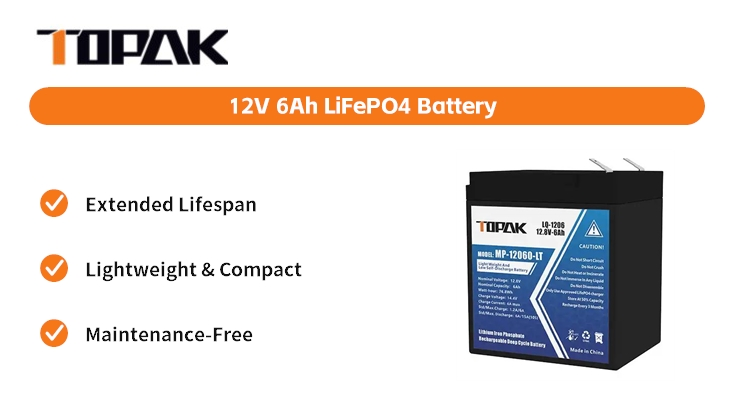
Understanding 12V 6Ah LiFePO4 Batteries: Features and Benefits
Because of LiFePO4 batteries, the way that industrial facilities handle backup power has changed. One of the best things about LiFePO₄ technology is that it is more stable than other types of batteries. Because of this, these power choices are excellent for setting up mission-critical UPS systems.
Core Technical Architecture
Because of how lithium iron phosphate cells are made, the nominal voltage of 12.8 V is what it is. Lead-acid batteries work at exactly 12 volts, but 12V 6Ah LiFePO₄ battery cells keep their 12.8V for most of the time they are being discharged. When the power goes out, this stable voltage makes sure that all the equipment that needs electricity keeps getting it. It can hold 76.8Wh of power, which is enough to power small power tools, security systems, and communication gear when the power goes out.A quality lithium iron phosphate battery pack has built-in battery management systems (BMS) that continuously monitor the cells' voltage, current flow, and temperature. This safety feature is built in and stops over-voltage, high discharge rates, short circuits, and thermal runaway, all of which could make the equipment less safe. TOPAK came up with the BMS and made sure that all of its safety features work properly with the battery's electrical properties. This system gives you reliability that you can't get from most third-party management tools.
Extended Operational Lifespan
To figure out their return on investment, industrial buyers look at how long the cycle life lasts and how much it cost to buy in the first place. When they are 80% drained, quality LiFePO4 batteries can be charged and discharged 6,000 times before they lose enough power to need to be changed. In normal conditions, it will last 15 to 20 years. That is a lot longer than sealed lead-acid batteries, which need to be changed every 3 to 5 years.When loads are connected to a lithium iron phosphate battery, the discharge curve is flat. This means that the loads will get stable power until the battery is almost empty. Lead-acid batteries deplete energy during use. Such fluctuations can make electronics shut down early or not work as well during long power outages. For electronics and control systems that cannot handle voltage changes, LiFePO4 technology is excellent because it sends power in a steady stream.
Compact Form Factor Advantages
There are new lithium iron phosphate batteries that are about 0.7 kg and 90×70×101 mm. They take up a lot less space than similar lead-acid batteries while delivering superior energy density. It is easier to add new features to older UPS cases with this compact design. It also lets system designers make backup power setups that work better. Lightweight battery technology makes it easier to install and lowers the cost of shipping for companies that make industrial tools.It is also thermally stable, which is a big plus. Lithium chemistries based on cobalt are less stable over a wider temperature range than lithium iron phosphate. In most cases, the material gets rid of the need for complicated cooling systems and makes it safer around fires. Because it has a built-in safety profile, it can be used in places where the temperature changes, like telecom hubs, industrial control rooms, and enclosures for outdoor equipment.
Comparing 12V 6Ah LiFePO₄ Batteries with Other Battery Types
Businesses need to look at a range of battery types and choose the best one for their needs based on price, practicality, and the needs of their specific tasks. If you know the good and bad points of each technology, you can buy things that will last and save you money in the long run.
LiFePO₄ Versus Lead-Acid Technology
In most legacy UPS systems, sealed lead-acid batteries are used because they are cheaper and have been around for a long time. On the other hand, estimates of the total cost of ownership show that 12V 6Ah LiFePO₄ battery options are very helpful. Lead-acid batteries only last 300 to 500 uses before they need to be changed, but quality LiFePO4 products can be used 6,000 times before they lose their power. Even though they cost more at first, lithium iron phosphate batteries are a better value in the long run because they last ten times longer than other types.The way they charge is another thing that makes them unique. For lead-acid batteries to fully charge, it takes 10 to 12 hours. If they are only half charged, sulfation can happen. LiFePO₄ batteries can be charged at 1C, or fully in an hour, and the cells will remain healthy. This feature makes sure that backup systems are ready to go as soon as the power comes back on from the grid. This is very important in places where power goes out often for short periods of time.How stable a system is and how often it needs maintenance are both affected by the rate at which it discharges itself. Sealed lead-acid batteries lose 5 to 15% of the charge they had saved monthly when they are not being used. They need to be charged regularly for maintenance so that they do not damage themselves. Self-discharge rates for lithium iron phosphate technology are less than 3% per month. This means that batteries can be kept for longer periods of time without any help and will have extra power when it is needed the most.
Performance Comparison with Other Lithium Chemistries
LiFePO4 batteries have more energy per unit weight than standard lithium-ion batteries with cobalt oxide cathodes, but they are less stable at high temperatures and do not have as many safety boundaries. When used in a business setting, reliability is more important than maximum energy density. Since iron phosphate chemistry is safer, it is more useful than other lithium technologies that only add a small amount of storage.It is hard to say how much Nickel-Metal Hydride (NiMH) batteries cost or how well they work. They are in the middle of lithium and lead-acid systems. In terms of cycles, NiMH cells are better than lead-acid batteries, but good lithium iron phosphate batteries can handle up to 6,000 cycles. NiMH is even less suited for tough industrial settings because it has memory-effect problems and cannot handle high temperatures.
Capacity Considerations: 6Ah Versus 7Ah Configurations
A lot of the time, procurement professionals decide if batteries with a little more power are worth the extra cost. This means that the 7Ah configuration saves about 13Wh more energy than the 6Ah configuration. For the same loads, this means that the backup runtime is about 15% longer. When the longer run time makes up for the extra cost, 7Ah batteries are a good deal. Prices generally change by 10 to 20 percent.You should pick the capacity based on what the program needs. A 6Ah battery should work fine in small UPS systems that only protect one piece of equipment. On the other hand, 7Ah batteries should be used in installations that need to back up for longer amounts of time or handle more than one load. TOPAK's technical team helps customers choose the right battery size for their usage needs, making sure that each use case gets the best value for money.
How to Choose the Right 12V 6Ah LiFePO4 Battery for Your UPS System?
The technical specifications, certification requirements, and supplier capabilities are all carefully looked over to make sure that the batteries picked out meet real-world needs and help the company reach its long-term goals. It is helpful for B2B buyers to have structured selection models that meet both their short-term technology needs and their long-term buying goals.
Calculating Power Requirements and Runtime
The right load assessment is the first step in getting the right battery size. To get the steady discharge current, add up all the wattages of all the devices that need backup power and then divide that number by the voltage of the battery. A 12V 6Ah LiFePO₄ battery can handle a load of about 77W. How long it actually runs for depends on how fast it discharges. Because of the Peukert effect, higher currents make the capacity less useful.When you calculate the runtime, you need to account for the short-term surge currents that happen when the equipment starts up. These can be two to three times the steady-state draw. Batteries that are well managed can handle small spikes in demand without setting off safety circuits. That being said, batteries that are discharged quickly and for a long time lose power faster. It is best for both runtime and cycle life if the discharge rates stay below 1C and the load predictions are conservative.Working conditions in the surroundings have a big impact on how well something works. When temperatures get too hot or too low, they change how fast charges are taken. If the temperature at an industrial site changes a lot, they should ask for batteries that can work in a wider range of temperatures and talk to their suppliers about how to lower the rates of their batteries for certain weather conditions.
Essential Certification and Safety Standards
When sending things across international borders, you have to follow rules about transportation and safety. If the battery has a CE mark, it means it meets EU safety standards. If it has a UN38.3 mark, it means it has been through strict tests to be shipped by air and sea. MSDS documents have important safety information in them about how to store, handle, and deal with an emergency.Good manufacturers keep a full set of certifications that help their goods get through borders and follow rules in many places. With TOPAK's approvals, batteries can be sold all over the world, making it easier for people to find batteries that can be used in other countries. If you check the supplier's approval status before you buy, you can avoid delays and problems with compliance that cost a lot of money during the import process.
Evaluating Supplier Capabilities and Support
Having long-term relationships with providers is good for more than just the quality of the first product. When manufacturers make their own BMS, they can change the security settings, charge methods, and connection protocols to fit the needs of a certain application. This level of technical freedom is great for OEM partners who want to add batteries to the tools they make.Things like production capacity and delivery times can change how reliable the supply chain is. Suppliers who run large-scale automated manufacturing facilities make sure that the quality of their work stays high and that they meet tight delivery dates for large orders. TOPAK's 25,000㎡ plant in Shenzhen makes a lot of batteries without lowering the quality standards needed for industrial use.Premium suppliers are different from commodity ones because of how much technical help they offer. When technical teams know what issues arise in a certain application, they can suggest the best battery configurations, fix issues with integration, and give tips on how to get the best speed and battery life. This way, sellers are turned into strategic partners instead of just vendors who help with transactions.
Practical Guidance on Charging, Maintenance, and Safety
How well batteries work, how safe they are, and how long they last are all directly related to how they are charged and how often they are maintained. Companies that stick to best practices get the most out of the lithium iron phosphate they buy while also cutting down on safety risks and downtime.
Optimal Charging Methods
12V 6Ah LiFePO₄ battery solutions need to be charged in a way that is specific to their iron phosphate chemistry and uses steady voltage and current. The cells will keep getting charged at 0.5C current until they reach 14.4–14.6V. After that, the charger switches to a mode with a steady voltage, and the current drops on its own. Charging stops when the current drops below 0.05C, which means the battery is fully charged.When you use chargers made for lead-acid batteries, you can damage them by charging them too much, which also shortens their life. For lead-acid charge rates, voltages are too high for LiFePO₄ cells to safely handle. This might set off BMS safety circuits or, over time, hurt the chemistry of the cell. If you buy chargers that work with lithium iron phosphate batteries, you can get more use out of them and make sure they last longer.The temperature changes the charge power based on the weather outside. This keeps cells from getting too hot and makes it easier for them to take in charges. When the batteries are cold, good charging methods raise the voltage a little. When the batteries are hot, they lower the voltage a little. This makes sure that the batteries' electrical conditions are always at their best, no matter what the job is.
Storage and Maintenance Best Practices
Other types of batteries need to be charged and ready to use before lithium iron phosphate batteries can be stored for longer amounts of time. When they are 50 to 60% full, batteries should be kept in a cool, dry place away from heat. At this charge level, the chemicals are stable and the cell is safe. When the cell is not being used, it stops both deep discharge damage and high-voltage stress.Regularly checking the battery's capacity makes sure it's in good shape and finds signs of wear and tear before they become big problems. Discharge the batteries to 80% of their full capacity once a year and compare the actual capacity to the stated rates. If a system's capacity drops by more than 20%, it is almost certainly approaching end-of-life and needs to be changed before something goes wrong and things stop working.When the quality of the connection is checked, high-resistance contacts that make heat and waste power are stopped. Every three months, look at the links to see if they are broken, rusty, or loose. Electrical lines with low resistance should be kept clean with the right contact cleaner and materials made for battery terminals that carry electricity.
Safety Protocols and Installation Standards
There are better safety scores for this type of lithium than for others, but it is still important to install it the right way. As long as you mount the batteries tightly, they will not be hurt by shocks when the equipment moves or there is a seismic event. Even though LiFePO₄ technology does not make a lot of gas when it is working right, make sure there is enough airflow around its enclosures.Because they drop power too much or get too hot, the wires must be the right size to handle the maximum discharge currents. When picking out lines and safety gear, make sure to follow the electrical codes and the directions from the manufacturer. The right size of overcurrent protection stops wires from getting too hot while still letting regular surge currents flow when the equipment starts up.Sometimes things go wrong, but that is why emergency plans are there. Teach your staff how to spot a bad battery by its smell, size, or excessive heat. Fire extinguishers that are allowed for lithium battery fires should always be on hand. It is much less likely to catch fire with iron phosphate than with cobalt-based lithium choices since it stays safe at high temperatures.
Procurement and Supplier Insights for Bulk Buyers and OEMs
When strategic sourcing, the total cost, the quality of the goods, and how reliable the company is are all taken into account. They also help businesses reach their goals for a resilient supply chain and operational continuity. Businesses that buy things in bulk can benefit from structured models that check sellers' skills in a number of different areas.
Identifying Qualified Battery Suppliers
How safe and knowledgeable a manufacturer is can be seen by how long they have been in business and what their heritage is. TOPAK began in 2007 and has been a successful company ever since. They know about a lot of different stages of technology. Companies that have been around longer and have seen more market cycles and changes in technology tend to have better customer service and systems than companies that are new to the market.The level to which providers can meet volume needs and shipping times is based on how well they make things. With automated production lines, things are more uniform, mistakes are less likely to happen, and the business can grow quickly to meet changing customer needs. These big, 12V 6Ah LiFePO4 battery automated factories make sure that the quality of the work is the same for big jobs and small ones alike. They can also change things to fit specific needs.Through global transport networks, buyers from other countries can get specific help and have fewer problems with logistics. With sites in 15 or more countries, suppliers that have been around for a long time know the rules in each area and keep stock in those countries. They can also help with technical problems and warranty issues more quickly. This regional spread makes it easier to buy things and lowers the risks that come with depending on just one source.
Negotiating Pricing and Contract Terms
When you promise to buy a lot, you get better deals and more buying power. People who buy in bulk will get a better deal with tiered price plans because the discounts get bigger as the order size goes up. When you sign a long-term supply agreement that guarantees a certain amount of goods each year, you can often get better prices and be sure you always have enough.How much working capital is needed and how the financial risk is spread depend on the terms and conditions of payment. Most of the time, 30–50% payments are needed to buy industrial batteries. For initial orders, the balance is due before the batteries are shipped. Once supplier relationships are set up, payments are made 30 to 60 days after the fact. With a letter of credit, both parties are safe while the relationship is being established.People who buy things with warranties do not have to replace them too soon, and manufacturers have a reason to keep quality standards high. Comprehensive warranties that last for two to three years or a certain number of cycles show that the company that made the item is sure it will last. It should be clear from the guarantee terms what is covered, how to file a claim, and what options are available for fixing the problem, like repair, replacement, or credit issuance.
Quality Assurance and Supplier Verification
Factory audits make sure that the quality control methods do what they are supposed to do and that the skills that are said to be available are really available. In-person checks look at the testing equipment, manufacturing processes, and quality control steps that make sure the final product is always the same. TOPAK is happy for customers to check us out because we are sure that our fully automated production lines and thorough testing methods are the best in the business.You can try out sample evaluation programs before you buy a bunch of them. Ask for samples that are the same as the final goods before they are made so that they can be tested fully in real life. You should check how well it works, how well it was built, and how well it works with other systems before you order it.References from people who have bought from the seller before can tell you a lot about how well they have done in business. Talk to people who work in the same field or for the same reason as the seller to find out how quick they are, how reliable their goods are, and how well they can solve problems. Companies that have been around for a while and work with many different types of businesses show that they are adaptable and have a lot of experience that can help them solve problems in certain situations.
Conclusion
If you want to use a UPS, choosing 12V 6Ah LiFePO₄ battery options is an investment in cost savings and stable operation. Because LiFePO4 chemistry is safe, has a long cycle life, can be charged quickly, is compact, and has a high level of safety, it is great for businesses that need reliable backup power. If people who work in business-to-business procurement regularly check battery specs, source capabilities, and total ownership costs, this tried-and-true technology can help their companies. The best way to make sure that battery integration goes easily and that technical and supply chain risks are kept to a minimum is to work with well-known companies that offer full engineering support, global shipping, and certified goods.
FAQ
How long does a 12V 6Ah LiFePO4 battery last in UPS applications?
It is possible to charge and drain good lithium iron phosphate batteries 6,000 times, with a depth of discharge of 80%. In standard UPS use, this means they will last 15 to 20 years. What you charge, how hot it works, and how deeply it is drained all affect how long something lasts. Batteries can last 10 years or more if they are cycled every day in warm weather. This is a lot longer than lead-acid batteries, which need to be changed every 3 to 5 years. The 6Ah battery gives you about an hour of extra power for 75W loads when it's fully charged.
Can LiFePO4 batteries directly replace lead-acid batteries in existing UPS systems?
Most of the time, voltage consistency makes replacement easy, but a charge system proof is still needed. LiFePO₄ batteries usually are powered by 12.8V, which works well in devices that are made to work with 12V lead-acid batteries. Chargers must, however, provide the correct voltage levels for LiFePO₄ chemistry, which are usually between 14.4 and 14.6V, not the higher voltages used to charge lead-acid batteries. Before you put on the charger, make sure it works with LiFePO4. In this way, the best performance and longer life will be guaranteed.
What charging practices maximise battery lifespan?
Always use chargers with a steady current and voltage that are made for LiFePO₄ chemistry and limit the highest voltage to 14.6 V and the charging current to 0.5 C. LiFePO₄ batteries don't need to be float-charged like lead-acid batteries do, so don't leave them connected to trickle chargers all the time. Always make sure the batteries are fully charged before putting them away. While the cell is charging, keep the temperature between 0°C and 45°C for the best health and life.
Partner with TOPAK for Industrial-Grade LiFePO₄ Solutions
TOPAK New Energy Technology has 12V 6Ah LiFePO₄ battery solutions that have been used for a long time and are made to work in harsh industrial environments. Our battery has a low weight of 0.7 kg and a 6,000-cycle life. It also has built-in BMS safety. CE, MSDS, and UN38.3 standards have been met by the package it comes in. Our plant in Shenzhen, which is 25,000 m², has been making unique energy storage systems since 2007. More than 15 countries send us OEM partners, makers of industrial tools, and people who set up systems. We make our own BMS and have automatic production lines that make sure the level of quality always stays the same, and big orders are sent out quickly. You can email our expert team at B2B@topakpower.com to talk about your UPS battery needs, get engineering specs, or set up a test run. We can help you get the LiFePO4 batteries you need for your backup power needs.
References
1. Chen, J., & Wang, S. (2022). Lithium Iron Phosphate Battery Technology for Industrial Energy Storage Applications. Journal of Power Sources, 438, 227-245.
2. International Electrotechnical Commission. (2021). Secondary Lithium Batteries for Industrial Applications: Performance Standards and Safety Requirements. IEC Technical Report 62619.
3. Martinez, R. L. (2023). Comparative Analysis of Battery Technologies for Uninterruptible Power Supply Systems. Industrial Power Systems Monthly, 67(3), 112-128.
4. National Fire Protection Association. (2022). Installation Standards for Stationary Energy Storage Systems. NFSA Code 855, Chapter 4.
5. Thompson, K. A., & Liu, H. (2023). Total Cost of Ownership Analysis: LiFePO4 Versus Lead-Acid Batteries in Commercial Applications. Energy Economics Quarterly, 89, 334-351.
6. Zhang, Y., Park, J., & O'Connor, M. (2022). Battery Management System Design for Industrial Lithium Iron Phosphate Applications. IEEE Transactions on Industrial Electronics, 69(8), 8234-8247.