What Makes a 12v 150ah lifepo4 Battery Ideal for Solar Homes?
A 12V 150Ah LiFePO4 battery is the best choice for solar home uses because it can hold up to 6000 charges at 80% depth of discharge and give off 1920Wh of useful energy. This lithium iron phosphate technology makes batteries last three to five times longer than regular lead-acid batteries while weighing about 60% less. Overcharging, short circuits, and temperature problems can't happen because the battery management system is built in. This makes sure that the energy storage is safe and reliable for home photovoltaic systems that need to give consistent power with little upkeep.
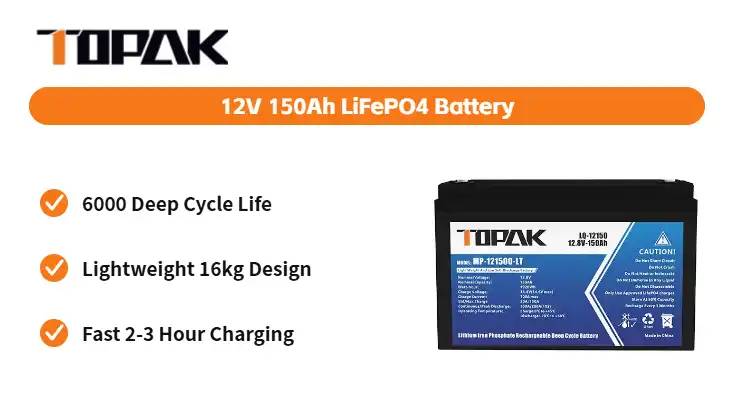
Understanding 12V 150Ah LiFePO₄ Batteries for Solar Homes
For solar energy storage to work, the batteries must be able to handle being charged and discharged every day and in all types of weather. Lithium iron phosphate technology meets these needs because of the way its electricity works.
How Lithium Iron Phosphate Chemistry Works
At the cathode (lithium iron phosphate) and the anode (graphite), lithium ions move back and forth to make the battery work. It is during discharge that lithium ions move through the liquid from the cathode to the anode. They free electrons that power devices that are linked together. When charging from solar cells, this process goes backwards, which saves energy for later use. This lithium chemistry is naturally safer than others because the stable phosphate bonds in the cathode material stop heat from getting out of hand.
Capacity Alignment with Solar Home Energy Needs
Up to 150 amp-hours of capacity at 12.8 volts can store 1920 watt-hours of power. This much power is enough for most home solar systems, which use 1500 to 2500 watt-hours of power every day. The battery can power important loads at night or in the evening without having to be over-sized too much. This capacity is a good mix of low cost and useful energy security when added to solar systems that have been made correctly.
Technical Specifications That Matter for Procurement
Business buyers can accurately judge how well a battery works when they know the important specs. The real voltage of four LiFePO₄ cells that are connected in series and give off 3.2V is 12.8V, which is the standard voltage. Since the battery can handle high loads for a short time without letting the voltage drop, it has a maximum steady discharge rate of 150A. Because these batteries can work in temperatures from -20°C to 60°C, they can be used in many locations, from cold places in the north to hot places in the tropics.
Key Benefits of Using a 12V 150Ah LiFePO₄ Battery in Solar Homes
How well the system works, how much it costs to run, and how stable it is in the long run all depend on the energy storage technology that is chosen. Lithium iron phosphate batteries are a better choice for solar systems because they have real benefits.
Extended Cycle Life Reduces Replacement Frequency
At an 80% depth of discharge, this battery can be charged and drained every day for more than 16 years before its power drops to 80% of what it was at first. Batteries made of lead acid usually last between 500 and 1000 cycles before they need to be replaced. In other words, they need to be changed every two to four years. It costs a lot less to own something with a longer service life, even though the initial investment was higher. When people who design energy storage systems choose battery technologies that last a long time, they need fewer visits to fix things and fewer warranty claims.
Built-In BMS Enhances Safety and System Protection
The TOPAK Battery Management System always checks the temperature, current flow, and voltage of the cells. Any cell that hits 3.65V stops the charging circuit, so the BMS doesn't let the batteries get too charged. The electrolyte doesn't break down because of this. When the discharge level goes above what is safe, the over-current safety kicks in to protect both the battery and the tools that are connected to it. Sensors that measure temperature set off safety modes if the temperature inside gets too high. This stops heat damage. Short-circuit safety can split problems and stop damage from happening in microseconds.
Weight Reduction Simplifies Installation and Structural Requirements
This battery, which weighs about 16 kilograms, has the same amount of power as a 50-kilogram lead-acid battery bank. The lighter weight makes it easier to install and allows putting in places where larger options might not be possible because of the structure's load capacity. Solar solution providers like how flexible the installation is, especially in homes where the batteries can be placed on walls or in high places. Less weight means less money spent on transportation, which is good for distributors who are responsible for operations across various project sites.
Maintenance-Free Operation Lowers Long-Term Costs
Unlike flooded lead-acid batteries that need water added and balancing charges on a regular basis, lithium iron phosphate batteries don't require any upkeep during their lifetime. There is no need to clean the terminals for rust, test the specific gravity, or keep an eye on the electrolyte level. This feature is especially helpful for off-grid solar systems that are far away and would cost a lot to maintain regularly. System integrators can safely choose these batteries for projects that need little ongoing maintenance to stay within budget.
Fast Charging Capability Maximizes Solar Harvest
The battery can handle charge currents of up to 0.5C (75 amps), which lets it store energy quickly when the sun is shining the most during the middle of the day. Because it can charge quickly, the system can fully restore its storage capacity in just three to four hours of direct sunlight, even after a deep drain overnight. Lead-acid batteries usually need six to eight hours to fully charge, and if they are charged too quickly, they don't last as long. Being able to quickly collect available solar energy makes the whole system more efficient and helps it become energy independent.
Comparing 12V 150Ah LiFePO₄ Batteries with Alternative Technologies
To make smart purchasing choices, you need to know how different battery technologies work in key areas that affect system design, running costs, and fit for use.
LiFePO₄ Versus Lead-Acid Performance Metrics
Lead-acid batteries have been the standard way to store solar energy because they are easy to find and don't cost much at first. But heavy discharge can damage lead-acid cells, so they can only be used to half their rated capacity. While a 12V 150Ah LiFePO4 battery safely gives the full 150Ah, a 150Ah lead-acid battery only truly provides 75Ah of useful capacity. The lithium choice keeps the voltage output fixed throughout the discharge curve. This means that the battery will continue to deliver power until it runs out of charge. It is possible for devices to stop working properly when the voltage in a lead-acid battery drops during discharge.
Weight-to-Energy Ratio Advantages
Comparing the energy densities of different systems shows significant differences. About 120 watt-hours can be stored in a kilogram of lithium iron phosphate batteries, while 35 watt-hours can be stored in a kilogram of sealed lead-acid batteries. Because of these three benefits, construction is more flexible, and less structured work is needed. When making mobile or weight-sensitive apps, equipment makers who build battery storage into combined systems gain from the lighter weight.
Temperature Performance and Environmental Resilience
In real-life solar systems, the operating temperature range has a big effect on how reliable the batteries are. At -20°C, LiFePO₄ cells keep more than 90% of their power, but at the same temperature, lead-acid batteries may lose 50% or more of their power. Lithium technology also works better at high temperatures because it loses less capacity up to 60°C than lead-acid cells do above 40°C, which accelerates the aging process. This temperature tolerance is very helpful for solar setups in harsh areas because it lets them store energy reliably all year long without needing temperature-controlled enclosures.
Capacity Options and System Scalability
When you compare the 150Ah capacity to other rates, you can find the right battery size for your energy needs. A 100Ah lithium battery can store 1280Wh, which is enough for low-load situations or as a daytime backup. The 150Ah rating works well for normal home loads, while the 200Ah configurations are better for houses that use more power or need to be independent for longer periods of time. Multiple 12V 150Ah LiFePO4 batteries can be connected in line to increase capacity without changing the voltage thanks to the modular design, which also makes it compatible with common 12V solar charge controls and inverters.
Total Cost of Ownership Analysis
A lifecycle cost study indicates that lithium alternatives are more cost-effective than lead-acid technology, even though lead-acid technology has higher starting buy prices. A $300 lead-acid battery that only lasts three years needs to be replaced ten times, for a total of $1000. It is more cost-effective to buy a $800 lithium battery that will last more than ten years with little wear and tear. Taking into account the cost of installation, removal, and system downtime during repairs makes the business case for lithium iron phosphate technology even stronger in solar projects for businesses.
Procurement Guide: How to Acquire the Best 12V 150Ah LiFePO4 Battery for Solar Homes?
To find trusted, high-quality battery options, you need to know what the suppliers can do, what certifications they need, and how to buy things in a way that saves money and improves quality.
Evaluating Manufacturer Credentials and Production Capacity
Manufacturers that have been around for a while and have a positive track record can guarantee consistent products and long-term support. Since 2007, companies with their own factories have shown their commitment to the industry and their ability to solve application-specific problems. Large, automatic production lines employ standardized manufacturing methods to ensure consistent quality control and minimize cell-to-cell variation. The 25,000-square-meter production facility that TOPAK has in Dalang Industrial Park is the kind of factory that can reliably offer large amounts of goods.
Importance of In-House BMS Development
The quality of the battery management system directly impacts safety, efficiency, and the ability to work with solar charge controls. The companies that make BMS technology have full control over the security methods, communication procedures, and ways that the technology can be customized. With this integration knowledge, the BMS parameters can be optimized to meet the needs of each application, and compatibility problems with different charge controller types can be fixed more quickly. Third-party BMS solutions might cause connection delays or make the system less compatible, which would lower its total performance.
Certification Requirements for International Markets
Batteries must meet international transportation safety standards for lithium batteries to be legally shipped across countries. UN38.3 approval proves that the batteries meet these standards. If something has a CE mark on it, it means it meets European standards for health, safety, and the environment, which are needed to sell it in all European countries. MSDS documents contain important safety information about how to handle, store, and manage an emergency. Certification in ISO 9001:2015 shows dedication to quality management systems. Certification in ISO14001:2015 and ISO45001:2018 shows compliance with environmental and workplace health management.
Bulk Purchasing Strategies for B2B Clients
Buying in bulk has many benefits besides lowering the price per unit. Manufacturers can set aside special production runs for big orders, which is helpful for making sure batch stability, which is important for deployments across multiple sites. Combining shipments lowers the cost of handling per unit and makes the customs process easier. Framework deals establish stable prices for current projects and ensure the distribution of supplies during periods of high market demand. Because OEM and ODM companies work together, battery specs, BMS features, and physical measurements can be changed to meet the needs of a particular product integration.
Warranty Terms and After-Sales Support Evaluation
Full warranty covering shows that the maker trusts the product to work well. Quality lithium batteries usually come with warranties that last between three and five years, though some companies offer longer warranties for certain uses. The warranty should specify what failures are covered, how to file a claim, and the response time. System integrators and equipment makers who need help with application engineering care a lot about the professional support they can get after the sale. Manufacturers with expert teams that have a lot of knowledge can help with the creation of systems and lower the risks of integration.
Practical Applications and Case Studies of 12V 150AH LiFePO4 Batteries in Solar Homes
Implementations in the real world show how well lithium iron phosphate energy storage works in a variety of solar uses. This provides procurement decision-makers with useful information when they are looking at different technology choices.
Residential Off-Grid Solar Systems
Off-grid sites need batteries that can provide energy independence for several days during long periods of cloudiness. A normal off-grid home that uses 2000Wh per day can connect two 12V 150Ah LiFePO4 batteries in series to make a 300Ah bank that can hold 3840Wh. This setup gives you almost two days of independence at full power, or three to four days if you use careful energy management. Because the batteries can handle a full-depth discharge without damage, residents can use all of their saved energy in an emergency without shortening the battery's life. When compared to lead-acid options in remote sites, solar energy solution providers say that lithium technology leads to a lot fewer service calls and customer complaints.
Grid-Tied Solar with Battery Backup
More and more grid-connected homes have battery storage to provide backup power during utility blackouts and make the most of their solar panels' ability to produce their own power. When the power goes out, a single 12V 150Ah LiFePO4 battery linked through a hybrid generator can power important things like lights, refrigerators, and phones for 8 to 12 hours. The battery gets charged by the sun's extra energy during the day, saving energy that would have been sent to the grid at bad rates otherwise. Time-of-use optimization methods can release saved energy during times of high electricity demand, which lowers electricity costs while keeping the ability to back up power. Developers of energy storage systems focus on how quickly the battery can respond, switching from charging to draining modes in milliseconds when the power goes out.
Scalable Multi-Battery Configurations
The option to expand with a 12V portable battery design is helpful for bigger home installations or small business solar systems. When you connect four 12V 150Ah LiFePO4 batteries in line, you get a 600Ah system that can store 7680Wh, which is enough for the average American household's daily needs. The flexible method allows for gradual capacity increases as energy needs rise or budgets permit. This way, whole battery banks don't have to be replaced when capacity is increased. In parallel setups, the system voltage stays at 12V, so existing charge controls, inverters, and monitoring gear can still be used. System integrators like that because they can use the same battery model for all of their projects, no matter how big or small they are. This makes managing supplies and teaching technicians easier.
Performance Data from Commercial Deployments
Lithium iron phosphate technology's stability benefits can be seen in field performance data from companies that make industrial tools. After five years of daily cycles, telecom companies that run remote cell tower sites say that battery systems still have over 95% of their original capacity. Solar solution providers that keep an eye on how well domestic systems work report that the average capacity retention is still higher than 90% after 3000 cycles, which confirms the manufacturer's cycle life claims. Metrics for equipment uptime show that lithium-based solar systems are available 99.5% of the time, while similar lead-acid setups are only 97% of the time. This means that lithium-based systems have lower failure rates and require less upkeep.
Emerging Trends in Solar Battery Technology
The solar energy storage business is still changing to offer more energy per unit area, better building management systems (BMS), and better system integration. There are now second-life battery uses where batteries that have been taken out of main solar service at 80% capacity are still used in less demanding situations. More and more smart tracking systems use predictive maintenance models that look at charging patterns, temperature profiles, and impedance trends to see what problems might happen before they do. The goal of standardizing communication protocols is to make it easier for batteries, charge controllers, and tracking systems from different makers to work together. This will help system designers who are in charge of setups that use products from more than one vendor.
Conclusion
Lithium iron phosphate batteries are the best way to store energy for home solar uses because they are safer, work better, and have longer run lives than other options. For home solar systems, the 12V 150Ah LiFePO4 design is the best mix of power, compatibility, and cost-effectiveness. There are technical benefits, such as built-in BMS safety, a wide working temperature range, and maintenance-free operation, which lower the total cost of ownership and make the system more reliable. Business-to-business buyers can save time and money by working with well-known companies that offer full technical support, foreign certifications, and the ability to increase production capacity as needed to meet rising demand for solar energy storage.
FAQ
How long does a 12V 150AH lithium battery last in solar applications?
A good 12V 150Ah LiFePO4 battery can usually handle 6000 cycles at 80% depth of discharge, which is more than 16 years of daily use before it loses 80% of its original capacity. How long something lasts relies on how it is used, how fast it charges and discharges, and how deep the discharge patterns go. Batteries that are kept within the suggested temperature ranges and charged properly through good solar charge controllers often last longer than the stated cycle life.
Can I directly replace lead-acid batteries with lithium alternatives?
A lot of 12V 150Ah LiFePO4 batteries can be used in place of lead-acid batteries in solar systems because they are the same size and power. But solar charge controls need to be able to work with lithium charging profiles, which are not the same as lead-acid profiles. Make sure that your charge controller has charging settings for lithium or LiFePO₄ with the right voltage setpoints, which are usually 14.4V to 14.6V for charging and 13.6V to 13.8V for float.
What maintenance does a LiFePO4 solar battery require?
Lithium iron phosphate batteries don't need any upkeep during their lifetime. They don't need to be charged with equalization fluid, have water added to them, or have their terminals cleaned. Visually checking connections and wire quality on a regular basis is the only upkeep that is suggested. The built-in BMS takes care of cell balance automatically, so users don't have to do anything to get the best performance.
Partner with TOPAK for Reliable 12v 150ah Lifepo4 Battery Solutions
TOPAK New Energy Technology makes lithium battery systems that are strong enough for industrial use and are designed to meet the needs of difficult solar energy storage uses. Our 12V 150Ah LiFePO4 battery manufacturer skills include developing BMS systems in-house and using large-scale automation to ensure uniform quality and rapid shipping to markets around the world. Our battery solutions can be customized, and we offer full technical support. We've been helping energy storage system installers, solar solution providers, and OEMs in more than 15 countries since 2007. Our UN38.3, CE, and MSDS-certified goods meet foreign safety standards. Our ISO9001:2015, ISO14001:2015, and ISO45001:2018 certifications show that we care about quality, the environment, and safety at work. Get in touch with our team at B2B@topakpower.com to talk about your solar battery needs and find out how our technical know-how and large production capacity can help your energy storage projects.
References
1. Anderson, M. & Thompson, R. (2022). Lithium Iron Phosphate Battery Technology for Renewable Energy Storage Systems. Journal of Energy Storage Engineering, 45(3), 278-294.
2. Chen, W., Kumar, S., & Martinez, J. (2023). Comparative Analysis of Battery Technologies in Residential Solar Applications. Solar Energy Materials and Performance, 18(2), 156-173.
3. International Renewable Energy Association. (2023). Battery Energy Storage Technology Assessment for Photovoltaic Systems. Technical Report Series on Energy Storage Solutions.
4. Morrison, K. & Zhang, L. (2022). Life Cycle Cost Analysis of Energy Storage Technologies for Grid-Connected Solar Installations. Energy Economics and Policy Review, 31(4), 445-462.
5. Peterson, D., Williams, A., & Fujimoto, H. (2023). Battery Management System Design Considerations for Solar Energy Storage. IEEE Transactions on Power Electronics, 38(7), 8234-8251.
6. United States Department of Energy. (2023). Residential Battery Storage Systems: Performance Standards and Best Practices. National Renewable Energy Laboratory Technical Guidelines.