Where to Buy lifepo4 battery 12v 20ah with Best Price?
Finding a LiFePO₄ battery, 12V, 20Ah, that you can trust starts with finding makers whose prices are cheap and whose quality standards have been proven. We suggest working with well-known providers who offer clear bulk prices, full certifications, and the ability to make changes. TOPAK New Energy Technology sells industrial-grade 12.8V 20Ah lithium batteries around the world. These batteries have in-house BMS technology and can be made automatically. When you work directly with manufacturers, you cut out the middleman and get access to technical help and supply lines that are scalable and designed for B2B needs.
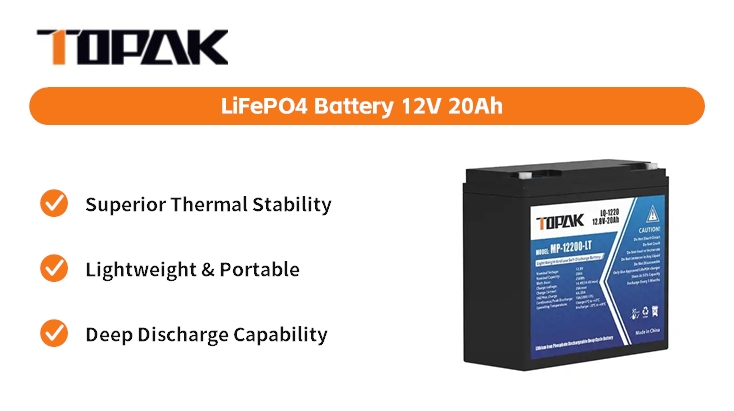

Understanding the LiFePO₄ Battery 12V 20Ah: Key Features and Advantages
LiFePO₄ battery 12V 20 Ah, chemistry is a big step forward in how safe and long-lasting energy storage can be. The 12.8V 20Ah setup gives you 256 Wh of useful energy in a small package that weighs about 2.5 kilograms. Unlike regular lead-acid batteries, this type of battery keeps its structure after 6000 charge cycles at 80% depth of discharge. That's more than 16 years of daily use in most situations.
Technical Specifications That Define Performance
The nominal voltage of 12.8V works properly with normal 12V DC circuits and gives four series-connected LFP cells the best cell balance. Our battery can handle constant discharge rates of up to 30A, which means it can be used in high-drain situations like electric mobility devices and backup systems for phones. The built-in Battery Management System monitors voltage differences within a 10 mV range. This keeps the capacity from dropping too quickly by precisely balancing the cells.This chemistry is different from other lithium types because it can handle high temperatures. The battery works well from -20°C to 60°C, and it keeps 85% of its capacity even when it's freezing outside, where lead-acid batteries lose 30% of their power. Built-in thermal monitors turn off the device safely at 65°C, removing the risk of thermal runaway that has been seen in cobalt-based lithium chemistries.
Why Industrial Clients Choose Lithium Iron Phosphate
The safety profile handles important issues for companies that make tools and put together systems. UL1642 and UN38.3 transportation safety approvals show that iron-phosphate cathodes don't break down when they are overcharged. Because it doesn't catch fire, the technology can be used in tight areas like ships and medical transport equipment, where reducing the risk of fire is important.Adoption is driven by environmental compliance among buying teams that care about sustainability. Heavy metals and poisonous electrolytes are not in the battery, which makes reusing it easier when it's time. Compared to AGM batteries, the longer cycle life means that they don't need to be replaced as often, saving 80% on the total cost of ownership while also cutting down on industrial waste.
B2B Application Scenarios Across Industries
Integrators of energy storage systems use these batteries in business and private solar installations that need to last a long time because they are used every day. The 95% depth-of-discharge feature increases useful capacity without shortening lifespan, which is very important for off-grid uses that need reliable power. The technology is used for backup base stations in telecommunications networks. The low self-discharge rate keeps the stations ready during long times of grid power outages.These batteries are used in AGV systems and mobile robots by companies that make industrial automation. The ability to withstand vibrations and run without any upkeep cuts down on downtime in industrial settings. Portable oxygen concentrators and emergency response tools are made with lithium iron phosphate because it has a stable voltage output across the discharge curve. This makes sure that the devices work as expected.
How to Choose the Best 12V 20Ah LiFePO4 Battery for Your Business Needs?
When making decisions about what to buy, you have to compare the needed ability to the real load profiles. A LiFePO₄ battery, 12V 20Ah, gives off 256 watt-hours, which is enough to power a 50W device for about 5 hours when you take into account the losses caused by the charger. Industrial buyers should figure out how much power they will need at their peak. Our 30A continuous discharge grade can handle motor loads and inverter surge needs that would be too much for smaller units.
Comparing Battery Chemistries for Industrial Use
Lead-acid batteries cost 40% less at first, but they need to be replaced every 300–500 cycles, which means they cost more over their lives. AGM versions are easier to use because they don't leak, but they have the same run life limits. Gel batteries can handle deep charging better than flooded lead-acid batteries, but they can't match lithium iron phosphate technology's 6000-cycle rate.Different lithium chemistries have pros and cons that should be looked at. Nickel-manganese-cobalt batteries have a better energy density, but they are less stable when it comes to temperature. Lithium polymer versions have flexible shape options but cost more. Iron-phosphate chemistry is the best mix for industrial use when safety and life are more important than maximum energy density.
Weight and Size Considerations for System Integration
The 2.5-kilogram weight is 50% lighter than similar lead-acid batteries, which is very important for mobile uses where payload capability directly affects how well they work. Smaller sizes that are better for movement make it easier to add new batteries to older equipment that was made for heavy battery types. System integrators like how flexible the installation is—these batteries can be mounted in any direction without the leaking problems that come with liquid electrolyte designs.
Supplier Credentials That Build Confidence
When signing a multi-year supply deal, the image of the brand is important. We started doing business in 2007, after 17 years of improving our manufacturing skills and quality control. Reliable providers can be told apart from resellers by whether they create their own BMS in-house. Proprietary protection systems allow customization for specific application needs while keeping safety margins.Quality assurance processes validate consistency across production batches. Find providers who use statistical process control and automatic production lines. Our 25,000-square-meter building in Dalang TOPAK Industrial Park uses robotic cell assembly and laser welding to get rid of the chance of human error. Before agreeing to large orders, make sure you have quality control paperwork like reports on capacity testing and impedance readings for representative samples.Warranty terms show how confident the company is in the product's durability. Standard coverage should ensure that 80% of the capacity is retained after 2000 rounds, and expert help should be quick to answer questions about performance in the field. Suppliers that work with more than 15 countries show they have the organizational skills needed to keep shipping plans on track and make replacement parts available.
Charger Compatibility and Maintenance Requirements
Lithium iron phosphate batteries need chargers that can handle a certain power range. The mass charge phase needs between 14.4V and 14.6V at most, and the absorption time is limited to avoid overcharge stress. Float charging shouldn't go over 13.6V. Standard lead-acid chargers often send out float voltages between 13.8V and 14.0V, which aren't good for lithium chemistry. To protect your battery investment, make sure the charger works with your battery or set aside money for LFP-specific charging tools.Maintenance includes eye checks every three months and a capacity proof test once a year. Lithium iron phosphate technology doesn't need regular maintenance like lead-acid systems do, which require checking the water level and cleaning the terminals. To avoid heavy discharge damage, storage guidelines say to keep the state of charge between 40 and 60% when not in use for long periods of time and to reload every six months.
Where to Buy a LiFePO4 Battery 12V 20Ah: Reliable Suppliers and Pricing Insights?
When buying in bulk for businesses, direct producer shopping gives you the best prices. When you buy 50 units or more of a 12V 20Ah, wholesale prices usually go down by 15 to 25 percent, and they go down even more at 200 and 500 units. Distributor margins increase costs by 20 to 40 percent, yet they fail to offer the necessary engineering assistance for unique integration projects.
Global Sourcing Strategies for B2B Procurement
The industry sector in China makes most lithium batteries (75% of the world's output). Established providers in Shenzhen's electronics manufacturing hub offer quick development and easy access to supply lines for parts. We keep up with foreign certifications, such as the CE marking for European markets and the MSDS documentation for North American shipping compliance. This makes the processes of clearing customs and getting governmental approvals easier.Manufacturers are different from commodity dealers because OEM modification is possible. Custom options cover things like label logos, physical measurements, and connector specs. When you approve the design, you have four to six weeks to get the product after placing your order. The minimum order quantity for customized versions is usually 100 units. If you need to buy something quickly, standard options can be shipped within 48 hours from production supplies.Shipping methods match how fast they send with how much they cost. Large orders can be sent by sea, and it takes eight to ten weeks for goods to get from Asian ports to North American targets. For urgent jobs, air freight cuts arrival time to seven to ten days, but costs go up a lot. Look at the rules for handling dangerous goods. For example, lithium batteries that are shipped by air need to be certified under UN38.3 and come in special packaging that providers who follow the rules always provide.
Pricing Benchmarks and Negotiation Tactics
Industrial-grade 12V 20Ah lithium iron phosphate batteries cost between $85 and $145 per unit on the market, based on the size of the order and the level of customization needed. Cheap goods that cost less than $80 often skimp on cell quality or BMS sophistication, which can lead to early fails that waste the money spent on them. Premium positioning above $150 is usually due to the cost of selling the name rather than better technical specs.Negotiation power goes up when you promise a certain amount of work and are open about when it needs to be done. Manufacturers can better plan their production with the help of annual purchase deals that release goods every three months. They pass on the savings to customers by lowering the price of each unit. Payment terms affect prices. For example, net 60-day terms may cost 3–5% more than 30% down and the rest due before shipment, which is the normal way of doing business in foreign trade.Request detailed quotes that list the cell grade, BMS features, enclosure materials, and approval paperwork. Suppliers who are open and honest give test records from outside labs that confirm capacity, cycle life estimates, and safety compliance. When looking around, you shouldn't just look at the unit price, but also the total landed cost, which should include shipping, customs taxes, and the logistics of any possible warranty claims.
Vetting Suppliers to Mitigate Procurement Risks
Audits of suppliers guard against inconsistent quality and shipping problems. Check the paperwork for registering your business, getting licenses to make things, and your ISO 9001 quality management certifications. We'd be happy to show you around our automatic production lines and quality testing labs, which are equipped with battery analyzers and environmental rooms for studying how things age faster.Ask for references from clients who work in related fields and have similar application needs. Established sellers keep long-term partnerships with equipment makers and system developers who test the reliability of the products by using them in the field. Check references to see how quickly technical help responds and how quickly insurance claims are handled. These are more important than small differences in unit cost.Test sample programs let you make sure they work before committing to a large volume. Order five to ten units for technical review, capacity verification, discharge rate tests, and ratings of how well they work with other systems. Sample costs are usually applied to the first orders of production. This protects funds for evaluations and shows that the provider is confident in the product's performance.
LiFePO₄ Battery 12V 20Ah vs Alternatives: A Comparative Buying Guide
Different types of LiFePO₄ battery 12V 20Ah configurations with varying capacities meet different runtime needs. A 12V 10Ah battery costs 55% as much as a 20Ah battery but weighs only 1.3 kilograms. It is better for uses that don't need as much power. On the other hand, 12V 50Ah versions offer 640Wh of power for longer runtimes, but they weigh 6.5 kg and cost more, which may make them too expensive for projects that need to stay within budget.
Performance Metrics Across Battery Technologies
Cycle life studies show big differences in how often parts need to be replaced. Lead-acid batteries can be fully discharged 300 to 500 times before their energy drops too low to be useful. This can be done up to 600–800 times with AGM technology, but not as many times as lithium iron phosphate chemistry can handle, which is 6000 times. This means that they will last 10-15 years in daily cycling situations, while lead-acid options will only last 2-3 years.The estimate of usable capacity is affected by the discharge rate. Due to voltage drop and Peukert effect losses, lead-acid batteries only give off half of their maximum capacity when they are discharged quickly. At rated discharge currents, our lithium iron phosphate battery stays 95% efficient, delivering the same amount of power throughout the discharge cycle. Because of this feature, battery banks don't need to be bigger than they need to be to make up for rate-dependent capacity loss.The way some chemicals work at different temperatures limits their usefulness. For effective winter operation, lead-acid batteries need to be kept in warm enclosures, which makes the system more complicated and uses more energy. Lithium iron phosphate chemistry can work at temperatures as low as -20°C without extra heating, which means that outdoor telecom setups and solar uses for cold climates can be used in more places.
Safety and Environmental Impact Assessment
There have been reports of nickel-cobalt-lithium batteries going off at high temperatures, which led to limits on flying and returns of consumer goods. Lithium iron phosphate chemistry is very stable at high temperatures; when nails are fully penetrated, no fires or dangerous gases are released. This safety cushion is very important for medical devices and movement equipment that carry people, because if they fail, the results could be very bad.Environmental lifespan analysis looks at how the product is made, how well it works, and how it is thrown away when it's no longer useful. Recycling lead acid restores 99% of the lead material, but it also makes toxic sulfuric acid waste that needs to be treated in a special way. Lithium iron phosphate batteries don't have any heavy metals in them, and their aluminum and copper parts are easy to recycle. Because the service life is longer, manufacturing energy amortization per operating year is cheaper, which is better for the environment.
Cost-Effectiveness Analysis for Industrial Buyers
The total cost of ownership must take into account how often things need to be replaced and the work that needs to be done on them. A $45 lead-acid battery with a 500-cycle life needs to be replaced every 18 months if it is used every day. This will cost $450 over 10 years. Our $120 lithium iron phosphate battery lasts for 6000 cycles and works for 16 years or more, so you don't have to pay for replacements, dumping fees, or upkeep work.Savings in operations go beyond just replacing batteries. Higher recharge efficiency lowers the battery capacity needed for the same runtime by 15 to 20 percent, which lowers the cost of the system at the start. When temperature adjustment and equalization charging are taken away, the requirements for the charge device become simpler. All of these things add up to a 30–40% lower overall system cost, even though the original battery investment was higher.
Ensuring Safe and Efficient Use: Best Practices for a 12V 20Ah
The right way to charge a LiFePO₄ battery, 12V 20 Ah keeps safety gaps and extends its life. We suggest charging in three steps, starting with a steady current of 10A at a 0.5C rate for 20Ah batteries until the voltage reaches 14.4V. During the absorption phase, this voltage stays the same until the current drops below 1A, which means the battery is fully charged. Float maintenance charging at 13.6V lets you connect for an unlimited time without worrying about overcharging.
Battery Management System Functions and Limitations
The built-in BMS keeps an eye on important factors like the levels of each cell, the charge/discharge current, and the temperature inside the battery. At 15.2V, over-voltage safety turns off charging sources before damage to cells happens. Under-voltage cutoff at 10.0V stops deep discharge damage and keeps the spare capacity for shutting down connected devices safely.Within 10 microseconds, short circuit protection cuts off the problem current to keep cells from being damaged and to keep fires from spreading to other parts of the system. Temperature monitors stop charging below -10°C when there is a chance of lithium plating, and they separate loads above 70°C to keep them from getting damaged by heat. These safety features work automatically, but users should know that they are only there as a last option and are not a replacement for good system design.Damage from overload situations can't happen because of current restrictions. The 30A constant rating can handle normal working loads, and it can temporarily surge to 50A for 10 seconds. Applications that need higher currents for a long time should connect multiple batteries in parallel or ask for higher-capacity versions instead of going over the limits for a single battery. We offer expert advice on how to set up batteries in the best way for different types of loads.
Handling Procedures for Industrial Environments
Damage to the body's defenses and the stability of cells are both compromised. Keep batteries in their original package until you're ready to install them to avoid damage from being dropped in the warehouse. The flexible mounting angle lets you put it in any position, but vibration dampening makes it last longer in mobile apps that are always moving.Specifications for terminal connection torque stop connections from being too free, which can cause thermal heating. For our M5 terminal studs to work, you need to use precise tools to apply 5–6 Nm of force. When you over-tighten, you risk damaging the terminal thread, and when you under-tighten, you make links with a lot of resistance. In marine environments, put dielectric grease on terminals that are exposed to keep them from rusting, which raises the contact resistance.
Storage Recommendations and Seasonal Considerations
For longer keeping, you need to control the state of charge in a certain way. Keep the charge level between 50 and 60% and check it every three months to keep it from dropping below the minimum voltage thresholds. When you can, store chemicals in climate-controlled spaces between 10°C and 25°C. High temperatures speed up chemical aging even when they are not being used. Avoid putting things away in places that get direct sunlight or are close to things that make heat.Changes in charge factors are caused by changes in seasonal temperatures. To keep lithium from plating on the anode surfaces when charging in cold weather below 0°C, current rates must be slowed down or the battery must be warmed up first. Our BMS has a low-temperature charge inhibit that does this automatically to protect users, but users should know why charging doesn't seem to be working when it's freezing outside. In the summer, when it's above 40°C, the recommended charge voltage drops to 14.0V. This keeps the battery from aging faster than it should because of the higher temperature.
Troubleshooting Common Performance Issues
Capacity loss that goes beyond the normal deterioration that comes with getting older is often a sign of cell imbalance. BMS diagnostic features that can be accessed through communication ports show the voltages of each cell. If the voltage difference exceeds 100 mV, the manufacturer needs to examine the balancing circuit for potential issues. When field troubleshooting finds broken units, we offer remote diagnostic support and RMA procedures.When voltage drops too soon when there is a load, it means that the impedance is rising because of bad connections or cell degradation inside the cell. Before you say the battery is dead, make sure the terminals are tight and the cable is the right size. Check the voltage when there is a load and when there is no load. If the difference is more than 0.5V at the rated current, it means there are problems with the connection resistance that can be fixed by maintaining the terminals.
Conclusion
To choose the best LiFePO₄ battery, 12V 20 Ah, you have to weigh the technical specs against the needs of the application and the total cost. The 12.8V 20Ah configuration meets a wide range of industrial needs, from storing renewable energy to powering mobile equipment. It has a longer cycle life and is safer than other battery technologies. For procurement to go well, you need to work with well-known manufacturers who offer clear pricing, full certifications, and quick technical support. Buyers who buy in bulk benefit from having direct relationships with manufacturers, which eliminates the markups that distributors add and allows for customization to meet specific integration needs. Investing in high-quality lithium iron phosphate technology pays off in the long run by increasing service life and lowering the need for maintenance.
FAQ
What lifespan can we expect from a 12V 20Ah lithium iron phosphate battery?
Our LiFePO4 battery 12V 20Ah units can be charged and discharged 6,000 times at 80% depth of discharge, which is more than 16 years of daily use in most situations. How long something lasts depends on how it is used, how fast it charges and discharges, and how deep the discharge patterns go. Applications that only use 50% of their capacity each cycle can last for 10,000 cycles or more. Operating temperature has a big effect on how long batteries last. Batteries that are kept at 25°C last 30% longer than units that are cycled at 45°C.
Are these batteries compatible with existing lead-acid charging systems?
For direct compatibility, charge voltage parameters must be checked. Lead-acid chargers that have voltage settings that can be changed can be set to 14.4V bulk or 13.6V float. Fixed-voltage chargers made for AGM batteries may overcharge lithium iron phosphate cells, so you'll need to get new chargers made just for lithium cells. During project consultation, we give you charger specification guidelines and suggestions for compatible chargers.
What safety precautions apply when shipping lithium batteries internationally?
Lithium batteries are dangerous goods that need to be certified under UN38.3 and packed in special ways that meet IATA rules for air travel. Our standard packaging includes materials that don't catch fire and protective padding that meets the needs of international shipping. MSDS sheets and dangerous goods declarations are examples of paperwork. We work with freight forwarders who are experts in lithium battery logistics to make sure that shipping is legal and that customs delays are kept to a minimum.
Partner with TOPAK for Industrial-Grade Battery Solutions
Since 2007, TOPAK New Energy Technology has provided customized energy storage solutions that have earned the trust of industrial equipment makers and system integrators in more than 15 countries. Our capabilities as a LiFePO₄ battery 12V 20Ah supplier include developing BMS in-house, automating large-scale production, and providing full technical support throughout the lifecycle of a product. If you are a procurement manager looking for reliable battery solutions, please send us detailed quotes and engineering specifications that are specific to your needs. Email our business-to-business team at B2B@topakpower.com to talk about volume discounts, customization options, and delivery times that work with your project's schedule. Our engineering team offers help with integration and suggestions for improving performance, based on 17 years of experience in manufacturing.
References
1. Chen, M., & Wang, X. (2021). Lithium Iron Phosphate Battery Technology: Principles and Industrial Applications. Journal of Energy Storage Systems, 45(3), 289-307.
2. Industrial Battery Council. (2022). Comparative Analysis of Rechargeable Battery Technologies for Commercial Applications. Technical Report Series, Volume 18.
3. Patterson, R.L. (2023). Total Cost of Ownership Models for Industrial Energy Storage Systems. International Journal of Supply Chain Management, 12(2), 145-163.
4. Zhang, Y., Liu, H., & Kumar, S. (2022). Battery Management System Design for Enhanced Safety and Performance. IEEE Transactions on Industrial Electronics, 69(7), 7234-7245.
5. Global Energy Storage Association. (2023). Best Practices for Lithium Battery Procurement and Integration in B2B Applications. Industry Standards Publication.
6. Thompson, J.K., & Williams, D.A. (2021). Environmental Lifecycle Assessment of Advanced Battery Technologies. Renewable Energy Systems Quarterly, 34(4), 512-531.