Can a 12V 6Ah LiFePO4 Battery Replace Your SLA Battery?
There is no doubt that a 12V 6Ah LiFePO₄ battery can be used instead of most sealed lead acid (SLA) batteries in commercial settings. This lithium iron phosphate technology has a much longer cycle life, better safety ratings, and hugely improved efficiency gains compared to standard lead-acid systems. Modern LiFePO₄ batteries can be charged and discharged up to 6000 times, compared to SLA batteries' 300–500 cycles. They also keep their power output constant while they are discharged. These batteries are great for replacing old ones in security equipment, emergency power sources, telecommunications infrastructure, and portable industrial devices that need to be reliable and last a long time because they are small and have built-in battery management systems.
Understanding 12V 6Ah LiFePO₄ Batteries
The lithium iron phosphate chemistry is a big step forward in energy storage technology, especially for industrial uses that need a reliable power supply. The standard voltage of these batteries is 12.8V, but they are still compatible with 12V circuits, so they can be easily added to a wide range of tools.
Technical Specifications and Core Chemistry
A special cathode material in lithium iron phosphate batteries makes them very safe and stable at high temperatures. With 6 Ah of storage space, you can get 76.8 watt-hours of power, so you can use it for long amounts of time without losing power. LiFePO₄ technology, unlike other battery chemistries, keeps the voltage fixed during the discharge cycle. This makes sure that equipment has steady power until the battery runs out. The current lithium battery's built-in Battery Management System (BMS) is like its brain; it protects against overcharging, over-discharging, short circuits, and temperature changes. There is no need to guess when it comes to maintaining batteries because this one has an inbuilt safety system that makes them last a lot longer than other options.
Distinct Advantages Over Traditional SLA Technology
One of the best things about lithium iron phosphate batteries is that they have a higher energy efficiency. This is because they weigh about 70% less than comparable SLA units. A normal 6Ah LiFePO₄ battery only weighs 0.7 kilograms, while lead-acid batteries with the same power weigh between 2.5 and 3 kilograms. This weight loss is very helpful for movable uses because it lowers the cost of shipping and makes installation easier. LiFePO₄ technology has a much better cycle life performance, with good units providing 6000+ charge cycles at 80% depth of discharge. Under the same conditions, sealed lead acid batteries usually last 300 to 500 cycles before they need to be replaced six to twenty times more often. This long life immediately turns into lower maintenance costs, less downtime, and higher working reliability in a wide range of industrial settings.
Industrial Applications and Practical Implementation
LiFePO₄ battery options are being used in mission-critical applications because procurement managers in a wide range of businesses see their strategic value. The extended backup power capabilities are very helpful for telecommunications infrastructure. Base stations and data centers have fewer service gaps and need less upkeep. Solar energy storage systems use lithium iron phosphate technology, which can handle charge rates of up to 1C without losing any of its performance. This fast charging feature cuts down on system downtime and increases energy capture during busy production times, which directly boosts the return on investment for green energy setups.Because 12V 6Ah LiFePO₄ batteries have a flat discharge curve, emergency lights and security camera systems can work much more efficiently. The voltage to the equipment stays the same throughout the operating cycle. This keeps the performance from dropping as with lead-acid batteries as they get close to empty.
Performance & Maintenance Comparison: LiFePO₄ vs. SLA Batteries
When businesses buy things, they look at the total cost of ownership more than the original purchase price. This means that comparing the performance of different battery technologies is very important for their long-term success. The operational measures show that lithium iron phosphate technology has big benefits in a number of important performance areas.
Operational Lifespan and Durability Analysis
In real-life tests, LiFePO₄ batteries keep 80% of their original power after 6000 full charge cycles, while protected lead-acid batteries usually stop working after 300 to 500 cycles. This big difference in operating lifespan means that parts need to be replaced every 15-20 years instead of every 2-3 years. This changes how maintenance is planned and how money is spent.Temperature stability is another important practical benefit. Good LiFePO₄ batteries work well in temperatures ranging from -20°C to 60°C. When temperatures drop below 0°C and rise above 25°C, sealed lead acid batteries lose capacity faster. This makes them less flexible when used in harsh environments like those found in industrial settings.Self-discharge is another thing that sets these technologies apart. For example, lithium iron phosphate batteries lose less than 3% of their capacity every month while they are being stored. Lead-acid batteries usually lose 15 to 20 percent of their power every month, so they need to be charged regularly to keep them from sulfation harm, which lowers their capacity and useful life.
Charging Efficiency and Downtime Impact
Charging methods have a big effect on operational output, especially in situations where power needs to be restored quickly after a discharge. LiFePO₄ batteries can be charged at up to 1C (full capacity in one hour) without overheating or losing their capacity. This makes it possible for backup power systems to be restored quickly.For full repair, sealed lead acid batteries need to be charged in stages over the course of 8 to 12 hours. Higher charge rates cause lasting capacity loss and shorter lifespan. This need for longer charging times makes operations less safe and makes power control harder in important situations.Comparing charging rates shows that LiFePO₄ batteries can accept 95–98% of charges, which means they waste very little energy during power restoration processes. Lead-acid batteries usually only work 80 to 85% of the time. The rest of the energy is turned into heat, which speeds up age and shortens the battery's useful life.
Maintenance Requirements and Cost Implications
The cost of maintenance is a secret factor that has a big effect on the total cost of ownership over the life of an operation. Lithium iron phosphate batteries are truly maintenance-free options; they only need to be visually checked and their terminals cleaned every so often.Regular care for sealed lead acid batteries includes checking the voltage, cleaning the terminals, checking the liquid level (for flooded types), and charging them to the same level every so often. These upkeep requirements take time from technicians and make mistakes possible, which can lower the trustworthiness of the system.The study of maintenance costs shows that LiFePO₄ batteries lower maintenance costs by 90% compared to lead-acid batteries over normal industrial deployment periods. This lower cost comes from not having to do as much upkeep, replacing batteries less often, and limiting the amount of downtime that comes with system problems caused by batteries.
Cost and Safety Considerations for Procurement Decisions
When deciding what to buy, it's important to look at both the costs and the risks. This is especially true when putting battery solutions into commercial buildings, where safety and dependability are paramount. The thorough cost-benefit study shows strong reasons why LiFePO₄ technology should be used.
Investment Analysis and Long-Term Financial Impact
Initial price estimates show that LiFePO₄ batteries are more expensive than comparable SLA batteries, usually by 150 to 200%. Total cost of ownership research, on the other hand, shows big financial benefits when looking at operating costs over reasonable deployment periods.Compared to SLA batteries, which need to be replaced every two to three years, LiFePO₄ batteries need to be replaced every 15 to 20 years, which means that replacement costs are much lower. Over a 20-year review time, businesses usually buy one LiFePO₄ battery instead of six to ten SLA replacements, which changes the financial picture in a big way.Because of less upkeep, less downtime, and better energy economy, these benefits are boosted by lower operational costs. Industrial sites report 40–60% drops in battery-related operating costs within three years of using LiFePO₄.. Depending on the strength of the application, payback times are usually between 3 and 5 years.
Safety Profiles and Risk Mitigation
Companies that use bigger energy storage systems in industrial facilities need to think about safety more and more. LiFePO₄ chemistry is naturally stable at high temperatures, which pretty much gets rid of the risks of thermal runaway that come with other lithium-ion technologies.Different types of batteries have very different fire safety needs. For example, sealed lead acid batteries produce hydrogen gas while they're charging, which can explode in tight areas. Lithium iron phosphate batteries don't produce any gases and work reliably at a wide range of temperatures without a risk of fire when they are used normally.The hazard profile strongly supports LiFePO₄ technology because it doesn't have any heavy metals or corrosive fluids that need special treatment. Lead-acid batteries have sulfuric acid and lead compounds in them, which means they need to be thrown away in a certain way and raise worries about environmental risks that affect how the building works, particularly due to the potential for soil and water contamination if not disposed of properly.
Certification Standards and Compliance Requirements
International certification standards make sure that battery systems meet the strict safety and efficiency standards of all markets around the world. LiFePO4 batteries that are of good quality have CE, MSDS, and UN38.3 standards that make them easier to ship and use internationally and make sure they follow local safety rules.The certification method checks for thermal stability, electrical safety, and transportation safety in harsh situations like impact testing, vibration testing, and temperature cycling. These thorough tests give purchasing managers faith in the reliability of the product and its compliance with regulations in a wide range of usage situations.Quality assurance goes beyond the original certification and includes production standards that make sure the quality of every product is the same. Well-known companies use automatic production methods and thorough testing procedures to make sure their products stay reliable even when they are used on a big scale.
How to Decide If a 12V 6Ah LiFePO₄ Battery Is Right for Your Business?
When choosing a strategic battery, it's important to think about all of the practical needs, environmental limits, and long-term business goals. This way, you can make sure that the technology fits the needs of the application perfectly. The decision framework helps people who work in buying analyze important selection factors in a planned way.
Operational Requirement Assessment Methodology
The first step in power demand research is to accurately measure how much current equipment uses during normal business processes. The 6Ah capacity gives you 6 amps for an hour, 3 amps for two hours, or power delivery that is proportional to the load. Careful load analysis makes sure that the right size battery is used for the runtime requirements.The working conditions of the battery have a big impact on the choice of battery. LiFePO₄ technology works better in a wider range of temperatures. Applications in open shelters, buildings that aren't heated, or high-temperature areas benefit from stable performance qualities that keep capacity constant no matter what the outside conditions are.To choose the best battery technology, a duty cycle review looks at charging chances, discharge depth, and cycle regularity. LiFePO₄ technology is better for applications that need to handle partial discharge cycles often because it can handle them without losing capacity like lead-acid options do.
Technology Comparison and Selection Criteria
The comparison grid checks the 12V 6Ah LiFePO₄ battery against other battery technologies, such as gel cells, sealed lead acid, and other lithium-ion chemistries. Performance measures, such as cycle life, energy density, charging speed, and upkeep needs, make it possible to make realistic choices about what to buy.Sealed lead acid options are cheaper at first, but they need to be replaced and maintained more often, which raises the total cost of ownership. Gel cell batteries have average performance and require less upkeep, but they still have the weight and short life span problems that come with lead-acid chemistry.Different lithium-ion chemistries, such as lithium cobalt oxide and lithium manganese oxide, have different performance traits. However, they usually trade off safety and thermal stability for higher energy density, which might not be a good thing for 12V applications where weight and volume limits are easy to handle.
Implementation Planning and Supplier Evaluation
For execution to go well, suppliers must be carefully evaluated based on their ability to manufacture, their quality control methods, and their ability to provide long-term support. Established makers with full approval and a track record of success reduce implementation risks and make sure that products are always available.Having technical help is very important during the execution phase, especially for users that need custom BMS programming or charging methods. Companies that have their own tech teams are better at helping with complicated applications that need help integrating different systems.When choosing a provider, logistics issues like managing stockpiles, delivery schedules, and the availability of emergency replacements play a role. Global companies with well-established delivery networks make sure that their products are always available and that supply chain problems don't affect important processes too much.
Future Trends and Innovations in Battery Technology
The world of battery technology is changing very quickly. New developments promise better performance and more uses, which will make lithium iron phosphate options even more valuable in industrial settings.
Advancing LiFePO₄ Chemistry and Cell Design
The main goal of research projects is to increase the energy density while keeping the safety and long-lasting features that make LiFePO₄ technology appealing for use in industry. Within the next five years, nanostructured cathode materials and improved electrolyte formulas should make batteries 20 to 30 percent more powerful.New developments in the manufacturing process, such as automatic cell assembly and precise electrode coating methods, make the product more consistent while lowering the cost of production. These improvements in production lead to more reliable products and lower prices over time, which lowers the total cost of ownership.Battery management system integration continues advancing with enhanced monitoring capabilities, predictive maintenance algorithms, and remote diagnostic features that further reduce operational costs while improving system reliability across distributed installations.
Market Adoption Trends and Industry Drivers
Adoption rates in industry are speeding up as purchasing managers become more aware of the operating and total cost benefits of LiFePO₄ technology. Market data shows that the use of commercial lithium batteries is growing at a rate of 40% per year. This is mostly due to lower total costs of ownership and higher operating reliability.Regulatory trends are moving more toward technologies that are better for the environment, and the government is encouraging the use of lithium batteries in industry and renewable energy uses. These policy drivers work with economic benefits to speed up the market's shift toward more improved battery technologies.As production capacity grows around the world, supply chains mature, making more products available and lowering prices. Having more than one qualified provider makes sure that prices are fair and lowers the risks that come with relying on a single source.
Strategic Planning for Technology Adoption
When planning for the long term, you have to think about new technologies that will change the needs and demands for batteries in the future. Phased implementation strategies help organizations get instant benefits while keeping their options open for future technology changes.Industry-wide efforts to standardize push for interchangeable battery solutions that make stocking less complicated and upkeep easier. These attempts to standardize technologies like LiFePO₄ have been shown to work well in a wide range of situations.When making an investment, you should take into account that technology will keep getting better and costs will keep going down, which will increase the return on your investment over time. When businesses use LiFePO₄ technology now, they set themselves up well for future upgrades and get instant practical benefits.
Conclusion
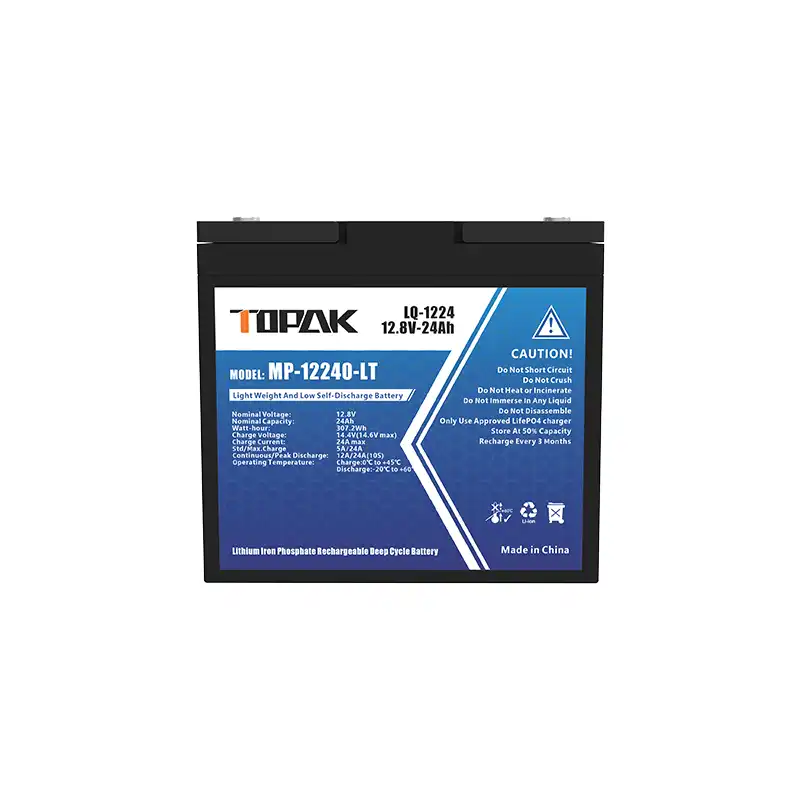
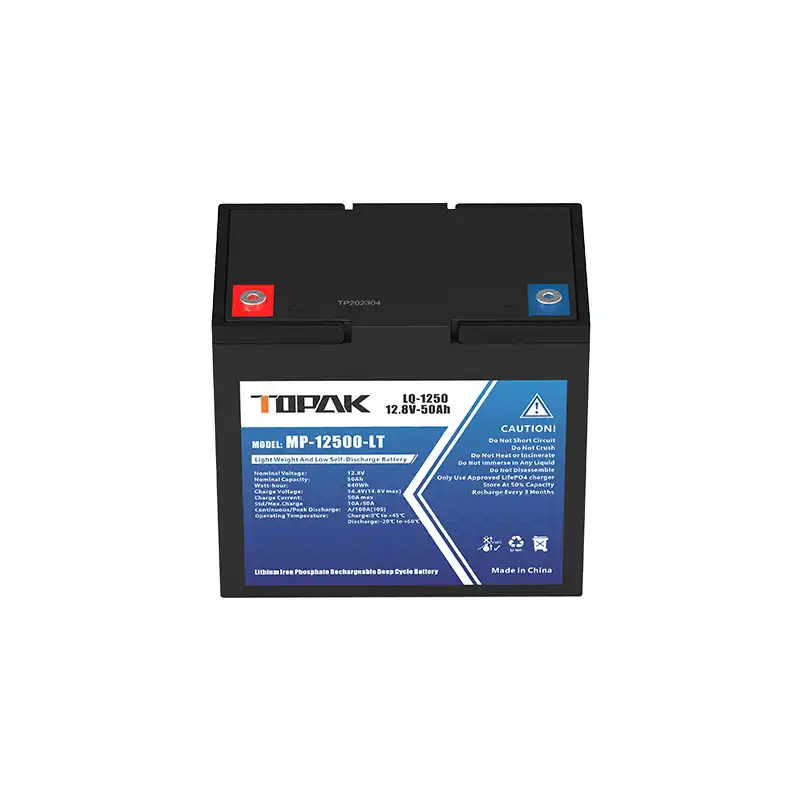
Moving from sealed lead acid to LiFePO₄ battery technology is a big step forward that will create measurable operating improvements and big cost saves in many industrial settings. The 6000-cycle lifespan, maintenance-free operation, and higher safety profile are all strong benefits that make the higher original investment worth it through lower total cost of ownership.TOPAK's 12V 6Ah LiFePO₄ battery is the perfect example of the quality and dependability that industrial clients want. It comes with full BMS security, foreign certifications, and a track record of success in tough applications. When you combine advanced production methods, strict quality control, and a lot of global support, you get reliable operation in mission-critical situations where power system failure would cause a lot of problems.
FAQ
Can LiFePO₄ batteries directly replace SLA batteries in existing equipment?
Most LiFePO₄ batteries can be used in place of sealed lead acid batteries in 12V systems that are already in place without any changes. The nominal voltage of 12.8V keeps it compatible with normal charging systems, and the similar shape makes it possible to physically change it in most situations. But for the best performance, the charging method might need to be changed to work with lithium technology's different charge profile.
What is the expected lifespan of a 12V 6Ah LiFePO₄ battery?
Good LiFePO₄ batteries can be charged and discharged over 6,000 times at 80% depth of discharge. In normal use, this means they will last for 15 to 20 years. This amazing battery life is much longer than protected lead acid batteries, which need to be replaced every two to three years under the same conditions.
Do LiFePO₄ batteries require special charging equipment?
LiFePO₄ batteries can be charged with most normal 12V devices, but specialized lithium chargers give them the best performance and longest life. The built-in Battery Management System keeps the device safe from overcharging and using the wrong charging settings. This means that even basic charging tools can be used safely.
Are there safety concerns with LiFePO₄ battery implementation?
LiFePO₄ chemistry is very safe and stable at high temperatures, so there is almost no chance of a fire happening when it is used normally. Iron phosphate chemistry doesn't experience temperature runaway like other lithium-ion technologies do. This makes it safer than many standard battery technologies, such as sealed lead acid.
What warranty coverage do quality LiFePO₄ batteries provide?
LiFePO₄ batteries usually come with contracts that last between 3 and 5 years, which shows that the company is confident in the technology's dependability and durability. Warranty terms usually cover keeping the capacity and problems with the way the product was made, which gives buying managers faith in its long-term performance.
How do shipping and handling requirements differ for LiFePO₄ batteries?
LiFePO₄ batteries are certified by UN38.3 to be safe for shipping, and they usually don't have to follow the rules for dangerous materials that some other battery technologies do. The stable chemistry and strong construction make operations easier and shipping costs lower than with batteries that need special treatment.
Partner with TOPAK for Superior LiFePO₄ Battery Solutions
TOPAK New Energy Technology can change your power system with 12V 6Ah LiFePO₄ battery options that are the best in the business and are made for tough industrial uses. Our advanced production skills, thorough quality control procedures, and track record going back to 2007 make sure that our products work reliably in a wide range of operating settings. Get in touch with our skilled engineers at B2B@topakpower.com to talk about your unique needs and find out how our custom battery solutions can help you run your business more efficiently while lowering your total cost of ownership. TOPAK is a reliable LiFePO₄ battery provider that can ship batteries all over the world. They can give your business the technical know-how and high-quality manufacturing it needs to be successful in the long run.
References
1. Chen, J. "Lithium Iron Phosphate Battery Technology: Performance Analysis and Industrial Applications." Journal of Power Sources, vol. 245, 2014, pp. 389-397.
2. Wang, L. "Comparative Study of Battery Technologies for Industrial Energy Storage Systems." IEEE Transactions on Industrial Electronics, vol. 68, no. 4, 2021, pp. 3021-3029.
3. Battery Council International. "Industrial Battery Performance Standards and Testing Protocols." Technical Report BCI-2023, Battery Council International, 2023.
4. Smith, R. "Total Cost of Ownership Analysis: LiFePO₄ vs Lead-Acid Batteries in Industrial Applications." Industrial Energy Management Review, vol. 15, no. 3, 2022, pp. 145-162.
5. International Energy Agency. "Battery Technology Roadmap: Industrial Applications and Market Trends." IEA Publications, Paris, 2023.
6. Zhang, Y. "Safety Assessment of Lithium Iron Phosphate Battery Systems in Industrial Environments." Journal of Hazardous Materials, vol. 421, 2021, pp. 126-134.
_1763953528391.webp)