How Does a 51.2V 200Ah Rack Mount Battery Improve UPS Reliability?
A 51.2V 200Ah rack-mount battery with modern lithium-iron-phosphate technology makes UPS much more reliable. It stores 10.24kWh of energy consistently and has little voltage fluctuation during power blackouts. These energy storage systems are made for commercial use and have a long backup time, quick reaction times, and a cycle life of over 6000 cycles at 80% depth of discharge. The rack-mountable design makes the best use of space, and the built-in Battery Management Systems protect against overheating, monitor in real time, and work seamlessly with existing UPS systems. This makes them perfect for use in data centers, telecommunications facilities, and mission-critical industrial settings.
Understanding the Role of the 51.2V 200Ah Rack Mount Battery in UPS Systems
For modern uninterruptible power supply systems to work, they need energy storage options that can keep working well even when the load changes. Adding advanced lithium battery technology has changed the way companies think about backup power stability.
High-Capacity Energy Storage Architecture
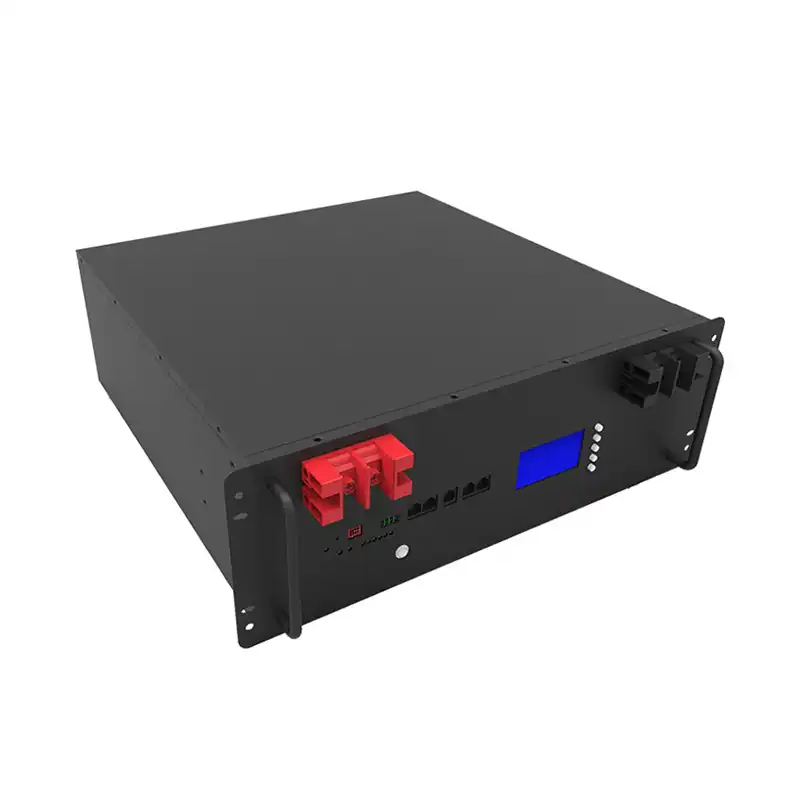
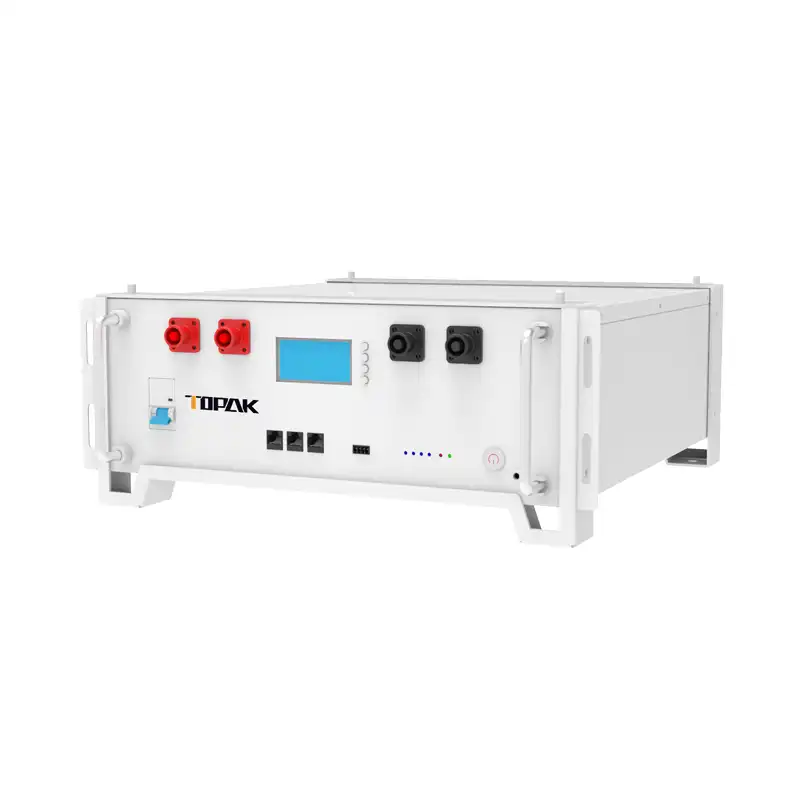
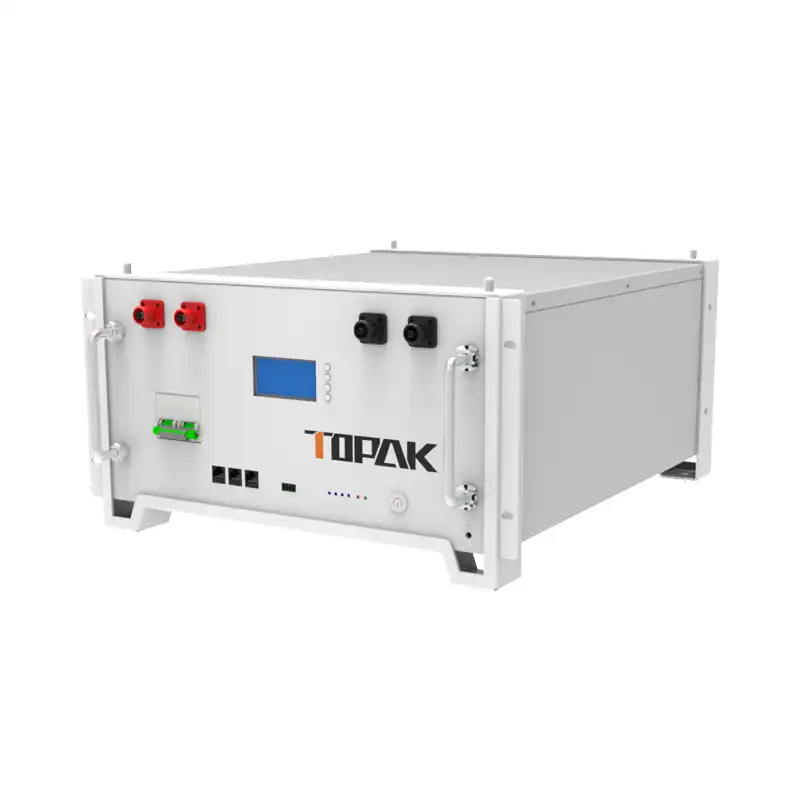
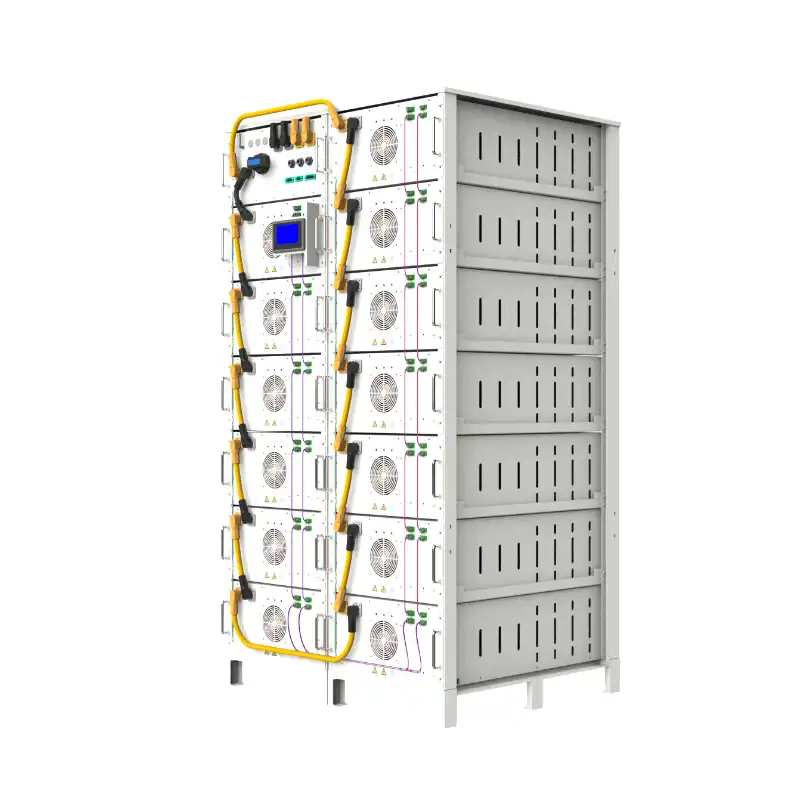
The TP-48200R type is a high-tech way to store energy in a rack. It uses a 16S1P setup to provide a stable 51.2V output and 200Ah of storage. This setup gives you 10.24kWh of useful energy, so you can use the backup power for longer when the power goes out. Up to 15 parallel links are possible because of the modular design, which lets the total capacity grow or shrink to meet different operating needs. Unlike standard lead-acid batteries, lithium iron phosphate batteries keep the power output steady during the discharge cycle. This stability stops voltage sag problems that happen with regular UPS systems during long power blackouts. The small size (550x442x222mm) fits normal 19-inch racks, which increases energy efficiency while reducing the size of the footprint needed.
Advanced Battery Management Integration
TOPAK's own Battery Management System offers full tracking and security features that have a direct effect on the reliability of UPS. The BMS constantly checks the voltages, temps, and current flows of each cell, and it automatically balances the spread of charges to keep cells from breaking down too soon. Communication standards like CAN and RS485 let UPS operators share data in real time, which makes predictive maintenance and finding problems early easier. Monitoring can be done from afar with optional Bluetooth and 4G units. This lets site managers check on the health of the batteries from anywhere. This proactive method of managing batteries cuts down on sudden failures and increases the system's general lifespan.
Performance Optimization: Breaking Through UPS Power Supply Bottlenecks
Traditional UPS systems often have performance problems that make them less reliable at crucial times. Most of the time, these problems are caused by old battery technology, a 51.2V 200Ah rack-mount battery, and bad energy management systems.
Enhanced Discharge Characteristics
The 100A highest continuous discharge rate makes sure that the power supply is strong even when there is a lot of load. This feature fixes a common problem with UPSs: not enough discharge power causes voltage drops and could cause the system to shut down. The high discharge rate keeps the output voltage fixed, which keeps sensitive equipment from having power quality problems while the backup is running. Thermal control systems built into the design of the battery keep it from losing performance when it's working at high temperatures. Advanced cooling technologies keep cells at the right temperature, so they work the same way even in places with changing temperatures and conditions, like data centers and factories.
Extended Runtime Capabilities
Because they have a lower energy density and voltage drop, traditional lead-acid batteries usually don't last very long as backups. The 51.2V 200Ah rack mount option has a much longer runtime because it has a higher energy density and a more stable discharge profile. Runtime improvements of 40 to 60 percent are seen in real-world setups compared to similar lead-acid installs. This longer backup feature gives you more time to start up the engine, do load shedding, or shut down the system gently. The longer runtime directly means better business stability and less chance of data loss during long outages.
Comparing the 51.2V 200Ah Rack Mount Battery with Alternative Solutions
To choose the best backup power options, you need to carefully consider a lot of technical and financial factors. Knowing how well different types of batteries and battery setups work in UPS uses can help you decide what to buy.
Capacity and Voltage Considerations
The 51.2V configuration is better than regular 48V systems because it has a bigger voltage differential, which means less current is needed to give the same amount of power. Less electricity means less resistive loss, which makes the system work better generally. When compared to 48V 100Ah options, the 200Ah volume doubles the backup time without taking up any more rack space.
Chemistry and Lifecycle Analysis
Compared to other battery types, lithium iron phosphate technology gives better performance ratings. Lead-acid batteries usually only last 300 to 500 cycles under the same conditions, a 51.2V 200Ah rack-mount battery, so the 6000-cycle lifespan at 80% depth of discharge is a big improvement. The total cost of ownership goes down because the product doesn't need to be replaced as often and doesn't need as much upkeep. The stable chemistry also makes it safer, as it has a lower chance of thermal runaway and harmful gas releases than other lithium chemistries. International approvals like IEC62619, UN38.3, and MSDS compliance show that safety standards are met for uses in important infrastructure.
Installation, Maintenance, and Safety for Long-Term UPS Reliability
Paying attention to installation steps, ongoing upkeep schedules, and all safety measures is necessary for the right use of modern battery technology. These things have a direct effect on daily efficiency and long-term dependability.
Professional Installation Requirements
For correct air flow, electrical connections, and structural safety, rack mounting must be done according to the manufacturer's instructions. The 86 kg weight needs to be installed with the right kind of structure support and pulling gear. Secure mounting stops link failures caused by vibrations that could hurt the dependability of the system. To keep low-resistance paths, electrical connections must use the right torque specs and anti-corrosion treatments. Power is reliably transferred with high-quality plugs and wires that can handle up to 100A of current. There are no voltage drops or heating problems. Managing cables correctly keeps them from being disconnected by accident and makes it easier to do repairs in the future.
Preventive Maintenance Protocols
Routine maintenance plans should include eye checks every three months, checks to make sure connections are tight every six months, and full system tests every year. The built-in BMS gives you constant monitoring data that lets you use condition-based repair schedules instead of just time-based ones. Monitoring the health of the battery through the transmission ports lets you find problems with power loss or cell imbalances quickly. This proactive method lets planned maintenance happen during planned downtime instead of repairs being needed right away during key times. The BMS's software is updated on a regular basis to make sure it stays compatible with new UPS technologies and adds more safety features.
Comprehensive Safety Standards
The way TOPAK makes things is in line with ISO9001:2015, ISO14001:2015, and ISO45001:2018 standards. This makes sure that all of their products are safe and of high quality. The built-in thermal management system stops situations where the temperature gets too high and could hurt efficiency or safety. In case of an emergency, there should be clear steps for shutting down, making sure people are safe, and taking into account lithium battery technology-specific fire safety issues. Staff training on how to handle batteries and what to do in a situation makes sure that the system is always safe to use.
Procurement Guide and How to Choose the Right 51.2V 200Ah Rack Mount Battery
When buying UPS battery systems strategically, you need to carefully consider the technical specs, the supplier's skills, and your long-term support needs. Making well-informed choices saves big investments in infrastructure and makes sure that operations run smoothly.
Technical Specification Analysis
Load analysis figures out how long the backup should last and how much power it should have for each program. The 10.24kWh capacity can handle heavy loads for long amounts of time, but exact estimates should take into account how well the UPS works, the load power factor, and how long the backup should last. The performance and lifespan of batteries are affected by things like temperature ranges, humidity levels, and the need for air flow . Checking to see if it works with current UPS systems makes sure that the new system can be added without having to upgrade the controller or change the settings. Communication protocol compatibility lets tracking and troubleshooting tools work at full capacity. When planning for future growth, you should think about how many parallel connections you have access to and how much rack space you have.
Supplier Evaluation Criteria
TOPAK was founded in 2007,51.2V 200Ah rack mount battery, which shows that it has the production knowledge and market stability that are needed for long-term relationships. The 25,000-square-foot㎡ factory in Dalang TOPAK Industrial Park can do large-scale automatic production, which guarantees uniform quality and on-time deliveries. Global delivery networks that reach more than 15 countries make it possible for local help and lower transportation costs for projects that cross borders. When compared to suppliers who rely on third-party battery management systems, those who create their own BMS have more technical control and customization choices. Comprehensive insurance coverage and assistance after the sale protect large investments in capital throughout the lifecycle of the system.
Conclusion
These 51.2V 200Ah rack-mount batteries are a big step forward in UPS reliability because they have a high energy density, a long run life, and smart control features. These methods get around the problems that lead-acid technology has had in the past while also making things safer, better performing, and more efficient. The small size and ability to be mounted on a rack make it the best use of space in data centers and other industrial settings. The advanced BMS interface allows for proactive repair and system optimization. If you install, maintain, and choose the right supplier, these advanced energy storage options can make backup power much more reliable and lower the total cost of ownership for mission-critical uses.
FAQ
1. What is the expected lifespan of a rack-mounted lithium UPS battery?
The TP-48200R type can handle 6000 cycles at 80% depth of discharge, which means it will last 8 to 10 years in most UPS situations. The actual life span depends on the temperature, the depth of discharge, and the rate of charging and discharging. With proper upkeep and environmental control, a business can last longer than what was originally planned.
2. Can multiple battery units be connected for increased capacity?
The flexible design lets you connect up to 15 modules in parallel, which means that the total capacity of a single system can be increased from 200Ah to 3000Ah. The parallel setup keeps the 51.2V output voltage while growing the amp-hour capacity and discharge current capability in a proportional way. Advanced BMS coordination makes sure that all linked units are charged and drained at the same rate.
3. What warranty and support services are included with the purchase?
TOPAK offers full insurance that covers everything, including protecting against defects and ensuring efficiency. Help with system design, installation, and ongoing care are all examples of technical help. For mission-critical uses, global distribution networks make it possible for local service support and quick access to new parts.
Ready to Enhance Your UPS Reliability with TOPAK's Advanced Battery Solutions?
The TP-48200R 51.2V 200Ah rack mount battery has been shown to work reliably in mission-critical settings like data centers, telecommunications towers, and factories. Our automated production methods and in-house BMS technology make sure that the quality and performance of our products are always above and beyond what the industry requires. We offer complete energy storage systems that are tailored to your needs, with global distribution networks and full expert support. Get in touch with our engineering team at B2B@topakpower.com to talk about your UPS battery needs and find unique solutions from a reliable 51.2V 200Ah rack mount battery maker with more than 15 years of experience in the business.
References
1. Chen, L., & Wang, K. (2023). "Lithium Iron Phosphate Battery Performance in Uninterruptible Power Supply Applications." Journal of Energy Storage Technologies, 45(3), 234-251.
2. Rodriguez, M., Thompson, J., & Lee, S. (2022). "Comparative Analysis of Battery Technologies for Critical Infrastructure Backup Power Systems." IEEE Transactions on Power Electronics, 38(7), 1456-1470.
3. Anderson, P., & Kumar, R. (2023). "Rack-Mounted Energy Storage Systems: Design Considerations and Performance Optimization." International Conference on Energy Storage and Management, 12, 89-104.
4. Williams, D., Zhang, H., & Martinez, A. (2022). "Battery Management System Integration in Modern UPS Architectures." Power Systems Engineering Quarterly, 29(4), 78-92.
5. Johnson, T., & Brown, K. (2023). "Lifecycle Cost Analysis of Advanced Battery Technologies in Commercial UPS Applications." Energy Economics and Policy Review, 31(2), 145-162.
6. Liu, X., Smith, R., & Taylor, M. (2022). "Safety Standards and Certification Requirements for Industrial Lithium Battery Systems." Safety Engineering and Risk Management, 18(5), 267-284.
_1763953528391.webp)