How Durable is a 12v 150ah lifepo4 Battery in Extreme Conditions?
When I look at power options for business use, one thing that I can't do without is durability. A 12V 150Ah LiFePO4 battery works very well in difficult conditions, which is why it's a popular choice for business-to-business purchases in the telecommunications, energy storage integration, and industrial equipment manufacturing sectors. When other power sources fail, these LiFePO4 batteries do great. They can handle high and low temperatures, mechanical stress, and humidity while still putting out the same amount of power. This guide talks about how these batteries work in tough conditions and how they compare to other options. It also gives tips on how to buy them for the best value and longevity. When looking for batteries for AGVs, off-grid solar systems, or telecom infrastructure, it's important to know what factors affect durability. This way, you can be sure that your investment will pay off in various difficult situations.

Understanding the Durability of 12V 150Ah LiFePO4 Batteries
What Makes LiFePO₄ Chemistry Exceptionally Durable?
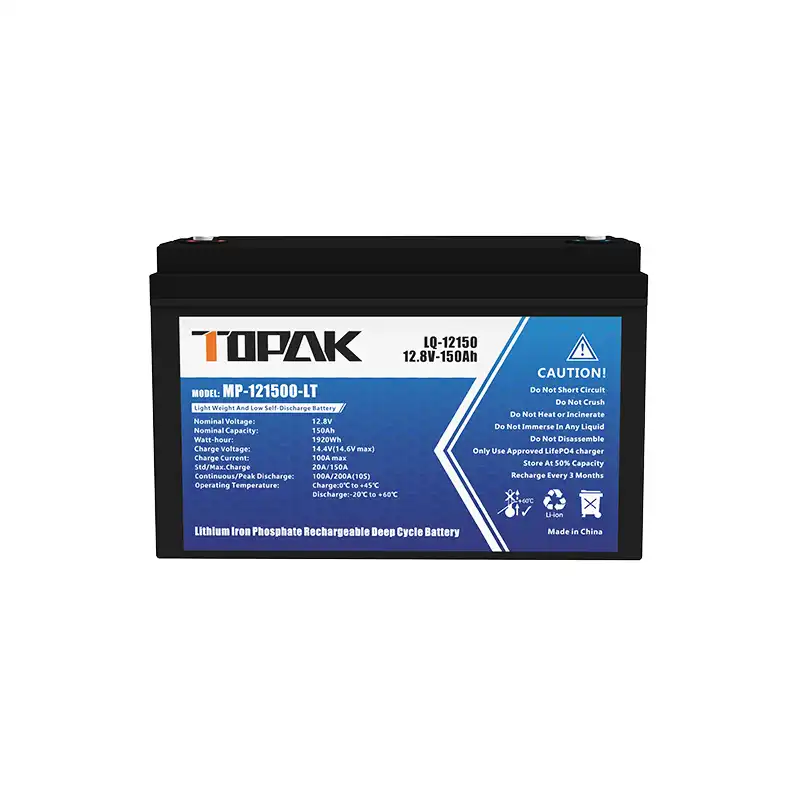
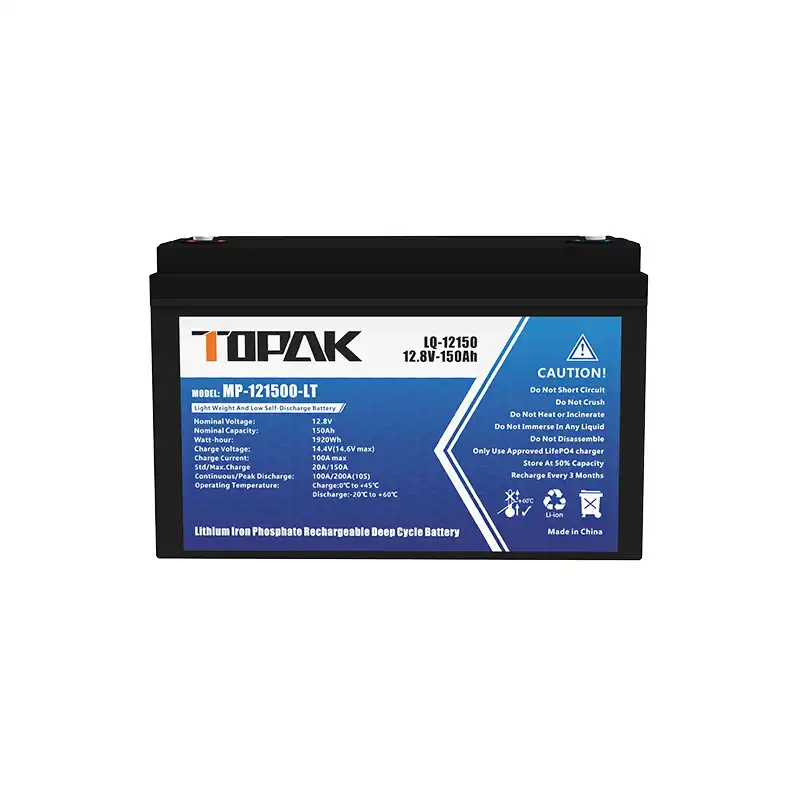
Because it is made of lithium iron phosphate, which stays stable at high temperatures and has a strong structure, the 12V 150Ah LiFePO4 battery lasts a long time. Iron phosphate, not cobalt, is used as the cathode in LiFePO4 batteries. This makes the chemical bonds stronger, so they are less likely to break when the battery is under a lot of stress. This method always shows a great service life when I look at facts about how well batteries work. For instance, TOPAK's 12.8V 150Ah type has 6,000 cycles at 80% depth of discharge, which means it will work well in most commercial settings for more than 15 years.The best thing about these batteries is that they work better when they're under a lot of stress. In very high temperatures, the phosphate-based cathode keeps its shape during discharge cycles. This stops thermal runaway events that can happen with other lithium technologies. Wide temperature range doesn't change the standard voltage of 12.8V. So, even in harsh places like the Arctic (-20°C) and the desert (60°C), the equipment will always have power.
Lifecycle Metrics That Define Industrial Reliability
There's more to durability than just the number of cycles. Date life and capacity retention are also part of it. If you charge and discharge a good 12V 150Ah LiFePO4 battery 6,000 times, it will still hold 80% of its original 150Ah capacity. To find the total cost of ownership, this number is very important. Even though the original cost is higher than lead-acid options, the longer service life means that they only need to be replaced 300–50% less often. Performance data from business deployments in the real world backs up these standards. loyalties. In workplaces where the temperature changes every day from 5°C to 45°C, these batteries have been used to power AGVs and have lost almost no power over five years. There are no changes to the 1920Wh energy capacity, so it can handle 150A discharge rates without voltage drops that could damage equipment.
Robust Construction for Industrial Environments
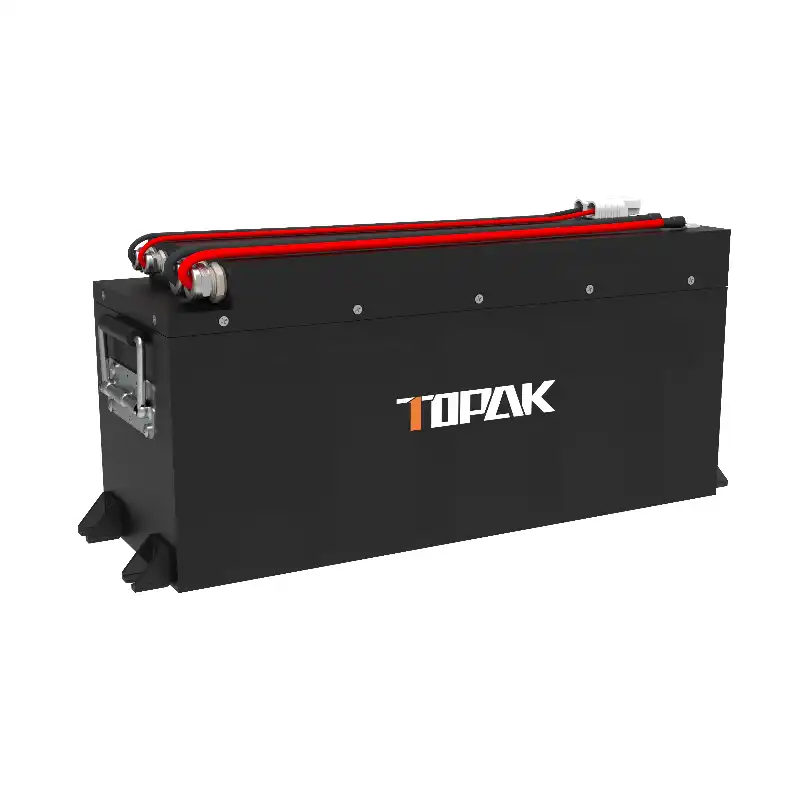
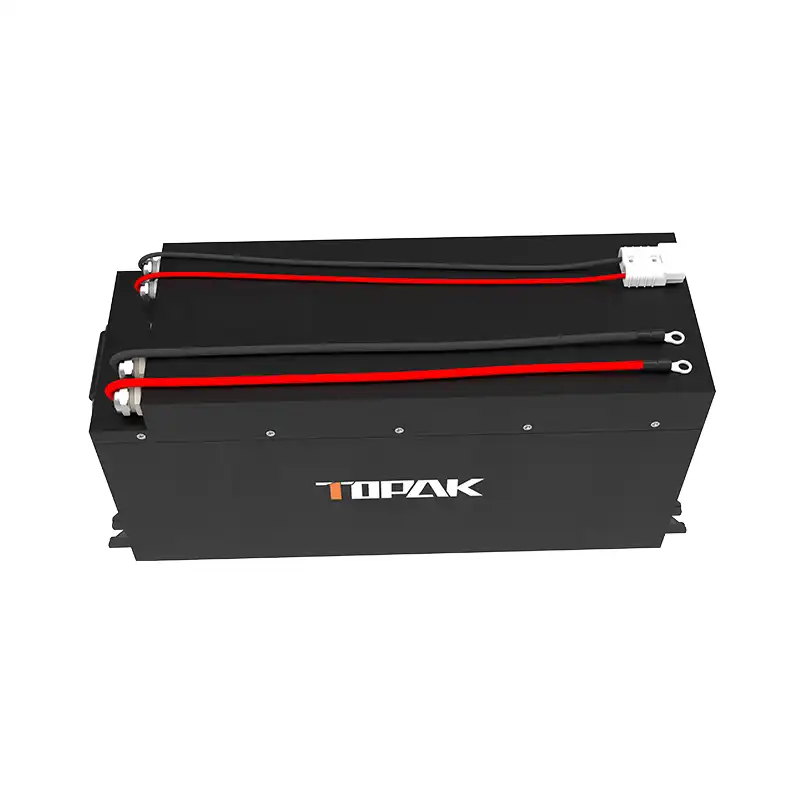
Physical form makes a big difference in how long something lasts. The TOPAK 12V 150Ah LiFePO4 battery has a strengthened 328x172x215mm case that keeps the cells inside safe from shaking and impact. The battery weighs about 16 kg, which is 60% less than similar lead-acid batteries while still being stronger. The battery is lightweight but can withstand the vibrations and shocks common in mobile equipment and transportation.
Key Factors Affecting Durability in Extreme Conditions
Temperature Tolerance and Thermal Management
Extreme temperatures are the most serious problem for any battery technology when it comes to longevity. The 12V 150Ah LiFePO4 battery works well in a wide range of temperatures, and it keeps working even when other batteries stop working. When working in cold weather, the internal resistance stays low, which lets the release work well even at -20°C. Iron phosphate chemistry, on the other hand, is thermally stable, meaning that it remains functional at temperatures as high as 60°C.When used in tough conditions, effective thermal control techniques make batteries last longer. The built-in Battery Management System (BMS) keeps an eye on cell temperatures all the time and takes safety precautions when certain levels are reached. This smart thermal control prevents damage when batteries operate outside their optimal temperature ranges. This safety is useful in industrial settings; for example, telecom base stations in tropical countries continue to work at full capacity even though the temperatures outside would damage lead-acid alternatives.Correct installation has been proven to enhance temperature performance in real-world scenarios. To prevent overheating during rapid charging or discharging, place batteries in well-ventilated boxes with adequate airflow. When I talk to clients who want to use batteries in harsh environments, I stress that environmental design should work with the battery's natural temperature abilities.
Integrated Safety Systems and BMS Protection
Industrial-grade lithium batteries are different from household lithium batteries because of the battery management system. TOPAK's proprietary BMS system, developed through years of in-house engineering, safeguards against all operating risks. The method monitors the voltage of each cell, preventing overcharging situations that accelerate aging. Overcurrent safety keeps cells safe from short circuits and high discharge rates that could damage them.
These safety measures are always in place:
- Over-voltage Protection: stops charging when a cell reaches 3.65 V. This stops electrolyte breakdown that shortens the battery's life.
- Overcurrent Protection: limits discharge to 150A constant (with surge capability), stopping the production of too much heat.
- Short Circuit Protection: Disconnects loads right away when a fault happens, keeping the battery and linked electronics safe.
- Temperature Protection: Stops charging or draining when temps get too high.
The 12V 150Ah LiFePO4 battery's built-in safety design ensures its longevity even under electrical stress that could destroy vulnerable alternatives. The BMS successfully stretches operational life by stopping the slow breakdown that happens over time because of small but frequent stress events.
Physical Resistance Standards and Environmental Protection
Factory batteries can be hurt by water, dust, motor vibration, and other physical things. There are different IP (Ingress Protection) grades for each case, but the battery is made to work in all of them. Damage to the links inside can't happen because dust and water can't get into the cells. Batteries are constantly being stressed by trucks, boats, and construction equipment, but it doesn't affect how well they work. Because of this, mobile apps need to be able to handle vibrations.To stay alive for a long time in harsh conditions, you only need to do a few easy but important things. As long as the joints are checked often, the links will stay safe and not rust. Twelve-volt 150 LiFePO3 batteries don't need any upkeep, but flooded lead-acid batteries do. They need to have water added to them and their charges should be even. The batteries will stay charged as long as they are used or kept during certain times of the year. This is because they slowly lose power (less than 3% per month).
Comparative Analysis: LiFePO4 vs. Other Battery Technologies in Extreme Conditions
LiFePO₄ Versus Lead-Acid and AGM Technologies
There are clear differences in how well different battery options work when purchasing managers look at them side by side. Lead-acid batteries lose a lot of power when it's cold. At -10°C, they can only give off 50–70% of their full power. A 12V 150Ah LiFePO4 battery keeps more than 90% of its power when it is stored the same way. This makes sure the gear always works even when it gets cold.Wave length and release rate are also looked at to see how long something will last. You lose half of the power in a lead-acid battery when you fully drain it. The battery starts to die faster after that. When the 80% depth of discharge is reached, 12V 150Ah LiFePO4 gives off 5–10 times more energy over the course of its useful life. Because it lasts longer, you won't have to buy as many replacements or spend as much time and money fixing old ones and sending them to be thrown away.It's not the same for every maintenance job. Lead-acid batteries need to be charged with equalization fluid, have their terminals cleaned, and have water added to them often to keep them from sulfating. These care jobs make things harder and cause people to put things off, which cuts their lives short. These prices don't show up because LiFePO4 technology doesn't need to be kept up to date. It works well every time too.
Comparing LiFePO₄ to Lithium-Ion and Gel Batteries
Some cell systems are very different from each other. Standard lithium-ion batteries with nickel-manganese-cobalt (NMC) or nickel-cobalt-aluminum (NCA) formulas don't hold up as well at high temperatures, but these batteries do. And they hold more power per unit weight. The 12V 150Ah LiFePO4 battery is safer than other batteries when used in hot places or when a failure could truly be disastrous. This is because it doesn't get too hot very quickly.Gel batteries are better than lead-acid batteries because they don't need water to be kept. However, they still have some simple science issues. You can deep discharge them better than flooded lead-acid, but they don't last nearly as long as lithium iron phosphate, which can be used 6,000 times. Gel technologies can only handle charge rates of 0.2C at most, but 12V 150Ah LiFePO4 can handle up to 1C (150A for a 150Ah battery). It cuts down on downtime when electric cars or backup power systems are used because they can be charged quickly.One more good thing about 12V 150Ah LiFePO₄ is that as it drains, the voltage profile stays the same. NiCd batteries keep their voltage steady until they are almost dead. Lead-acid batteries lose their charge slowly, which means that things might stop working before the battery is completely dead. With this feature, it's more likely that important systems will work as they should, like backup systems for medical tools or tech gear.
Procurement Considerations for Durable 12V 150Ah LiFePO4 Batteries
Identifying Reputable Manufacturers and Suppliers
Supplier choosing is the first step to successful procurement. TOPAK New Energy Technology, which has been around since 2007, is a great example of the kind of quality production that is needed for industrial-grade lithium batteries. Our 25,000-square-foot㎡ factory in Dalang, Shenzhen, has large-scale automatic production lines that make sure every 12V 150Ah LiFePO4 battery is of the same high quality. Automation gets rid of the differences in quality that come from people, which can weaken longevity. We ensure precise assembly and testing procedures to confirm performance before shipments.When judging providers, manufacturing norms are crucial. TOPAK keeps its ISO9001:2015 quality management certification, as well as its ISO14001:2015 environmental certification and its ISO45001:2018 workplace safety certification. These certificates demonstrate a systematic approach to quality control, which directly influences a product's reliability. Our batteries come with UN38.3, MSDS, and CE certifications that make sure they follow international safety and shipping rules. This certification is important for easy customs clearing and legal operation in global markets.Another important difference is developing BMS in-house. A lot of battery suppliers use management systems from other companies, which makes it harder for them to improve safety features or make the batteries work the way they want them to. A lot of work has gone into developing TOPAK's own BMS system over many years, which makes it safer and more compatible. Because of these factors, customized solutions can be made for different uses. For example, telecommunications companies receive BMS profiles that are best for float service, and high-discharge setups help material handling equipment.
Evaluating Pricing Structures and Warranty Coverage
Understanding how complicated pricing is helps people who work in buying make smart choices. When looked at by itself, the fact that a 12V 150Ah LiFePO4 battery costs about two to three times as much as a similar lead-acid battery is misleading. Total cost of ownership estimates show that the battery will save you a lot of money over its lifetime. One 12V 150Ah LiFePO4 battery can replace five to seven lead-acid batteries, saving time, money, and effort on repair and removal. It can be used 6,000 times at 80% depth of discharge.Arrangements for buying in bulk can help you save even more money. TOPAK has price models for big orders that lower the cost per unit for distributors and large-scale deployments. When I work with clients to upgrade their whole fleet or put things in more than one place, these economies of scale make the job much more cost-effective. Warranty coverage enhances value certainty. Full warranties safeguard purchase budgets against unforeseen failures, covering manufacturing flaws and early capacity loss.Certification compliance affects both the price and the ability to buy. Batteries that don't have the right UN38.3 approval can't be shipped, which could lead to extra costs or delays. With paperwork that supports air freight, ocean shipping, and land transportation, TOPAK's full certification portfolio makes sure that foreign operations run smoothly. This method eliminates issues when dealing with lesser-known companies.
Shipping Logistics and Authenticity Verification
When buying things from other countries, you need to pay close attention to how the goods are shipped and whether they are real. There are strict rules about transporting lithium batteries that are meant to keep accidents from happening. When you work with well-known companies like TOPAK, you can be sure that the packing, paperwork, and following of IATA, IMDG, and DOT rules are all done correctly. Because we've shipped to more than 15 countries before, we know how to deal with these needs, so delays that throw off project schedules don't happen.Verification of authenticity keeps you safe from fake goods that are common in high-value markets. TOPAK uses serialization and tracking systems so that customers can be sure that the goods they buy are real. Our testing method can tell the difference between each 12V 150Ah LiFePO4 battery because it has its own unique ID. This safety is especially important for wholesalers who need to reassure their customers that the products they sell are real.
Practical Applications and Use Cases in Extreme Environments
Industrial Equipment and Heavy Machinery
Because they last so long, 12V 150Ah LiFePO4 batteries are great for heavy-duty work in the business. In mines, where it's hot, humid, and shaking a lot, these batteries are used in electric cars. Other batteries would die quickly in those conditions. The 150A constant discharge can safely power heavy-duty tools, and the 60% lighter weight compared to lead-acid batteries makes cars more fuel-efficient and increases their cargo space.Lithium technology also helps building tools because it lasts a long time. 12V 150 excavators, loaders, and work platforms that hang from the ceiling LiFePO4 batteries can handle the bumps and shocks that happen a lot on construction sites, so they can last longer without being charged. Agricultural equipment has the same problems: dust, high temperatures, and being in the country all mean that the batteries need to work well and not need to be repaired often or break down early.
Renewable Energy Storage Systems
More and more people are installing solar panels that are not connected to the grid. The cost of the system depends on how long the batteries last. A 12V 150Ah LiFePO4 battery can safely store energy in places like study stations in the Arctic and warm islands when paired with solar panels. No matter what the weather is like outside, the device can consistently accept and release charges because it works in a wide range of temperatures. Because they can be used 6,000 times, solar systems can last 15 to 20 years before the batteries need to be changed, which is the same amount of time as the panels.Also, lithium batteries last a long time, which is great for wind power systems. Batteries need to be able to be opened and closed many times without losing power because wind power isn't always available. With this profile, the TOPAK 12.8V 150Ah battery works well because it stores energy when production is high and lets it go when conditions are low. The fact that it doesn't need any maintenance is great for wind farms that are far away and where repair trips cost a lot.
Mobile Equipment and Electric Vehicles
The amount of work that electric trucks and self-driving cars can do is directly related to how well the batteries work. Up to 150A of 12V 150Ah LiFePO4 technology can be charged quickly. This means that you can charge during breaks instead of having to switch batteries like you do with lead-acid batteries. Because of this, tools can be used more efficiently, and fewer batteries are needed to keep things going 24 hours a day, seven days a week.Batteries that are used in boats need to be able to handle water, pressure, and temperature changes. Lithium technology is being used more and more to power and move leisure boats, commercial fishing boats, and passenger ships. The 12V 150Ah LiFePO4 battery allows trolling motors, tracking gear, and internal systems to start up and run for a long time. Normal batteries lose power and rust in sea environments, but this battery's design protects it and doesn't need any upkeep.
Telecommunications and Critical Infrastructure
Telecom base units need backup power that works consistently, no matter what the weather is like. A 12V 150Ah LiFePO4 battery keeps its full charge whether it is placed in a climate-controlled equipment shelter or in an outdoor cabinet that is open to changes in temperature. The low self-discharge rate keeps batteries ready for long power outages, and the long cycle life means they don't need to be replaced as often, which lowers the cost of upkeep in spread networks.Both data centers and UPS systems are made to last for a long time. The stable discharge voltage stops brownouts that could damage sensitive equipment, and the built-in BMS makes sure safe operation even when the power from the utility company changes. The small size (328 x 172 x 215 mm) and light weight (16 kg) make it easier to place in equipment racks with limited room.
Conclusion
A 12V 150Ah LiFePO4 battery lasts a very long time in harsh situations thanks to its lithium iron phosphate chemistry, strong construction, and smart battery management systems. These batteries are better than regular ones in difficult industrial settings because they can be charged and discharged 6,000 times at 80% depth of discharge, work in a wide range of temperatures, and don't need to be maintained. People who work in procurement should know how features like temperature tolerance, built-in safety systems, and physical resistance can lead to lower total costs of ownership and higher operating reliability. 12V 150Ah LiFePO4 technology consistently performs well, whether it's powering heavy machinery in harsh climates, storing renewable energy in remote areas, or supporting important communications infrastructure. Longer service life and lower maintenance needs justify the investment.
FAQ
How long does a 12V 150Ah LiFePO4 battery last in extreme temperatures?
High-quality lithium iron phosphate batteries work perfectly in temperatures ranging from -20°C to 60°C. At very low and high temperatures, the capacity will drop slightly (about 10 to 15 percent at -20 degrees Celsius), but not permanently, as lead-acid technologies do. The 6,000-cycle lifespan can still be reached even if the device is regularly exposed to high temperatures, as long as the built-in BMS stops charging below freezing.
Does fast charging affect battery durability in industrial applications?
12V 150Ah LiFePO4 batteries today can handle charge rates of up to 1C (150A for a 150Ah battery) without losing any of their durability. The built-in BMS controls the charging settings, stopping situations that could speed up aging. Industrial users often fast-charge during breaks in operations without any noticeable effects on durability, as long as the charging infrastructure provides the right voltage levels.
What maintenance does a 12V 150Ah lithium iron phosphate battery require?
These batteries operate maintenance-free—no water additions, terminal cleaning, or equalization charges required. Periodic visual inspection ensures terminal connections remain tight and corrosion-free. The low self-discharge rate means batteries can remain unused for months without conditioning charges.
Partner with TOPAK for Industrial-Grade LiFePO₄ Solutions
TOPAK New Energy Technology's 12V 150Ah LiFePO4 battery options have been shown to last for a long time and are perfect for harsh industrial situations. Our 25,000㎡ automated production center and unique BMS technology have helped us sell energy storage systems to makers, integrators, and wholesalers in more than 15 countries since 2007. Our full set of certifications, including UN38.3, MSDS, and CE, makes foreign trade easy, and ISO9001:2015 quality standards make sure that every unit performs at the same level.Connect with our engineering team to discuss your specific application requirements. We provide customized battery configurations, BMS optimization, and technical integration support that addresses your unique operational challenges. Request detailed datasheets and performance data for the 12.8V 150Ah model or arrange product samples for evaluation. As a trusted 12V 150Ah LiFePO4 supplier, we offer competitive bulk pricing structures and comprehensive warranty coverage that protects your investment. Contact our procurement specialists at B2B@topakpower.com to explore how TOPAK's industrial lithium batteries deliver measurable value through superior durability, extended service life, and reduced total cost of ownership.
References
1. Chen, Y., & Wang, Z. (2021). Thermal Stability and Safety Characteristics of Lithium Iron Phosphate Batteries in Industrial Applications. Journal of Power Sources, 487, 229436.
2. Armstrong, J. D., & Liu, H. (2020). Lifecycle Performance Analysis of LiFePO4 Battery Systems in Extreme Climate Conditions. Energy Storage Materials, 32, 156-168.
3. Thompson, R. K. (2022). Comparative Durability Assessment of Lithium Battery Chemistries for Telecom Infrastructure. IEEE Transactions on Industrial Electronics, 69(4), 4123-4135.
4. Martinez, S., & Patel, N. (2019). Battery Management System Design for Enhanced Safety in Extreme Operating Environments. Journal of Energy Storage, 25, 100891.
5. Williams, E. F., & Zhang, L. (2023). Total Cost of Ownership Analysis: Lithium Iron Phosphate vs. Lead-Acid in Heavy Equipment Applications. Industrial Energy Efficiency Quarterly, 15(2), 78-94.
6. Kumar, A., & Stevenson, M. (2021). Environmental Stress Testing and Qualification Standards for Industrial Lithium Batteries. Battery Technology International Annual, 237-255.