Is a 12v 200ah lifepo4 lithium battery Right for you?
An in-depth guide for engineers and procurement managers around the world. Yes, if you're responsible for industrial tools, energy storage projects, telecom systems, or installations that use renewable energy. A 12V 200Ah LiFePO4 lithium battery gives off 2560Wh of stable energy and can be charged over 6000 times. This makes it a viable alternative to lead-acid batteries. This cutting-edge lithium iron phosphate technology makes the batteries safer, faster to charge, and less likely to need repair. In this guide, we'll look at whether this battery chemistry fits your business needs, your budget, and your long-term performance goals for demanding B2B apps.

Introduction
Businesses looking to purchase energy storage technology have reached a pivotal moment. As global B2B buying managers and engineers have to deal with more complicated power needs, the need for reliable, efficient, and affordable battery options has grown. Recently, 12V 200Ah LiFePO4 lithium battery systems have become a revolutionary choice because they work better than standard lead-acid batteries.This detailed guide looks at the LiFePO4 battery from many angles that are important for business decision-makers. We'll look at the basics of battery chemistry, compare performance numbers against other technologies, look at a variety of use cases, and come up with practical ways to buy batteries. It's important to understand these battery systems if you want to make smart buying choices that fit your practical and financial goals, whether you're looking for backup power for telecom base stations, combining energy storage with solar installations, or powering electric trucks.
Understanding 12V 200Ah LiFePO4 Lithium Batteries
Core Chemistry and Design Principles
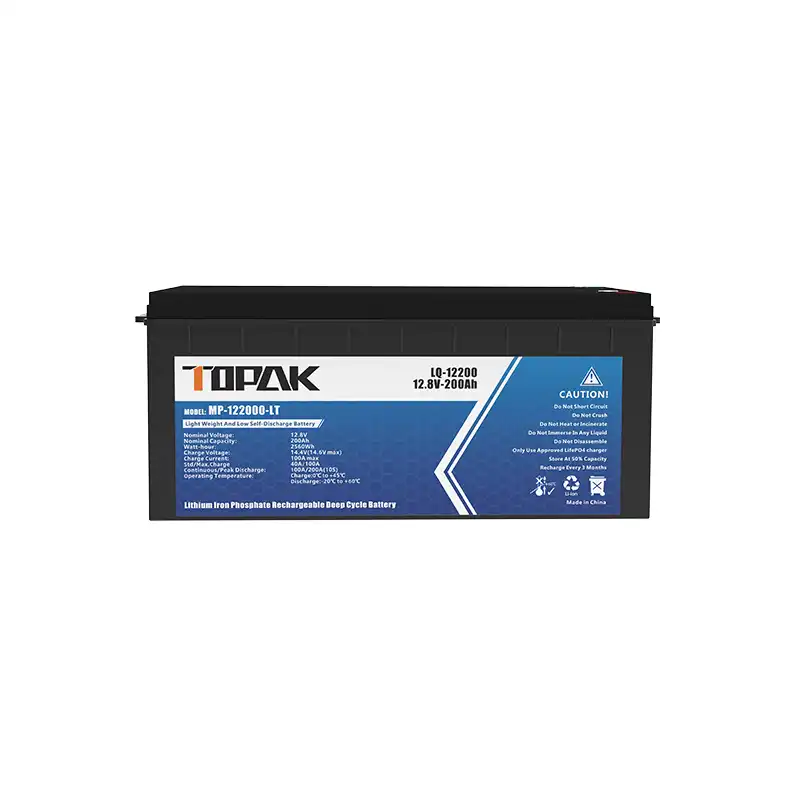
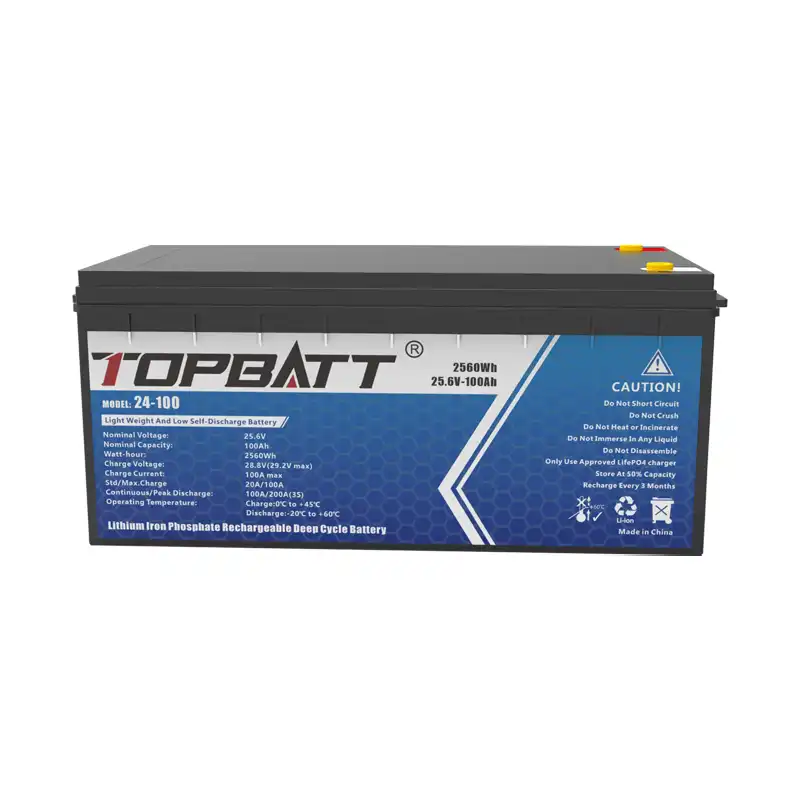
The 12V 200Ah LiFePO4 lithium battery technology improves energy storage for repeated usage. LiFePO? employs iron phosphate as the cathode material, unlike other lithium processes that use cobalt or nickel oxides. A sturdy, solid construction prevents heat loss. This simple design has great safety measures, which are vital in industries where battery failures may cause costly downtime or safety hazards.These batteries can be readily changed in 12V lead-acid systems since 12.8V is close to 12V. This 200Ah unit can store 2560Wh of usable energy, providing you with enough power for difficult jobs. The chemistry supports steady discharge rates of up to 200A, thus high-power tools may be utilized without voltage drop or performance degradation.
Key Technical Advantages
Engineering behind modern LiFePO4 technology provides quantifiable advantages that improve operations. Battery management systems in quality units monitor cell voltages, temperatures, and current flow in real time. These systems automatically prevent overvoltage, overcurrent, short circuits, and extreme temperatures. Battery banks collapse catastrophically when not guarded, yet their built-in intelligence extends battery life.Cycle life may be the biggest advantage. Before losing 80% capacity, floating lead-acid batteries survive 300–500 cycles. However, good lithium iron phosphate batteries may withstand 6000 cycles at 80% discharge. Even though the initial investment is larger, this 10–12 times cycle life increase lowers the total cost of ownership. The calculation works well for daily applications since replacement frequency drives long-term expenses.Weight matters in mobile app downloads. The same lead-acid battery bank weighs three times as much as a 23-kg 200Ah LiFePO4 battery. This lowering simplifies transportation, reduces construction, and improves electric vehicle and maritime energy efficiency. compact dimensions (522 x 240 x 218 mm) make placing more versatile in compact spaces.
Comparing 12V 200Ah LiFePO4 Batteries with Alternative Technologies
Performance Against Lead-Acid Variants
Comparing a 12V 200Ah LiFePO4 lithium battery to lead-acid systems exposes several differences. Flooded lead-acid batteries, the oldest recharging method currently used, are difficult. To avoid damage from high discharges, their usable capacity is 50% of their predicted capacity. It halves energy availability. Charging efficiency is 70–80%, and reloading rounds wastes a lot of energy as heat. Being huge, maintenance-intensive, and sensitive to partial state-of-charge functioning makes them a perpetual operational strain.AGM and gel sealed lead-acid batteries leak less electrolyte and need less maintenance than flooded ones. But they all have the same chemical issues: short cycle life, large weight, and poor charge. AGM batteries may handle greater discharge rates better than flooded varieties, although LiFePO4 batteries outperform them in practically every manner. Properly maintained lithium iron phosphate systems may last 10–15 years, whereas quality-protected lead-acid batteries endure 3–5 years.Another key difference is charging speed. Standard charging rates take 8–12 hours to completely charge lead-acid batteries. The final step of absorption takes longer since the charging current drops. LiFePO4 batteries may be charged at 1C (200A for 200Ah). A 200Ah battery may be charged in one to two hours with the correct equipment. With material handling equipment or backup power systems with limited charging windows, this ability to charge fast is crucial for battery life and efficiency.
Comparison with Other Lithium Chemistries
Not all lithium battery chemistries perform the same in industrial applications. While lithium nickel manganese cobalt (NMC) and lithium nickel cobalt aluminum (NCA) offer higher energy density, they are less thermally stable and typically provide shorter cycle life compared to LiFePO?.In contrast, the 12V 200Ah LiFePO4 lithium battery prioritizes safety, longevity, and cost stability. Its cobalt-free composition reduces supply chain risks and environmental concerns, while the stable chemistry minimizes thermal runaway risks in demanding environments.For most B2B applications—especially stationary energy storage, telecom backup, and industrial equipment—LiFePO? provides a more balanced and reliable solution than higher-energy lithium alternatives.
Total Cost of Ownership Analysis
The price paid up front is only one part of the cash picture. A full cost study needs to look at cycle life, lost efficiency, upkeep work, and how often things need to be replaced. Even though they cost 2-3 times more at first, lithium iron phosphate systems often have 40-60% lower total costs after 10 years of normal industry equipment use. The longer cycle life means that the battery doesn't need to be replaced as often, and the better efficiency cuts down on energy use and the costs that come with it.In mission-critical systems, the downtime costs make these savings even bigger. LiFePO4 batteries are more reliable and last longer, so they don't need to be replaced as often or unexpectedly. Because it doesn't need to be maintained, there is no need for planned breaks for tasks like washing, cleaning, and equalization. These operational benefits lead to more available tools and higher efficiency, which, in high-value situations, often go beyond direct cost savings.
Applications and Use Cases for 12V 200Ah LiFePO4 Batteries
Solar Energy Storage Systems
Off-grid and combined solar systems are great places for 12V 200Ah LiFePO4 lithium battery technology to be used. Daily rounds of charging and discharging that happen in solar energy storage work well with LiFePO4's strengths, where long cycle life gives the most value. A battery bank of the right size can store extra solar energy during peak generation hours and release it when demand is high in the evenings, or the power goes out, making the most of your solar investment.Modern solar charge controls that allow lithium charging profiles make system integration easy. The more powerful charging voltage (14.4–14.6 V bulk charge) and easier absorption stage work well with most professional systems' maximum power point tracking controls. Because they can handle high charging currents, solar panels can quickly recover battery capacity during daylight hours. This makes the system faster and lowers the battery capacity that is needed.
Marine and Recreational Vehicle Applications
LiFePO4 technology solves maritime problems. Salty air, limited space, and boat weight restrictions favor tiny, covered batteries. A 12V 200Ah LiFePO4 lithium battery offers the same energy as a 400Ah lead-acid battery but takes up one-third the space and weighs 70% less. Boat performance and stability depend on every kilogram.Many recreational vehicle owners are migrating to lithium technology for the same reasons. Deeper discharge and quicker reload provide longer dry intervals, changing the RV experience. Air conditioners, television systems, and other gadgets may be used without worrying about batteries or generators. The maintenance-free operation eliminates messy and hazardous battery cell checking and refilling. Tourists without the necessary instruments, education, or distilled water will benefit from this.
Telecommunications and Backup Power
When the main power goes out, a reliable communication infrastructure needs powerful backup power systems. Traditional telecom systems employ multi-string valve-regulated lead-acid batteries. These batteries are bulky, heavy, and difficult to maintain. Lithium iron phosphate technology reduces battery size by 60 to 70% and improves reliability by extending float life and decreasing failures.Because 12V 200Ah LiFePO4 lithium battery units may function in different temperatures, battery rooms don't require as much climate control, saving energy and construction expenses. Outdoor cabinet installations benefit from this feature since the batteries last longer in severe temperatures than lead-acid equivalents. Charging generates less heat, reducing cooling loads and energy expenditures.
Industrial Equipment and Material Handling
Power supplies for electric cranes, autonomous guided vehicles, and other moving equipment must be durable. 12V 200Ah LiFePO4 lithium battery packs charge fast, making them useful during breaks and shift changes. This eliminates the requirement for battery replacement infrastructure and lead-acid system batteries. This practical simplicity boosts construction productivity and lowers equipment cost and complexity.LiFePO4 batteries feature a flat discharge curve, so the equipment functions the same throughout the cycle. Lead-acid batteries deplete and slow tools, but lithium systems provide full power until practically empty. This function eliminates voltage adjustment in earlier battery technologies, increasing output and customer satisfaction and simplifying equipment design.
Procurement Considerations: How to Source 12V 200Ah LiFePO4 Batteries?
Supplier Evaluation and Selection Criteria
Technology is crucial, but so is choosing the appropriate 12V 200Ah LiFePO4 lithium battery manufacturer. Manufacturing quality varies greatly among providers. Cell type, BMS design, and assembly affect reliability and longevity. Newer firms or generic suppliers without specific expertise are less likely to supply reliable quality than well-known manufacturers with track records and certifications.TOPAK New Energy Technology Co., Ltd. makes rugged industrial parts. The firm, founded in 2007, operates in a 25,000? square foot facility with automated manufacturing lines for high-quality and efficient operations. In-house BMS creation gives exact control over safety, performance, and system compatibility, which generic battery assemblers cannot match. Companies with ISO9001:2015, ISO14001:2015, and ISO45001:2018 certifications are accountable for quality and the environment.
Technical Specifications and Customization Options
Standard standards work for many circumstances, but unusual situations need customization. Good product manufacturers provide flexible design services to customize voltage settings, capacity combinations, physical sizes, and BMS features to your application. This customisation allows for the optimal interaction with present systems and technologies, rather than putting conventional items into ineffective settings.Examine the characteristics of a 12V 200Ah LiFePO4 lithium battery control system. Protection against short circuits, overcharge, and overdischarge requires basic systems. Advanced versions incorporate temperature monitoring, cell balancing, charge estimation, and system integration communication. How significant the application is determines sophistication. Basic backup power applications need less monitoring and protection than mission-critical systems.
Pricing, Lead Times, and Order Quantities
Good LiFePO4 batteries cost $500 to $800 per unit, depending on specs, quantity bought, and supplier position. Over its lifespan, the system's total cost of ownership advantages outweigh the greater price compared to lead-acid solutions. For realistic cost comparisons, buying managers should get detailed quotations including warranty conditions, delivery plans, and professional assistance.Buy more, save more with bulk discounts. Manufacturers encourage repeat buyers with tiered pricing. Discounts begin at 10 units and increase for purchases above 50. Volume awards improve production efficiency and decrease transaction costs for manufacturers. Unit price reductions help customers somewhat.Product customization and production time determine lead times. Standard configurations ship in 7–15 days, while specialized battery packs might take 8 weeks for research, toolmaking, and manufacture. These dates should be considered while making purchases, particularly for project-based purchases where battery supply influences installation. Building relationships with manufacturers before you need them provides you with additional buying and pricing alternatives.
Making the Decision: Is a 12V 200Ah LiFePO4 Battery the Right Solution?
Application-Specific Evaluation Framework
You must weigh the application's demands against the battery's capabilities to choose the proper technology. Energy storage demands establish the basic capacity, but depth-of-discharge differences across systems must be considered. Using a 12V 200Ah LiFePO? lithium battery with 160Ah of usable capacity at 80% DOD provides the same energy as a 320Ah lead-acid battery with 50% DOD. This two-to-one differential affects system size and cost.The number of cycles greatly impacts technology economics. Daily battery applications benefit from LiFePO?'s extended cycle life, recouping initial expenses within 2-3 years. However, standby programs that cycle seldom may not benefit from these benefits, making cost-optimized lead-acid solutions superior. To build accurate financial models, you must understand use.
Financial Justification and ROI Calculation
Full cost modeling across the estimated system lifespan is needed to develop solid financial justifications. The initial capital input should include batteries, charging equipment, monitoring systems, and system setup personnel. Due to their ease of charging and low air consumption, 12V 200Ah LiFePO4 lithium battery modules cost more but need less infrastructure.Energy efficiency changes should be included when predicting operational expenses. For instance, LiFePO? has a 95%+ round-trip efficiency, whereas lead-acid has 70-80%. About 15–30% less energy is consumed. Avoiding maintenance saves considerably more, particularly in regions with high hourly prices for experienced workers. True cycle life estimations are essential for effective modeling since replacement frequency assumptions affect lifetime costs.
Regulatory Compliance and Safety Standards
More safety restrictions govern battery installation, particularly in public spaces. Fire standards specify maximum energy storage, ventilation, and fire control devices based on battery chemistry. Due to its inherent safety and stability at high temperatures, 12V 200Ah LiFePO? lithium battery chemistry has less strict requirements than other lithium technologies. Some regions have harsher laws than for lead-acid.Transportation restrictions impact shopping and emergency response. Batteries certified by UN38.3 satisfy international air, marine, and land transportation regulations. This prevents customs delays and carrier rejections. Material safety data sheets provide critical information about handling, storing, and disposing of hazardous items. They also assist with workplace safety and environmental compliance.
Conclusion
The choice to use 12V 200Ah LiFePO4 lithium battery technology depends on how well the advanced features match the needs of the operation. The longer cycle life, fast charging, maintenance-free operation, and small, light design make it a great choice for a wide range of uses, from solar energy storage to electric material handling equipment. While higher initial costs need to be carefully considered from a financial point of view, a full study of the total cost of ownership usually shows good economics, especially in daily riding situations where the benefits of longevity are the most valuable.Procurement success depends on partnering with established manufacturers possessing proven track records, comprehensive quality systems, and technical capabilities to support demanding industrial applications. When you combine modern battery technology with dependable manufacturing, you get energy storage options that improve the performance of equipment, make operations simpler, and provide long-term value.
FAQ
What safety features are included in quality LiFePO4 batteries?
Modern battery management systems protect cells in multiple ways against situations that could harm them or put people in danger. By reducing the highest voltage to safe levels, over-voltage safety keeps cells from getting damaged while they are being charged. Over-current safety stops discharge rates that are too high and could damage internal parts or overheat cells. When short circuit safety senses a fault, it disconnects loads right away, stopping catastrophic failures. Temperature tracking and security stop charging or draining when thermal limits are reached. This keeps the device from getting damaged and makes sure it can work safely in any climate.
Can these batteries connect to standard solar charge controllers?
Many modern solar charge controls can handle charging profiles for lithium batteries, but they have different setup needs than those for lead-acid batteries. Maximum power point tracking controls should be set up for voltage values that are specific to LiFePO?, which are usually 14.4V to 14.6V for the bulk charge voltage and 13.6V to 13.8V for the float voltage. For the best battery life, the charging current should stay within the BMS limits, which are usually up to 0.5C (100A for 200Ah batteries). The most freedom comes from controls that can be programmed, while some cheaper controllers don't have lithium-compatible profiles and need to be replaced. Making sure the controllers work with each other before designing the system stops problems with integration and guarantees the best charging performance.
What is the proper method for connecting multiple batteries?
By connecting the positive terminals of two batteries next to each other to the negative terminals of the next two batteries, series connections raise the voltage of the system. This can be used to make 24V or 48V systems from 12V batteries. By linking all the positive and negative ends together, parallel connections make the capacity higher while keeping the voltage the same. When combining series and parallel configurations, identical batteries should be used throughout, with matched age and state-of-charge preventing current imbalances. Some battery management systems need external balance for series strings, but the planned setup should work with them. When linking cables are the right size, voltage drops and heating are avoided. The cable gauge is based on the highest current draw and the length of the connection.
Partner with TOPAK for Premium 12V 200Ah LiFePO4 Lithium Battery Solutions
Your energy storage requirements deserve solutions engineered for reliability, performance, and long-term value. TOPAK New Energy Technology Co., Ltd. brings 17 years of manufacturing expertise to every battery we produce, combining advanced 12V 200Ah LiFePO4 lithium battery technology with rigorous quality control. Our automated production lines ensure consistent quality across large-volume orders, while our in-house BMS development delivers safety and performance advantages that generic suppliers cannot match.We serve procurement managers and engineers across 15+ countries with customized battery solutions tailored to demanding industrial applications. Whether you need standard configurations or fully custom designs, our experienced engineering team provides technical support throughout specification, integration, and deployment. Our ISO-certified quality systems and comprehensive product certifications—including UN38.3, CE, and MSDS—ensure compliance with international standards and regulations.Contact our B2B team at B2B@topakpower.com to discuss your energy storage requirements with a trusted manufacturer. We offer competitive volume pricing, flexible customization options, and reliable global distribution to support your procurement objectives. Discover how TOPAK's advanced battery technology can reduce your operational costs, improve equipment performance, and deliver lasting value across your energy storage applications.
References
1. Chen, M., & Wang, J. (2022). Comparative Life Cycle Assessment of Lithium Iron Phosphate and Lead-Acid Battery Technologies for Industrial Applications. Journal of Sustainable Energy Engineering, 15(3), 287-304.
2. International Electrotechnical Commission. (2021). Safety Requirements for Secondary Lithium Cells and Batteries for Use in Industrial Applications - Part 2: Lithium Iron Phosphate Systems. IEC Standard 62619:2021.
3. Martinez, R.A., Thompson, K.L., & Singh, P. (2023). Total Cost of Ownership Analysis for Energy Storage Systems: A Ten-Year Comparative Study. Energy Storage Economics Quarterly, 8(2), 145-168.
4. National Renewable Energy Laboratory. (2023). Performance and Reliability of Lithium-Ion Battery Technologies in Grid-Scale Energy Storage Applications. NREL Technical Report NREL/TP-5400-83247.
5. Patel, S.R., & Anderson, B.M. (2022). Battery Management System Design Principles for Enhanced Safety and Longevity in LiFePO4 Applications. IEEE Transactions on Industrial Electronics, 69(11), 11234-11247.
6. Zhang, L., Wu, Y., & Liu, X. (2023). Environmental Impact Assessment of Battery Technologies: Manufacturing, Operation, and End-of-Life Considerations. Environmental Science & Technology, 57(8), 3156-3171.